Sofa Repair vs Replace: When to Fix It and When to Buy New
When your sofa, a central piece of living room furniture designed for seating and comfort starts to sag, tear, or creak, you face a simple but costly question: repair or replace? It’s not just about money—it’s about value, comfort, and how long you want it to last. A well-made sofa can easily last 10 to 15 years, but most people replace theirs way earlier because they don’t know what’s fixable and what’s beyond saving.
Let’s break it down. If the frame, the internal wooden or metal structure that supports the entire sofa is solid—no cracks, no wobbling, no loose joints—you’ve got a good candidate for repair. The springs, the coiled metal system that gives the seat its bounce and support might be worn out, but they can be replaced. Same with cushions, the foam or down-filled layers that determine how soft or firm the seat feels. Reupholstering the fabric? Totally doable. But if the frame is broken, warped, or made of cheap particleboard, you’re throwing money at a sinking ship. That’s when sofa repair vs replace becomes obvious: replace it.
Think about your lifestyle. If you’ve got kids, pets, or long movie nights, durability matters more than looks. A sofa with a sturdy frame and high-density foam can be reupholstered again and again. But if your current sofa is already 8 years old and the cushions are flat as pancakes, buying a new one might save you more in the long run—especially if you’re looking at sustainable materials like bamboo, which offer both strength and eco-friendliness. And don’t forget the warranty. A new sofa often comes with a 5- to 10-year guarantee on the frame. Repairs rarely do.
Here’s the truth: most people replace their sofa too soon because they don’t know how to assess it. Check the frame. Test the springs. Feel the cushions. Look at the stitching. If it’s holding up underneath, repair it. If it’s falling apart at the roots, walk away. The right choice isn’t about emotion—it’s about what the numbers and materials tell you. Below, you’ll find real-world examples of what works, what doesn’t, and how to spot the hidden signs that your sofa is ready for its next chapter—whether that’s a new cover or a new home.
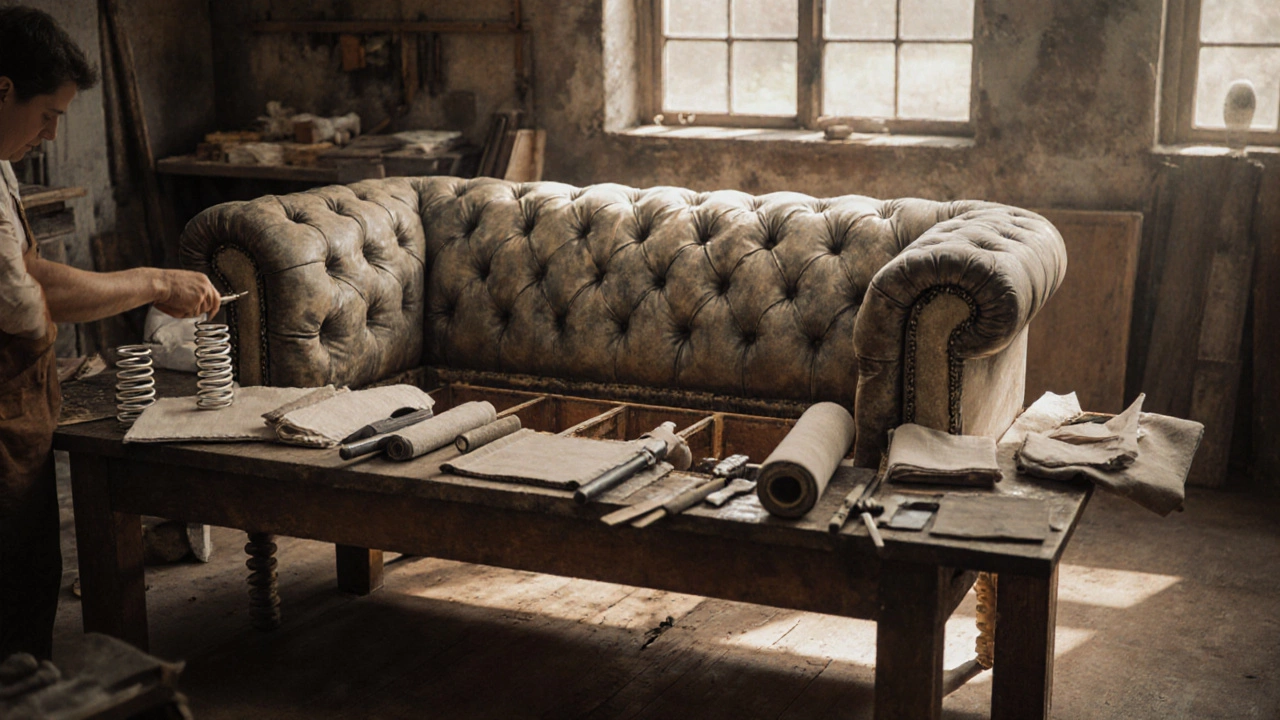
Is it cheaper to recover a couch or buy a new one? Here's the real cost breakdown
Recovering a couch can cost less than buying new-especially if it has a solid frame. Learn when reupholstering saves money, what fabrics work best, and how to tell if your couch is worth fixing.
View more