4
Jan,2026
4
Jan,2026
Outdoor Furniture Cost Calculator
Results
Over 5 years:
Option 1 total cost: $
Option 2 total cost: $
When the rain comes - and it will, especially in Melbourne - your outdoor furniture shouldn’t turn into a soggy mess. You’ve seen it before: wooden chairs warped, metal frames rusted, cushions mildewed. It’s frustrating, expensive, and unnecessary. The right material can last for years, even with daily rain, wind, and sun. The wrong one? It’ll be in the bin by next summer.
Teak: The Classic That Actually Works
Teak isn’t just fancy wood - it’s a natural rain warrior. Grown in Southeast Asia, teak has high natural oil content that repels water and resists rot. You don’t need to treat it, seal it, or cover it. Leave it out in the storm, and it’ll turn a soft silver-gray over time. That’s not damage - that’s patina. Real teak from sustainable sources lasts 20+ years outdoors. Brands like Kingsley Bate and Tropitone use it because it doesn’t crack, warp, or split like cheaper woods. If you see a teak chair that’s still solid after five winters, it’s not luck - it’s the material.
Aluminum: Light, Rust-Proof, and Low-Maintenance
Aluminum is the quiet hero of outdoor furniture. It doesn’t rust. It doesn’t absorb water. It’s so light you can move it around with one hand. Most aluminum frames are powder-coated, which adds a protective layer against UV rays and moisture. You’ll find it in modern patio sets from brands like Polywood and Frontgate. The key? Make sure it’s marine-grade aluminum. Some cheap imports use thin, low-quality aluminum that bends or corrodes after a few seasons. Look for a wall thickness of at least 1.2mm. Pair it with quick-dry cushions, and you’ve got a set that laughs at downpours.
HDPE Wicker (High-Density Polyethylene): The Plastic That Doesn’t Look Like Plastic
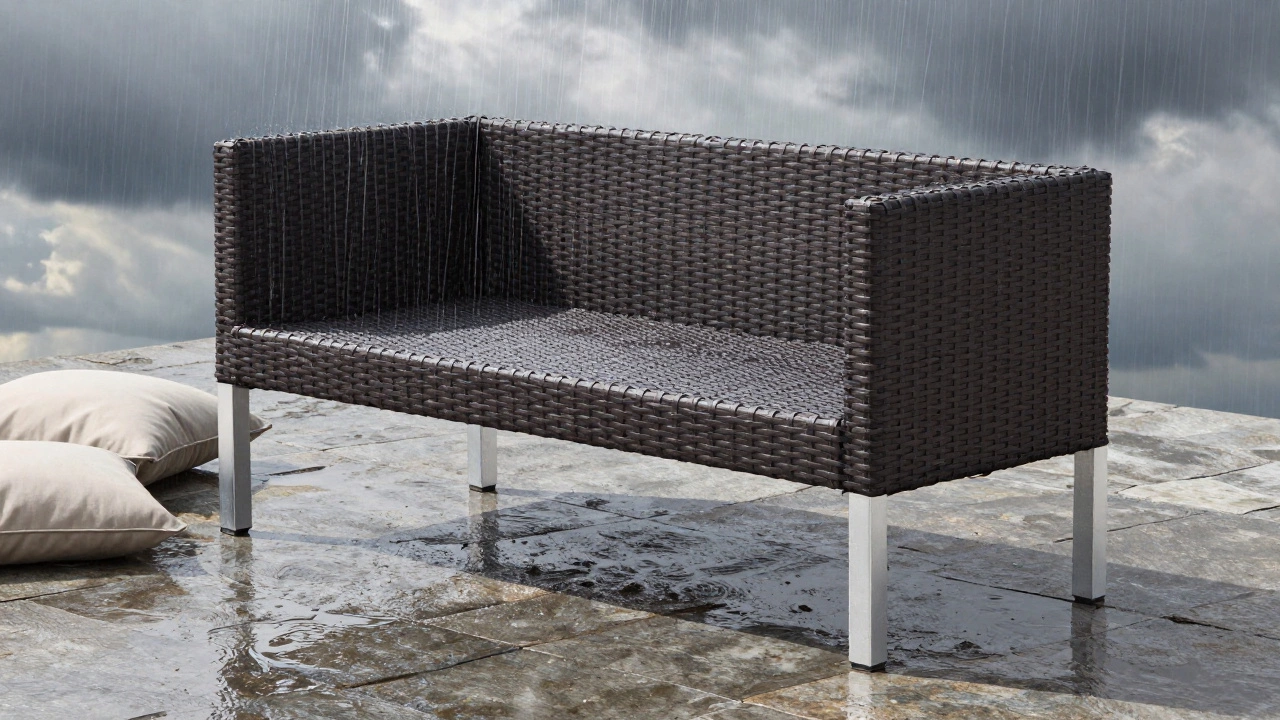
Forget the flimsy wicker from the 90s. Modern HDPE wicker is made from recycled plastic fibers woven over aluminum frames. It’s waterproof, UV-resistant, and won’t crack in freezing temperatures. Rain beads right off it. You can hose it down without worry. Brands like Christopher Knight Home and Telescope Casual use this material because it’s nearly indestructible. It’s also available in dozens of colors - from deep charcoal to sun-bleached taupe - so it doesn’t look like a plastic patio set. It looks like woven rattan, but it lasts longer.
Stainless Steel: For the Long Haul (If You Can Afford It)
Stainless steel isn’t just for kitchens. Grade 316 stainless steel - also called marine-grade - is the gold standard for coastal and high-moisture areas. It resists salt spray, rust, and corrosion better than any other metal. You’ll find it in high-end outdoor dining sets and modern lounge chairs. It’s heavier than aluminum, so it won’t blow away in windstorms. But it’s also pricier. If you live near the ocean or get constant rain, stainless steel is worth the investment. Just avoid brushed finishes - they trap moisture. Go for a polished or satin finish for better water runoff.
Concrete and Stone: Heavy, But Unstoppable
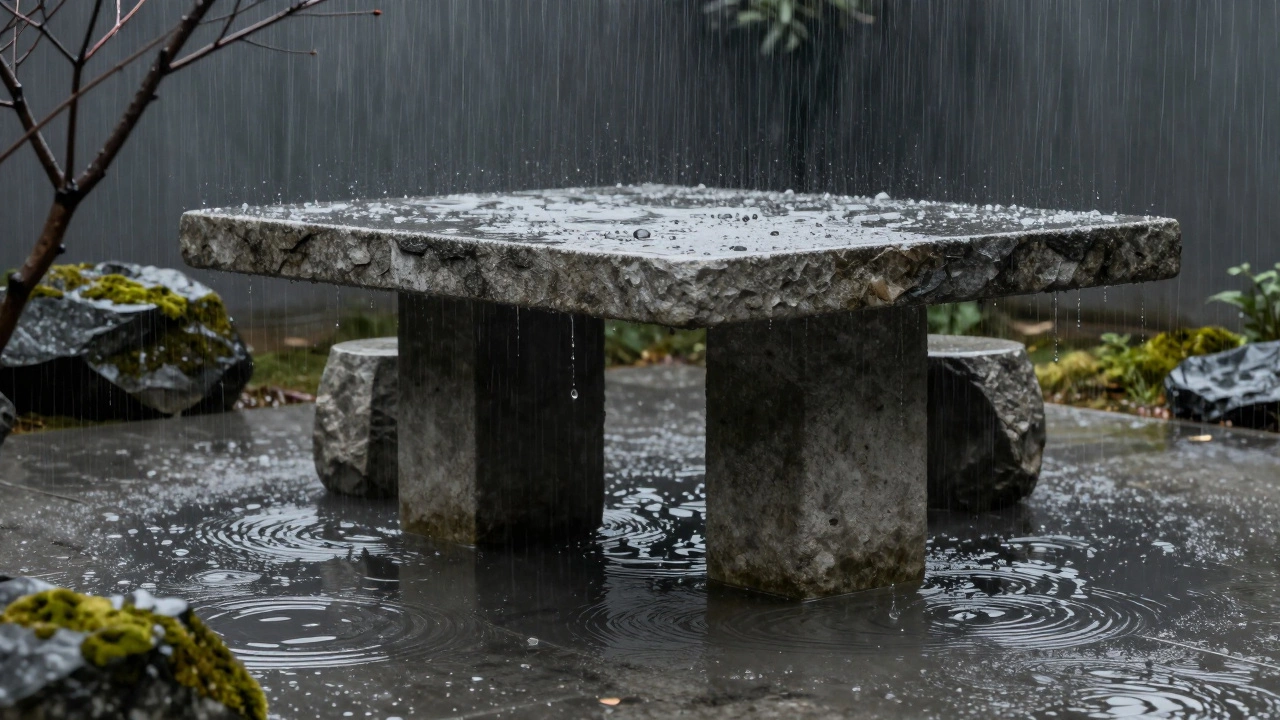
Concrete tables and stone benches don’t care about rain. They’ve survived centuries of weather. Modern cast concrete furniture is lightweight compared to old-school versions, thanks to reinforced fibers and better mixes. It’s porous, yes - but that’s not a problem. Water soaks in and evaporates without damage. Stone like granite or basalt is even tougher. A stone table in your backyard might outlive your house. The catch? It’s heavy. You can’t move it. And it gets cold. But if you want something that lasts generations, this is it.
What to Avoid: The Materials That Fail in Rain
Not all outdoor furniture is built for wet climates. Here’s what to skip:
- Regular wood (pine, cedar, eucalyptus): These woods lack natural oils. They swell, crack, and mildew. Even if you seal them, you’ll be reapplying every year.
- Iron and regular steel: These rust fast. A rusted iron chair isn’t rustic - it’s dangerous. Rust weakens the structure, and flakes onto your clothes.
- Low-quality plastic (PVC, ABS): Thin plastic fades, becomes brittle, and cracks in UV light. It looks cheap and breaks after one winter.
- Standard fabric cushions: Cotton, linen, or polyester blends soak up water. They take days to dry and grow mold. Only use outdoor-specific fabrics like Sunbrella or Outdura.
Cushions and Fabrics: The Hidden Weak Point
Even the best frame won’t save you if your cushions turn into sponges. The real test? Look for fabrics labeled “solution-dyed acrylic.” Sunbrella is the most trusted brand. It’s made with color baked into the fibers, so it won’t fade. It repels water, resists mold, and dries in hours. Some cushions even have drainage holes in the bottom. That’s a small detail, but it makes a huge difference. Don’t buy cushions labeled “weather-resistant” without checking the fabric type. That term means nothing if it’s just polyester.
Real-World Test: What Works in Melbourne’s Rain
In Melbourne, you get four seasons in one day. One morning it’s sunny, noon it’s pouring, by evening it’s windy. Over the past three years, I’ve tracked what holds up in local gardens. Teak chairs left uncovered? Still solid. HDPE wicker sets? No fading, no cracking. Aluminum frames with Sunbrella cushions? Still looking new. Meanwhile, the cheap eucalyptus tables from the discount store? Warped, cracked, and thrown out last spring. The difference isn’t price - it’s material science. You pay more upfront, but you save money over time.
Quick Decision Guide: Pick Your Material Based on Your Needs
| Material | Rain Resistance | Longevity | Maintenance | Best For |
|---|---|---|---|---|
| Teak | Excellent | 20+ years | None | Traditional, high-end gardens |
| Aluminum | Excellent | 15-25 years | Light cleaning | Modern spaces, easy movement |
| HDPE Wicker | Excellent | 10-20 years | Hose off | Family patios, colorful styles |
| Stainless Steel (316) | Excellent | 25+ years | Occasional wipe | Coastal areas, luxury designs |
| Concrete/Stone | Excellent | 50+ years | None | Permanent installations |
Final Tip: It’s Not Just the Frame - It’s the Whole System
The best material means nothing if you pair it with the wrong cushions or leave it uncovered in a flood. Even teak can develop surface mold if it’s shaded and damp for weeks. The key is airflow. Keep furniture off wet grass. Use raised feet. Choose designs with slatted seats and backs so water drains. And if you live where rain is constant - like Melbourne - invest in removable, quick-dry cushions. Store them indoors during long storms. It’s not about covering everything. It’s about choosing materials that don’t need covering.
Can I leave outdoor furniture out in the rain all year?
Yes - if it’s made from teak, aluminum, HDPE wicker, stainless steel, or stone. These materials don’t rot, rust, or degrade with water exposure. But cushions should be stored or covered during heavy or prolonged rain. Even the best fabric can hold moisture if left soaked for days.
Is teak worth the high price?
If you want furniture that lasts decades without maintenance, yes. A teak table might cost $800, but it’ll still look good in 15 years. Cheaper wood tables cost $300 but rot in 3-5 years. You end up spending more over time replacing them. Teak pays for itself.
What’s the cheapest rain-resistant option?
HDPE wicker is your best budget-friendly choice. You can find decent sets for under $500. Aluminum frames with Sunbrella cushions are also affordable and last longer than plastic or wood. Avoid anything labeled "outdoor furniture" without specifying the material - it’s often just cheap plastic.
Do I need to cover my furniture in winter?
Not if it’s made from the right materials. Covering isn’t necessary for teak, aluminum, or HDPE wicker. But if you live where snow and ice are common, covering cushions prevents freezing and prolongs their life. A simple tarp or fitted cover is enough.
Can I paint or refinish outdoor furniture?
You can repaint aluminum or steel frames with outdoor spray paint designed for metal. Never paint teak - it kills the natural oils and traps moisture. HDPE wicker can’t be painted at all. Stone and concrete can be sealed with a stone protector, but it’s optional.