 11
Dec,2025
11
Dec,2025
Outdoor Furniture Rain Care Calculator
Know Your Furniture's Needs
Select your furniture type and rain exposure frequency to get personalized care instructions.
When you’ve invested in good outdoor furniture, you don’t want it to rot, rust, or fade after just one wet season. Rain isn’t just a nuisance-it’s a silent killer of patio sets, lounge chairs, and dining tables. In Melbourne, where sudden downpours and damp winters are the norm, leaving your furniture exposed isn’t just careless-it’s expensive. But you don’t need to store everything away or buy expensive covers. With the right approach, your outdoor pieces can last over a decade, even in the rain.
Know What Your Furniture Is Made Of
Not all outdoor furniture reacts the same way to water. The material tells you exactly how to protect it. Here’s what you’re likely to own:
- Teak wood: Naturally oily and resistant to rot. Rain won’t hurt it, but it will turn gray over time. That’s not damage-it’s patina. If you want to keep the golden color, oil it twice a year with teak sealer.
- Aluminum: Won’t rust, but moisture can trap dirt and cause white oxidation. Wipe it down after heavy rain and rinse with fresh water every few weeks.
- Wrought iron: Prone to rust if the paint chips. Check for scratches every spring and touch up with rust-resistant spray paint.
- Plastic or resin wicker: Waterproof and low-maintenance. But UV rays from the sun, not rain, are what crack it. Clean with mild soap and water to prevent mold buildup in crevices.
- Upholstered cushions: The real weak point. Even "weather-resistant" fabrics can soak through if left wet for days. Look for quick-dry foam and removable, machine-washable covers.
Most people treat all outdoor furniture the same. That’s why cushions mildew and iron chairs turn orange. Know your material. It changes everything.
Don’t Rely on Covers Alone
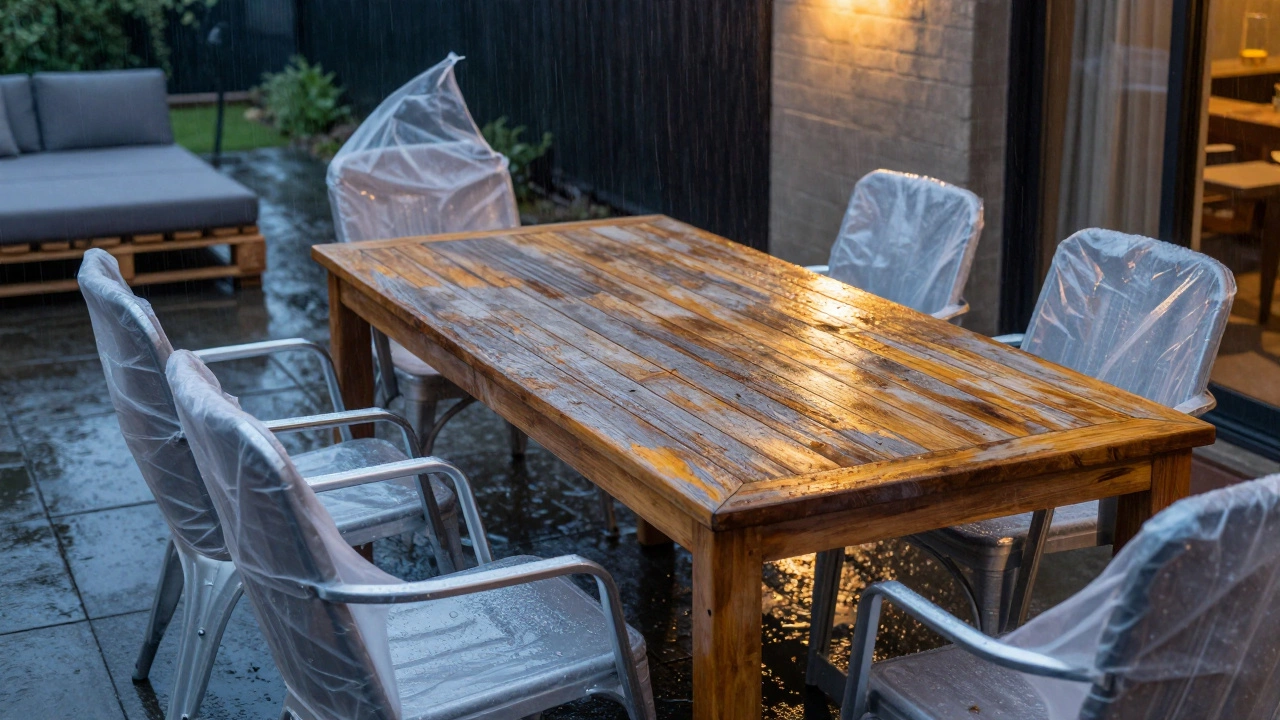
Covers are helpful-but only if used right. A cheap plastic tarp that traps moisture underneath is worse than no cover at all. Here’s how to use them properly:
- Only cover furniture after it’s completely dry. Wet fabric under a cover = mold factory.
- Use breathable, UV-resistant covers made of polyester or solution-dyed acrylic. Avoid vinyl-it doesn’t breathe.
- Don’t leave covers on for weeks straight. Take them off every 3-5 days, even in rain, to let air circulate.
- Secure covers with bungee cords, not ties. Wind lifts loose covers and dumps rain right back on your furniture.
One Melbourne homeowner I spoke to left her cover on for three months straight. When she finally took it off, the teak table underneath was covered in black mold. She didn’t know moisture was trapped. Covers aren’t magic. They’re tools.
Keep Water Off Cushions
Cushions are where most people lose their investment. Rain doesn’t just wet them-it soaks into the foam, invites mold, and stinks up your patio. Here’s how to stop it:
- Buy cushions with quick-dry foam and water-repellent zippers. Brands like Sunbrella and Outdura are tested for 1,000+ hours of rain exposure.
- Store cushions indoors during prolonged rain. Even a garage or shed is better than leaving them out.
- If you can’t move them, prop them up on edge so water drains off. Don’t let them sit flat in puddles.
- Wash covers every 3 months with mild detergent. Don’t use bleach-it breaks down the fibers.
One trick: Place cushions on a wooden pallet or raised tray. It lifts them off wet decking or concrete and lets air flow underneath. Simple. Cheap. Works.

Clean After Rain, Not Before
Many people think they should clean furniture after a storm. That’s backwards. Rain carries dirt, pollen, bird droppings, and pollution. Let it sit for a few hours, then rinse with a hose. Wait until the surface is dry before wiping or scrubbing.
Why? Because scrubbing wet dirt just grinds it in. Think of it like mopping a floor right after someone walks in with muddy shoes. You’re making it worse.
Instead:
- Rinse off debris with plain water.
- Let furniture air-dry for 2-3 hours.
- Wipe with a soft cloth and a mix of warm water and dish soap.
- For stubborn stains, use a 50/50 vinegar and water solution. Rinse again.
Never use pressure washers on wood or wicker. The force tears fibers and strips protective coatings. You’ll damage more than you clean.
Seasonal Maintenance Checklist
Set a reminder in your phone. Every autumn, do this:
- Inspect all metal parts for rust. Sand lightly and apply rust-inhibiting primer if needed.
- Check wood for cracks or splits. Apply teak oil or wood sealant.
- Wash cushions and let them dry completely before storing.
- Store cushions and pillows in a dry bin with silica gel packs to absorb moisture.
- Move lightweight furniture under a covered area if possible-like a carport or veranda.
Spring is for inspection. Autumn is for protection. Skip one, and you’ll pay for it next winter.

What to Avoid
Here are the most common mistakes-and how to fix them:
- Leaving furniture uncovered all winter → Use breathable covers or move under cover.
- Using regular indoor cushions outside → They soak up water and never dry. Always buy outdoor-rated fabric.
- Storing wet covers in a shed → Mildew grows fast in dark, damp places. Dry covers completely before storing.
- Ignoring the underside → Water pools under chairs and tables. Wipe it down. Mold starts there.
- Thinking "weather-resistant" means "weather-proof" → No material is invincible. Rain + time = wear.
Outdoor furniture isn’t meant to be abandoned. It’s meant to be cared for-like a car, or a pair of boots. You don’t leave them out in the rain and expect them to last.
Final Tip: Build a Rain Routine
The best protection isn’t expensive gear or fancy products. It’s consistency. Make a habit:
- After every heavy rain, check for standing water under chairs.
- Every weekend during wet months, wipe down metal and wood surfaces.
- Every month, inspect cushions for dampness or odor.
It takes five minutes. But those five minutes, done regularly, save you hundreds in replacements. Your furniture will thank you-long after the rain stops.
Can outdoor furniture get damaged by rain even if it’s labeled "weather-resistant"?
Yes. "Weather-resistant" means it can handle occasional exposure, not constant soaking. Materials like aluminum and teak can endure rain for years, but cushions, fabric, and untreated wood will degrade if left wet for days. Rain-resistant doesn’t mean rain-proof. Regular drying and maintenance are still required.
Should I cover my outdoor furniture every night?
No. Covering furniture every night traps moisture and encourages mold. Use covers only during prolonged rain or when you’re away for days. Let air circulate daily. A breathable cover used 2-3 times a week is better than a plastic tarp used daily.
Is it safe to leave outdoor cushions outside during Melbourne’s winter?
Not if you want them to last. Winter in Melbourne brings frequent rain and damp air. Even high-end cushions will absorb moisture, leading to mold and foam breakdown. Store them indoors in a dry bin with silica gel packs. A garage or under-bed storage works fine.
What’s the best way to clean mildew off outdoor furniture?
Mix one part white vinegar with one part water. Spray it on the mildew, let it sit for 15 minutes, then scrub gently with a soft brush. Rinse with clean water. Never use bleach-it weakens fabric and finishes. For metal, use a rust remover like Naval Jelly if stains remain after cleaning.
Can I use a pressure washer on my garden furniture?
Only on solid aluminum or plastic. Never use it on wood, wicker, or fabric. High pressure strips protective coatings, splinters wood, and tears woven fibers. A garden hose and soft brush are safer and more effective for most materials.