American Closet: What It Is, How It Differs, and Modern Alternatives
When people talk about an American closet, a built-in storage space designed for clothing and personal items, typically found in bedrooms in North American homes. Also known as walk-in closet, it's a feature many assume is universal—but it’s not. In fact, it’s a distinctly North American solution shaped by space, culture, and housing trends. Unlike the slim, freestanding wardrobe, a freestanding cabinet for storing clothes, common in Europe and often called an armoire. Also known as cupboard or vestiaire, it’s a compact, mobile option that fits smaller apartments and older buildings., the American closet is carved into the wall, often stretching floor to ceiling, with rods, shelves, and drawers built right in. It’s not just storage—it’s a design statement. And while it looks efficient, it’s not always the best choice for every home.
Why do American homes have them? The answer lies in history and space. Post-WWII suburban expansion led to larger homes with more rooms. Builders added closets as a standard feature because they were cheap to install and gave the illusion of more storage. But here’s the catch: once built, you can’t move it. If you remodel, you’re stuck with the layout. That’s why many modern homes, especially in cities, are moving away from fixed closets. Instead, they use built-in storage, custom cabinetry designed to fit specific spaces, often used for clothes, linens, or media. Also known as custom cabinetry, it’s flexible, scalable, and often smarter than a traditional closet.. Think floor-to-ceiling panels that double as room dividers, or modular units that can be rearranged as your needs change. This shift isn’t just about style—it’s about function. A fixed closet in a small apartment wastes space. A smart storage unit doesn’t.
European homes rarely have American-style closets. Why? Older buildings have thinner walls, lower ceilings, and strict renovation rules. Plus, Europeans have long relied on freestanding furniture that’s easier to move, repair, or replace. A European wardrobe, a freestanding, often ornate storage unit common in older European homes, designed for clothes and sometimes linens. Also known as armoire, it’s a piece of furniture, not part of the architecture. can be taken with you when you move. It doesn’t require demolition. It doesn’t lock you into a layout. And in a world where people move more often, that flexibility matters. The American closet might feel like a luxury, but it’s also a commitment. And not everyone wants to make that kind of investment.
So what’s the real difference? It’s not just size or style—it’s philosophy. The American closet is permanent. It’s built-in. It’s part of the house. The wardrobe, the armoire, the modular storage unit? They’re yours. You choose them. You move them. You replace them. That’s why today’s designers are blending both: using the depth of a closet with the modularity of a wardrobe. You get the structure without the rigidity.
What you’ll find in the posts below isn’t just a list of articles—it’s a guide to understanding how storage works in real homes. From why built-in bookcases should or shouldn’t go to the ceiling, to how to spot a high-quality couch, to why a chair without armrests can hurt your back—each piece ties back to one thing: how we live in our spaces. Whether you’re remodeling, moving, or just tired of clutter, the answers are here. No fluff. No hype. Just what works.
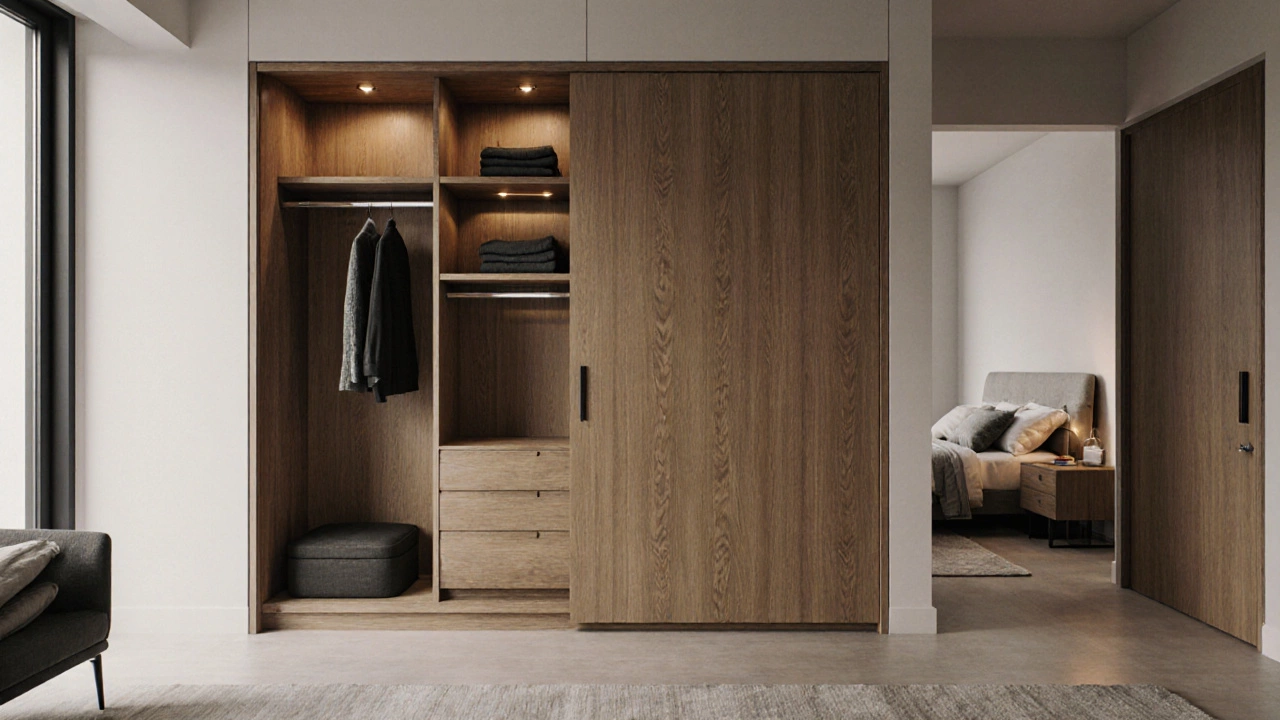
What Do Americans Call Wardrobes? The Real Name Used in U.S. Homes
Americans don't call wardrobes wardrobes-they call them closets. Learn why the U.S. prefers built-in storage, how the terms differ across English-speaking countries, and what to search for when shopping for clothes storage.
View more