 4
May,2026
4
May,2026
50-30-20 Wardrobe Audit & Gap Calculator
Enter the number of items you currently own in each category to see how balanced your closet is.
Audit Results
Look at your closet right now. If you’re like most people, you probably have clothes that fit perfectly, some that are a bit tight or loose, and others that you haven’t touched in years but just can’t bring yourself to throw away. It’s messy, stressful, and honestly, it makes getting dressed every morning feel like a chore. This is where the 50-30-20 wardrobe rule comes in.
This isn’t just another trendy organizing hack from social media. It’s a practical framework for building a functional, stylish, and manageable closet. By dividing your clothing into three distinct categories based on how often you wear them, you stop guessing what to buy and start curating a collection that actually works for your life. Let’s break down exactly how this system works and why it might be the last closet guide you ever need.
The Core Concept: Why Split Your Clothes?
The idea behind splitting your wardrobe into percentages is simple: not all clothes serve the same purpose. Treating a white t-shirt the same way you treat a sequined evening gown leads to clutter. The 50-30-20 method forces you to categorize items by their utility and frequency of use. This creates a balanced inventory where you always have something appropriate to wear without being overwhelmed by choice.
Think of your closet as a team. You need reliable players who show up every day (the 50%), specialists who step in when needed (the 30%), and star players for big events (the 20%). When these roles are clear, shopping becomes intentional rather than impulsive. You know exactly which category is lacking before you spend a single dollar.
| Category | Percentage | Purpose | Key Characteristics |
|---|---|---|---|
| Basics | 50% | Daily wear, layering, foundation | Neutral colors, high-quality fabrics, versatile styles |
| Seasonal/Trend Items | 30% | Weather adaptation, style updates | Colors, patterns, specific weather gear, current trends |
| Special Occasion | 20% | Events, interviews, formal gatherings | Bold pieces, expensive materials, statement accessories |
The 50%: Your Everyday Essentials
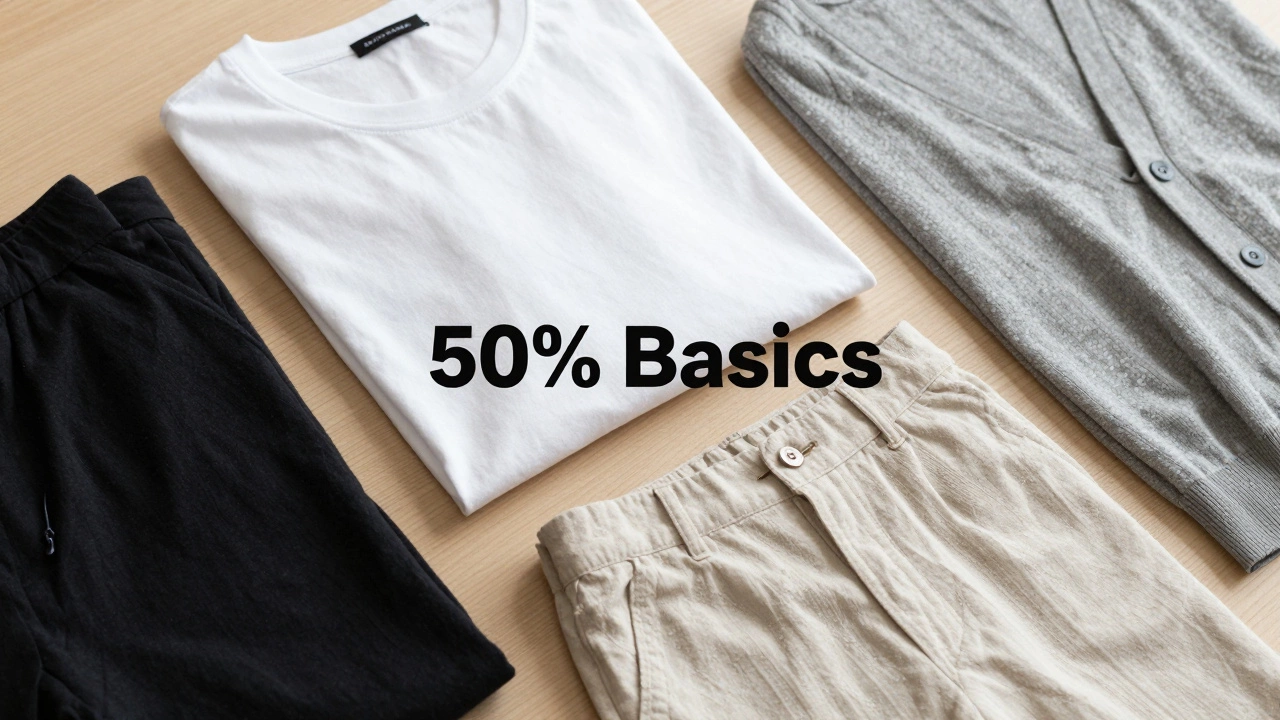
The largest chunk of your closet should consist of staples. These are the items you reach for without thinking. They form the backbone of your daily outfits and mix and match easily with everything else. For many people, this includes plain t-shirts, well-fitting jeans, neutral cardigans, comfortable trousers, and basic undergarments.
The key here is quality over quantity. Since you’ll be wearing these items constantly, they need to withstand frequent washing and wear. Invest in natural fibers like cotton, wool, and linen where possible. Stick to neutral colors-black, white, navy, beige, and grey-because they act as a blank canvas for the other two categories. If a basic item doesn’t go with at least three other things in your closet, it doesn’t belong in this 50%.
A common mistake people make is filling this section with "basics" that aren’t actually wearable. That oversized shirt that looks cool in the store but feels sloppy on you? That’s not a staple; it’s clutter. Your 50% should be comprised of items that make you feel confident and comfortable immediately upon putting them on.
The 30%: Seasonal and Trend Pieces
Life changes, and so do seasons. The next third of your wardrobe is dedicated to items that adapt to your environment and personal style evolution. This includes winter coats, summer dresses, rain jackets, and perhaps a few trend-focused pieces you love right now. This category keeps your look fresh without requiring a complete overhaul every year.
This is also where you experiment. If you want to try a new color palette or a specific silhouette, this is the safe zone. Because these items aren’t worn every single day, they don’t need to be indestructible. However, they still need to fit well and align with your body type. Rotate this section seasonally. In Melbourne, for example, you might swap out heavy knits for lighter linens as the weather warms up. Storing off-season items frees up space and keeps your daily choices relevant.
Be ruthless with this category. Trends fade quickly. If you bought a pair of shoes because they were popular last year but they hurt your feet or clash with your basics, let them go. This 30% should reflect who you are *now*, not who you thought you’d be six months ago.
The 20%: Special Occasion and Statement Items
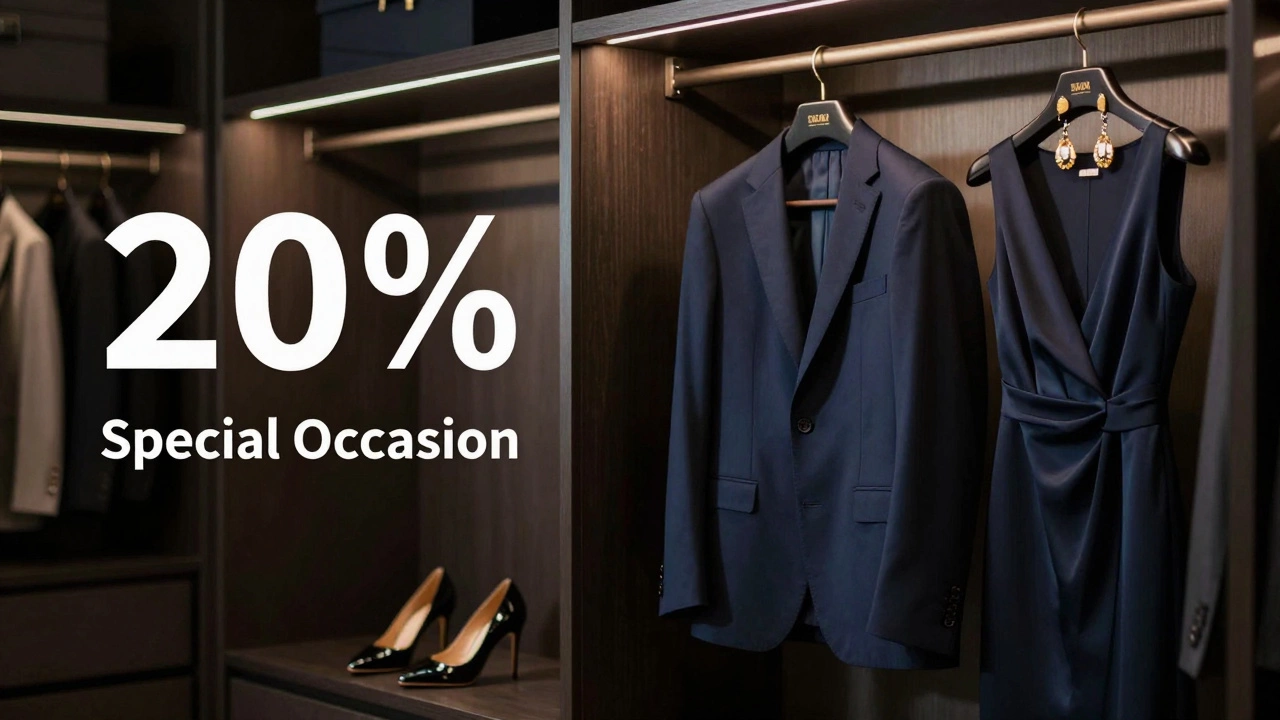
The final slice of the pie is reserved for special moments. These are the clothes you wear for weddings, job interviews, date nights, or important presentations. They might include a tailored suit, an elegant cocktail dress, bold accessories, or high-end footwear. These items don’t need to be practical for daily life; they need to make an impact.
People often neglect this category until an event arises, leading to panic shopping. By maintaining a dedicated 20%, you ensure you’re always prepared. Store these items carefully to preserve their shape and fabric. Use padded hangers for delicate blazers and keep accessories organized to prevent tangling or damage.
Don’t let guilt keep these items hidden away. If you own a beautiful dress but never wear it because it’s "too nice," you’re defeating the purpose. Clothing is meant to be enjoyed. Wear your special pieces when the occasion calls for it, and rotate them out if they no longer fit your lifestyle or taste.
How to Audit Your Current Closet
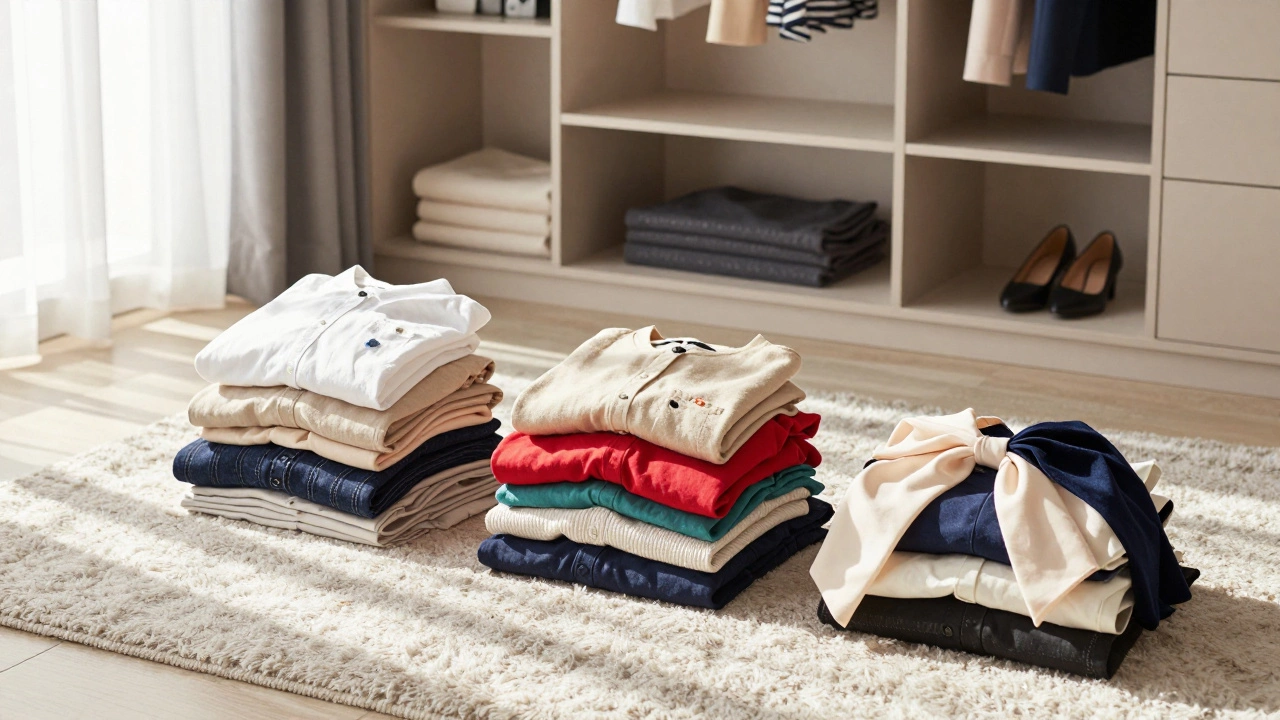
Implementing the 50-30-20 rule requires an honest assessment of what you currently own. Start by emptying your entire closet. Yes, everything. Place each item into one of three piles: Keep, Donate/Sell, or Maybe. Be strict with the "Maybe" pile-if you hesitate too long, it likely belongs in the donate stack.
Next, sort the "Keep" pile into the three categories. Count the items in each. Are your basics overwhelming your special occasion wear? Do you have more trend pieces than essentials? Aim for balance. If your 50% is too small, you’ll struggle to create outfits. If your 20% is too large, you’re wasting money on clothes you rarely wear.
Use this audit as a shopping guide. Before buying anything new, ask yourself which category it fills. If your basics are solid, resist the urge to buy another black t-shirt. Instead, look for a gap in your seasonal or special occasion sections. This mindful approach saves money and reduces waste.
- Step 1: Remove all clothes from your closet and drawers.
- Step 2: Sort into Keep, Donate, and Maybe piles.
- Step 3: Categorize "Keep" items into Basics (50%), Seasonal (30%), and Special (20%).
- Step 4: Identify gaps in each category.
- Step 5: Create a shopping list based only on those gaps.
Maintaining Balance Over Time
Closets aren’t static. As your job, hobbies, or climate change, so should your wardrobe. Review your 50-30-20 split every season. Did you get a promotion that requires more formal attire? Shift some percentage from seasonal to special occasion. Moving to a warmer climate? Increase your lightweight basics and reduce heavy outerwear.
Adopt a "one-in, one-out" policy to maintain equilibrium. When you buy a new item, remove an old one from the same category. This prevents accumulation and ensures every piece earns its place. Regular maintenance takes less time than a full closet purge and keeps your style sharp and relevant.
Remember, the 50-30-20 rule is a guideline, not a rigid law. Adjust the percentages slightly if they don’t fit your lifestyle. Some people need more work uniforms; others thrive on casual comfort. The goal is intentionality. Know why you own each piece, and let that knowledge simplify your mornings and boost your confidence.
Is the 50-30-20 rule only for women?
No, the 50-30-20 wardrobe rule applies to everyone regardless of gender. Men can apply it by defining their basics (e.g., chinos, plain shirts), seasonal items (e.g., jackets, sweaters), and special occasion wear (e.g., suits, formal shoes). The principle of balancing utility, versatility, and occasion-specific needs is universal.
How many items should be in my 50% basics category?
The number depends on your total closet size, but aim for roughly half of your total garments. For a minimalist capsule wardrobe of 30 items, that would be 15 basics. For a larger closet of 100 items, it would be 50. Focus on quality and versatility rather than a specific count.
Where should I store my 30% seasonal items?
Store off-season items in accessible but out-of-sight locations, such as the top shelf of your closet, under-bed storage bins, or vacuum-sealed bags. This keeps your primary view focused on your current 50% basics and active 30% seasonal pieces, reducing decision fatigue.
Can I adjust the percentages based on my job?
Absolutely. If you work in a corporate environment, you might increase your special occasion/formal wear to 30% and reduce seasonal/trend items to 20%. Conversely, if you work from home casually, you might expand your basics to 60% and shrink special occasion wear to 10%. Flexibility is key to making the system work for you.
What do I do with clothes that don’t fit any category?
If an item doesn’t fit comfortably, hasn’t been worn in a year, or doesn’t align with your current style, it likely doesn’t belong in any category. Donate, sell, or recycle these items. Holding onto clothes that don’t serve a purpose creates mental clutter and wastes valuable closet space.