 4
Dec,2025
4
Dec,2025
Queen Elizabeth I didn’t just wear clothes-she wore power. Every stitch, every jewel, every fold of fabric was a calculated move in a game where appearance was politics. In a time when portraits were the only way to project authority across a kingdom, her wardrobe wasn’t about comfort or style. It was about survival.
She Used Clothing to Project Power
Elizabeth inherited a throne that many doubted she could hold. As a woman ruling alone in a man’s world, she had to prove she was more than just a queen-she had to be a symbol. Her clothes became her armor. Velvet gowns lined with fur, embroidered with gold thread, and adorned with pearls weren’t just luxurious-they were propaganda. Each outfit told people: Queen Elizabeth I was not just a monarch. She was divine.
Her portraits show her in stiff, towering collars called ruffs, which made her neck appear elongated and regal. These weren’t fashion trends. They were designed to make her look taller, colder, and untouchable. The more fabric she wore, the more distance she created between herself and ordinary people. She wasn’t just dressed up-she was built up.
Her Wardrobe Was a State Secret
Elizabeth’s clothes were managed by the Wardrobe of the Robes, a department of the royal household with its own budget, staff, and records. This wasn’t a closet-it was a government office. Tailors, embroiderers, and jewelers worked under strict secrecy. No one outside the court was allowed to copy her designs. The penalty for imitating her style? Fines, imprisonment, or worse.
She owned over 2,000 garments at the height of her reign. Each one was recorded in meticulous detail: fabric type, color, trim, gemstones, even who made it. One gown might cost the equivalent of $150,000 today. She didn’t just buy clothes-she commissioned works of art meant to be worn.
Color Was a Political Tool
Back then, certain colors were legally restricted to royalty. Purple, for example, was made from crushed sea snails and cost more than gold. Only the monarch could wear it. Elizabeth used purple in her gowns to remind everyone who held ultimate authority.
Red was reserved for the royal family and high-ranking nobles. She wore it often-not just because it looked bold, but because it signaled dominance. White, the color of purity, became her signature after 1560. She famously stopped wearing colored dresses and stuck to white and silver, turning herself into the ‘Virgin Queen.’ It wasn’t about modesty. It was about mythmaking. She turned her unmarried status into a national brand.
Her Style Changed as Her Power Shifted
Early in her reign, Elizabeth wore rich, colorful gowns with wide skirts and low necklines-typical of Tudor fashion. But after the 1570s, her style hardened. Her dresses became more rigid, her shoulders broader, her face more masked by lace and jewels. Her body disappeared under layers of fabric, her age became invisible.
By the 1590s, she wore white makeup made from lead and vinegar to achieve a ghostly pallor. Her hair was covered in wigs, often red to match the image of the youthful queen she once was. She didn’t hide her aging because she was vain-she hid it because she couldn’t afford to look weak. A queen who looked old was a queen who looked vulnerable.
Her Clothes Were Used to Control Perception
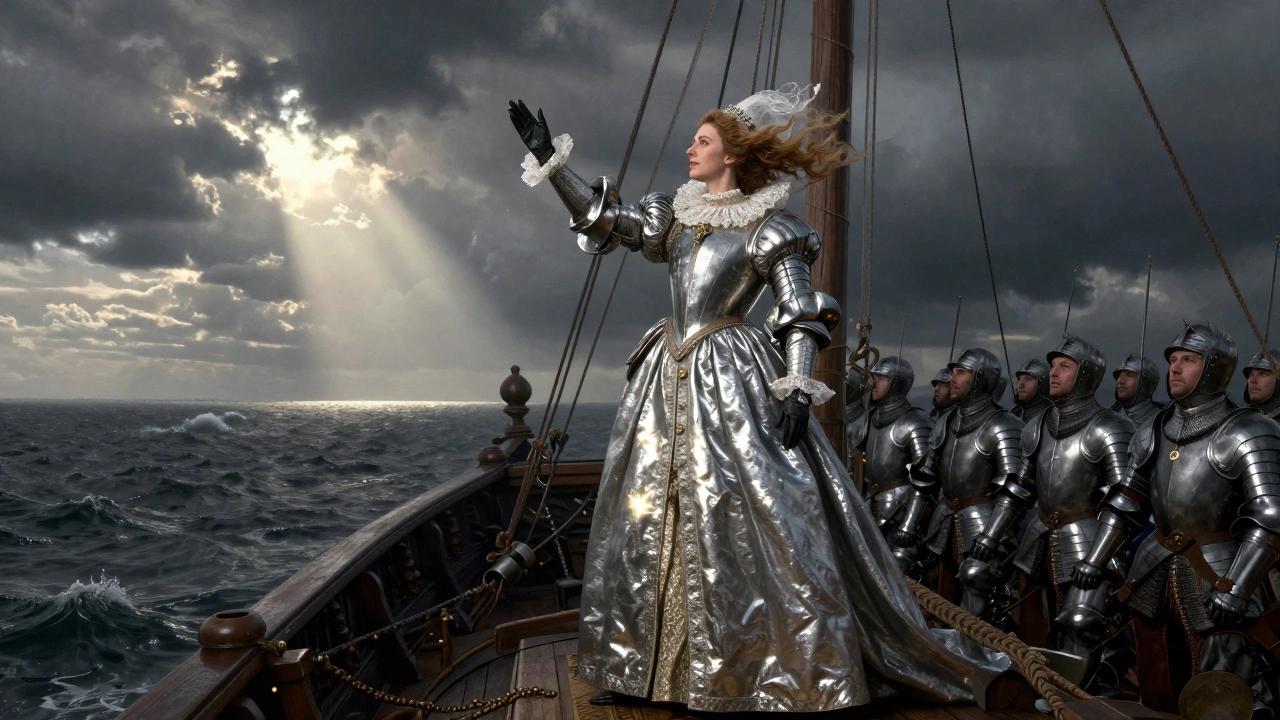
Elizabeth never appeared in public without careful planning. Every gown she wore for a public appearance was chosen to send a message. When she visited the navy at Tilbury in 1588, she wore a silver breastplate over a white velvet gown. She didn’t ride into battle, but she dressed like she could. The message? She was not just a queen-she was a warrior.
She used clothing to calm rebellions, celebrate victories, and intimidate rivals. When she gifted a gown to a loyal noble, it wasn’t a favor-it was a reward with strings attached. To wear her cast-off clothes was to swear loyalty. To refuse them was to risk treason.
Her Wardrobe Was a Reflection of England’s Global Reach
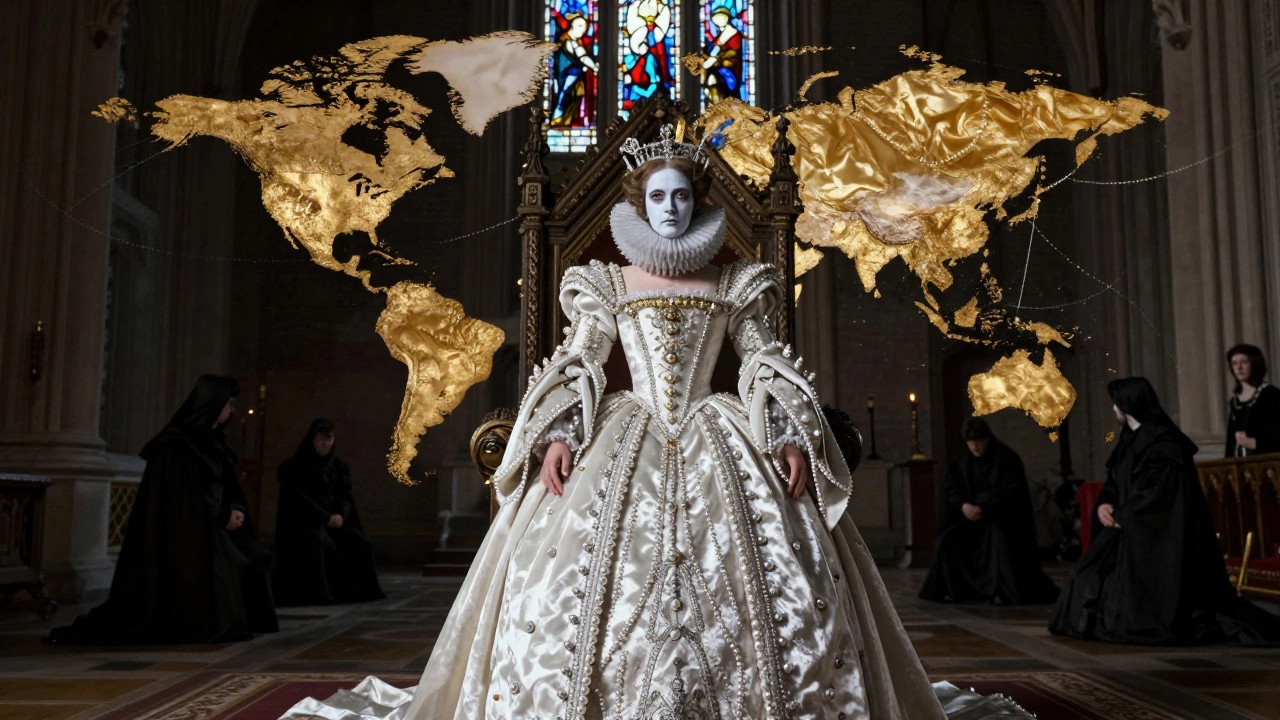
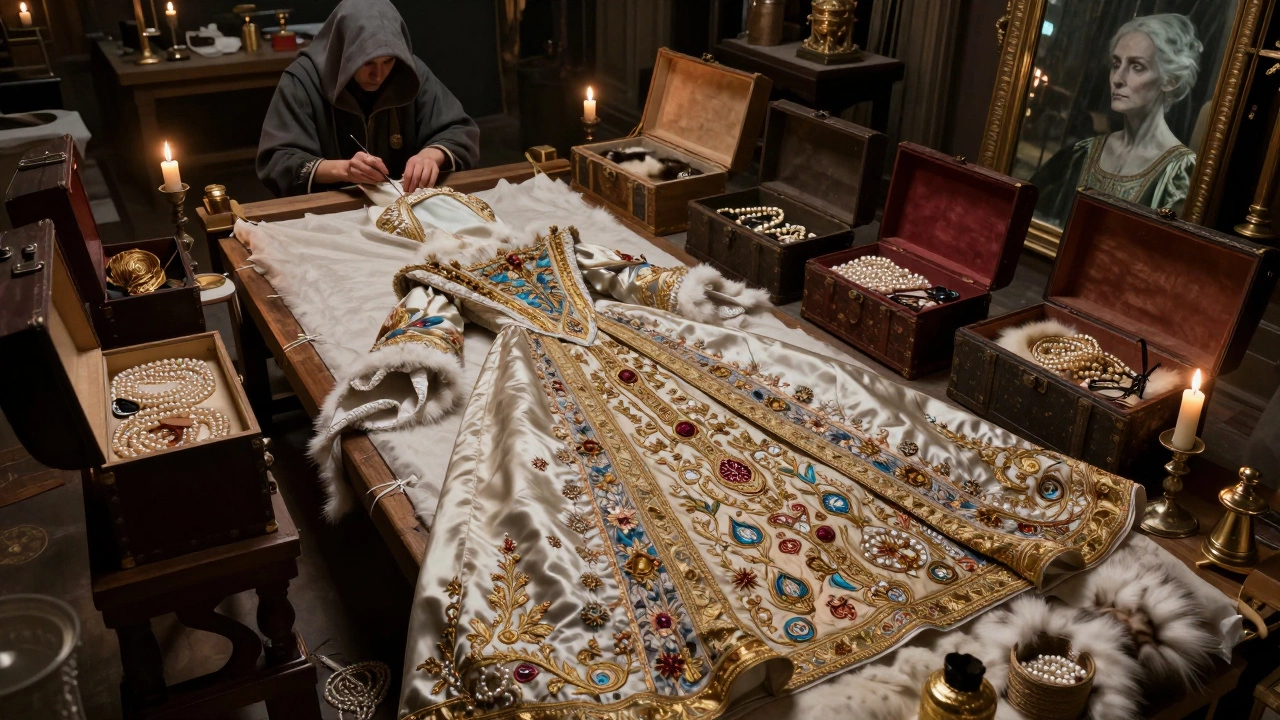
Elizabeth’s clothes weren’t made in England alone. Silk came from Persia and China. Pearls were harvested from the Caribbean. Gold thread was spun in Venice. Her wardrobe was a map of England’s expanding trade routes. Each jewel and fabric told a story of empire.
She didn’t just wear luxury-she showcased it. The more foreign materials she used, the more she proved England could compete with Spain, France, and the Ottoman Empire. Her clothes were economic statements. They said: England doesn’t just take from the world-it shapes it.
Her Legacy Lives in How We See Power
Today, we still see Elizabeth’s influence in how leaders dress. Think of modern politicians in tailored suits or female leaders choosing sharp silhouettes to command attention. She didn’t invent power dressing-but she perfected it.
Her wardrobe wasn’t about vanity. It was strategy. It was survival. It was spectacle. And it worked. For 44 years, she ruled England without a husband, without an heir, and without a single successful invasion. Her clothes helped her do it.
She didn’t just dress like a queen. She dressed like the only queen England could have.
Why did Queen Elizabeth I wear white makeup?
She used white lead-based makeup to create a pale, flawless complexion, which was associated with nobility and purity. In an era when tanned skin meant outdoor labor, a ghostly white face signaled wealth and status. It also helped mask her aging features and reinforced her image as the eternal Virgin Queen.
Did Queen Elizabeth I really own over 2,000 outfits?
Yes. Royal inventories from her reign list more than 2,000 garments, including gowns, cloaks, hats, and accessories. Many were worn only once for special events. Each piece was hand-embroidered, often with gold and silver thread, and lined with expensive furs like ermine. Her wardrobe was one of the largest and most expensive in European history.
Why did Elizabeth I avoid wearing colored dresses later in life?
After the 1560s, she switched almost entirely to white and silver to reinforce her identity as the Virgin Queen-a symbol of purity and divine rule. This shift was political, not personal. White became her trademark, helping to separate her from other monarchs and turning her appearance into a national icon.
Could common people copy Queen Elizabeth’s fashion?
No. Sumptuary laws strictly controlled who could wear certain fabrics, colors, and trims. Only royalty and high nobility could wear purple, gold thread, or ermine fur. Commoners caught wearing these could face fines or imprisonment. Elizabeth’s clothing wasn’t just expensive-it was legally off-limits.
How did Elizabeth’s clothing reflect England’s global trade?
Her gowns were made with silk from China and Persia, pearls from the Americas, gold thread from Venice, and lace from Flanders. These materials weren’t just decorative-they showed England’s growing reach. Her wardrobe became a symbol of national pride and economic power, proving England could access and control global luxury goods.