 12
Jul,2026
12
Jul,2026
Mold-Proof Storage Calculator
Select the characteristics of your current or planned storage setup.
Risk Assessment
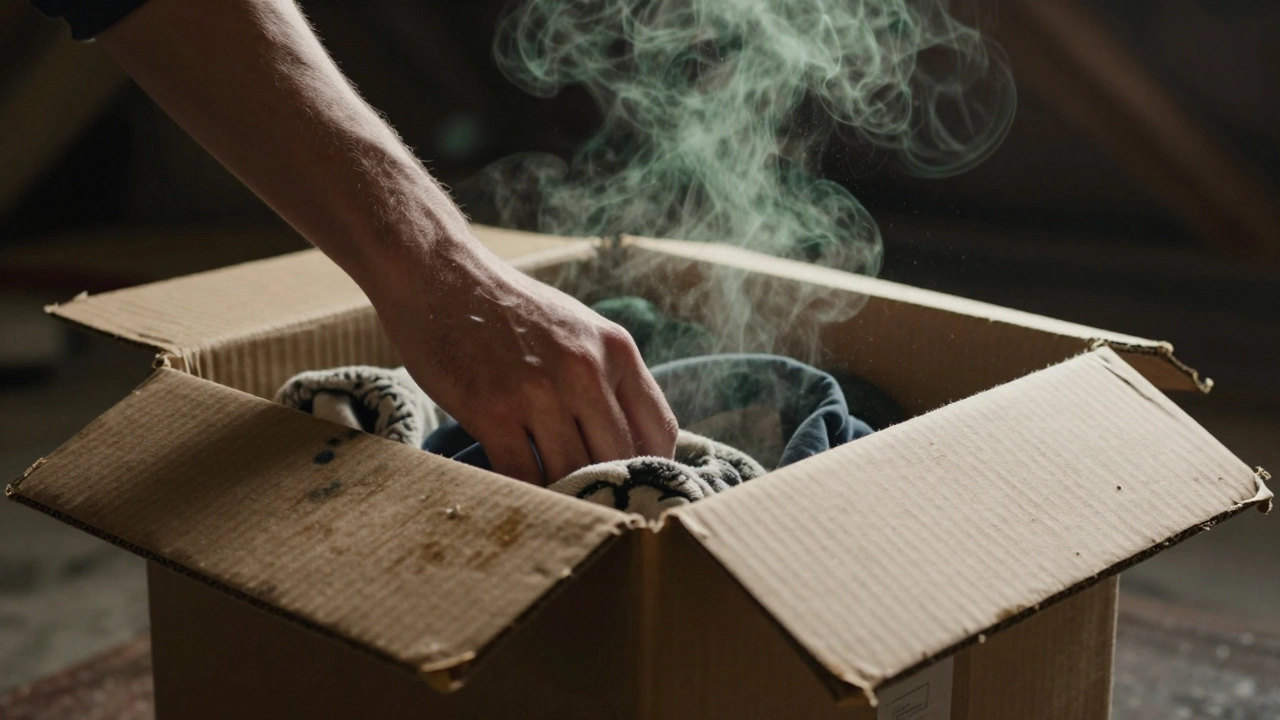
Have you ever opened a box of old clothes or winter gear only to be hit by that musty, earthy smell? It’s not just unpleasant; it’s a sign that mold has moved in. This is a common frustration for anyone trying to keep their home organized, especially if you live in a humid climate like Melbourne, Australia, where damp winters can wreak havoc on stored items.
The problem isn’t usually the items themselves-it’s the container they’re living in. Standard cardboard boxes and open baskets act like sponges for humidity, creating the perfect breeding ground for spores. To stop this, you need more than just a place to put things; you need a barrier against moisture. Choosing the right mold-proof storage solution is the single most effective step you can take to protect your belongings from decay and damage.
Why Mold Loves Your Storage Space
Before picking up a bin, it helps to understand what you are fighting. Mold is a type of fungus that thrives in warm, dark, and damp environments. It doesn’t need much-just a little bit of organic material (like paper, cotton, or wood) and moisture levels above 60% relative humidity to start growing.
In many homes, storage areas like basements, attics, and even under-bed drawers are poorly ventilated. When air circulation is low, moisture gets trapped. If you store items in permeable materials, that moisture soaks into the fibers. Within days, invisible spores begin to colonize, leading to visible black spots and that distinct odor we all hate.
The goal of proper storage is simple: break the cycle. You need to create an environment where moisture cannot reach your items, or where any existing moisture is absorbed before it causes harm. This requires a combination of the right material, a tight seal, and smart placement.
Material Matters: Plastic vs. Cardboard vs. Metal
Not all containers are created equal when it comes to moisture resistance. The material you choose dictates how well your items will survive long-term storage.
| Material | Mold Resistance | Durability | Breathability | Best Use Case |
|---|---|---|---|---|
| Plastic (PP/HDPE) | High (if sealed) | High | None | Clothing, documents, electronics |
| Cardboard | Very Low | Low | High | Short-term moving only |
| Metal (Galvanized Steel) | High | Very High | Low (if lidded) | Heavy tools, outdoor gear |
| Fabric/Canvas | Low | Medium | High | Airflow-needed items (leather) |
Plastic bins are the gold standard for preventing mold because they are non-porous and waterproof. Look for bins made from polypropylene (PP) or high-density polyethylene (HDPE). These plastics do not absorb water, meaning spills or ambient humidity won’t soak through the walls. However, plastic alone isn’t enough-the lid must fit tightly.
Cardboard boxes are essentially fuel for mold. They are made from cellulose, which fungi love to eat. In a humid room, a cardboard box can become soft and disintegrate within weeks, leaving your items exposed. Avoid using them for anything you plan to store for more than a month.
Metal containers, such as galvanized steel lockers or toolboxes, offer excellent protection. They are impervious to moisture and pest-resistant. However, if condensation forms inside a metal box, it can rust over time, potentially staining contents. Ensure the interior is coated or lined if storing sensitive fabrics.
The Importance of Airtight Seals
You can have the best plastic bin in the world, but if the lid doesn’t seal, you’re still at risk. An airtight seal is a mechanism that prevents outside air and moisture from entering the container. Most quality storage bins feature rubber gaskets or silicone rims around the lid. When you press down, these seals compress to block airflow.
How do you know if a bin is truly airtight? Try the "suction test." Place the lid on the bin and press down firmly. Then, try to lift the lid by holding only the sides (not the latch). If it resists lifting slightly, the seal is working. If it pops off easily, air-and moisture-is getting in.
Vacuum-seal bags are another option for extreme protection. By removing all air, you eliminate the oxygen mold needs to grow. This is ideal for bulky items like comforters or seasonal clothing. However, vacuum sealing isn’t practical for everything; rigid items like books or electronics can get crushed, and natural fibers like wool may lose their loft permanently.
Smart Additions: Moisture Absorbers and Desiccants
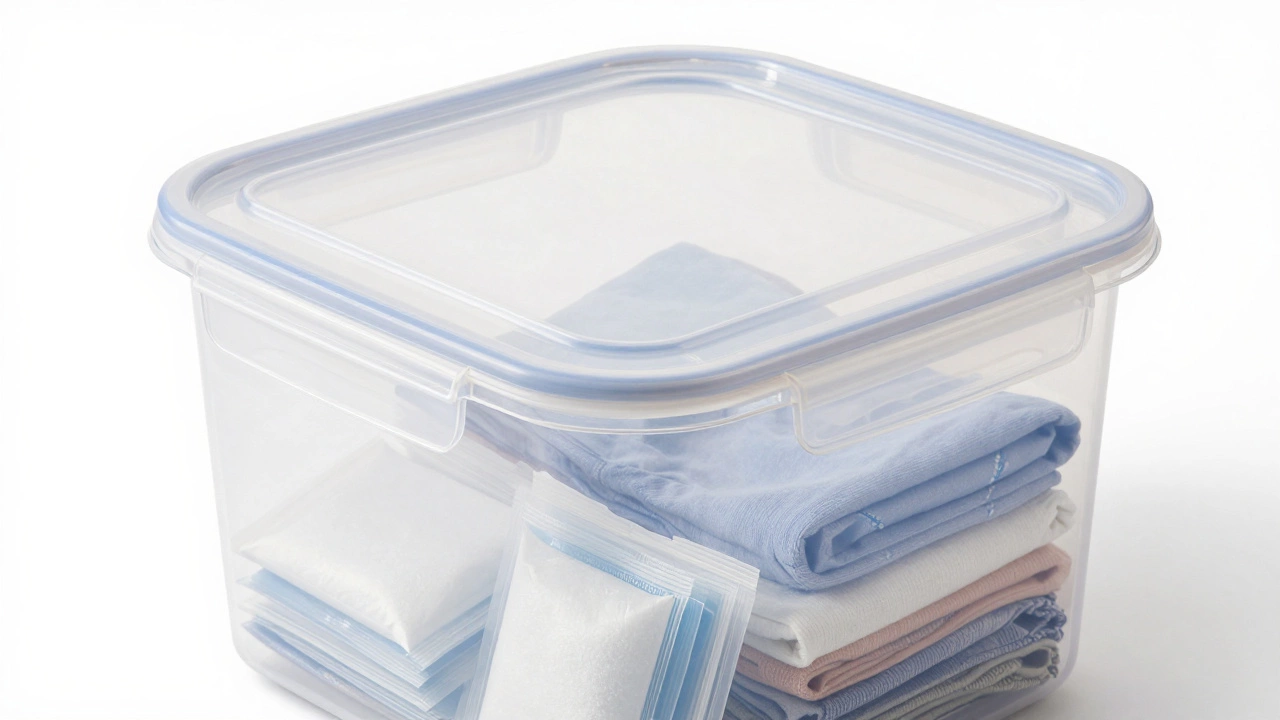
Even with an airtight container, there might be some residual moisture trapped inside when you close the lid. To neutralize this, use desiccants. These are substances that attract and hold water molecules from the surrounding environment.
- Silica Gel Packets: Those little packets you find in shoe boxes? They work. For larger bins, buy bulk silica gel beads in breathable pouches. They are reusable-you can dry them out in the oven and reuse them.
- Calcium Chloride Canisters: Brands like DampRid use calcium chloride to pull significant amounts of moisture from the air. These are great for closets or semi-enclosed spaces rather than fully sealed bins.
- Activated Charcoal Bags: Charcoal absorbs both moisture and odors. It’s a natural alternative that helps keep the air inside your storage fresh without chemicals.
- Cedar Blocks: While not a powerful desiccant, cedar wood repels moths and mildew naturally. It’s a good companion to other moisture-control methods for wooden furniture or woolens.
Place these absorbers at the bottom of the bin, away from direct contact with delicate fabrics, to ensure even distribution. Replace or recharge them every few months, depending on the humidity level in your home.
Placement and Environment: Where You Store Matters
The best container in the world won’t help if you leave it in a puddle. Where you place your storage units is just as critical as the units themselves. Mold loves darkness and stagnation, so your storage location should be the opposite: bright, dry, and airy.
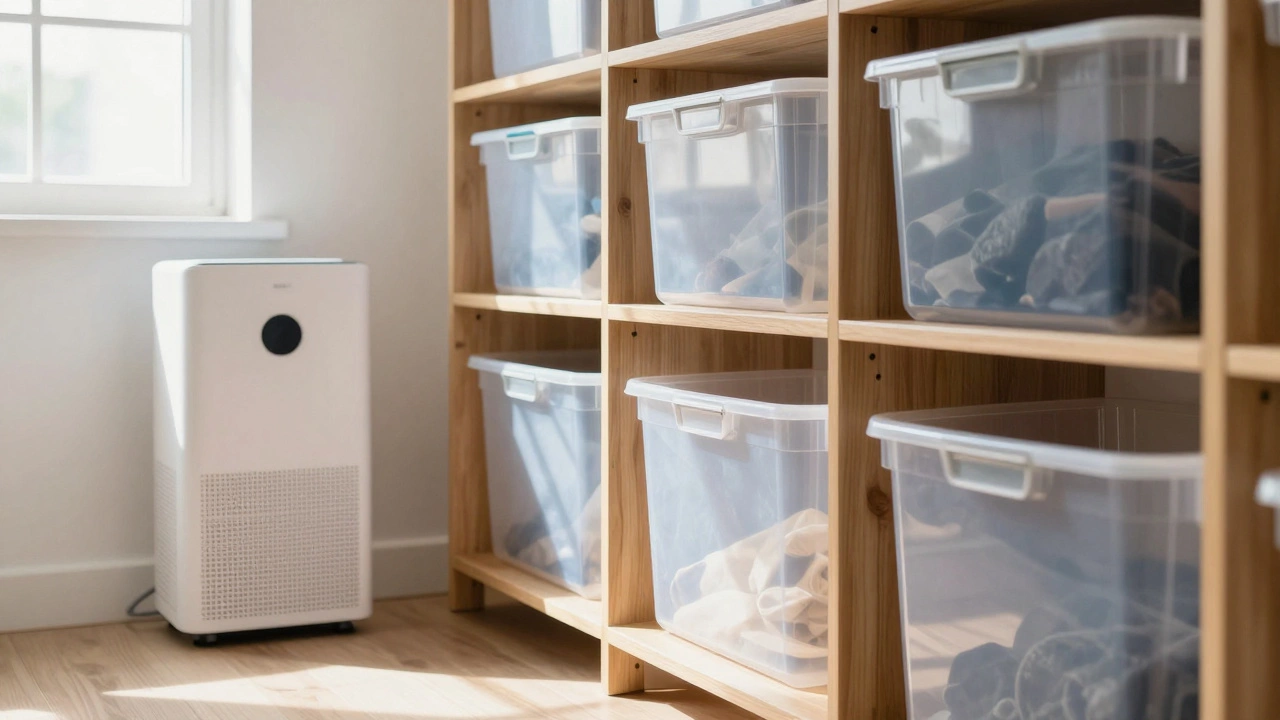
Avoid storing items directly on concrete floors. Concrete is porous and wicks moisture from the ground up, especially in basements or garages. Always place your bins on pallets, shelves, or plastic mats to create a barrier between the floor and your storage. This simple trick can prevent bottom-bin rot, a common issue in older homes.
If you’re using a closet, ensure there is space behind the doors for air to circulate. Stacking bins too tightly can trap heat and humidity between them. Leave a small gap between stacks to allow passive ventilation. Additionally, consider using a dehumidifier in rooms prone to dampness. Maintaining indoor humidity below 50% significantly reduces the risk of mold growth everywhere in the house, not just in storage bins.
Preparing Items Before Storage
You wouldn’t put dirty dishes in a clean cupboard, so why put damp clothes in a storage bin? Preparing your items correctly is the first line of defense. Never store anything that feels even slightly cool to the touch or smells faintly musty. That “cool” feeling often means residual moisture.
- Wash and Dry Thoroughly: All fabrics should be washed and completely dried before packing. Even body oils and sweat left on unworn clothes can attract mold and pests over time.
- Check for Hidden Dampness: Leather shoes, boots, and handbags should be conditioned and aired out. Insert newspaper or shoe trees to absorb internal moisture before placing them in bins.
- Use Breathable Wraps: For items that need some airflow, like leather jackets or fur, wrap them in acid-free tissue paper or cotton garment bags before placing them in a ventilated bin. Do not use plastic dry-cleaning bags for long-term storage, as they trap humidity and cause yellowing.
- Inspect Regularly: Set a reminder to check your storage every three months. Open the lids, sniff for odors, and look for condensation. Early detection prevents major cleanup later.
Common Mistakes to Avoid
Many people make well-intentioned errors that actually encourage mold growth. One big mistake is overfilling bins. When you cram items into a container, you compress them, reducing air pockets and trapping moisture inside the fabric folds. Leave a little room at the top to allow for slight expansion and easier sealing.
Another error is ignoring the lid’s condition. Rubber gaskets degrade over time, becoming brittle or cracked. Inspect the seals annually. If you see gaps or tears, replace the lid or the entire bin. A compromised seal is an open invitation for spores.
Finally, don’t forget about temperature fluctuations. Storing items in unheated garages or attics exposes them to extreme heat and cold. As temperatures drop, condensation can form on the inside of the bin. If possible, keep valuable or sentimental items in climate-controlled areas of your home, like interior closets or bedrooms.
Conclusion: Protecting Your Belongings
Preventing mold in storage isn’t about buying the most expensive bin; it’s about understanding moisture management. By choosing non-porous materials like plastic or metal, ensuring airtight seals, using desiccants, and keeping your storage area dry and ventilated, you can keep your items safe for years. Take the time to prepare your belongings properly, and you’ll never have to toss out a favorite sweater due to mold again.
Can I use cardboard boxes if I line them with plastic?
While lining cardboard with plastic helps, it’s not a foolproof solution. Cardboard is still susceptible to warping and breaking under humidity, which can compromise the plastic liner. For long-term storage, dedicated plastic bins are far more reliable and durable.
How often should I replace silica gel packs?
Silica gel is reusable. When the beads change color (often from blue to pink), they are saturated. You can regenerate them by baking them in an oven at 120°C (250°F) for 2-3 hours. Replace them entirely every 1-2 years, or sooner if you notice persistent moisture.
Is vacuum sealing safe for all types of clothing?
No. Vacuum sealing is great for synthetic fabrics and cottons, but it can damage natural fibers like wool, cashmere, and down. The pressure can crush the fibers, leading to permanent loss of warmth and shape. Use breathable garment bags for these delicate items instead.
What is the best way to clean mold off a plastic bin?
First, empty and discard any moldy contents. Wash the bin with hot soapy water, then scrub with a mixture of white vinegar and water (1:1 ratio). Vinegar kills mold spores effectively. Rinse thoroughly and let the bin dry completely in the sun before reusing. If the mold has penetrated deep cracks, it’s safer to replace the bin.
Do clear plastic bins protect against mold better than opaque ones?
The clarity of the plastic doesn’t affect mold prevention; the seal does. However, clear bins allow you to inspect contents without opening the lid, which helps maintain the airtight environment. Opaque bins are fine as long as they have robust gaskets and latches.