 7
May,2026
7
May,2026
Bedroom Furniture Buying Calendar
Click any month to see detailed buying advice, expected discounts, and specific tips for that time of year.
Walking into a furniture store when you’re desperate for a new bed is a recipe for overpaying. You need the comfort, you see the price tag, and suddenly that $1,200 bedroom furniture set feels like a necessity rather than a choice. But timing isn’t just about convenience-it’s about keeping hundreds, sometimes thousands, of dollars in your pocket.
The retail industry runs on predictable cycles. Inventory moves, seasons change, and manufacturers push new models. If you know when these gears turn, you can buy exactly what you want when the prices drop lowest. Here is how to time your purchase for maximum savings.
Key Takeaways
- The absolute best times to buy are major holidays: Memorial Day, Fourth of July, Labor Day, and Black Friday/Cyber Monday.
- End-of-season clearances (January for winter styles, August/September for summer) offer deep discounts on outgoing inventory.
- New model releases in January and September mean older stock gets marked down heavily.
- Buying off-season items (like heavy wooden beds in summer or light wicker pieces in winter) yields significant savings.
- Avoid buying during peak moving seasons (May-August) unless you find a specific clearance event.
The Holiday Calendar: When Retailers Bleed Prices
If you can wait, align your purchase with the major U.S. holiday sales events. These aren’t just marketing fluff; they are strategic moments where retailers compete fiercely for market share. During these periods, Mattress Firm, Wayfair, and big-box stores like IKEA slash prices across their entire catalogs.
| Event | Timing | Typical Discount Range | Best For |
|---|---|---|---|
| Memorial Day | Early May | 20-40% | Spring collections, mattresses |
| Fourth of July | July 1-7 | 20-30% | Mid-year clearance, outdoor-indoor mix |
| Labor Day | First week of September | 20-40% | Fall collections, end-of-summer clearance |
| Black Friday / Cyber Monday | Late November | 30-60% | Everything, especially online-exclusive bundles |
| President’s Day | Mid-February | 15-25% | Winter clearance, bedding sets |
Why do these dates matter? Because retailers have quarterly targets. At the start of Q2 (April), they want to clear out spring inventory. By Q4 (October), they are preparing for the holiday rush and need to move old stock to make room for Christmas-themed decor and new year arrivals. Your patience pays off here.
The New Model Cycle: January and September
Furniture works similarly to cars or electronics. Manufacturers release new lines twice a year: typically in late January and late August/early September. When the new collection hits the showroom floor, the previous year’s models become “last season.” They don’t stop working, but they stop being trendy.
This is your window. In February, after the Super Bowl and President’s Day sales fade, you’ll find massive markdowns on last year’s bed frames, nightstands, and dressers. The same happens in October. If you don’t care about having the absolute latest design, buying immediately after these release windows guarantees you get premium quality at mid-tier prices.
For example, a high-end upholstered bed frame might cost $1,800 at launch. By March, if it hasn’t sold, it could drop to $900 or less as the store makes room for the spring line. This cycle applies to both domestic brands and international retailers like Ashley Furniture.
Seasonal Swings: Buy Off-Season Items
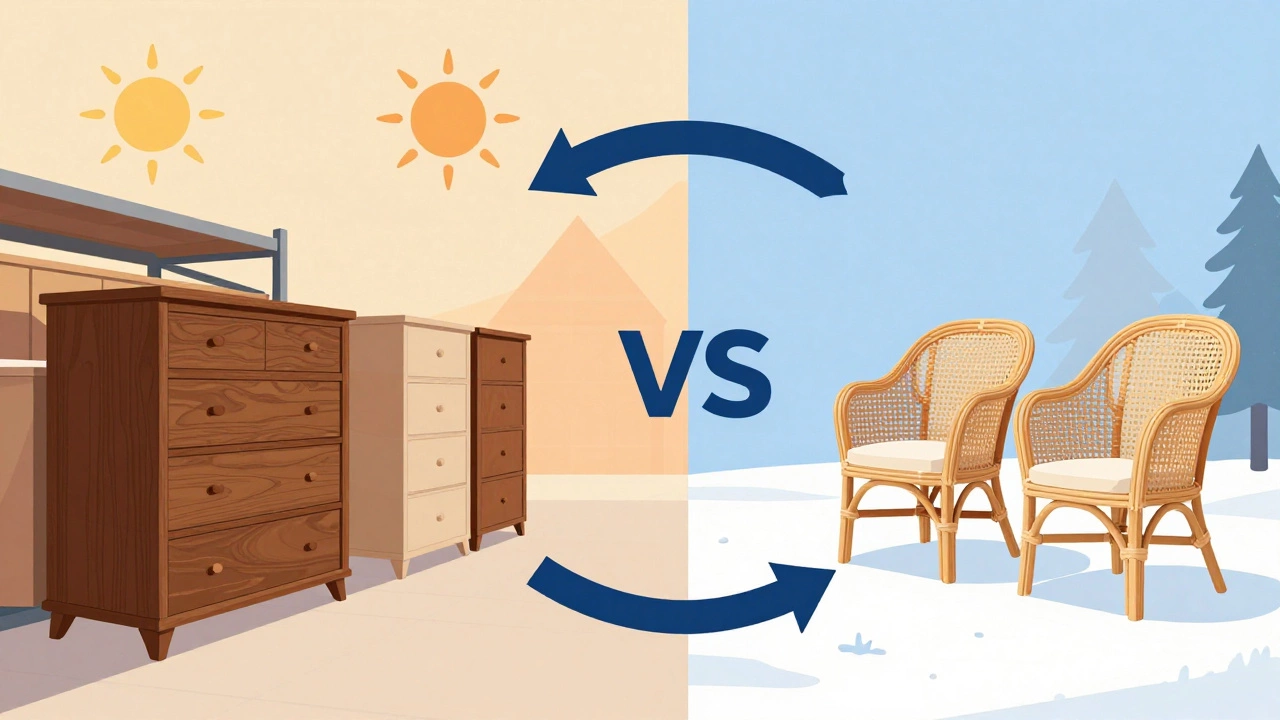
Think about what people want when the weather changes. In summer, everyone wants lightweight, airy, breathable materials-think linen, cotton, light woods, and wicker. In winter, shoppers gravitate toward heavy, warm textures: dark woods, velvet, leather, and thick upholstery.
So, what do you do? Buy the opposite.
- Buy heavy, upholstered furniture in late summer: As August turns to September, stores need to clear out the bulky, warm items to make space for lighter fall collections. You can snag a plush velvet armchair or a heavy oak dresser at a discount.
- Buy light, woven furniture in late winter: By February and March, retailers are eager to move last year’s rattan or light wood pieces to showcase their new spring linens and bright colors. A wicker headboard or bamboo nightstand will be cheaper then.
This strategy requires a bit of planning. You might need to store the item for a few weeks until your current furniture is gone, but the savings often outweigh the inconvenience. Just measure your storage space first!
The Mattress Exception: Timing Is Everything
Mattresses are the most heavily discounted part of any bedroom set. Why? Because they are expensive, take up huge amounts of warehouse space, and have standardized sizes. Retailers use them as loss leaders to get you in the door.
The best time to buy a mattress is almost always during a major holiday sale. However, there is a pro tip: ask for a “floor model” or a discontinued model number. Stores often replace their display beds every 6-12 months. These floor models are identical to the new ones, except they’ve been sat on by customers. They are often sold at 50-70% off because the retailer can’t sell them as brand-new.
Also, watch for “model number changes.” Companies like Sealy, Sleep Number, and Tempur-Pedic frequently change model numbers slightly (e.g., from Series 3 to Series 4). The internal construction is often the same, but the price resets. Buying the outgoing model number right before the switch saves you big money.
Online vs. In-Store: Where to Look
Your shopping channel affects timing too. Online retailers like Wayfair, Amazon, and Overstock run continuous sales. Their biggest events are Prime Day (usually July) and Black Friday/Cyber Monday. On Prime Day, you can find flash deals on bedroom sets that disappear within hours. Set alerts for specific items.
In-store experiences differ. Physical stores have limited floor space. If you visit a local boutique or a large chain like IKEA on a weekday morning, you might find unadvertised discounts on damaged boxes or slightly imperfect items. Ask the manager if they have a “scratch and dent” section. Many stores hide these behind the counter or in the back warehouse. You might get a perfect wardrobe with a tiny scratch on the inside for half price.

When NOT to Buy
Knowing when to avoid the store is just as important as knowing when to go. Avoid purchasing bedroom furniture during:
- Peak Moving Season (May-August): Demand is highest, so supply is tight. Prices stay firm, and delivery slots fill up fast.
- Right Before Major Holidays: Don’t buy in April if you’re waiting for Memorial Day. Don’t buy in October if you’re waiting for Black Friday. The discounts are worth the wait.
- During Supply Chain Disruptions: If news reports show shipping delays or material shortages, prices may spike due to scarcity. Wait for stability.
Negotiating Your Deal
Even with timed purchases, negotiation helps. At big-box stores, prices are usually fixed. But at independent furniture dealers or larger chains like Ashley or Rooms To Go, you have leverage. Ask for price matching. If you found a lower price online, bring the screenshot. Many stores will match it and even add an extra 10% off.
Bundle your purchases. Buying a bed, two nightstands, and a dresser together gives you more negotiating power than buying each piece separately. Ask for free white-glove delivery or assembly services as part of the deal. These services can cost $100-$300 alone.
Final Checklist Before You Buy
- Measure your space: Ensure the new furniture fits through your doors and hallways. Delivery issues can negate any savings.
- Check return policies: Sale items sometimes have stricter return rules. Make sure you can return it if it doesn’t fit or look right.
- Read reviews: A discounted bad product is still a waste of money. Check recent reviews for durability issues.
- Wait for the next sale: If it’s not a major holiday or clearance period, wait. The discount will come.
Is it better to buy bedroom furniture online or in-store?
It depends on your priorities. Online shopping offers wider selection and frequent flash sales (like Prime Day), making it great for finding deals on standard items. In-store shopping allows you to test comfort (especially for mattresses and chairs) and inspect quality firsthand. It also opens opportunities for negotiating bundle deals and accessing floor-model discounts.
How much can I save by waiting for a holiday sale?
You can typically save 20-40% during major holidays like Memorial Day, Labor Day, and Black Friday. For mattresses and floor models, discounts can reach 50-70%. End-of-season clearances often offer similar savings on outgoing inventory.
What is the worst time to buy bedroom furniture?
The worst times are peak moving season (May through August) and right before major holiday sales. During these periods, demand is high, inventory is low, and retailers have little incentive to offer discounts. Prices remain firm, and delivery options are limited.
Can I negotiate the price of furniture at big-box stores?
Generally, no. Big-box retailers like IKEA and Wayfair have fixed pricing algorithms. However, you can often request price matching if you find a lower advertised price elsewhere. Independent furniture dealers and larger chains like Ashley Furniture are more open to negotiation, especially for bundled purchases.
Are outlet stores good places to buy bedroom furniture?
Yes, but be cautious. Outlet stores sell discontinued models, overstock, and sometimes lower-quality lines made specifically for outlets. You can find great deals on high-quality pieces, but always inspect items carefully for defects and compare prices with regular retail offerings to ensure you're actually saving money.