 14
Dec,2025
14
Dec,2025
Knee Health Calculator
Assess Your Knee Risk
Your Risk Assessment
If you’ve ever fallen asleep in your recliner after a long day and woken up with stiff, aching knees, you’re not imagining it. Many people rely on recliners for naps or even full-night sleep-especially older adults or those with back pain-but few stop to ask: can sleeping in a recliner cause knee problems? The answer isn’t simple yes or no. It depends on how you sit, how long you stay there, and what’s already going on with your joints.
How Your Knees React When You Sleep in a Recliner
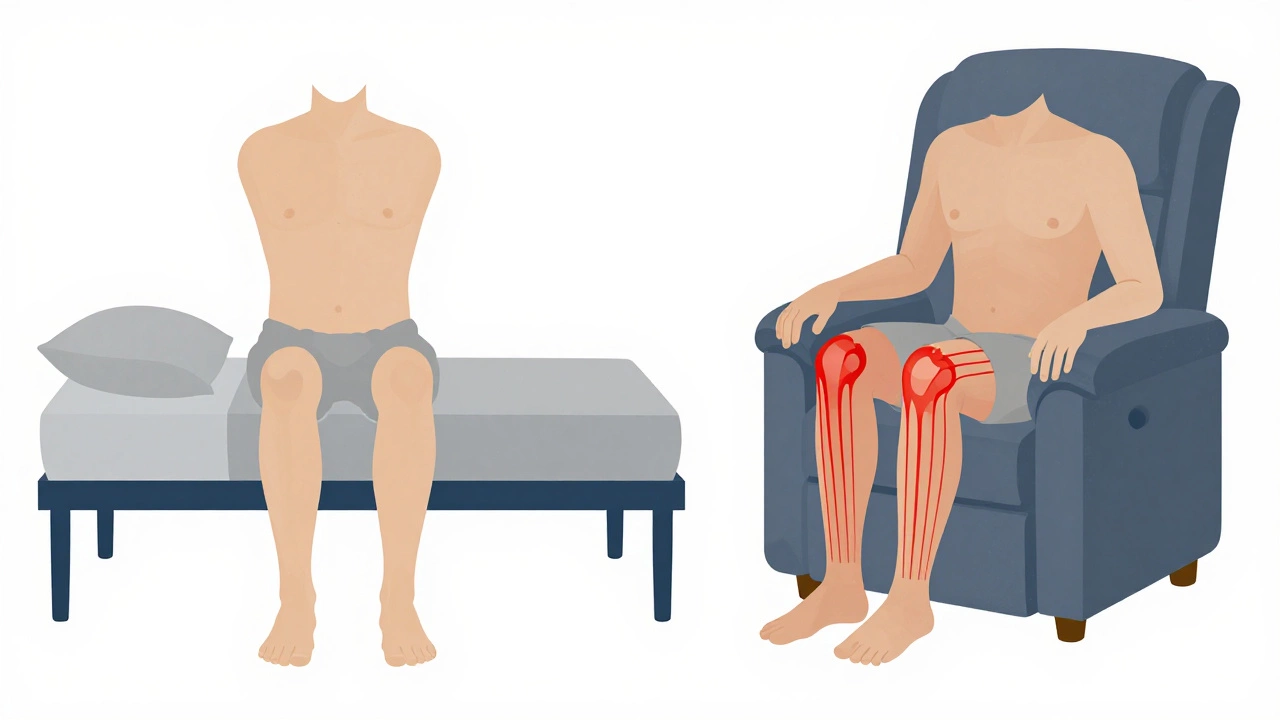
Your knees aren’t designed to stay bent for hours at a time. When you recline, especially in a chair that doesn’t fully support your legs, your knees are often held at a 90-degree angle or tighter. This position puts pressure on the back of the knee joint, compressing soft tissues like the popliteal bursa-a small fluid-filled sac that cushions the joint. Over time, repeated compression can lead to inflammation, known as bursitis, which causes swelling and discomfort.
Studies on prolonged knee flexion show that keeping the knee bent beyond 90 degrees for more than 30 minutes can reduce blood flow to the joint. A 2023 study in the Journal of Orthopaedic & Sports Physical Therapy found that participants who slept with knees bent at 110 degrees for six hours nightly showed increased stiffness and reduced range of motion after just two weeks. While this doesn’t mean everyone will develop damage, it does show that your knees aren’t meant to be locked in that position without movement.
Who’s Most at Risk?
Not everyone who sleeps in a recliner will have knee issues. But certain people are more vulnerable:
- People with existing osteoarthritis-especially in the knees-already have worn-down cartilage. Extra pressure from prolonged bending makes pain worse.
- Those with tight hamstrings or quadriceps muscles. If your leg muscles are short, your knee has to work harder to stay bent, increasing strain.
- People recovering from knee surgery. Doctors often warn against keeping the knee bent for long periods during recovery because it can limit healing.
- Older adults. As we age, joint fluid decreases and ligaments stiffen. Even minor pressure can feel more intense.
One patient I spoke with in Melbourne, a 68-year-old retired teacher, started sleeping in her recliner after hip surgery. Within three months, she couldn’t fully straighten her right knee. Her physiotherapist traced it back to sleeping with her knees bent at 100 degrees every night. After switching to a flat bed with a pillow under her calves, her mobility improved in six weeks.
Why Recliners Are Tempting-But Problematic
Recliners feel舒服 because they support your lower back and take pressure off your spine. That’s why so many people with back pain swear by them. But the same design that helps your back can hurt your knees. Most recliners don’t extend your legs fully. Instead, they lift your feet while keeping your knees bent. This creates an unnatural alignment: your hips are tilted, your spine curves, and your knees are stuck in a compromised position.
Compare that to sleeping flat on your back. Your legs lie straight, your knees are relaxed, and your joints are in neutral alignment. Even if you use a pillow under your knees to ease lower back pressure, it’s still less stressful than being locked in a bent position all night.
What You Can Do to Protect Your Knees
You don’t have to give up your recliner entirely. But if you use it to sleep regularly, here are practical steps to reduce knee strain:
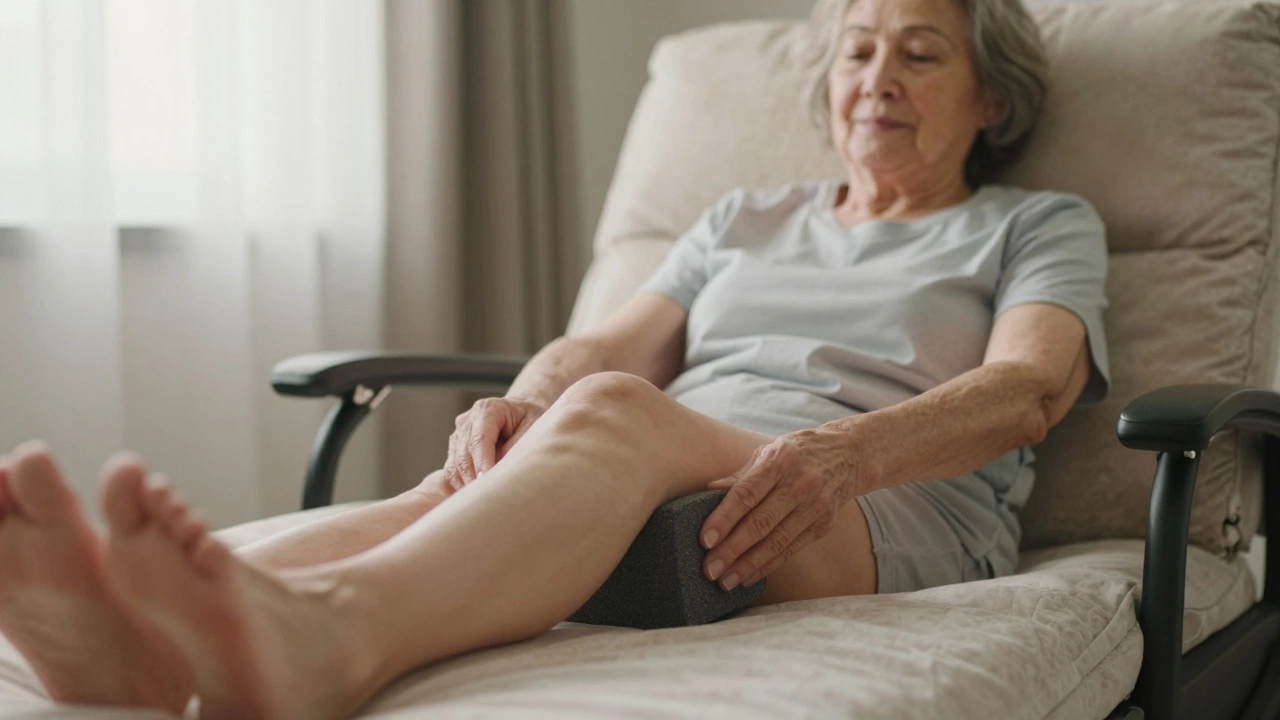
- Use a leg elevation pillow. Place a firm pillow or foam wedge under your calves-not under your knees. This keeps your knees slightly bent but reduces pressure on the joint’s backside.
- Adjust your recliner angle. If your chair lets you change the footrest height, raise it so your legs are nearly straight. Aim for a 160-170 degree angle at the knee instead of 90.
- Move every 30-45 minutes. Even if you’re asleep, your body shifts slightly. If you’re awake and using the recliner, stand up, stretch your legs, and walk around for a minute every hour.
- Stretch daily. Do simple hamstring and quad stretches before bed. Tight muscles pull on your knees and make bending more painful.
- Try a zero-gravity chair. These chairs are designed to elevate your legs above heart level while keeping your knees slightly bent in a neutral position. They’re pricier, but better for circulation and joint alignment.
When to See a Doctor
Some knee discomfort after sleeping in a recliner is normal. But if you notice any of these signs, it’s time to get checked:
- Swelling around the back of the knee that doesn’t go away after a day
- Difficulty straightening your knee fully in the morning
- Pain that wakes you up at night
- A clicking or locking sensation when you move your knee
These could signal bursitis, meniscus irritation, or early osteoarthritis. A physiotherapist can assess your posture and recommend exercises. An orthopedist might suggest an X-ray or ultrasound if there’s persistent swelling.
Alternatives to Sleeping in a Recliner
If you’re using a recliner because your bed feels uncomfortable, the real issue might not be the chair-it’s your mattress or sleeping position.
- Try a memory foam mattress topper. It adds cushioning without changing your sleeping position.
- Use a wedge pillow under your lower back. This mimics the lumbar support of a recliner without bending your knees.
- Sleep on your side with a pillow between your knees. This keeps your hips aligned and reduces pressure on your joints.
- Consider a hospital bed with adjustable angles. If you have chronic pain or mobility issues, these beds allow you to elevate your head and legs independently-giving you the comfort of a recliner without the joint strain.
One woman in her 70s from Geelong switched from her recliner to a bed with a wedge pillow and reported her knee stiffness dropped by 80% in four weeks. She didn’t need surgery. She just changed how she rested.
Final Takeaway
Sleeping in a recliner won’t automatically wreck your knees. But if you do it every night without adjusting your position, you’re asking for trouble. Your knees need movement, not pressure. Your joints need space, not compression. You can still enjoy the comfort of a recliner-just don’t turn it into your permanent bed.
Listen to your body. If your knees feel stiff or sore when you wake up, it’s a signal-not just a coincidence. Small changes in how you rest can make a big difference in how you move.
Can sleeping in a recliner cause knee pain?
Yes, sleeping in a recliner can cause knee pain if your knees are held in a bent position for long periods. This can compress soft tissues, reduce blood flow, and strain the joint-especially if you already have arthritis, tight muscles, or joint issues. People who use recliners nightly are more likely to develop stiffness or inflammation over time.
Is it better to sleep flat or in a recliner for knee health?
Sleeping flat is generally better for knee health because it keeps your joints in a neutral, relaxed position. If you need elevation for back pain, use a pillow under your calves-not under your knees-to avoid bending them too sharply. Recliners often force your knees into an unnatural angle, which increases pressure on the joint.
How can I sleep in a recliner without hurting my knees?
Raise the footrest so your legs are nearly straight (160-170 degree knee angle), place a pillow under your calves (not knees), stretch your hamstrings daily, and get up to move every hour. Avoid sleeping in a recliner for more than 6-8 hours straight. Zero-gravity chairs are a better option if you need full-body support.
Why do my knees feel stiff after sleeping in a recliner?
Stiffness happens because your knee joint stays bent for hours, which compresses the bursa and reduces circulation. Muscles around the joint-like the hamstrings and quads-tighten from being held in a shortened position. When you stand up, your body needs time to loosen up. Regular movement and stretching help prevent this.
Should I stop sleeping in my recliner if my knees hurt?
If your knees hurt consistently after sleeping in a recliner, yes-you should stop using it as your main sleeping spot. Try adjusting your bed setup first: add a wedge pillow, switch to a firmer mattress, or use a zero-gravity chair. If pain continues for more than two weeks, see a physiotherapist. Ignoring it could lead to long-term joint damage.