 1
Dec,2025
1
Dec,2025
Sofa Lifespan Calculator
How long will your sofa last?
Answer a few questions to estimate your sofa's expected lifespan based on article research.
Most people buy a sofa thinking it’ll last for years-maybe even decades. But how many of us actually get that kind of use? The truth is, your sofa might start sagging, fading, or squeaking way sooner than you expected. So how long should the average sofa last? The answer isn’t simple. It depends on how it’s made, how often it’s used, and how well it’s cared for. For most households in Australia, a decent sofa lasts between 7 and 15 years. But that’s not a guarantee. Some fall apart in three. Others sit proudly for 20.
What Makes a Sofa Last Longer?
Not all sofas are built the same. You can’t judge durability just by price or looks. The real clues are in the frame, the springs, and the fabric.
A solid hardwood frame-like kiln-dried oak, maple, or beech-is the gold standard. It doesn’t warp or crack easily. Avoid particleboard or plywood frames, especially in budget models. They might look fine at first, but after a few years of sitting, they’ll start to loosen, creak, or even collapse under weight.
Spring systems matter too. Eight-way hand-tied springs are the most durable and give the best support over time. Sinuous springs (S-shaped metal coils) are common in mid-range sofas and hold up well if they’re made from high-gauge steel. Skip sofas with cheap elastic webbing-it stretches out fast and leaves you with a hammock-like seat.
Then there’s the cushion. High-density foam (at least 2.5 pounds per cubic foot) lasts longer than low-density stuff. Down-filled cushions feel luxurious but need regular fluffing and can flatten faster unless they’re blended with foam. A good combo is foam core wrapped in down or polyester fiber-it keeps shape but stays soft.
How Usage Affects Lifespan
How often you use your sofa changes everything. A sofa in a quiet home with two people sitting on it occasionally might last 15 years or more. But in a home with kids, pets, and movie nights every weekend? That same sofa might show wear in under five.
Think about weight distribution. One person lounging all day puts pressure on the same spot. Over time, that creates a permanent dip. Families who spread out across the whole sofa-using the arms, the back, the corners-wear it more evenly. That helps.
Pets are another factor. Claws can snag fabric, especially cotton or linen. Dogs that jump on and off the sofa regularly stress the frame and legs. Cats that scratch the arms? You’ll need durable materials like microfiber, performance fabrics, or leather.
And don’t forget sunlight. If your sofa sits right in front of a big window, UV rays will fade the fabric and dry out leather. Even dark colors fade. Rotate cushions regularly and use curtains or blinds to block direct sun.
Signs It’s Time to Replace Your Sofa
You don’t need to wait until it collapses. Watch for these red flags:
- Deep, permanent sagging in the seat cushions-even after fluffing
- Fabric that’s frayed, torn, or stained beyond cleaning
- Frame that creaks loudly or wobbles when you sit down
- Arms or legs that feel loose or detached
- Smell that won’t go away, even after deep cleaning
If you’re dealing with two or more of these, replacement is smarter than repair. Patching a worn-out sofa often costs more than buying a new one-and you’re still stuck with an old frame that’s failing.
How to Extend Your Sofa’s Life
Good maintenance doesn’t mean spending hours cleaning. Just a few habits make a big difference.
- Rotate cushions every month. Flip them over and swap front to back to even out wear.
- Vacuum the sofa weekly. Use the brush attachment to lift dust and pet hair from crevices.
- Spot-clean spills immediately. Blot, don’t rub. Use a mild soap solution and a clean cloth.
- Apply fabric protector spray every 6-12 months. It repels stains and slows fading.
- Keep pets’ nails trimmed. It reduces accidental tearing.
- Use slipcovers if you have kids or messy pets. They’re cheap to replace and easy to wash.
Leather sofas need special care. Wipe them down monthly with a damp cloth and use a leather conditioner every 6 months. Dry leather cracks. Oily leather looks better and lasts longer.
Material Matters: What Lasts the Longest?
Not all fabrics are created equal. Here’s what holds up best in real-world use:
| Material | Lifespan (Typical) | Pros | Cons |
|---|---|---|---|
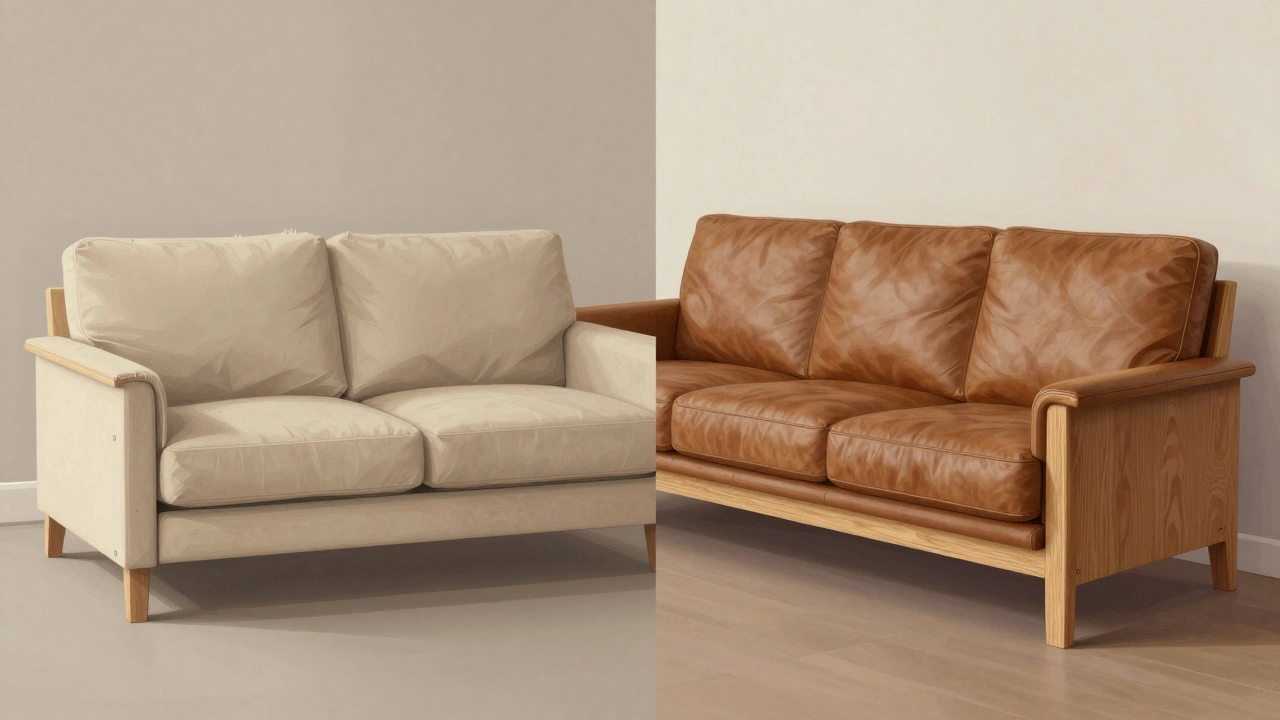
| Top-grain leather | 15-25 years | Gets better with age, easy to clean, durable | Expensive, can crack if not conditioned, shows scratches |
| Performance fabric (e.g., Crypton, Sunbrella) | 10-20 years | Stain-resistant, pet-friendly, fade-resistant | Can feel synthetic, higher upfront cost |
| Microfiber | 8-15 years | Soft, affordable, hides dirt well | Can pill over time, not as breathable |
| Cotton/linen | 5-10 years | Breathable, natural look, easy to dye | Stains easily, fades in sun, wrinkles |
| Velvet | 7-12 years | Luxurious feel, hides wear well | Shows footprints, attracts lint, hard to clean |
Performance fabrics are becoming the go-to for families. Brands like Crypton and Sunbrella are designed for heavy use. They’re tested for resistance to stains, mold, and UV rays. They’re not cheap, but they’re worth it if you want a sofa that survives kids, dogs, and spilled wine.
Why Some Sofas Last 20+ Years
There are stories of people who still use the same sofa from the 1990s. How? They didn’t buy on sale. They bought from makers who focus on craftsmanship. Brands like Hancock & Moore, Stickley, or even local Australian makers like MCM Furniture or Mogo use solid wood frames, hand-tied springs, and premium upholstery.
These sofas cost more upfront-often $3,000 to $6,000-but they’re built to be repaired. Reupholstering is possible. Replacing cushions is easy. You’re not throwing away the whole thing when the fabric wears out.
That’s the key difference between mass-market and quality furniture. One is designed to be replaced. The other is designed to be maintained.

What to Look for When Buying a New Sofa
If you’re shopping now, here’s what to ask:
- Is the frame solid wood? Ask for the type-oak, maple, birch.
- What’s the spring system? Hand-tied or sinuous steel?
- What’s the foam density? Ask for pounds per cubic foot-aim for 2.5 or higher.
- Is the fabric treated for stains? Look for performance fabric labels.
- Does the company offer a warranty? 10 years on the frame is good. 5 years on cushions is standard.
Don’t be fooled by fancy names like "European design" or "luxury finish." Check the specs. If the salesperson can’t tell you the foam density or frame material, walk away.
Is It Worth Repairing an Old Sofa?
Maybe. If the frame is solid and you love the shape, reupholstering can breathe new life into it. In Melbourne, a full reupholster job costs between $1,200 and $2,500, depending on fabric and complexity.
But if the frame is wobbly, the springs are broken, or the cushions are flattened beyond repair, it’s not worth it. You’re paying to fix something that’s already failing. It’s like putting new tires on a car with a rusted frame.
Only consider repair if:
- The sofa has sentimental value
- You found a rare style you can’t replace
- The cost of reupholstering is less than 40% of a new sofa’s price
Otherwise, replace it. Your back and your wallet will thank you.
Final Takeaway
Your sofa isn’t just furniture. It’s where you relax, watch movies, hug loved ones, and maybe even nap on a Sunday afternoon. It deserves to last. The average sofa lasts 7-15 years, but that’s only if you choose wisely and care for it. Skip the cheap, flimsy options. Invest in solid construction, durable fabric, and proper maintenance. A good sofa doesn’t just survive-it becomes part of your home’s story.
Can a sofa last 20 years?
Yes, but only if it’s built well. Sofas with solid hardwood frames, hand-tied springs, and high-density foam can last 20 years or more. They’re usually from reputable makers, not big-box stores. Regular maintenance like rotating cushions and cleaning fabric helps too.
Is leather or fabric better for long-term use?
Leather lasts longer than most fabrics-often 15-25 years if conditioned regularly. But performance fabrics like Crypton or Sunbrella are close behind and are easier to clean if you have kids or pets. Natural fabrics like cotton or linen fade and stain faster. For durability, go with leather or performance fabric.
How do I know if my sofa’s frame is good?
Lift one corner of the sofa. If the whole frame lifts off the floor evenly, it’s likely solid. If it wobbles or feels loose, the frame is weak. Check under the sofa-if you see plywood or particleboard, it’s not built to last. Solid hardwood, especially kiln-dried, is what you want.
Do sofa warranties mean anything?
They can. A 10-year warranty on the frame is a strong signal of quality. A 5-year warranty on cushions is standard. But read the fine print. Many warranties don’t cover sagging or fabric wear. Focus on frame and spring coverage-those are the core parts that fail.
Should I buy a sofa on sale?
Sales can be smart-if you know what you’re buying. Many discounted sofas are made with cheap materials and won’t last. Look for sales on high-quality brands from reputable retailers. Avoid deep discounts on unknown brands. A $500 sofa from a big-box store is rarely worth it, even on sale.
What’s the most common reason sofas fail?
The most common reason is poor cushion foam. Low-density foam (under 1.8 lbs/ft³) compresses quickly and never bounces back. That leads to sagging seats, which is the #1 complaint. Frame weakness and cheap fabric come in second and third.