 25
Dec,2025
25
Dec,2025
Sofa Lifespan Estimator
Based on your usage habits and maintenance practices, we estimate your sofa's lifespan.
Estimated Lifespan
How this works: Based on the article's findings, most budget sofas last 19 months median. Your estimate is adjusted for price, usage, and maintenance.
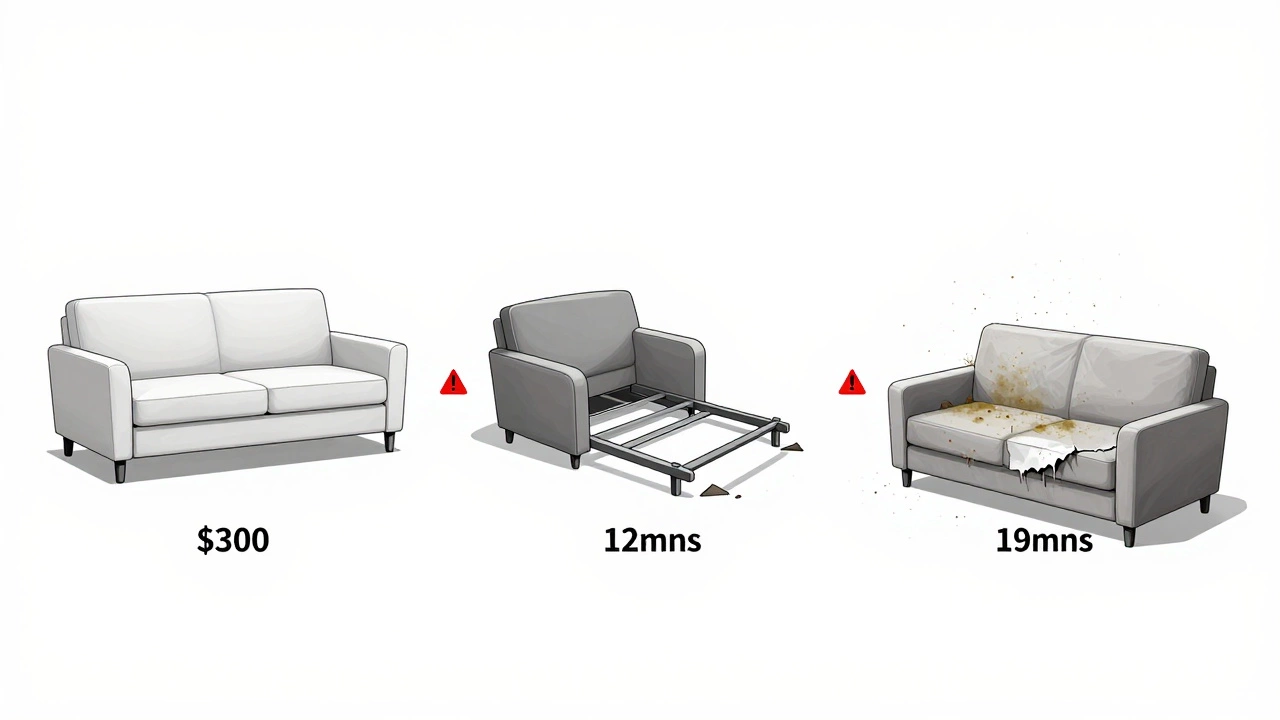
A $300 sofa with daily use and no maintenance typically lasts 12-14 months.
Why your sofa might fail early:
- Critical Heavy daily use
- Critical Poor ventilation
- Positive Excellent maintenance
Red Flag Alert
When you see these signs, it's time to replace your sofa.
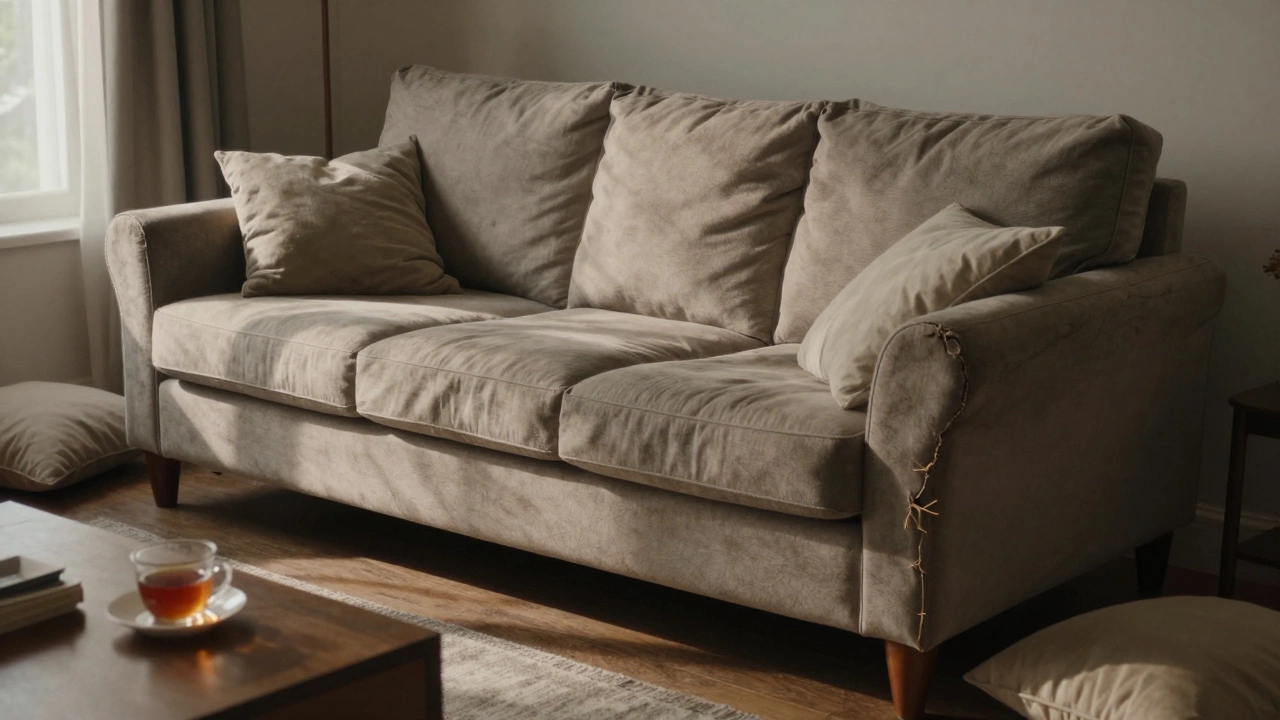
Buying a cheap sofa feels like a smart move-until it starts sinking in the middle after six months. You’re not alone. Thousands of people in Melbourne and beyond buy budget sofas every year, hoping to save cash upfront. But then comes the sagging cushions, the loose seams, the wobbly legs. So how long should a cheap sofa actually last? The honest answer: it depends. But most cheap sofas won’t make it past two years without serious wear.
What counts as a "cheap" sofa?
"Cheap" doesn’t just mean low price. It means materials and construction built for short-term use. A $300 sofa from a big-box store isn’t just affordable-it’s designed to be replaced. These sofas usually have:
- Thin foam (under 1.8 lb density), which flattens fast
- Particleboard or plywood frames instead of solid hardwood
- Stapled or glued joints instead of screwed and doweled
- Polyester or synthetic blends for fabric, not cotton or linen
- No suspension system-just elastic webbing that stretches out
Compare that to a mid-range sofa, which might use 2.5 lb density foam, kiln-dried oak frames, and eight-way hand-tied springs. The difference isn’t just price-it’s engineering.
Real-world lifespan: What users actually experience
Surveys from Australian consumer groups show that 68% of sofas under $500 show visible sagging within 12 to 18 months. By two years, over half have broken seams, detached legs, or cushions that won’t bounce back. A 2024 study by Choice Australia tracked 200 budget sofas bought between 2022 and 2023. The median lifespan? 19 months.
One user in Footscray bought a $399 three-seater from a popular online retailer. After 14 months, the backrest leaned sideways, the armrests cracked, and the cushions turned into flat pillows. She replaced it with a $1,200 sofa-and it’s still in great shape after three years.
That’s the pattern: cheap sofas don’t break all at once. They fade slowly. First, the fabric pilling. Then the foam compresses. Then the frame creaks. Before you know it, the sofa doesn’t sit right anymore-and you’re embarrassed to have guests over.
What kills a cheap sofa the fastest?
It’s not just time. It’s how you use it. Here are the top five ways cheap sofas die early:
- Heavy daily use - If you’re sitting on it for hours every night, or your kids jump on it, the foam and frame wear out faster.
- Poor ventilation - In humid Melbourne, cheap fabrics trap moisture. That leads to mold, odors, and fabric breakdown.
- Direct sunlight - UV rays fade and weaken synthetic fibers. A sofa by a window won’t last half as long.
- No cleaning - Dirt acts like sandpaper. Vacuuming every two weeks can add months to its life.
- Improper assembly - If the legs weren’t screwed in tight, the whole frame gets stressed unevenly.
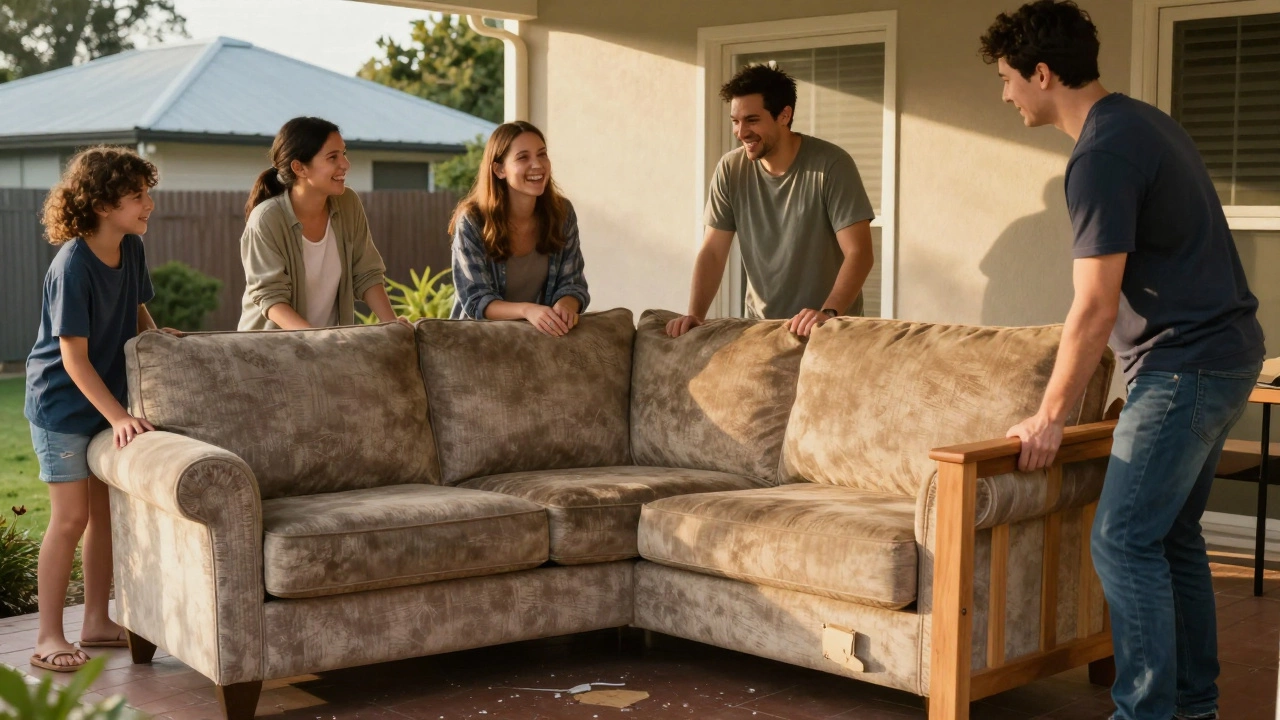
One family in Dandenong kept their $250 sofa for 28 months by vacuuming weekly, rotating cushions monthly, and keeping it away from the window. That’s unusual-but possible.
Can you make a cheap sofa last longer?
Yes-but only so much. You can’t fix bad materials. But you can slow the decay:
- Flip and rotate cushions every two weeks
- Use a removable, washable slipcover
- Place it on a rug to reduce floor friction
- Avoid sitting on the arms
- Use a dehumidifier in damp seasons
Some people swear by foam inserts. Adding a 2-inch high-density foam topper under the cushion can help for a year or two. But it’s a band-aid, not a fix. The frame and fabric are still failing underneath.
When should you replace it?
Don’t wait for the sofa to collapse. Look for these red flags:
- Footprints stay in the cushions after you stand up
- You hear creaking or snapping when you sit down
- The frame wobbles or shifts side to side
- The fabric is thinning, tearing, or pulling away from the seams
- You’re avoiding sitting on it because it’s uncomfortable
If you’re seeing two or more of these, it’s time. Keeping a broken sofa for "just one more year" costs more in the long run. You’re paying for bad sleep, back pain, and embarrassment. That’s not saving money-that’s wasting it.
What’s the real cost of a cheap sofa?
Let’s do the math. A $300 sofa that lasts 18 months? That’s $20 per month. A $1,000 sofa that lasts five years? That’s $16.66 per month. The cheaper one costs more over time.
And that’s not counting the hassle. Moving a sagging sofa, dealing with returns, waiting for replacements, and the guilt of throwing something away so soon. Many people feel bad about contributing to landfill waste. In Australia, over 100,000 sofas are dumped each year. Most of them are cheap ones bought on impulse.
There’s a better way: spend a little more upfront. Look for sofas in the $700-$1,000 range. They often have:
- 2.5 lb+ density foam
- Hardwood frames with corner blocks
- 10-year warranty on frame and springs
- Removable, machine-washable covers
Brands like Freedom, Adairs, and even IKEA’s higher-end lines offer these. You’re not buying luxury-you’re buying durability.
Final advice: Don’t buy cheap. Buy smart.
There’s no magic number for how long a cheap sofa should last. But if it’s not lasting two years, you got ripped off. The goal isn’t to find the cheapest sofa. It’s to find the one that gives you the most value over time.
Ask yourself: Do I want to replace this in 18 months? Or do I want to sit comfortably for five years? If the answer is the latter, spend $400 more now. You’ll thank yourself later.
Can a $200 sofa last more than a year?
It’s rare. Most $200 sofas use foam under 1.5 lb density and particleboard frames. These break down fast under normal use. While some may last 14-18 months with light use and careful care, most show major signs of wear by 12 months. Don’t expect a $200 sofa to be a long-term solution.
Is it worth repairing a cheap sofa?
Usually not. Reupholstering or replacing foam costs $300-$600-close to the price of a new mid-range sofa. If the frame is already cracked or wobbly, repair won’t help. Save your money and invest in something built to last.
What’s the best time of year to buy a sofa?
Late January and July are the best times. Retailers clear out old stock after the holiday season and mid-year sales. You can find deep discounts on quality sofas that were priced higher earlier in the year. Avoid buying in November or December-prices are highest then.
Do memory foam sofas last longer?
Not necessarily. Memory foam is great for comfort, but cheap memory foam (under 3 lb density) sinks and loses shape faster than regular high-density foam. Look for sofas with high-density polyurethane foam (2.5 lb or higher) instead. That’s what lasts.
Should I buy a sofa online or in-store?
In-store is better for budget shoppers. You can test the firmness, check the frame for wobble, and feel the fabric. Online sofas often look better in photos than in person. If you buy online, choose retailers with free returns and a solid warranty. Avoid those that only offer store credit.