 15
Jan,2026
15
Jan,2026
Coffee Table Height Calculator
Find Your Perfect Coffee Table Height
Based on the 2026 modern minimalist design standards from the article, your coffee table should match your sofa height for comfort and visual harmony.
Pro Tip: As stated in the article: "A coffee table should be between 16 and 18 inches. Anything higher feels awkward to reach. Anything lower makes it hard to set down a coffee cup without leaning too far."
When you walk into a living room, the coffee table is often the first piece of furniture you notice. It’s not just for holding drinks-it’s the anchor of the space. But what style dominates homes right now? If you’ve been scrolling through Pinterest or browsing stores, you’ve probably seen a lot of low, rectangular tables with clean lines and natural wood. That’s not a coincidence. The most popular coffee table style in 2026 is the modern minimalist design.
Why Modern Minimalist Rules the Living Room
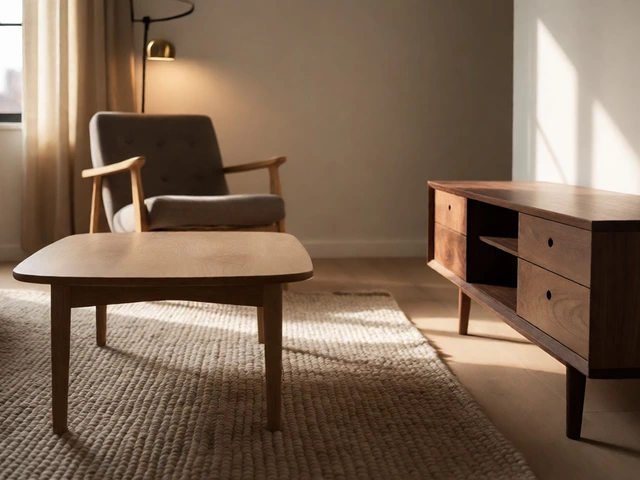
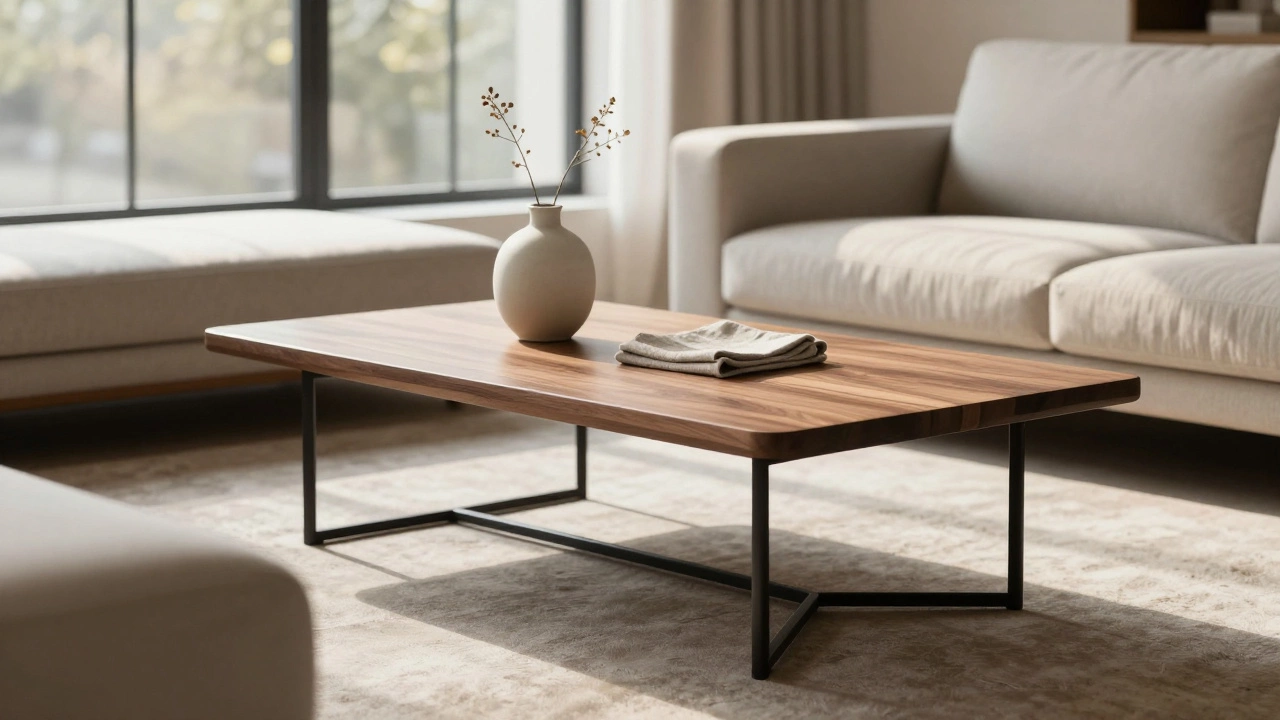
Modern minimalist coffee tables aren’t flashy. They don’t have ornate carvings, brass inlays, or curved legs that look like they belong in a Victorian parlor. Instead, they focus on form, function, and simplicity. Think: a slab of oak or walnut, slightly raised on thin metal legs, with no drawers, no shelves, no distractions.
This style took off because people are tired of clutter. After years of buying too much furniture, homeowners now want pieces that breathe. A minimalist coffee table doesn’t compete with the sofa or the rug. It complements them. It’s the quiet backbone of the room.
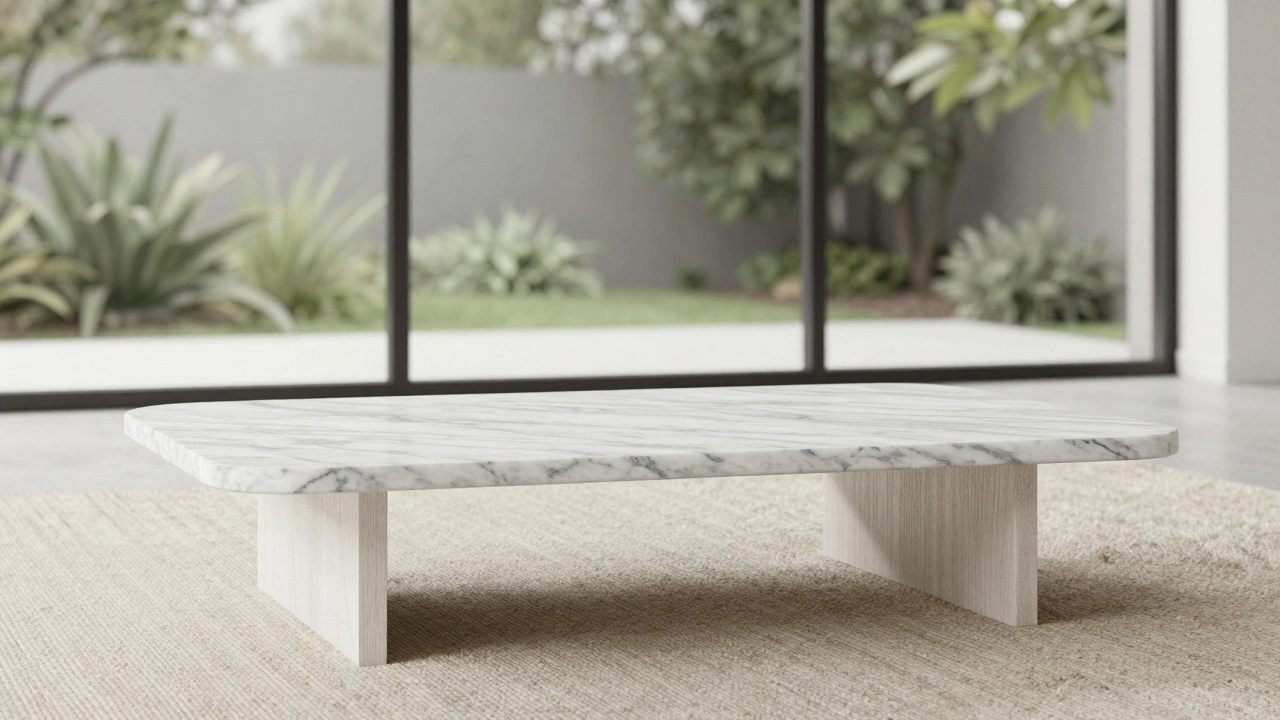
In Melbourne, where open-plan living is common, this style fits perfectly. Large windows, light walls, and neutral tones are everywhere. A dark walnut table with matte black legs becomes a grounding element. Light ash with a white marble top adds texture without weight. These aren’t just trends-they’re responses to how people actually live now.
What Makes a Coffee Table ‘Modern Minimalist’?
It’s not just about looking simple. There are specific traits that define this style:
- Low profile - Usually 16 to 18 inches high, matching the height of most sofas.
- Rectangular or oval shape - Rounded corners are common to soften the look, but sharp edges still appear in high-end designs.
- Single material or two-material combo - Wood and metal are the top pair. Wood and glass come second. Rarely do you see three materials on one table.
- Hidden or no storage - If there’s storage, it’s integrated. A lift-top with a hidden compartment counts. A drawer sticking out doesn’t.
- Flat or slightly textured surface - No beveled edges, no carved patterns. Just smooth wood, polished stone, or brushed metal.
Brands like IKEA, West Elm, and Australian makers like Local Form and Studio 8 dominate sales because they nail this balance. You won’t find a single minimalist table with a glass shelf underneath or a carved floral motif. Those belong to the past.
What’s Replacing the Old Favorites?
Twenty years ago, the most popular coffee tables were heavy, dark, and ornate. Cherry wood with carved legs. Glass tops with brass trim. Marble slabs with intricate bases. Those aren’t gone-but they’re no longer the default.
Today’s buyers are asking: “Does this need to be this big?” “Can I move it easily?” “Will it still look good in five years?”
Round tables? Still popular in small spaces, but they’ve shed the traditional look. Now they’re made from single slabs of stone or wood, with no trim. Oval tables? Gaining ground in long, narrow living rooms. But they’re still clean-lined.
Storage coffee tables with drawers? They’re not dead-but they’re being redesigned. Instead of visible handles and bulky frames, they now have push-to-open mechanisms or subtle recessed grips. You don’t see the hardware. You just see the surface.
Materials That Are Winning Right Now
Material choice makes or breaks a modern coffee table. Here’s what’s selling:
| Material | Popularity | Why It Works |
|---|---|---|
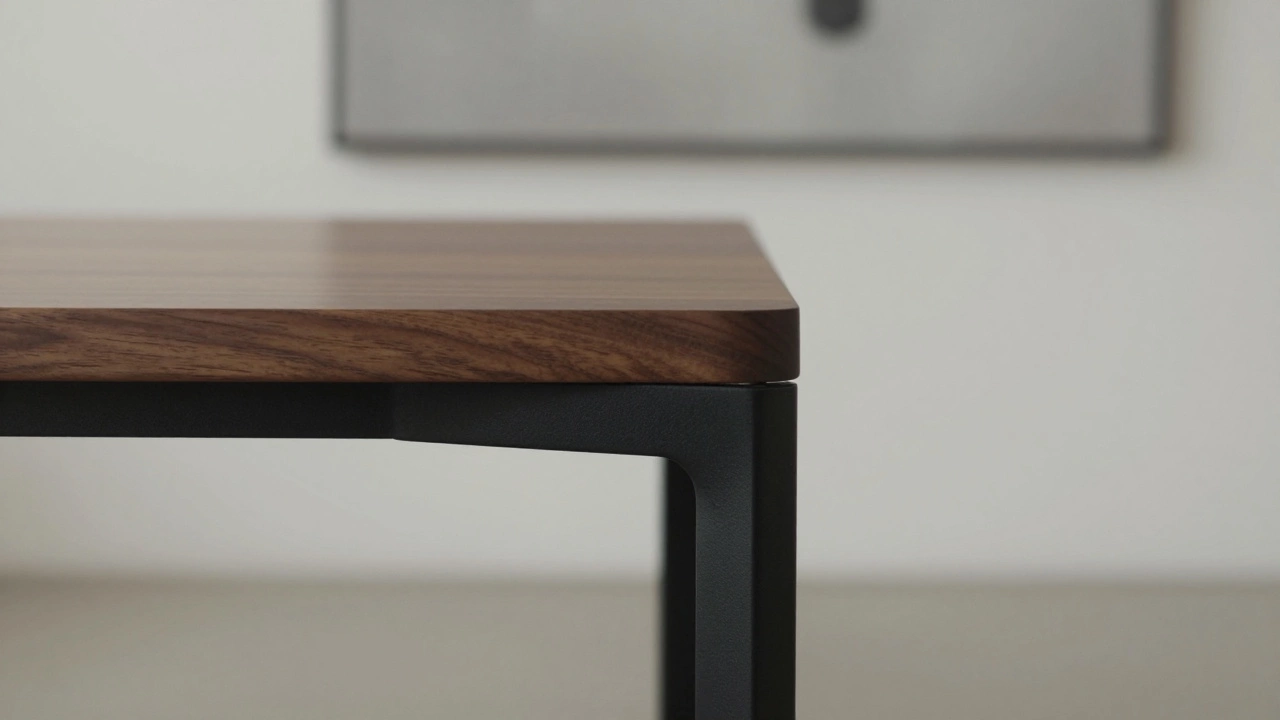
| Walnut | High | Warm tone, durable, looks expensive without being flashy. |
| White Oak | High | Lighter than walnut, pairs well with neutral walls and light rugs. |
| Blackened Steel | High | Thin legs give the illusion of floating. Resists scratches better than brass. |
| Marble (Carrara or Statuario) | Moderate | Used as a top only. Too heavy for full-frame tables. Adds luxury without clutter. |
| Tempered Glass | Declining | Still used, but mostly as a secondary layer over wood. Pure glass tops feel cold and uninviting now. |
Brass and gold finishes? They’re out. Chrome? Only in very industrial spaces. Matte black metal is the new neutral. It’s not shiny. It doesn’t show fingerprints. It just works.
What About Size and Shape?
Size matters more than ever. The rule of thumb? The coffee table should be about two-thirds the length of your sofa. Too small? It looks lost. Too big? It crowds the space.
Height is non-negotiable. If your sofa seat is 17 inches off the ground, your table should be between 16 and 18 inches. Anything higher feels awkward to reach. Anything lower makes it hard to set down a coffee cup without leaning too far.
Shape-wise, rectangles still win. They fit neatly under long sofas and leave room for walking. Ovals are second, especially in homes with kids-they reduce bumping. Circles? Only if your room is small or circular. They don’t work well in rectangular living rooms unless they’re very small.
Who’s Buying This Style-and Why?
It’s not just design lovers. It’s busy professionals, young families, and empty-nesters who want their space to feel calm. They don’t want to spend time dusting carved details. They don’t want to worry about scratches from kids’ toys. They want something that looks expensive but doesn’t demand perfection.
Real estate agents notice it too. Homes with minimalist coffee tables sell faster. They look more spacious. They feel more intentional. Buyers can picture their own stuff on it-books, a plant, a remote-because there’s no visual noise.
In Australia, where many homes are built with natural light and outdoor views, the coffee table doesn’t need to be the star. It needs to be the quiet partner. That’s why minimalist designs are winning.
What to Avoid
Even in a minimalist space, mistakes happen. Here’s what to skip:
- Too many decorative objects - One vase, one book, one candle. That’s it. Clutter kills the vibe.
- Wood with heavy stains - Dark walnut is fine. Black-stained pine? It looks cheap and dated.
- Tables with visible screws or joints - If you can see the hardware, it’s not minimalist. Seamless is the goal.
- Matching sets - Don’t buy a coffee table, side table, and TV stand from the same collection. It looks like a showroom, not a home.
The best coffee tables feel like they were found, not bought. They look like they’ve been in the house for years-even if they’re brand new.
Final Thought: It’s Not About Trending. It’s About Living.
The most popular coffee table style isn’t popular because it’s trendy. It’s popular because it works. It fits modern lifestyles. It’s easy to clean. It doesn’t scream for attention. It lets the people, the art, the light, and the conversation take center stage.
If you’re shopping for one, don’t ask, “What’s in style?” Ask, “Does this make the room feel better?” If the answer is yes, you’ve found the right one.
What is the most popular shape for a coffee table in 2026?
The most popular shape is rectangular. It fits best under standard sofas and leaves clear walking space. Oval shapes are growing in popularity for long, narrow rooms, while circles are reserved for small or circular living areas.
Are glass coffee tables still popular?
Pure glass coffee tables are declining. They feel cold and show fingerprints easily. Glass is still used, but mostly as a top layer over wood or stone. The trend now is for solid, warm materials that feel grounded.
What height should a coffee table be?
A coffee table should be between 16 and 18 inches tall. This matches the typical height of most sofa seats (around 17 inches), making it easy to reach drinks and books without leaning too far forward or back.
Is wood or metal better for a coffee table?
Neither is better-it’s about balance. Solid wood (like walnut or white oak) gives warmth. Thin metal legs (like blackened steel) add lightness. The most popular tables combine both: a wood top with metal legs. This mix offers comfort and structure without bulk.
Should a coffee table have storage?
Storage isn’t required, but if you want it, go for hidden options. Lift-top tables with a hidden compartment or tables with integrated drawers that have no visible handles are ideal. Avoid bulky drawers that stick out-they ruin the clean look.
What’s the best material for a coffee table in a home with kids?
Solid wood like walnut or white oak is the best choice. It’s durable, easy to clean, and hides minor scratches better than glass or marble. Avoid high-gloss finishes-matte or satin finishes are more forgiving and less likely to show fingerprints or water rings.