 14
May,2026
14
May,2026
Coffee Table Spacing Calculator
Your Room Details
Recommendation
Enter your details to calculate the perfect spacing.
There is nothing worse than stubbing your toe on the sharp corner of a coffee table while trying to get to the sofa. It happens to everyone, usually right when you are having guests over or just trying to relax after a long day. You might have bought a beautiful coffee table that looks perfect in the showroom, but once it lands in your living room, it feels like an obstacle course. The culprit is almost always incorrect spacing. Getting the distance right between your center table and your surrounding furniture is not just about avoiding injury; it is about making the room feel open, functional, and inviting.
If you are wondering how much room you should leave around a coffee table, the short answer is usually between 14 and 18 inches. However, that number changes depending on your sofa depth, the size of your room, and how you actually use the space. Let’s break down exactly how to measure, arrange, and adjust your layout so your living room works for you, not against you.
The Golden Rule: 14 to 18 Inches
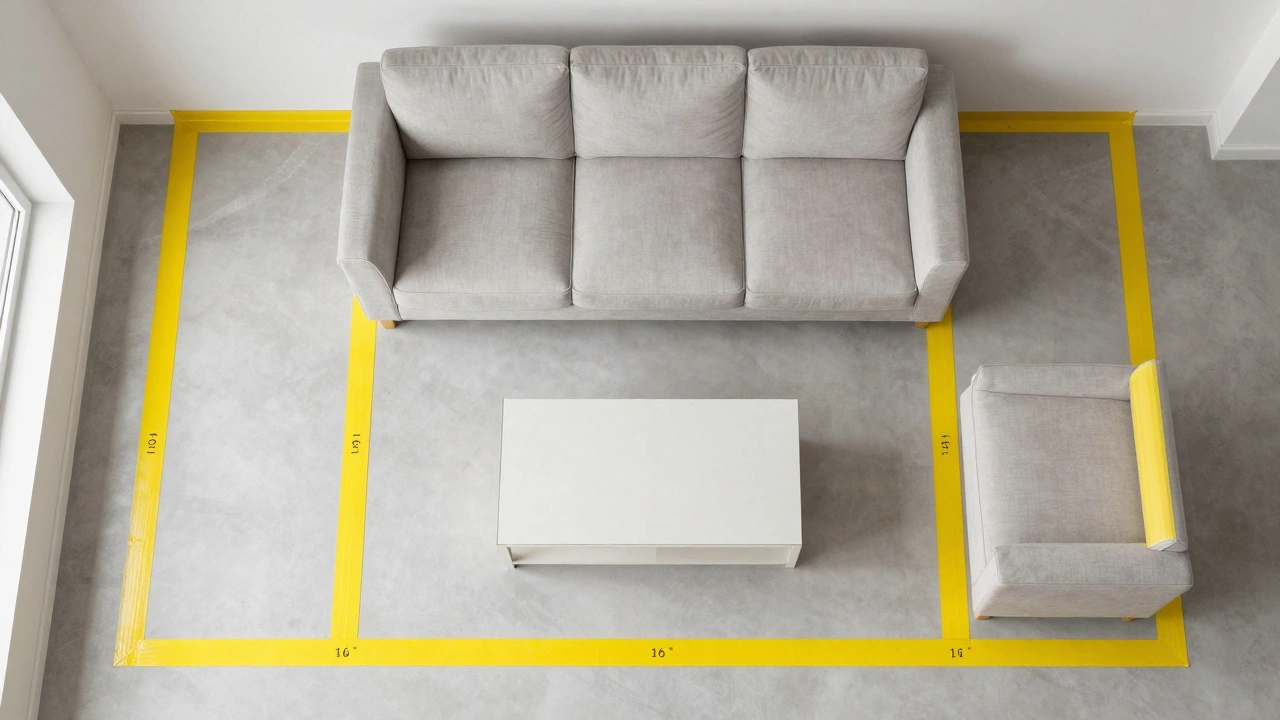
Interior designers often refer to the "14-to-18-inch rule" as the baseline for living room layout. This measurement refers to the clear floor space between the front edge of your sofa and the nearest edge of your coffee table. Why this specific range? It strikes a balance between accessibility and usability.
- 14 inches: This is the absolute minimum. It allows you to slide your legs out comfortably without hitting the table. It works well in smaller apartments where every square foot counts.
- 16 inches: This is the sweet spot for most homes. It provides enough room for your knees to bend naturally and gives you space to reach for a drink or remote without leaning forward awkwardly.
- 18 inches: This is ideal if you have deep-seated sofas or prefer a more spacious feel. It prevents the room from feeling cramped and makes cleaning under the furniture easier.
If you go below 14 inches, you will likely find yourself constantly pulling your legs back or reaching too far. If you exceed 18 inches, the table becomes less functional because you have to stretch to grab anything on it. Measure from the front edge of the sofa cushion, not the armrest or the frame, to get an accurate reading.
Accounting for Sofa Depth and Seating Style
Not all sofas are created equal, and your seating style matters more than you think. A standard sofa seat depth is typically around 20 to 22 inches. However, modern "deep-seat" sofas can run 24 inches or more. If you own a deep sofa, you might need to push the coffee table slightly closer to maintain that 14-to-18-inch gap, or choose a larger table to keep it within reach.
Consider how you sit. Do you perch on the edge of the cushions, or do you sink back with pillows behind you? If you tend to recline, your feet will extend further forward. In this case, aim for the upper end of the range (16-18 inches) to ensure your shins don’t collide with the table legs. Conversely, if you sit upright, you might be comfortable with a tighter 14-inch gap, which helps keep the conversation circle intimate.
Walkways and Traffic Flow
Your living room is not just a static display; people move through it. When planning your furniture arrangement, you must account for the paths people take. The space behind the sofa and along the sides of the coffee table needs to be wide enough for two people to pass each other comfortably.
Aim for at least 30 to 36 inches of clearance for main walkways. This is the space between the back of the sofa and the wall, or between the side of the coffee table and adjacent chairs or walls. If your walkway is narrower than 30 inches, it will feel tight and force people to step over furniture to get through. Wider walkways (36+ inches) create a sense of luxury and ease, especially in high-traffic areas where multiple people enter and exit the room regularly.
If your living room doubles as a dining area or entryway, prioritize wider pathways. You don’t want guests bumping into the coffee table while carrying drinks or greeting others. Use painter’s tape on the floor to map out these paths before moving heavy furniture. Walk through the taped lines to see if they feel natural.
Room Size and Proportion
The size of your room dictates how strict you should be with these measurements. In a small apartment or studio, you might need to compromise on the 18-inch rule to fit everything in. In these cases, opt for a smaller, round, or oval coffee table. These shapes eliminate sharp corners and reduce the visual bulk, making the 14-inch gap feel less restrictive.
In larger rooms, you have more flexibility. You can increase the gap to 18 or even 20 inches if you want a grander, more formal look. Just remember that a larger gap means a larger table to maintain functionality. If you leave 20 inches of space but use a tiny table, you’ll still have to lean forward to reach it. Scale matters: match the table size to the distance.
| Room Type | Recommended Gap | Table Shape Tip |
|---|---|---|
| Small Apartment | 14-15 inches | Round or Oval to save space |
| Standard Living Room | 16-18 inches | Rectangular or Square |
| Large Open Plan | 18-20 inches | Larger Rectangular or Nested Tables |
Special Considerations: Kids, Pets, and Accessibility
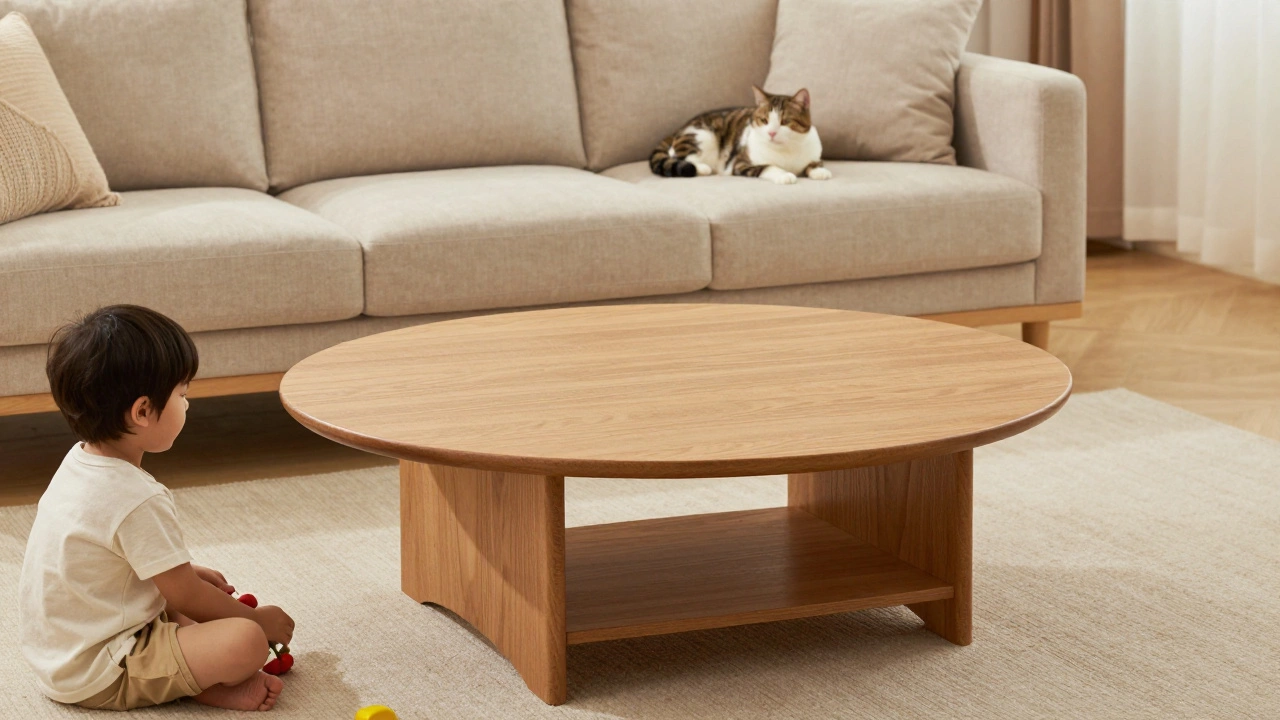
If you have young children or pets, safety should override aesthetic preferences. Toddlers run fast and aren’t great at stopping abruptly. In households with kids under five, consider increasing the gap to 18-20 inches to give them more reaction time. Alternatively, choose a coffee table with rounded edges or soft materials like wood instead of glass or metal.
Dogs and cats also change the equation. Pets often jump up onto sofas or weave between legs. A tighter gap might trap a pet underneath, causing stress or injury. Leave enough room for your pet to move freely without getting stuck between the sofa and the table.
For accessibility, if anyone in the household uses a wheelchair or walker, the standard 14-to-18-inch rule may not apply. Wheelchairs require a turning radius of about 60 inches. Ensure there is ample space around the coffee table for maneuvering. You might need to place the table further away or choose a lower-profile table that doesn’t obstruct movement. Consult with an occupational therapist or accessible design expert for personalized recommendations.
Measuring and Adjusting Your Layout
Getting the spacing right doesn’t require professional tools. Here is a simple step-by-step process to test your current setup:
- Sit Down: Sit on your sofa in your normal position. Extend your legs straight out.
- Check Clearance: See if your shoes hit the coffee table. If they do, the gap is too small.
- Reach Test: Place a book or remote on the far side of the table. Can you reach it comfortably without leaning forward? If you have to stretch, the table is too far away.
- Use Tape: If you’re unsure, use painter’s tape to mark the ideal 16-inch line on the floor. Move the table to this line and live with it for a few days.
- Adjust: Fine-tune based on comfort. Maybe 15 inches feels better, or maybe you need 17. Trust your body’s feedback.
Remember, these guidelines are starting points, not rigid laws. Your comfort and daily habits should dictate the final placement. If your living room feels crowded, try pulling the table closer. If it feels disconnected, push it back slightly. Experiment until the flow feels natural.
What is the ideal distance between a coffee table and a sofa?
The ideal distance is typically 14 to 18 inches. This range allows for comfortable legroom and easy access to items on the table without feeling cramped or stretched.
Should I measure from the front of the sofa or the armrest?
Measure from the front edge of the sofa cushion where you sit. This ensures the gap accounts for your actual seating position and leg extension.
Can I use a smaller gap in a small apartment?
Yes, you can reduce the gap to 14 inches in small spaces. To make it work, choose a round or oval coffee table to minimize visual bulk and avoid sharp corners.
How does room size affect coffee table spacing?
In larger rooms, you can increase the gap to 18-20 inches for a more spacious feel. In smaller rooms, stick to 14-16 inches to maintain functionality and prevent the area from feeling cluttered.
What if I have kids or pets?
Increase the gap to 18-20 inches for safety and movement. Choose tables with rounded edges and avoid glass tops to prevent injuries from bumps or falls.