 29
Oct,2026
Sofa Durability Scorecard
Enter the specifications of the sofa you are considering to estimate its longevity and resistance to sagging.
Durability Assessment
--You know the feeling. You drop onto your favourite spot on the couch after a long day, and instead of that supportive bounce you remember from the showroom, you sink. The middle has dipped. The arms feel loose. It looks like it’s been through a war zone rather than just a few years of Netflix binges. This is couch sagging, and it is the single biggest regret people have when buying furniture. But here is the good news: sagging isn’t inevitable. It’s a design flaw you can spot before you hand over your credit card if you know what to look for.
Most people buy sofas based on how they feel in the store. They sit for ten seconds, think "wow, soft," and walk out with a new centerpiece for their living room. That is a mistake. Softness often equals cheap materials that break down fast. To find a couch that lasts ten years or more, you need to ignore how it feels initially and focus on how it is built. We are going to walk through the anatomy of a durable sofa so you never have to deal with a lumpy, sagging seat again.
The Foundation: Why Frames Break First
Before we talk about cushions, let’s talk about bones. If the frame is weak, no amount of premium foam will save your sofa. The frame is the skeleton, and it takes all the stress every time someone sits down, stands up, or jumps off the armrest.
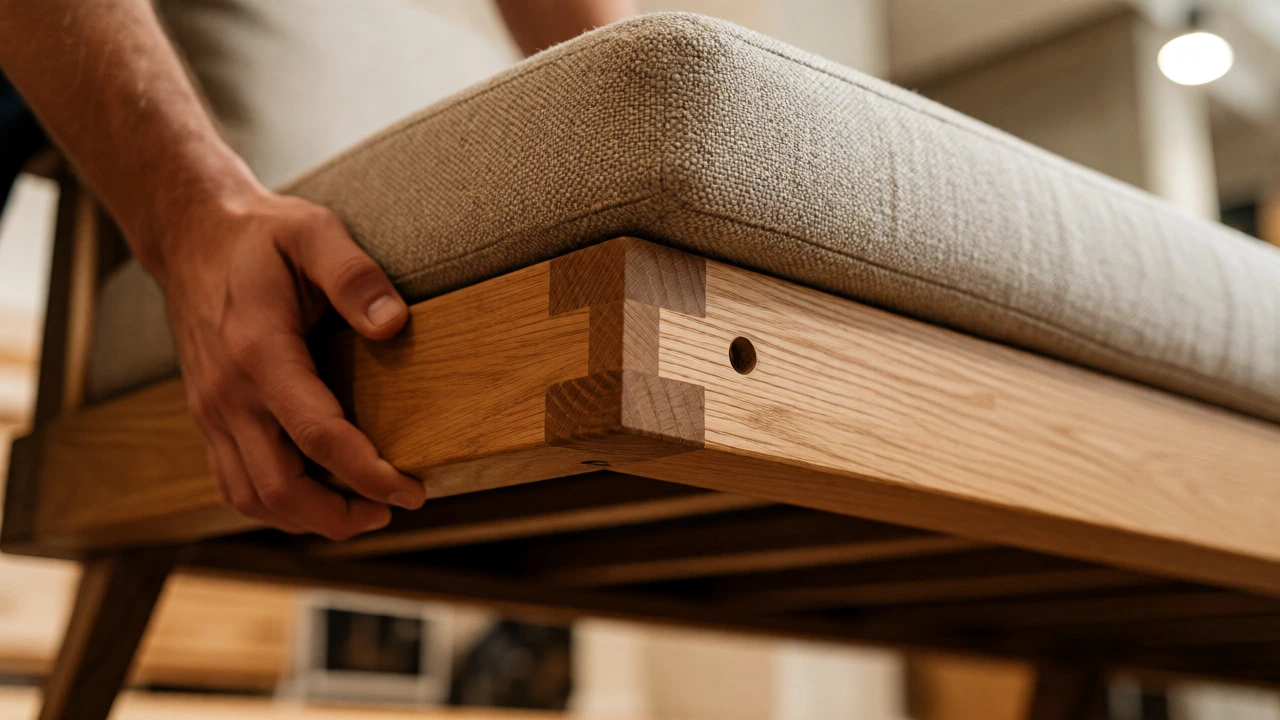
When you are shopping, ask about the frame material. You want hardwood frames. These are made from kiln-dried oak, maple, ash, or beech. Kiln-drying removes moisture, which prevents the wood from warping or cracking as temperatures change in your home. Avoid frames made from softwoods like pine or poplar unless they are heavily reinforced. Softwood bends under pressure, leading to wobbly legs and twisted joints within two years.
But wood type isn’t enough. Look at how the pieces connect. Staples and glue are red flags. They might hold together for six months, but once the humidity shifts or the weight distribution changes, those joints loosen. You want dowels, screws, and corner blocks. Corner blocks are triangular pieces of wood screwed into the inside corners of the frame. They act like gussets on a bridge, distributing weight evenly. If a salesperson says the frame is "stapled and glued," put it back on the floor. You are looking for joinery that says this thing was built to survive kids and pets.
Cushion Fill: The Secret to Long-Term Comfort
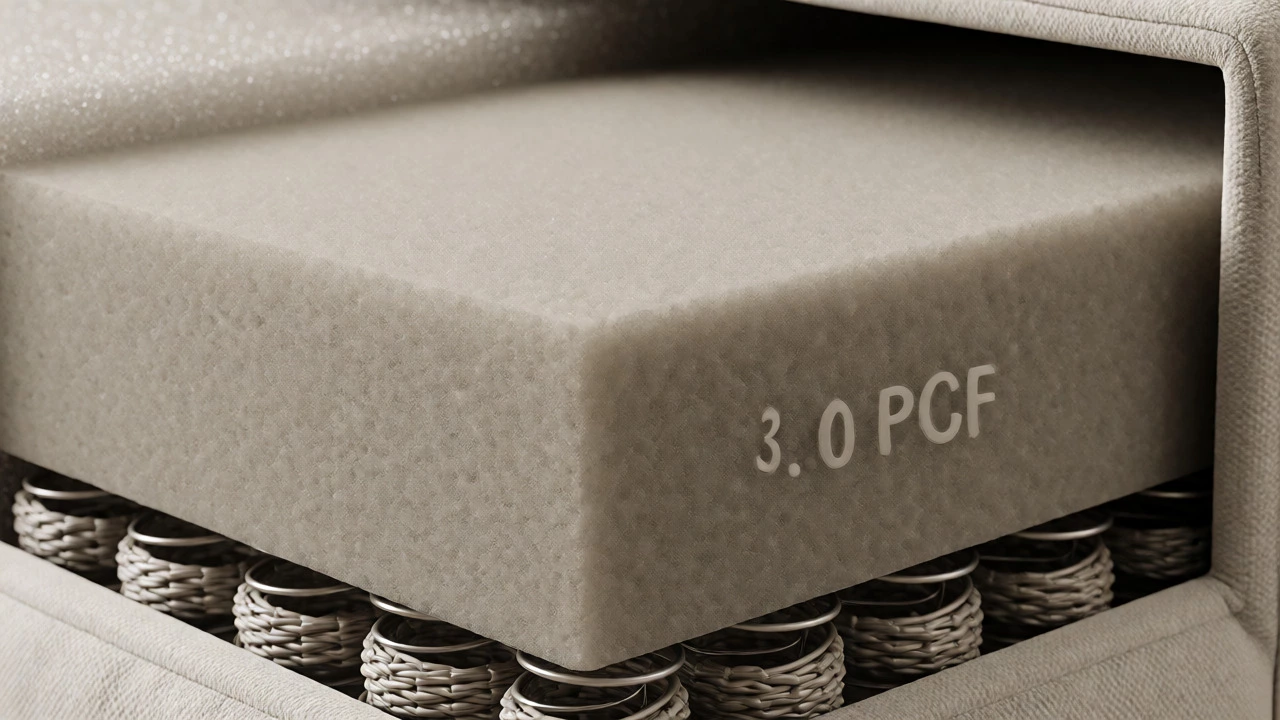
This is where most buyers get tricked. Foam density is measured in pounds per cubic foot (PCF). The higher the number, the heavier and more durable the foam. Cheap sofas use low-density foam, often around 1.8 PCF or less. This foam compresses quickly. After eighteen months, it turns into a thin pancake, leaving you sitting directly on the frame springs.
For a couch that won’t sag, you need high-density foam with a rating of at least 2.5 PCF for seat cushions. Ideally, aim for 3.0 PCF or higher. Yes, high-density foam feels firmer when you first sit on it. It doesn’t have that immediate "cloud" sensation. But give it three months. The fibers relax slightly, but the structure remains intact. Low-density foam collapses; high-density foam supports.
| Foam Type | Density (PCF) | Expected Lifespan | Comfort Profile |
|---|---|---|---|
| Budget Polyurethane | < 1.8 | 1-2 Years | Very Soft, Sags Quickly |
| Standard Commercial | 1.8 - 2.4 | 3-5 Years | Moderate Support, Moderate Sag |
| High-Density Residential | 2.5 - 3.5 | 7-10+ Years | Firm Initially, Durable Long-Term |
| Memory Foam Topper | N/A (Layer) | Varies | Adds contouring, needs HD base |
Some manufacturers try to hide low-quality foam by wrapping it in polyester fiber or down feathers. This is called a "foam core with feather wrap." It sounds luxurious, and it is comfortable, but the foam underneath still needs to be high-density. If the core is cheap, the feather wrap just masks the sag until it completely flattens out. Check the tag. If it says "polyester fill" without mentioning foam density, assume the worst.
Support Systems: Springs vs. Webbing
Underneath those cushions lies the support system. This is the layer that holds the foam up. There are two main types: webbing and springs. Which one is better? It depends on quality, but generally, springs win for longevity.
Elastic webbing is common in budget and mid-range sofas. It consists of strong fabric straps stretched across the frame. High-quality webbing is tightly woven and attached with heavy-duty staples or clips. However, even the best webbing loses tension over time. Heat and weight stretch the fibers. Within five years, webbed seats often develop a noticeable dip in the center.
Spring systems come in three varieties:
- Serpentine Springs: These are zigzag wires running front-to-back. They are affordable and decent, but they can rub against each other and squeak. They also tend to push through the padding if not properly insulated.
- Pocket Coils: Similar to mattress technology, these are individual coils wrapped in fabric. They move independently, meaning if your partner sits down, you don’t feel them. They offer excellent support and resist sagging well, but they are expensive.
- Eight-Way Hand-Tied Springs: The gold standard. These are knots tied by hand in eight directions. They provide superior weight distribution and rarely sag. If you see this in a price range you can afford, buy it. It is an investment in structural integrity.
If you are stuck between webbing and serpentine springs, choose the webbing only if it is double-layered and tight. If you choose springs, ensure there is a thick layer of insulating padding between the springs and the foam. Without it, the metal will eventually cut through the foam, creating hard spots and accelerating wear.
Testing the Sofa Like a Pro
You cannot always read the spec sheet in the store. Sometimes the tags lie or omit details. So, you need to perform physical tests. Don’t be shy-salespeople expect you to test the furniture. Here is exactly what to do.
First, lift one side of the sofa. Grab the armrest and pull upward. If the entire unit lifts easily, the frame might be light and flimsy. A solid hardwood frame should feel substantial. If it feels hollow or extremely light, it likely uses particleboard or thin plywood.
Next, sit on the edge. Not in the middle-the edge. Sit near the armrest and lean forward. Then stand up and press down firmly on the cushion with your fist. Hold for ten seconds. Release. Watch the cushion return to its original shape. High-density foam rebounds quickly. Low-density foam stays compressed for several seconds. If it takes more than three seconds to fully recover, it will sag within two years.
Finally, check the stitching. Look at the seams along the bottom and sides. Are they straight? Is the thread uniform? Poor stitching indicates rushed manufacturing. While stitching doesn’t cause sagging directly, it reveals the overall care taken in construction. A factory that cuts corners on thread will definitely cut corners on foam density.
Common Myths That Lead to Bad Buys
Let’s clear up some confusion. Many shoppers believe certain features guarantee durability, but they actually don’t.
Myth 1: "Down-filled sofas are the most comfortable." Down is incredibly soft and moldable. But pure down fills flatten completely. You end up sitting on the frame. If you love down, look for "down-proof ticking" and a high-density foam core surrounded by down. Never buy a sofa filled entirely with down if you want it to keep its shape.
Myth 2: "Leather is tougher than fabric." Leather is durable, yes, but it stretches. Over time, leather seats widen and sag because the material itself expands under weight. Fabric, especially tightly woven synthetic blends, holds its shape better. If you want leather, look for top-grain or full-grain hides, which are thicker and resist stretching better than bonded or corrected grains.
Myth 3: "More layers mean better quality." Some sofas have multiple thin layers of foam glued together. This creates delamination risks. Each glue line is a potential failure point. One solid block of high-density foam is structurally sounder than three glued layers of medium-density foam.
Real-World Scenarios: What Should You Buy?
Not everyone needs an eight-way hand-tied spring system. Your choice depends on usage. Let’s look at three common scenarios.
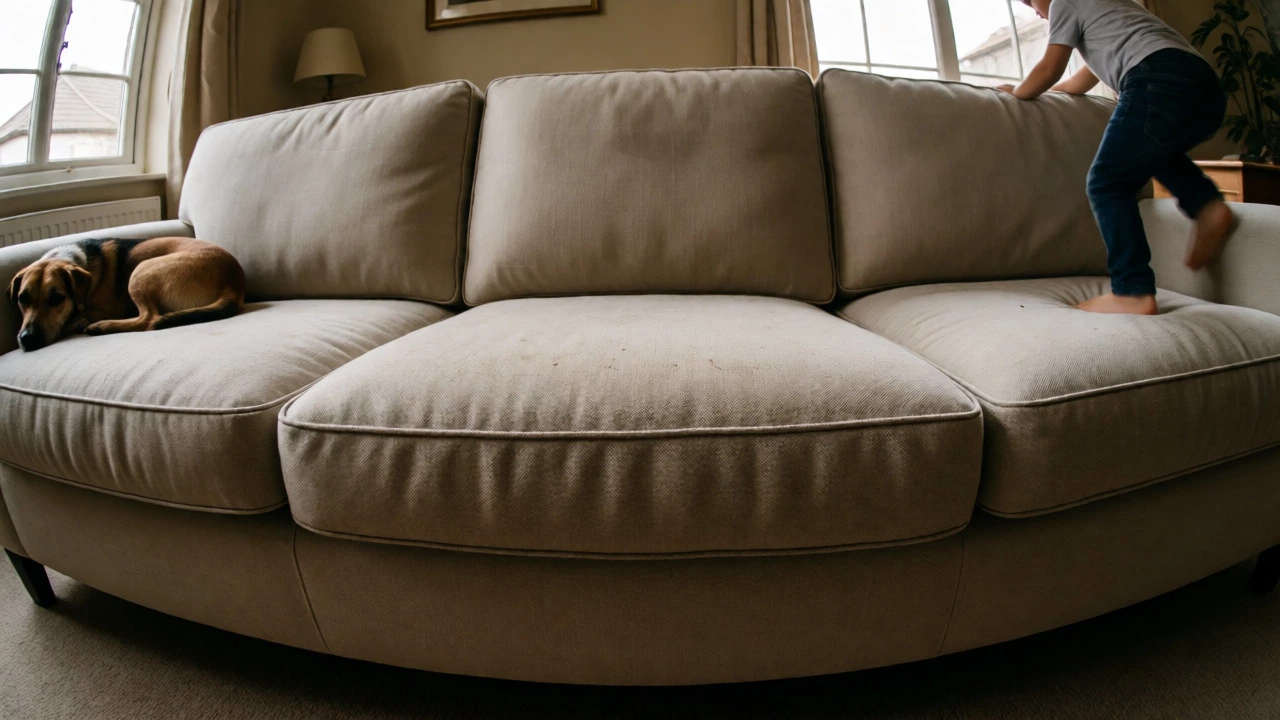
The Family Home: You have kids jumping on the couch and maybe a dog. You need resilience. Go for a hardwood frame, high-density foam (3.0 PCF), and pocket coil springs. Choose a performance fabric that resists stains. Do not skimp on the frame; this sofa will take a beating daily.
The Formal Living Room: This sofa gets used occasionally for guests. You can prioritize aesthetics over extreme durability. A webbed base with medium-density foam (2.2 PCF) might suffice. You can afford softer cushions because they aren’t being slept on every night. Just avoid ultra-cheap polyfill if you plan to host movie nights.
The Apartment Starter: You are on a budget and moving frequently. You might not want to spend $2,000 on a sofa. Look for modular designs with replaceable covers. Even if the foam sags in three years, you can buy replacement cushions separately. This extends the life of the frame significantly. Brands offering "lifetime warranty on frames" are worth investigating, even if the cushions are consumables.
Maintenance Tips to Prevent Early Sagging
Once you’ve bought the right couch, you can extend its life with simple habits. Rotate your cushions weekly. If you always sit on the same side, that foam compresses unevenly. Flipping and rotating distributes the wear.
Vacuum your sofa regularly. Dust and grit settle into the fabric and act like sandpaper against the fibers. Over time, this breaks down the upholstery and allows dirt to reach the foam, degrading it faster.
Avoid sitting on the very edge of the seat for prolonged periods. The edge is the weakest part of any sofa structure. If you have young children who like to perch on the arms, remind them to sit back. Consistent edge-sitting accelerates frame stress and cushion collapse.
By focusing on construction rather than initial comfort, you bypass the marketing traps. Remember: firm now means flexible later. Soft now means flat soon. Invest in the bones, and your couch will support you for a decade.
Is memory foam good for sofas?
Memory foam is great for contouring but poor for support on its own. It tends to trap heat and can make getting up difficult. For sofas, use memory foam only as a thin top layer over a high-density polyurethane core. Pure memory foam seats often feel too hot and lack the bounce needed for social seating.
How long should a high-quality sofa last?
A well-made sofa with a hardwood frame and high-density foam should last between 7 to 10 years with regular use. Budget sofas typically last 2 to 4 years. Luxury sofas with eight-way springs can last 15 years or more if the upholstery is maintained.
Can I fix a sagging couch myself?
Yes, if the frame is intact. You can buy replacement foam inserts online, cutting them to size. If the springs are broken, a professional upholsterer can re-string them. However, if the wooden frame is cracked or warped, repair is usually not cost-effective compared to replacement.
What does "kiln-dried" mean for a sofa frame?
Kiln-drying involves heating wood in a controlled oven to remove excess moisture. This stabilizes the wood, preventing it from shrinking, swelling, or cracking due to humidity changes in your home. Always insist on kiln-dried hardwood for maximum durability.
Are leather sofas more prone to sagging?
Leather itself stretches, which can contribute to a sagging appearance if the underlying support is weak. However, leather is easier to clean and more resistant to pet damage than fabric. To prevent sagging, ensure the leather sofa has a high-density foam core and a sturdy frame.