 1
Dec,2025
1
Dec,2025
Furniture Storage Risk Calculator
Assess Your Storage Risk
Risk Assessment Results
You’ve just moved, cleaned out the attic, or are prepping for a long trip. You grab a roll of plastic wrap and start covering your wooden dresser, your couch, your bookshelf. It feels like a smart move-dust-proof, moisture-proof, done. But is it really? Wrapping furniture in plastic might seem like a quick fix, but it can actually cause more damage than protection-especially over time.
Why Plastic Seems Like a Good Idea
Plastic wrap, shrink wrap, or even heavy-duty polyethylene sheeting looks like the perfect barrier. It blocks dust, keeps out bugs, and gives the illusion of a sealed, safe environment. People use it on sofas during renovations, on dining sets in garages, or on antique pieces in storage units. It’s cheap, easy to find, and fast to apply. But appearances are misleading.
The real problem isn’t the plastic itself-it’s what happens underneath it.
Trapped Moisture Is the Silent Killer
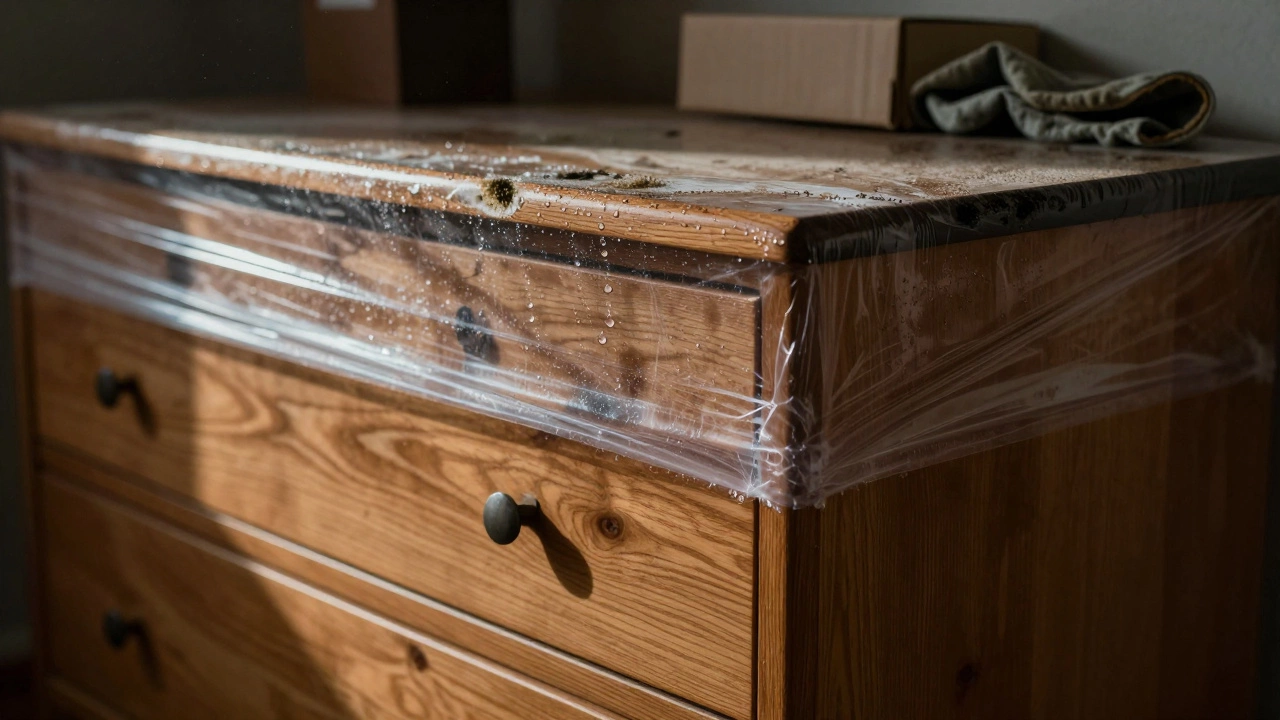
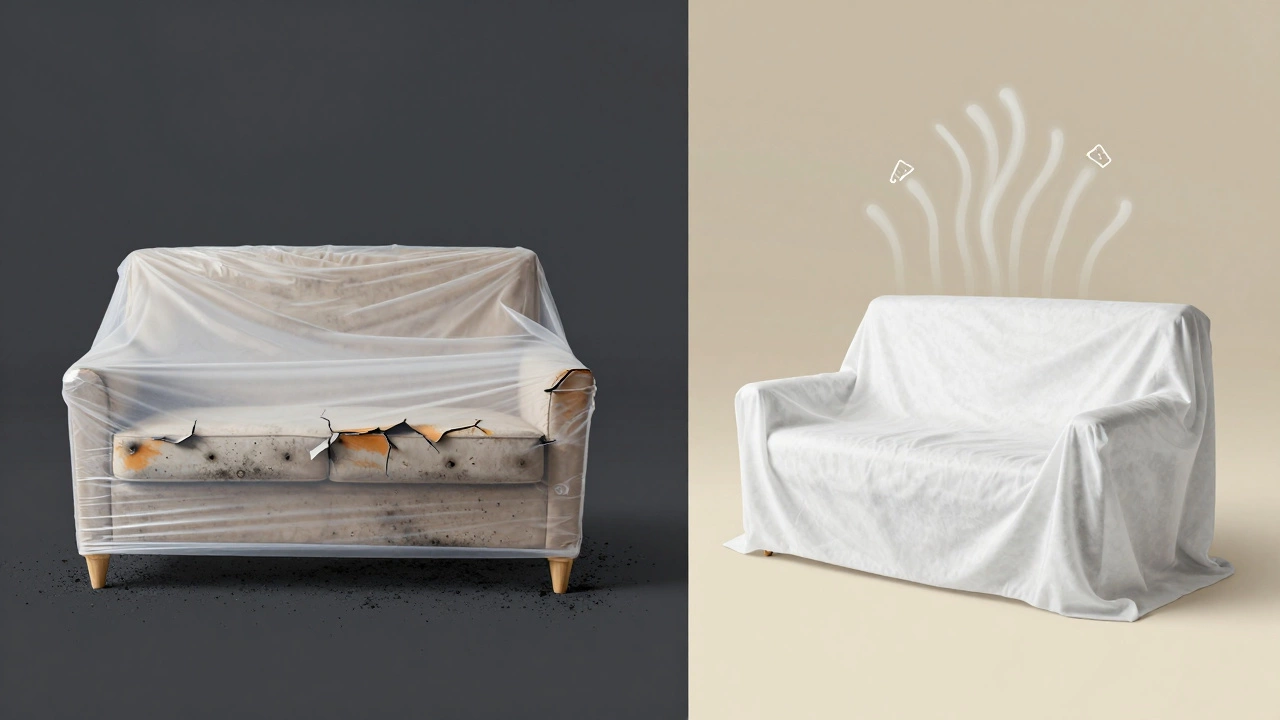
Furniture, especially wood, breathes. Even when it’s dry, it naturally absorbs and releases tiny amounts of moisture from the air. When you wrap it in plastic, you trap that moisture inside. In a cool, damp basement or a hot garage, condensation forms between the wood and the plastic. That’s not just water-it’s a breeding ground for mold, mildew, and rot.
One Melbourne homeowner wrapped a teak sideboard in plastic before storing it in a shed for six months. When they unwrapped it, the surface looked fine. But when they wiped it down, black spots appeared. The wood underneath had been rotting slowly, hidden by the plastic. The damage was irreversible.
Wood isn’t the only issue. Upholstered furniture like sofas and armchairs holds moisture in the padding and fabric. Plastic traps that moisture too, leading to musty smells, fabric degradation, and even insect infestations. Dust mites and silverfish thrive in dark, damp, enclosed spaces.
Plastic Can Also Damage Finishes
Modern furniture often has lacquered, painted, or veneered surfaces. Plastic wrap, especially low-quality cling film, can stick to these finishes. When you peel it off, you might pull off the top layer of paint or lacquer. This isn’t just cosmetic-it reduces the value of the piece and makes future refinishing harder.
Even if the plastic doesn’t stick, it can cause chemical reactions. Some plastics release plasticizers-softening agents-that can leave oily stains on wood or upholstery. These stains are tough to remove and often require professional cleaning.
What About Short-Term Storage?
Maybe you’re just covering your sofa for a week while you repaint the living room. In that case, plastic might be okay-but only if you take precautions.
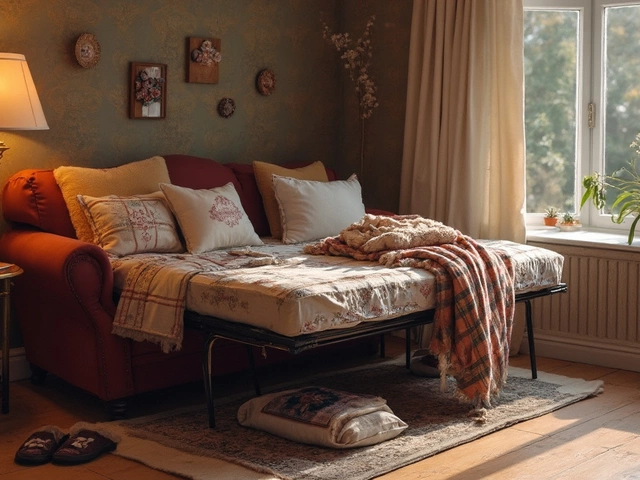
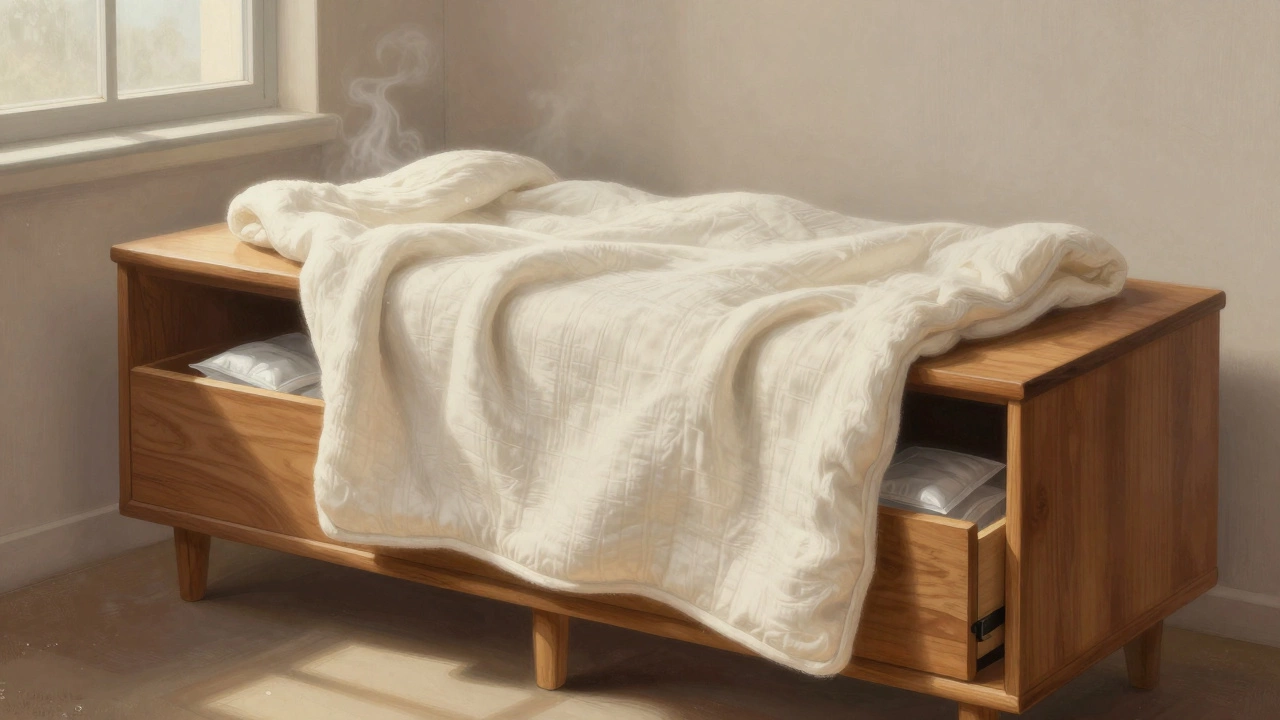
Use breathable cotton sheets or moving blankets first. Then, if you need extra protection from dust or spills, loosely drape a plastic sheet over the top-don’t wrap it tightly. Leave space for air to circulate. Remove the plastic as soon as the job is done.
For short-term use, avoid cheap plastic wrap. Use a heavy-duty, non-PVC tarp or a specialized furniture cover made for moving. These are designed to let moisture escape while still blocking dust.
Better Alternatives to Plastic Wrap
There are far better ways to protect your furniture during storage or moving.
- Use cotton or canvas furniture covers. These allow airflow and won’t trap moisture. Look for ones labeled "breathable" or "anti-mold."
- Wrap wood pieces in moving blankets. These cushion against bumps and let the wood breathe. Secure them with twine or straps, not tape.
- Use silica gel packs. Place a few in drawers or inside cabinets to absorb excess moisture. You can buy them in bulk online or from hardware stores.
- Store in a climate-controlled space. If you’re storing furniture long-term, choose a unit with temperature and humidity control. Avoid garages, basements, or sheds unless they’re properly insulated and ventilated.
- Elevate furniture off the floor. Use wooden pallets or plastic risers. Even a few inches of air space helps prevent moisture wicking from concrete or damp flooring.
What About Antique or High-Value Pieces?
If you’re storing heirloom furniture, vintage pieces, or anything with historical or monetary value, plastic is a hard no. These items are often made from sensitive materials-solid wood, hand-rubbed finishes, natural fabrics, or even animal hide.
Professional storage companies use acid-free tissue paper, archival-grade cotton wraps, and climate-controlled vaults. If you’re unsure, consult a furniture conservator. The cost of repair after plastic damage can be ten times the price of proper storage.
Signs Your Furniture Has Been Damaged by Plastic
Not all damage shows up right away. Watch for these red flags after removing plastic wrap:
- Dark spots or fuzzy growth on wood surfaces
- Musty, damp smell even after airing out
- Sticky or discolored areas on lacquered finishes
- Loose or crumbling fabric on upholstered pieces
- Warped drawers or doors that no longer close properly
If you see any of these, don’t ignore them. Mold can spread. Wood can continue to rot. The sooner you address it, the better your chances of saving the piece.
How to Properly Store Furniture Long-Term
Here’s a simple, step-by-step method that works whether you’re storing a single chair or a whole living room set:
- **Clean everything thoroughly.** Dust, vacuum, wipe down surfaces. Dirt and oils attract pests and trap moisture.
- **Disassemble if possible.** Take off legs, shelves, doors. This saves space and reduces stress on joints.
- **Wrap wood in moving blankets.** Use cotton or felt, not plastic. Secure with straps or twine.
- **Cover upholstery with breathable covers.** Avoid plastic. Use a cotton drop cloth if you don’t have specialty covers.
- **Place silica gel packs inside drawers and cabinets.** One pack per 2 cubic feet is enough.
- **Raise furniture off the floor.** Use pallets, plastic feet, or even stacked bricks.
- **Store in a dry, cool, ventilated space.** Ideal humidity: 30-50%. Ideal temperature: 15-22°C.
- **Check every 3-6 months.** Look for moisture, mold, or pests. Flip cushions, open drawers, air things out.
Final Verdict
No, it’s not okay to store furniture wrapped in plastic-especially for more than a few days. The risks far outweigh the benefits. Plastic creates a sealed environment that invites moisture, mold, and chemical damage. It’s a temporary fix that leads to long-term problems.
Instead, use breathable materials, control humidity, and give your furniture room to breathe. It might take a little more effort, but your furniture will thank you-years down the line.
Can I use plastic wrap on furniture for just a few days?
For a few days-like during a quick home renovation-it’s usually fine if you don’t seal it tightly. Leave gaps for air to circulate, and remove the plastic as soon as possible. Never leave plastic on furniture for more than a week, especially in humid climates.
What’s the best material to wrap wood furniture in?
Moving blankets made of cotton or felt are the best choice. They cushion the furniture and allow moisture to escape. Avoid plastic, bubble wrap, or vinyl. If you need extra protection, cover the blanket with a breathable cotton sheet.
Is it safe to store furniture in a garage?
Only if the garage is climate-controlled. Most garages get too hot in summer and too cold and damp in winter. Temperature swings cause wood to expand and contract, leading to cracks. Moisture buildup causes mold. If you must store furniture in a garage, use breathable covers, elevate it off the floor, and check it monthly.
Can plastic wrap cause mold on upholstered furniture?
Yes, absolutely. Upholstery traps moisture in the padding and fabric. Plastic wrap seals that moisture in, creating the perfect environment for mold and mildew to grow. You might not see it at first, but the smell will come back, and the fabric can start to break down.
What should I do if I already wrapped my furniture in plastic?
Remove the plastic immediately. Let the furniture air out in a dry, well-ventilated room for at least 24-48 hours. Check for dampness, stains, or musty smells. If you see mold, wipe it gently with a cloth dampened in vinegar and water, then dry thoroughly. For serious damage, consult a professional restorer.