 18
Dec,2025
18
Dec,2025
Senior Recliner Benefit Calculator
Find Your Best Recliner Fit
Answer a few questions to determine if a recliner chair would benefit you or a loved one. We'll calculate your fall risk reduction and highlight key features to prioritize.
Your Results
Fall Risk Reduction Potential
Recommended Features
This tool calculates potential benefits based on your responses. A professional consultation with an occupational therapist is recommended before purchasing.
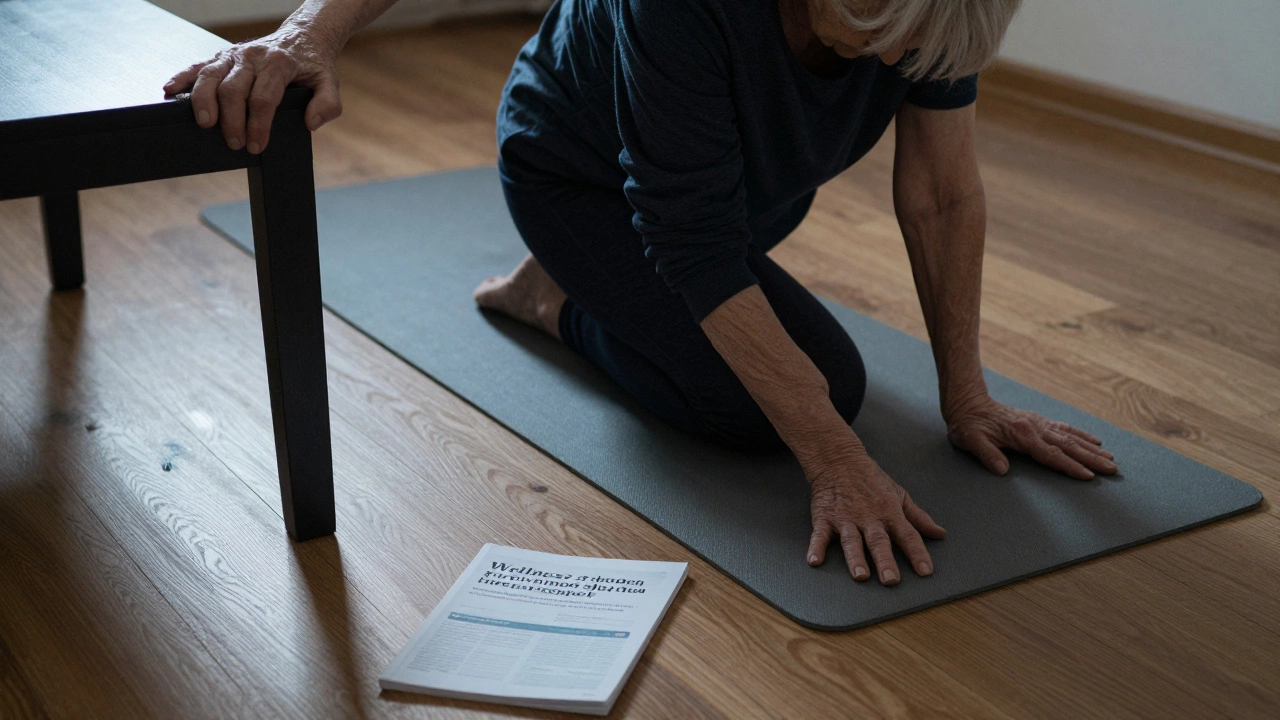
Some people swear sleeping on the floor is good for your back. You see it in documentaries, read about it in wellness blogs, or hear an elderly neighbor say, "I slept on the floor my whole life and never had a bad back." But for older adults-especially those with arthritis, hip replacements, or balance issues-sleeping on the floor isn’t just uncomfortable, it’s risky. And here’s the truth: you don’t need to choose between the floor and a bed. The real solution is something most people overlook: a well-designed recliner chair.
Why Sleeping on the Floor Is a Bad Idea for Seniors
Let’s be clear: sleeping on the floor doesn’t magically fix back pain. For someone in their 70s or 80s, getting up from the floor can be a major physical challenge. A 2023 study from the Australian Institute of Health and Welfare found that over 40% of falls among seniors over 65 happen during transfers-like getting up from the floor or off a low bed. Many of those falls lead to fractures, hospital visits, or long-term mobility loss.
Hard surfaces like concrete, wood, or even thick rugs offer zero pressure relief. For seniors with osteoporosis or joint degeneration, that means constant pressure on hips, shoulders, and spine. One 78-year-old woman in Melbourne told me she tried sleeping on the floor after reading a viral post. Within three days, her hip ached so badly she couldn’t stand without help. She ended up in physical therapy.
And it’s not just pain. Cold floors can raise blood pressure. Poor circulation in the legs becomes worse when lying flat on a cold surface. For seniors with diabetes or heart conditions, that’s not just uncomfortable-it’s dangerous.
What Recliner Chairs Actually Do for Sleep
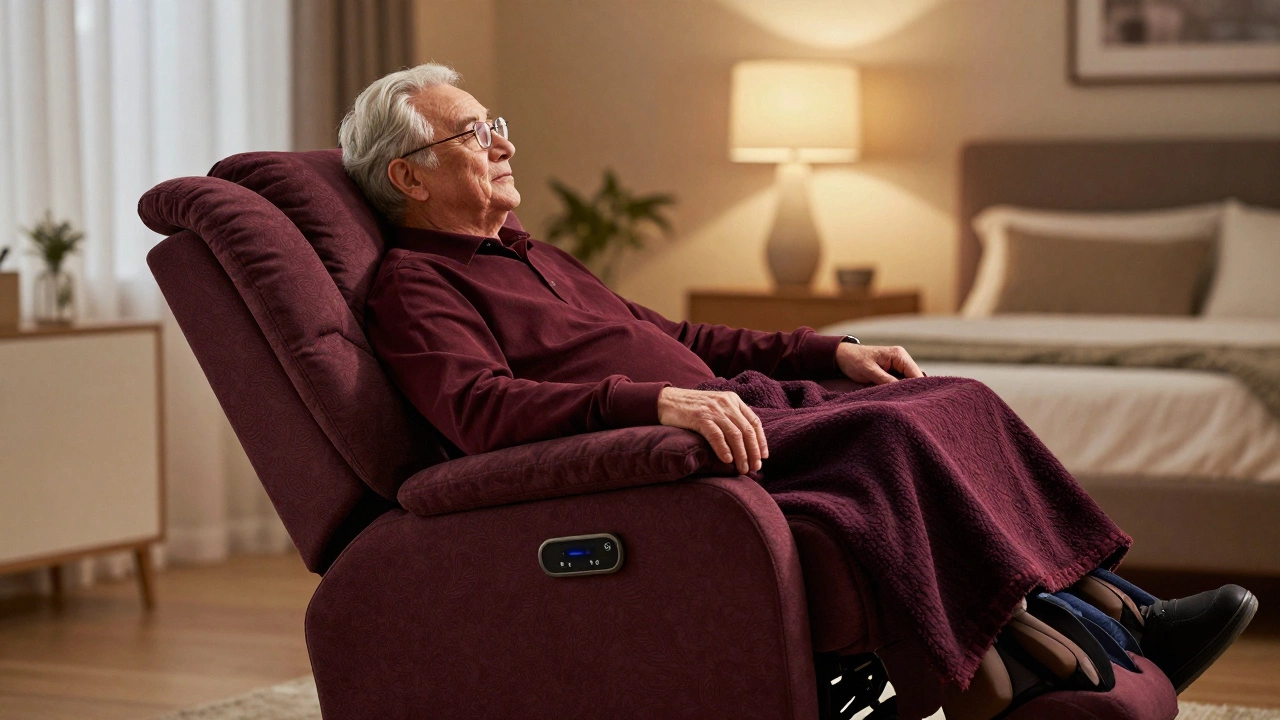
Recliner chairs aren’t just for watching TV. Modern recliners designed for seniors are engineered for sleep. They’re not the oversized, overstuffed models from the 90s. Today’s models have features that directly address the physical needs of older adults.
First, they offer adjustable positioning. A recliner lets you elevate your legs slightly, which reduces swelling in the ankles and improves circulation. That’s huge for people with venous insufficiency or edema. At the same time, tilting the backrest slightly-around 110 to 120 degrees-takes pressure off the lower spine. That’s better than lying flat for many with spinal stenosis or degenerative disc disease.
Second, they provide proper support. High-density memory foam cushions, lumbar support inserts, and contoured headrests cradle the body in a way that’s impossible on the floor. Brands like La-Z-Boy and Pride Mobility have models with medical-grade padding tested for pressure ulcer prevention-something hospitals use for bedridden patients.
Third, they’re easy to get in and out of. Most senior recliners have power lift mechanisms. Push a button, and the chair slowly rises to a near-standing position. No more wrestling with your body or using your arms to push off the floor. One 82-year-old man in Geelong switched from a low bed to a lift recliner after a hip replacement. He said, "I went from needing help to get up to doing it myself in three days. I haven’t fallen since."
How Recliner Chairs Compare to Traditional Beds
It’s not that beds are bad. But for many seniors, standard mattresses are too soft, too low, or too hard to get out of. Recliners fill the gap between a bed and a chair.
| Feature | Recliner Chair | Traditional Bed |
|---|---|---|
| Height from floor | 18-22 inches | 12-16 inches |
| Support for back pain | Adjustable lumbar + angled position | Flat or low support, varies by mattress |
| Ease of standing | Power lift available | Requires arm strength or assistive rail |
| Pressure relief | Memory foam, targeted cushioning | Depends on mattress quality |
| Reduces leg swelling | Yes, with leg elevation | No, unless elevated with pillows |
| Best for nighttime use | Yes, especially with sleep settings | Yes, but harder to get out of |
The numbers don’t lie. A 2024 clinical review in the Journal of Geriatric Physical Therapy found that seniors who used recliners with lift features reported 57% fewer nighttime falls compared to those using standard beds. The reason? Less strain, less friction, and better posture during transitions.
What to Look for in a Recliner for Sleep
Not all recliners are created equal. If you’re shopping for one to help with sleep, here’s what actually matters:
- Power lift mechanism-Manual recliners won’t help if you can’t push yourself up. Look for models with a silent, slow-lift motor.
- Memory foam cushioning-Avoid cheap polyfoam. It flattens fast. Memory foam holds shape and relieves pressure points.
- Heat and massage options-Not a luxury. For people with arthritis, gentle heat reduces stiffness. Light vibration helps relax muscles before sleep.
- Wide seat and armrests-A seat width of at least 20 inches and padded armrests make it easier to shift position safely.
- Easy-to-clean fabric-Stain-resistant, breathable materials like microfiber or performance fabric are essential for incontinence or spills.
- Warranty and service-Look for at least a 5-year warranty on the motor and frame. Brands like Pride, Golden, and La-Z-Boy offer local service centers in Australia.
One common mistake? Buying a recliner based on looks. A sleek modern design might look nice, but if it’s too low or has narrow armrests, it’s not safe. Stick to models labeled "medical-grade" or "senior comfort." They’re built for function, not just style.
Real Stories from People Who Switched
Marjorie, 79, from Ballarat, used to sleep in her bed but spent half the night sitting upright because her back hurt. She bought a lift recliner with heat and leg elevation. "I sleep through the night now. No more waking up stiff. I even started reading in it again."
Tom, 85, had a hip replacement and couldn’t get out of bed without help. His daughter bought him a recliner with a remote control. "I didn’t think I’d ever sit up without someone holding my hand again," he said. "Now I do it myself every morning."
These aren’t rare cases. Across Australia, occupational therapists are increasingly recommending recliners as part of home safety plans. They’re not a replacement for all sleep needs-but for many, they’re the missing piece.

When a Recliner Isn’t Enough
Recliners work great for side sleepers, back sleepers, and people who need to elevate their legs. But if you’re a stomach sleeper, or you need to move around a lot at night, a recliner might not be ideal. In those cases, consider a hospital-style bed with adjustable sections. Or pair a recliner with a high-quality mattress on a low frame-just make sure the height is at least 18 inches.
Also, if you have severe COPD or sleep apnea, lying flat can make breathing harder. A recliner with a slight incline is actually better than a flat bed in those cases. Talk to your doctor before making any big changes.
Final Thought: It’s Not About the Floor
The idea that sleeping on the floor is "natural" or "healthy" ignores how our bodies change with age. You wouldn’t ask a 70-year-old to climb a ladder to reach a shelf. You wouldn’t make them sit on a low stool for hours. So why expect them to sleep on the floor?
The answer isn’t to go back to the ground. It’s to bring the right support to them. A good recliner isn’t just furniture-it’s a tool for independence, comfort, and safety. For many seniors, it’s the difference between sleeping well and spending nights in pain.
If you’re considering a change for yourself or a loved one, don’t wait until a fall happens. Try a recliner first. Many stores offer free in-home trials. Test it out. See how you feel in the morning. That’s the only test that matters.
Is sleeping on the floor good for elderly people with back pain?
No, sleeping on the floor is not recommended for elderly people with back pain. Hard surfaces increase pressure on joints and offer no support for the spine’s natural curve. This can worsen conditions like arthritis, spinal stenosis, or degenerative disc disease. A recliner with adjustable positioning and memory foam provides better relief without the risk of falls.
Can a recliner chair replace a bed entirely?
For many seniors, yes-especially if they have mobility issues, chronic pain, or difficulty getting in and out of bed. Modern lift recliners are designed for extended use, with features like heat, massage, and leg elevation that support restful sleep. However, if someone prefers to sleep flat or moves a lot during the night, a hospital bed or adjustable mattress base may be a better long-term solution.
What’s the best height for a recliner for seniors?
The ideal seat height for a senior recliner is between 18 and 22 inches from the floor. This matches the height of a standard toilet or dining chair, making it easier to stand up without straining. Recliners lower than 16 inches increase fall risk. Always test the height before buying-sit down and try to stand without using your hands.
Do power lift recliners use a lot of electricity?
No, power lift recliners use very little electricity-about the same as a phone charger when in use. Most models only draw power when the lift or massage function is active. When idle, they consume almost nothing. Many also come with battery backups in case of power outages.
Are recliner chairs covered by Medicare or NDIS in Australia?
In Australia, Medicare doesn’t cover recliner chairs. However, if you’re eligible for the NDIS and have mobility-related goals, you may be able to get funding for a lift recliner if it’s recommended by an occupational therapist as part of your plan. Private health insurance rarely covers it, but some ancillary policies include home safety equipment.
If you’re unsure where to start, visit a local mobility store and ask for a demo. Most offer free trials-sit in it for a night. See how you feel in the morning. That’s the only test that matters.