Clothes Press: What It Is, How It Works, and Why You Need One
When you think of removing wrinkles from clothes, you probably picture an iron or a steamer. But there’s another tool that’s quieter, faster, and gentler on fabrics: the clothes press, a device that uses heat and pressure to flatten garments without direct contact or steam. Also known as a garment press, it’s the go-to solution for suits, dress shirts, and delicate fabrics that can’t handle the roughness of traditional ironing. Unlike an iron that drags across fabric, a clothes press clamps down evenly, smoothing out creases in seconds. It doesn’t splash water, leave shine marks, or burn through thin materials. That’s why tailors, hotel staff, and people who hate ironing all swear by it.
The real difference shows up in how it treats your clothes. A garment steamer, a tool that uses hot vapor to relax fibers works great for curtains or drapes, but it leaves fabric damp and can cause water spots on wool or silk. An iron, a heated metal plate used to press fabric with manual pressure gives control but demands time, skill, and attention. A clothes press? You set it, close the lid, wait ten seconds, and open. Done. No standing over a board. No guessing if you’re applying too much heat. It’s the only tool that gives professional results without the hassle.
People who buy clothes presses aren’t just trying to avoid ironing—they’re protecting their investment. A good wool suit can cost hundreds. A silk blouse might be hand-washed and air-dried for years. These aren’t throwaway items. A clothes press keeps them looking sharp without wearing them down. And it’s not just for formal wear. Think of linen shirts, tailored pants, or even cotton tablecloths. If it wrinkles easily and you care how it looks, a clothes press makes sense.
What you’ll find in the posts below isn’t just a list of articles. It’s a collection of real-world advice on how to care for your clothes, what tools actually work, and how to make your daily routine easier. From why Queen Elizabeth I used starched ruffs to how to store clothes without damaging them, these posts connect the dots between fashion, function, and practicality. You’ll learn what fabrics need special care, how to spot a quality pressing tool, and why some people swear by steam while others never touch an iron. This isn’t theory. It’s what people actually do to keep their clothes looking better, longer.
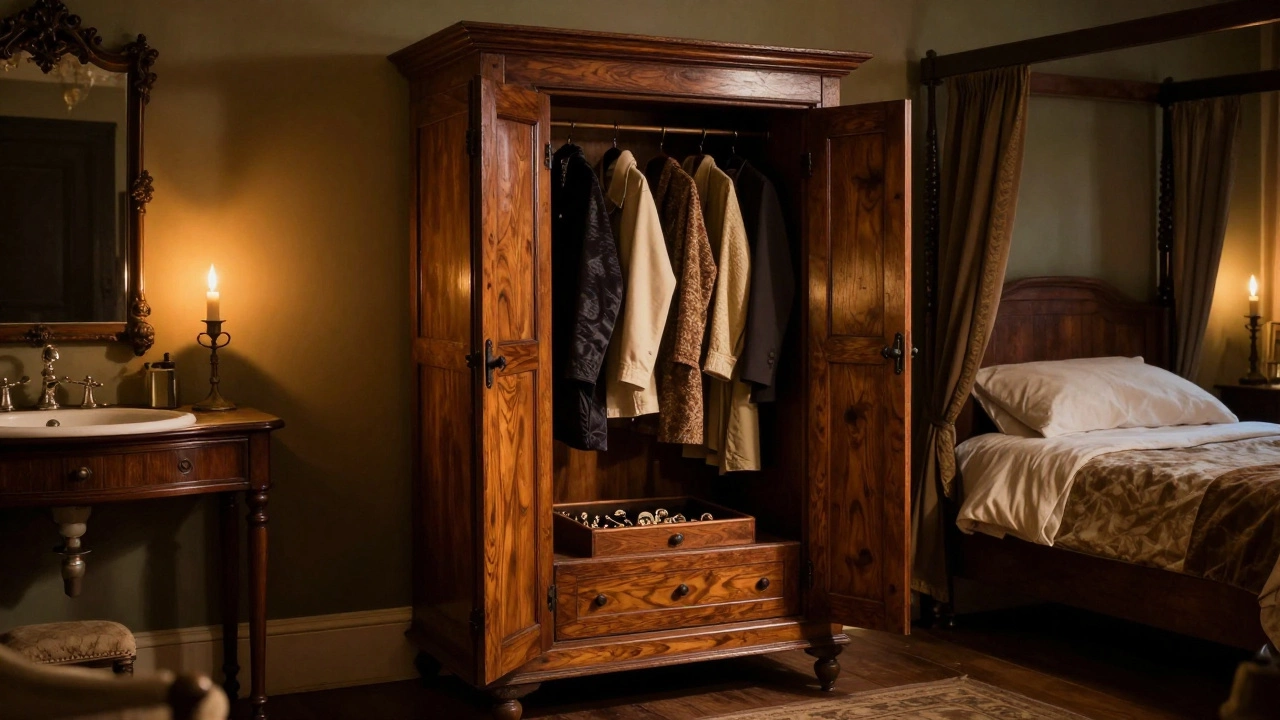
What Are Old Closets Called? The Real Names of Vintage Storage Furniture
Old closets weren't built into walls - they were freestanding furniture. Discover the real names like armoire and clothes press, how they were used, and why they still matter today.
View more