Tudor fashion: What it really looked like and how it shaped modern style
When we talk about Tudor fashion, the distinctive clothing style worn in England between 1485 and 1603 under the Tudor dynasty. Also known as Elizabethan dress, it was less about beauty and more about control—every sleeve, ruff, and color had a rule tied to rank, wealth, or law. This wasn’t just what people wore—it was a system. A tailor could be fined for making a merchant’s doublet too fancy. A noblewoman could be punished for wearing silk without permission. The clothes didn’t just show who you were—they enforced it.
Behind the velvet and gold thread was a world of strict hierarchy. Sumptuary laws, legal codes that dictated what fabrics, colors, and styles each social class could wear ruled daily life. Only the royal family could wear purple velvet. Only nobles could wear fur-lined cloaks. Even the width of a man’s sleeve was regulated. These rules weren’t suggestions—they were enforced by the state. And while we think of fashion today as self-expression, back then, it was a legal contract. The ruff collar, the stiff, lace-trimmed neckpiece that became a Tudor signature wasn’t just decorative—it took hours to starch and set, and only someone who didn’t need to work could afford the time. The same goes for the farthingale, the hoop skirt that created a bell-shaped silhouette for women. It wasn’t about comfort. It was about space. You had to have room to move, room to be seen, and room to remind everyone you belonged at the top.
What’s surprising is how much of this still lingers. The structured shoulders we see in modern blazers? They trace back to the padded doublets of Henry VIII. The oversized bows on today’s dresses? They’re cousins to the exaggerated puffs on Tudor gowns. Even the idea that certain colors are "power colors"—black, deep red, gold—comes straight from Tudor court rules. You don’t need a history degree to see it. Look at any high-end runway show, and you’ll spot Tudor DNA in the cut, the texture, the drama.
Below, you’ll find real, practical insights from people who’ve studied these garments—not as museum pieces, but as living design. You’ll learn what fabrics actually held up over time, how tailors built garments that looked extravagant but were built to last, and why some "historical" costumes you see today are completely wrong. Whether you’re into vintage style, costume design, or just curious about how power gets dressed, these posts cut through the myths and show you what Tudor fashion truly was—and how it still shapes what we wear today.
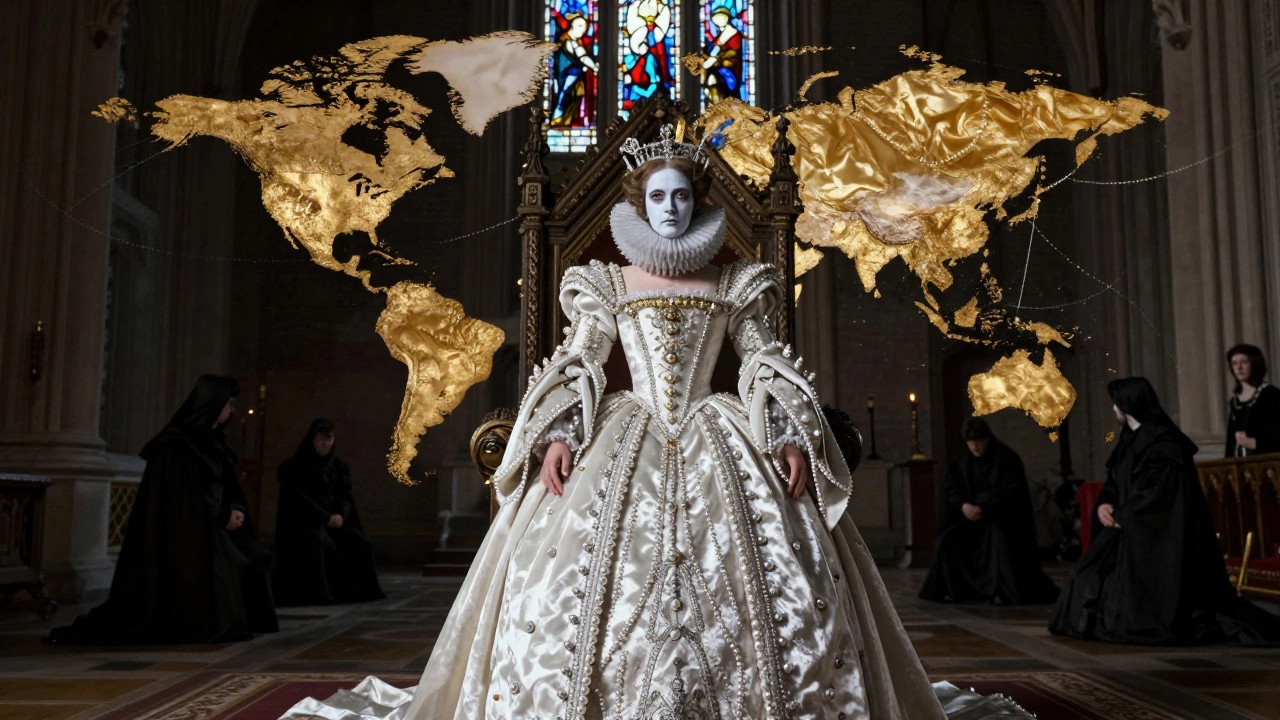
Why Did Queen Elizabeth I Dress the Way She Did?
Queen Elizabeth I used her wardrobe as a tool of power, politics, and propaganda. Every garment was carefully chosen to project authority, reinforce her image as the Virgin Queen, and assert England’s global influence.
View more