Wardrobe History: How Storage Evolved From Chests to Closets
When you think of a wardrobe, a freestanding cabinet for storing clothes. Also known as closet, it's a basic part of modern homes—but it wasn't always this way. Long before walk-in closets became standard, people stored clothes in wooden chests, trunks, or hanging hooks. The modern wardrobe as we know it began appearing in European aristocratic homes in the 1600s, designed to protect fine fabrics from moths and dust. These early wardrobes were heavy, ornate, and often locked—more like portable safes than simple storage units.
Across the Atlantic, Americans took a different path. With larger homes and a focus on built-in space, they started carving out rooms or alcoves for hanging clothes. By the 1900s, the term closet, a recessed storage space built into a wall. Also known as wardrobe, it's the dominant form of clothing storage in U.S. homes. became the norm. In contrast, European homes, especially in older cities with smaller apartments and strict building codes, kept freestanding wardrobes because they were easier to move and didn’t require structural changes. This split still exists today: if you’re shopping for clothes storage in the U.S., you’ll search for "closet"—not "wardrobe." In the UK and Europe, you’ll still see freestanding units in nearly every bedroom.
The shift wasn’t just about space—it was about lifestyle. As fabrics became cheaper and wardrobes lost their luxury status, design followed function. Simple sliding doors replaced heavy carved panels. Metal rods replaced wooden hangers. And then came the rise of modular systems, pull-out drawers, and mirrored fronts. Today, your wardrobe—or closet—isn’t just about storage. It’s part of your daily routine, your sense of order, even your personal style. A poorly designed one can make mornings stressful. A well-organized one can save you time, reduce clutter, and even help you pick outfits faster.
What you find in your closet now is the result of centuries of trade, migration, and changing tastes. The wooden chest that held a nobleman’s velvet coat in 17th-century France became the sliding door unit in a London flat today. The walk-in closet in a 1950s American suburban home grew out of a need for efficiency, not elegance. And now, with sustainability in mind, people are choosing bamboo wardrobes with tiger-inspired detailing—not just for looks, but because they’re durable, renewable, and built to last.
Below, you’ll find real-world stories and practical insights about how people store clothes, why certain terms vary by country, and what materials and designs actually work over time. Whether you’re replacing an old wardrobe, designing a new closet, or just curious why Americans don’t say "wardrobe," you’ll find answers rooted in history, not guesswork.
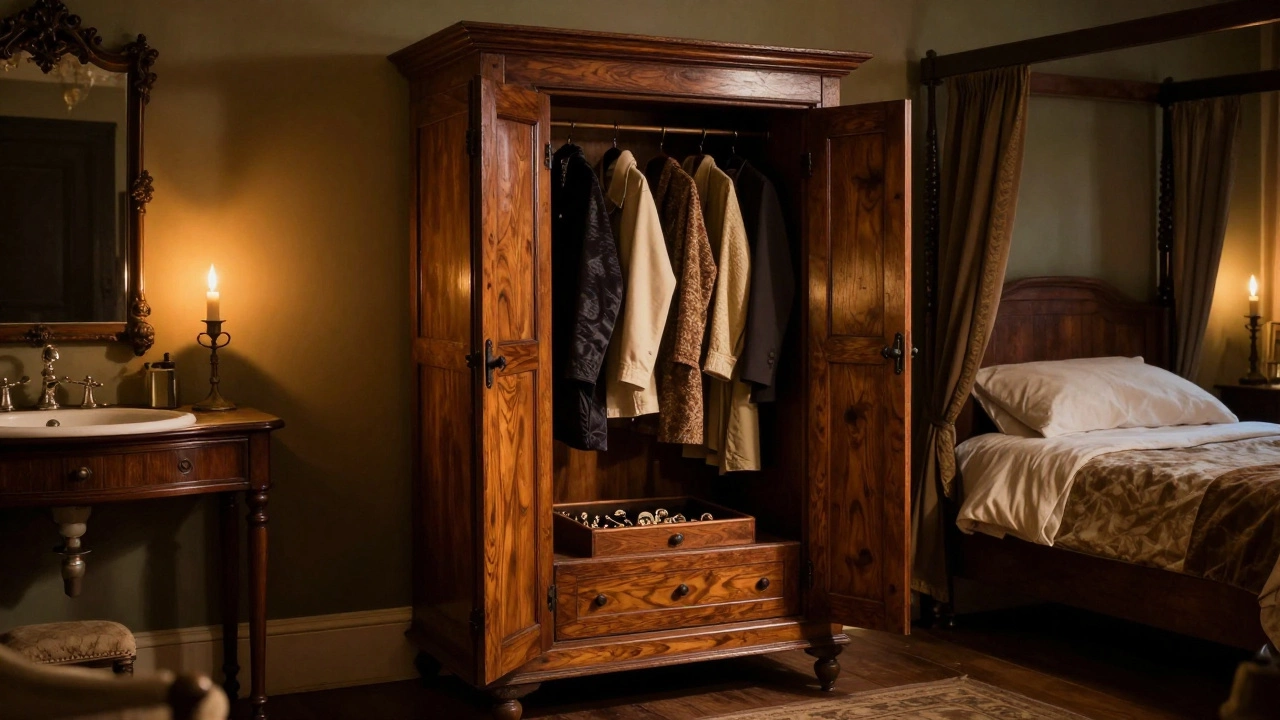
What Are Old Closets Called? The Real Names of Vintage Storage Furniture
Old closets weren't built into walls - they were freestanding furniture. Discover the real names like armoire and clothes press, how they were used, and why they still matter today.
View more