 5
Jan,2026
5
Jan,2026
TV Wall Mount Safety Calculator
Check Your TV Mount Safety
Determine if your wall can safely support your TV based on weight and mounting type.
If your TV came without a stand-or the stand broke, got lost, or you just don’t want it-you’re not stuck. A TV without a stand isn’t broken. It’s just waiting for a better home. Millions of people in Australia and around the world use their TVs without the original base. You don’t need to buy a new TV. You don’t even need to buy a new stand. There are smarter, safer, and often cheaper ways to make your TV work in your space.
Mount It on the Wall
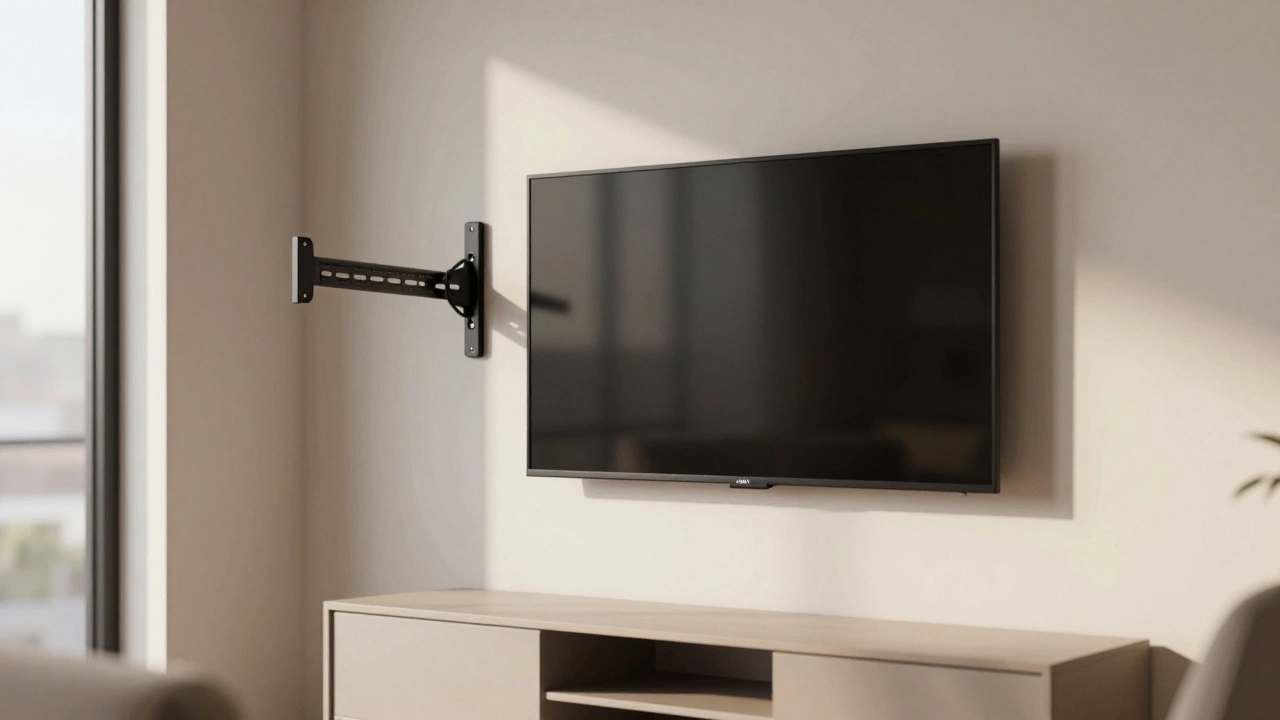
The most common and practical solution for a TV without a stand is to mount it on the wall. Wall mounts are designed for this exact situation. Most modern TVs have VESA mounting holes on the back-standardized patterns that fit almost every wall bracket. Check your TV’s manual or look up the model online to find the VESA size (like 200x200 or 400x300). Then pick a mount that matches it.Wall mounting isn’t just about saving space. It gives you a cleaner look, better viewing angles, and keeps the TV out of reach from kids or pets. In Melbourne homes, where space is tight, wall mounts are everywhere. You can get a basic fixed mount for under $50, or a tilting one for $80-$120 if you want to reduce glare from windows. Just make sure you’re screwing into wall studs. Drywall anchors won’t hold a 55-inch TV. Use a stud finder. Drill pilot holes. Double-check the weight rating. A 30kg TV needs a mount rated for at least 45kg. Safety isn’t optional.
Use a TV Cabinet or Console
If you like the idea of having your TV sit on something, but not the original stand, a TV cabinet or media console is your next best bet. These are designed to hold TVs without needing the original base. Look for one with a flat, sturdy top surface that’s wide enough to support your TV’s width. Most TVs are wider than their stands, so the surface needs to be at least as wide as the TV’s base. Measure before you buy.Many people use old sideboards, dressers, or even sturdy bookshelves as TV stands. Just make sure the surface is level and the unit is stable. Don’t put a 65-inch TV on a wobbly vintage cabinet. The weight could tip it. Also, leave room for ventilation. TVs generate heat. Don’t block the vents with books, speakers, or decorative items. A gap of 5-10cm behind and on the sides helps prevent overheating.
Place It on a Shelf or Bookcase
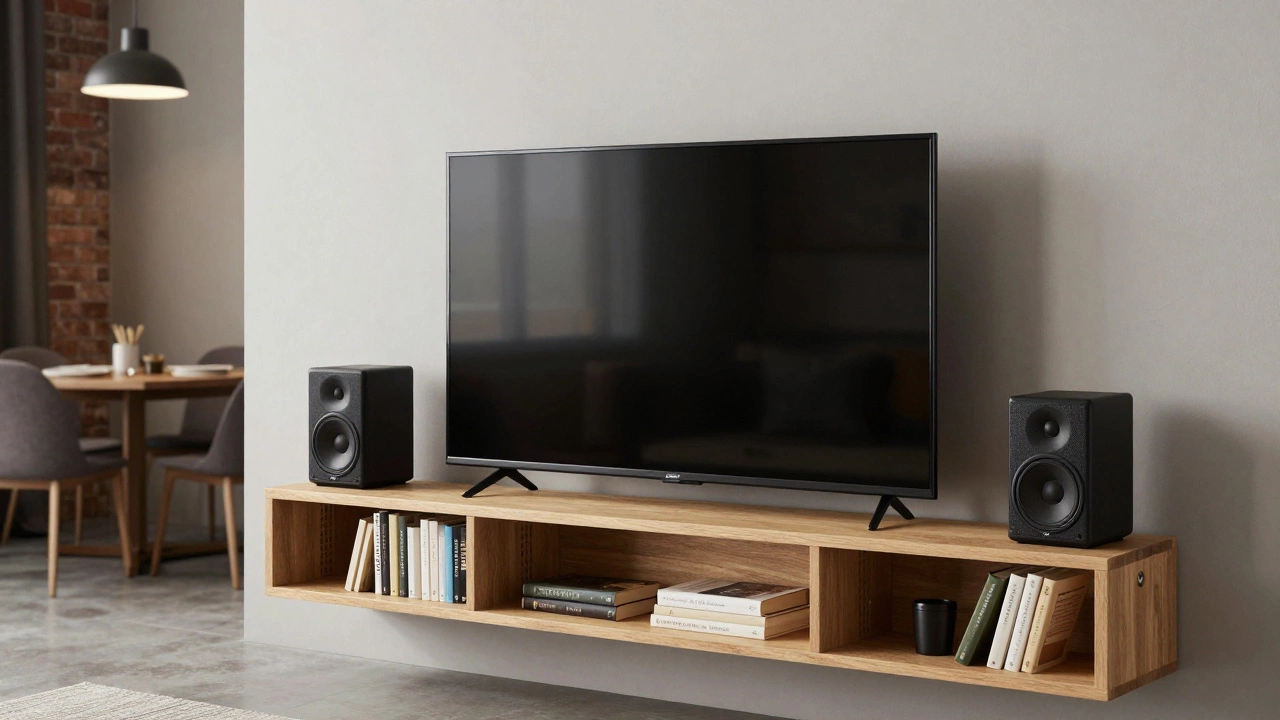
If you’ve got a solid shelf-like a built-in media unit or a heavy-duty floating shelf-you can set the TV right on top. This works well in smaller rooms or apartments. The key is stability and depth. The shelf must be deep enough so the TV doesn’t hang over the front edge. If more than 20% of the TV’s base is unsupported, it’s a risk. Also, make sure the shelf is anchored to the wall. Floating shelves can pull away if overloaded.Some people use IKEA KALLAX shelves with a solid top panel added. Others use metal industrial shelving units. These are strong, affordable, and look modern. Just avoid glass shelves unless they’re at least 10mm thick and rated for heavy loads. Most glass shelves aren’t made for TVs. They look nice, but they’re not safe.
Try a TV Stand Alternative
You don’t need the original stand. You can use something else entirely. A sturdy coffee table can work if it’s low enough and wide enough. A side table with a thick, solid top can be flipped around and used as a TV base. Even a heavy-duty rolling cart-like those used in kitchens or workshops-can hold a TV if it’s stable and has a wide platform.One common trick in Melbourne homes is to repurpose a wooden crate or a solid wooden bench. Sand it down, add felt pads to protect the TV, and you’ve got a rustic, custom base. Just remember: the surface must be flat, level, and wide enough to support the entire base of the TV. No wobbling. No leaning. If the TV rocks even slightly, it’s not safe.
Use a TV Cart or Rolling Stand
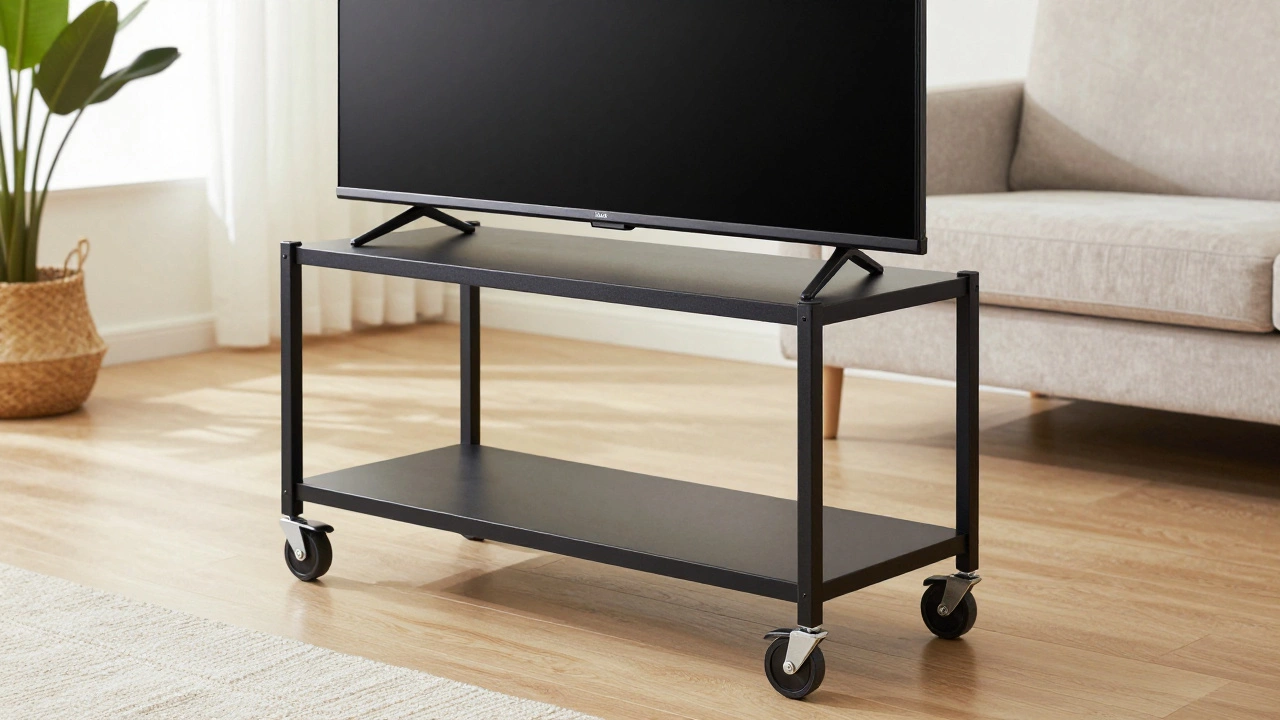
If you want flexibility-like moving your TV from the living room to the bedroom-a rolling TV cart is a great option. These are designed with wheels, height adjustability, and strong metal frames. You can find them online or at hardware stores for $100-$250. They’re heavier than wall mounts, but they’re portable and don’t require drilling.Look for carts with locking wheels and a weight capacity that exceeds your TV’s weight. A 50kg cart can handle a 40kg TV safely. Avoid cheap plastic carts. They’re designed for small tablets or monitors, not full-size TVs. Also, make sure the platform has side rails or a lip to prevent the TV from sliding off. A sudden bump could send it flying.
What Not to Do
There are some dangerous shortcuts people try. Don’t set your TV on a bookshelf that’s not meant for heavy loads. Don’t balance it on a stack of boxes. Don’t lean it against a wall without support. Don’t use duct tape or zip ties to hold it in place. These aren’t solutions-they’re accidents waiting to happen.TVs are heavy. A 55-inch model can weigh over 20kg. A 65-inch can be 30kg or more. That’s heavier than a toddler. If it falls, it can break floors, smash furniture, or seriously injure someone. Always prioritize safety over style.
How to Choose the Best Option
Ask yourself three questions:- How much space do you have? If your room is small, wall mounting saves the most floor space.
- Do you want to move the TV often? If yes, go for a rolling cart.
- Are you renting? If you can’t drill holes, skip wall mounts and choose a cabinet or cart.
Also, consider your viewing height. A wall-mounted TV should be at eye level when you’re seated. That’s usually 1.1 to 1.4 meters from the floor. A TV on a cabinet should sit so the center of the screen is at the same height. If it’s too high, you’ll strain your neck. Too low, and you’ll be looking down all the time.
Final Tip: Check Your Warranty
Some TV manufacturers say removing the stand voids the warranty. That’s rare, but it happens. Check your manual or contact customer support. Most won’t care as long as you’re not damaging the TV. Mounting it on a wall or placing it on a solid surface won’t harm the internal components. The stand was just a base-it’s not part of the TV’s function.So if your TV doesn’t have a stand, don’t panic. You’ve got options. Pick the one that fits your space, your budget, and your safety needs. A TV without a stand isn’t useless. It’s just waiting for the right setup.
Can I put my TV on a regular shelf?
Yes, but only if the shelf is strong, wide, and anchored to the wall. The shelf must be at least as wide as the TV’s base, and the TV should not overhang by more than 20%. Use a shelf made of solid wood or metal, not glass or thin particle board. Always check the weight rating.
Is it safe to mount a TV on drywall?
Only if you mount it into wall studs. Drywall alone can’t support a TV’s weight. Use a stud finder to locate the wooden supports behind the wall. Drill into those. If you can’t find studs, use toggle bolts rated for heavy loads-but even then, it’s risky. For TVs over 25kg, studs are non-negotiable.
What’s the cheapest way to use a TV without a stand?
The cheapest option is to place it on a sturdy, level surface you already own-like a solid coffee table, side table, or bookshelf. Just make sure it’s wide enough, stable, and won’t tip. Avoid anything flimsy. A $20 table might save you money now, but a $300 TV falling could cost you much more.
Can I use a TV stand from a different TV?
Only if the VESA pattern matches. Most TV stands are designed for specific models. But if you have another stand from a TV with the same size mounting holes (like 200x200), you can often swap them. Check the manual or measure the holes on the back of both TVs. If they line up, it’s usually safe.
Will a wall mount damage my wall?
It will leave holes, yes-but they’re easy to patch. Use a drill to make pilot holes for the screws. When you remove the mount later, fill the holes with spackle, sand, and repaint. The damage is minor compared to the benefit of a clean, stable setup. Many renters do this without issues.