 12
Jan,2026
12
Jan,2026
TV Alternative Calculator
Your TV Details
Room Information
Most people think a TV stand is the only way to hold their television-but that’s not true. If your TV stand is too big, too expensive, or just doesn’t fit your space, you don’t need to buy another one. There are plenty of smart, affordable, and stylish ways to mount or display your TV without a traditional stand. You can use what you already own, repurpose furniture, or go completely minimalist. The key is matching the solution to your room layout, TV size, and how you use it.
Mount it on the wall
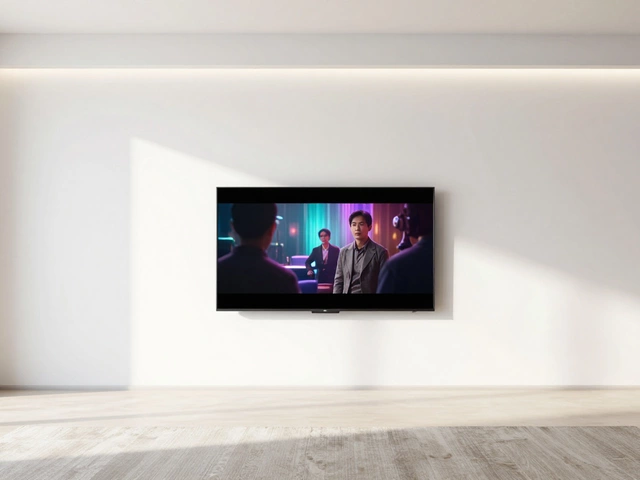
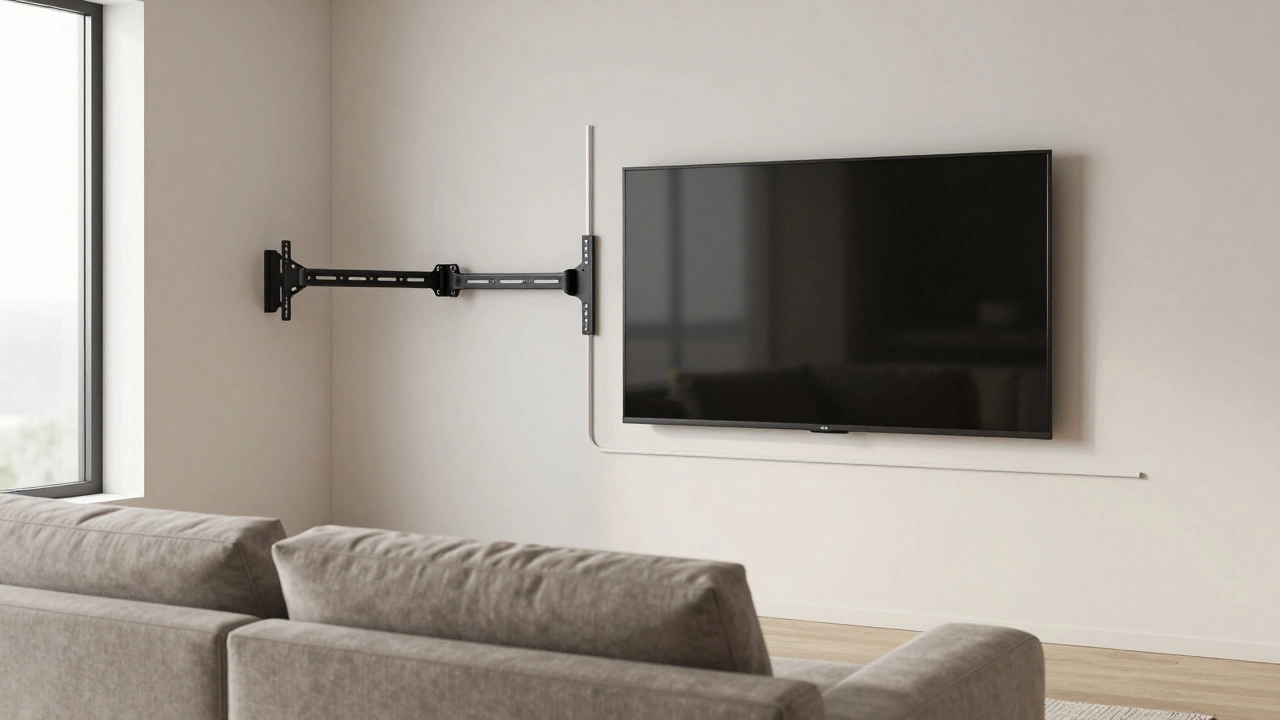
The most popular alternative to a TV stand is a wall mount. It’s clean, saves floor space, and lets you position the TV at eye level no matter where you sit. Modern mounts are easy to install with basic tools and support TVs from 32 to 85 inches. Look for a tilt or full-motion mount if you have windows or glare issues. A fixed mount is cheaper and works fine if you’re sitting directly in front of the screen.
Wall mounting removes clutter from your floor and makes the room feel bigger. It also keeps the TV out of reach of kids and pets. You’ll still need to hide wires, but cable management kits-like adhesive clips or raceway channels-make it simple. Many people forget that wall mounts also let you move the TV between rooms easily, unlike heavy stands.
Use a floating shelf
Want something between a stand and a wall mount? Try a floating shelf. These are sturdy, wall-mounted platforms designed to hold weight. You can buy ones made for TVs or repurpose a thick wooden shelf from a bookcase or kitchen cabinet. Make sure the shelf is at least 2 inches wider than your TV on each side and can support the weight-most TVs weigh 20 to 70 pounds.
Install it at the right height: the center of the screen should be about 42 inches off the floor. Use a stud finder and anchors if you’re not hitting wall studs. Floating shelves look modern and let you add small decor or soundbars underneath. They’re perfect for apartments, small living rooms, or rooms where you want a minimalist vibe.
Repurpose a console table
Don’t throw out that old console table from your hallway or entryway. It’s already the right height for a TV-usually 28 to 32 inches-and often has drawers or shelves for remotes, game consoles, or streaming devices. A console table gives you storage without the bulk of a full entertainment center.
Look for one with a solid wood top and sturdy legs. Avoid flimsy particleboard models-they can sag under the weight of a large TV. If the table is too narrow, add two side tables or baskets on either side to balance the look. You can paint or refinish it to match your decor. This option works great if you already own the table and just need a new purpose for it.
Try a media cabinet
If you want to hide your gear, a media cabinet is a great middle ground. Unlike open TV stands, these have doors or drawers that conceal cables, DVD players, speakers, and gaming systems. They come in wood, laminate, or metal and can be freestanding or built-in.
Look for models with ventilation holes to prevent overheating. Make sure the cabinet is wide enough for your TV and has enough depth for your soundbar or receiver. Media cabinets are ideal for families who want a tidy look or for rooms where you want to reduce visual clutter. They’re not as sleek as wall mounts, but they offer more storage and protection.
Use a bookcase or shelving unit
Bookcases aren’t just for books. A sturdy, wide bookcase can double as a TV stand. Place your TV on the top shelf and use the lower shelves for DVDs, speakers, or decorative items. This works best with a TV under 55 inches and a bookcase that’s at least 50 inches wide.
Make sure the shelf is level and the unit is anchored to the wall. Avoid glass shelves-they’re not strong enough. Solid wood or metal shelves are best. You can even use an IKEA KALLAX or similar unit with added backing and a flat top panel for stability. This solution is budget-friendly and flexible-you can rearrange shelves as your setup changes.
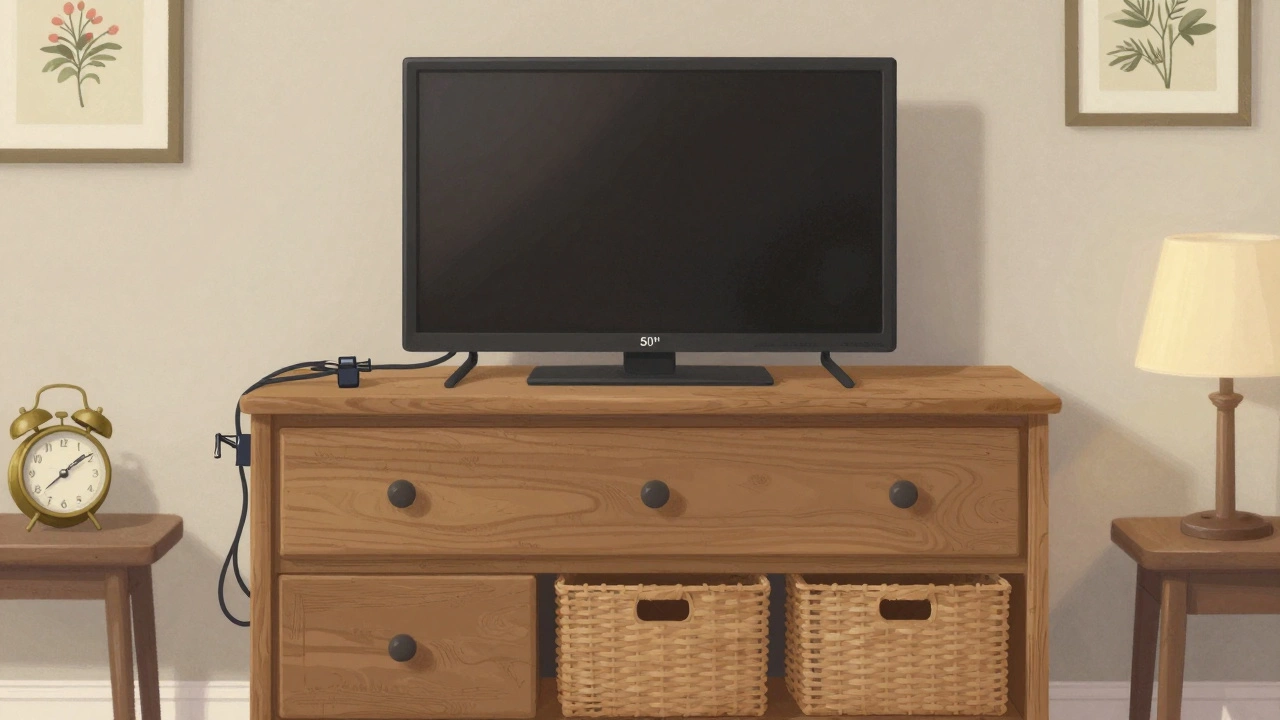
Put it on a dresser or chest of drawers
Old dressers are often overlooked as TV bases. A wide, low dresser with a solid top can hold your TV and still give you storage for clothes, blankets, or electronics. This works especially well in bedrooms or small living spaces where you need dual-purpose furniture.
Check the weight capacity-most dressers hold 100+ pounds, but older ones might not. Avoid ones with thin veneer tops or wobbly legs. If the dresser is too tall, place a thin wooden board on top to level the surface. Add cable clips to keep wires tidy. This option adds character to a room and turns unused furniture into something functional.
Build a custom media bench
If you’re handy with tools, you can build a simple media bench in a weekend. Use plywood, 2x4s, and wood screws. Make it the same height as a standard TV stand (28-32 inches) and wide enough to fit your TV plus a little breathing room on each side. Add legs or a base for stability.
You can stain or paint it to match your floor or furniture. Add open shelves underneath for game consoles or storage bins. This is a great way to get exactly what you want without paying retail prices. Many DIYers add hidden compartments or charging stations inside the bench. It’s a one-time project that lasts years.
Use a side table or end table
For a small TV-under 40 inches-a sturdy side table or end table can work. This is common in bedrooms, home offices, or studio apartments. Make sure the table is wide enough to support the TV base without tipping. Most TV bases are 12 to 20 inches wide, so the table top should be at least 24 inches.
Place it against a wall or next to a sofa. Use a non-slip pad underneath the TV to prevent sliding. This setup isn’t ideal for large screens or high-end audio, but it’s perfect for background viewing or quiet spaces. It’s also the cheapest option if you already own the table.
Go floor-to-ceiling with a media tower
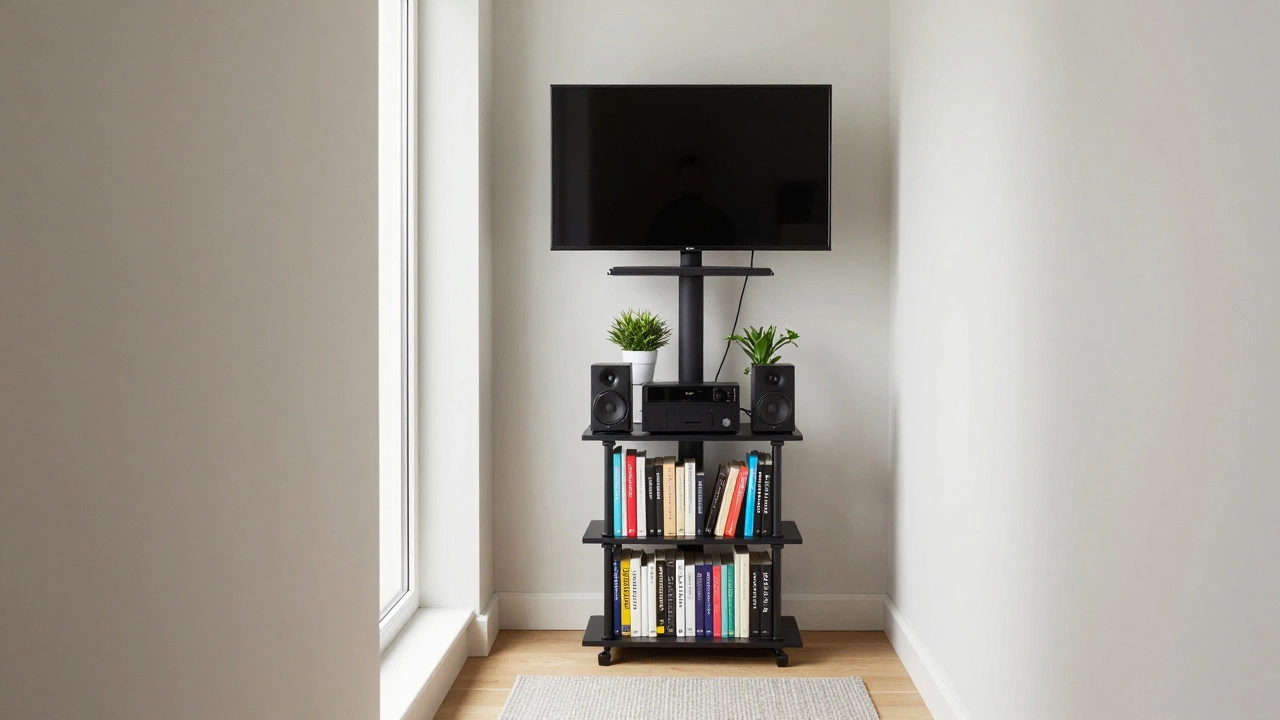
For a dramatic look, use a tall, narrow media tower. These are like bookshelves on steroids-designed to hold TVs at the top and storage below. They’re great for rooms with high ceilings or narrow walls. Brands like Sauder and Ameriwood make models that fit in corners or between windows.
They’re heavier than regular stands and need to be anchored to the wall. But they offer tons of storage for books, plants, or audio gear. This option works best if you want to make the TV part of a larger display, not the focal point.
Use a coffee table with a lift mechanism
Some modern coffee tables come with a hidden TV lift. You lower the TV into the table when not in use and raise it when you want to watch. These are high-end solutions, often costing $1,000+, but they’re perfect for open-concept homes where you want to hide the TV when it’s off.
They require professional installation and built-in wiring. The lift mechanism needs space underneath and proper ventilation. If you’re not ready to invest this much, skip it. But if you love the idea of a clean, clutter-free living room, it’s one of the most elegant alternatives.
What not to use
Not every surface works for a TV. Avoid glass tables without reinforced bottoms-they can crack under pressure. Don’t put a TV on a wobbly side table, a narrow console, or a piece of furniture that’s too high or too low. TVs need stable, level surfaces with enough depth to support the base.
Also, avoid placing your TV near heat sources like fireplaces or radiators. Electronics overheat quickly, and that can shorten their life. And never hang a TV above a fireplace unless you’ve installed a heat shield and the wall can handle the weight.
How to choose the right option
Ask yourself three things:
- How big is your TV? Bigger TVs need wider, sturdier surfaces.
- How much storage do you need? If you have a soundbar, game console, and streaming boxes, you’ll want drawers or shelves.
- What’s your room like? Small space? Go wall-mounted. Open layout? Try a media tower. Bedroom? A dresser or side table works.
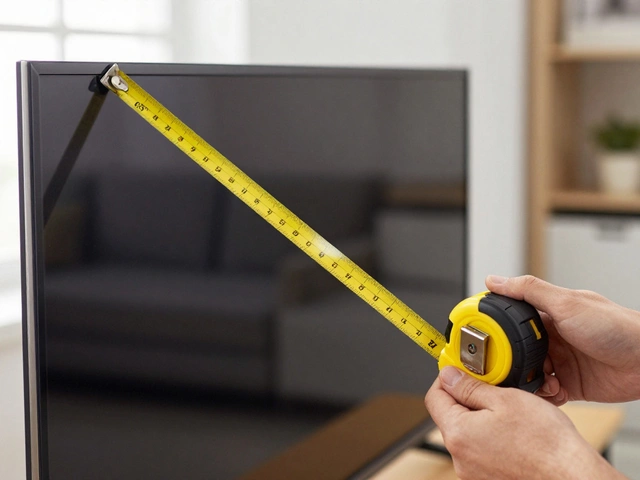
Measure your TV’s base width and weight. Then measure the surface you’re thinking of using. Leave at least 2 inches of space on each side for airflow and cable access. Check the weight limit of any furniture you plan to repurpose.
Final thoughts
You don’t need to buy a TV stand to enjoy your TV. Whether you mount it, shelf it, or repurpose a dresser, there’s a solution that fits your space, style, and budget. Many of these alternatives cost less than a new stand-and they free up floor space, reduce clutter, and make your room look more intentional. Start with what you already own. You might be surprised what works.
Can I put my TV on a regular bookshelf?
Yes, but only if the shelf is solid, wide enough (at least 50 inches), and can support the TV’s weight. Avoid glass or thin shelves. Anchor the bookshelf to the wall to prevent tipping, especially if you have kids or pets.
Is a wall mount better than a TV stand?
It depends. Wall mounts save space and give a cleaner look, but they require drilling into the wall and hiding wires. TV stands are easier to set up and offer built-in storage. If you have a small room or want to reduce clutter, go wall-mounted. If you need extra space for gear and don’t want to drill, stick with a stand or console.
Can I use a kitchen island as a TV stand?
Only if it’s sturdy, level, and designed to handle heavy loads. Most kitchen islands are built for weight, but they’re often too tall for comfortable viewing. If you use one, make sure the TV is at eye level when seated. Also, keep it away from heat and moisture from cooking.
How do I hide the wires without a TV stand?
Use adhesive cable clips along the wall or baseboard, or install a raceway channel that blends with your paint. For wall mounts, drill a small hole behind the TV and run wires through the wall to a nearby outlet. You can also use a power strip mounted on the wall behind the TV to keep plugs tidy.
What’s the cheapest TV stand alternative?
The cheapest option is using a sturdy side table or end table you already own. If you don’t have one, check thrift stores for a solid wood console or dresser. You can often find one for under $50. Avoid cheap particleboard-it won’t last.