 19
Jan,2026
19
Jan,2026
When Queen Elizabeth II passed away in September 2022, the world didn’t just lose a monarch-it lost a woman whose wardrobe told a story longer than most royal histories. Her clothes weren’t just fabric and thread. They were tools of diplomacy, symbols of continuity, and carefully curated extensions of her public role. But what happened to them after she died? The answer isn’t as simple as donating to charity or tossing them in storage. It’s a blend of tradition, protocol, and quiet reverence.
The Royal Wardrobe Wasn’t Just Clothing
Queen Elizabeth’s clothes were never just about style. They were part of her job. Every outfit had a purpose. A bright blue coat for a visit to a children’s hospital. A matching hat and handbag for a state opening of Parliament. A pearl necklace that had been worn by her mother, and then her grandmother. These weren’t random choices. They were deliberate. The Royal Collection Trust, which manages the monarch’s personal assets, confirmed that her wardrobe was treated as part of the sovereign’s official property-not personal belongings.Her clothes were made by a small team of in-house tailors and dressmakers at Buckingham Palace, many of whom had worked for the royal family for decades. The designers-like Angela Kelly and Stewart Parvin-didn’t just create outfits. They maintained archives of every piece, noting fabric, color, occasion, and even the exact pins used to hold a brooch. These records were kept as carefully as state documents.
What Was Preserved?
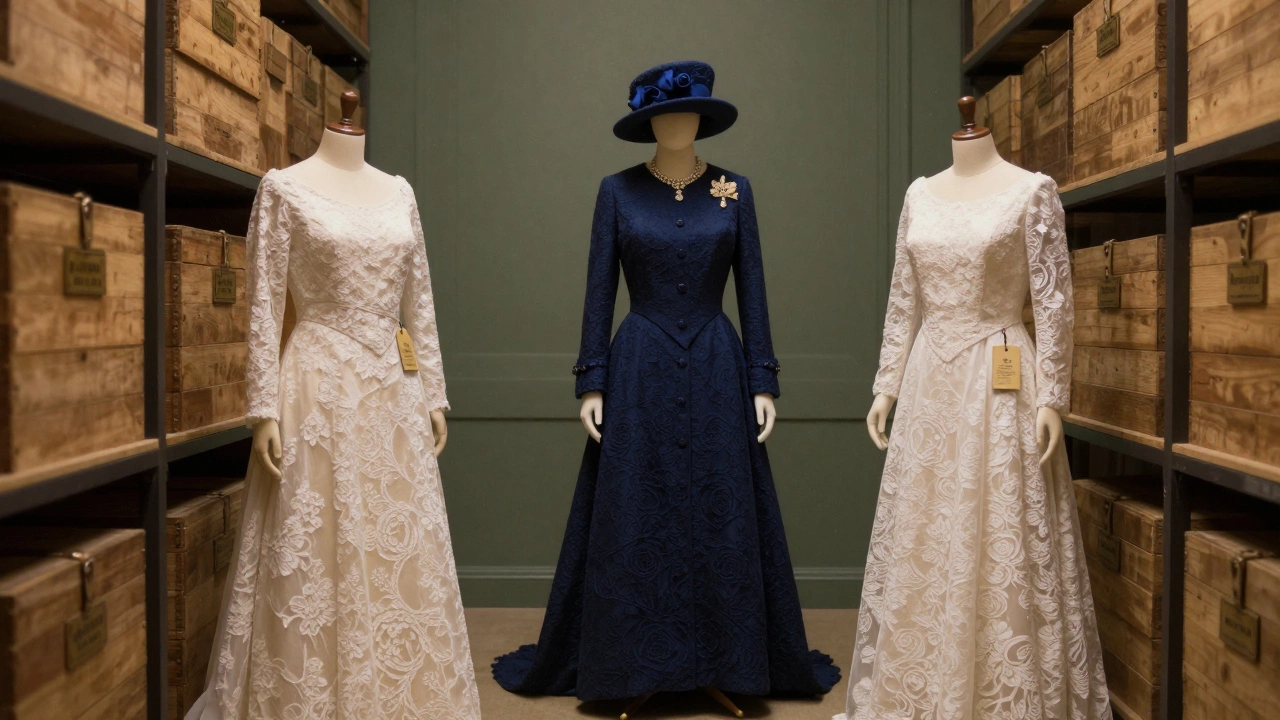
Not everything was kept. But a significant portion was. The Royal Collection Trust has a strict policy: items worn by monarchs during official duties are preserved for historical and cultural value. This includes the Queen’s coronation gown, the white lace dress she wore for her wedding, and the iconic navy blue coat and hat she wore during her 2018 Christmas broadcast. These pieces are now part of the Royal Collection, stored in climate-controlled archives at Windsor Castle.Even the less glamorous items-like her practical woolen cardigans, the simple cotton dresses she wore for garden parties, or the sturdy black shoes she walked in during public engagements-were documented. These aren’t just fashion relics. They’re cultural artifacts. One pair of her shoes, worn during a 1953 tour of Australia, was kept because it showed signs of wear from walking on gravel paths at country estates. That’s the kind of detail historians care about.
What Was Given Away?
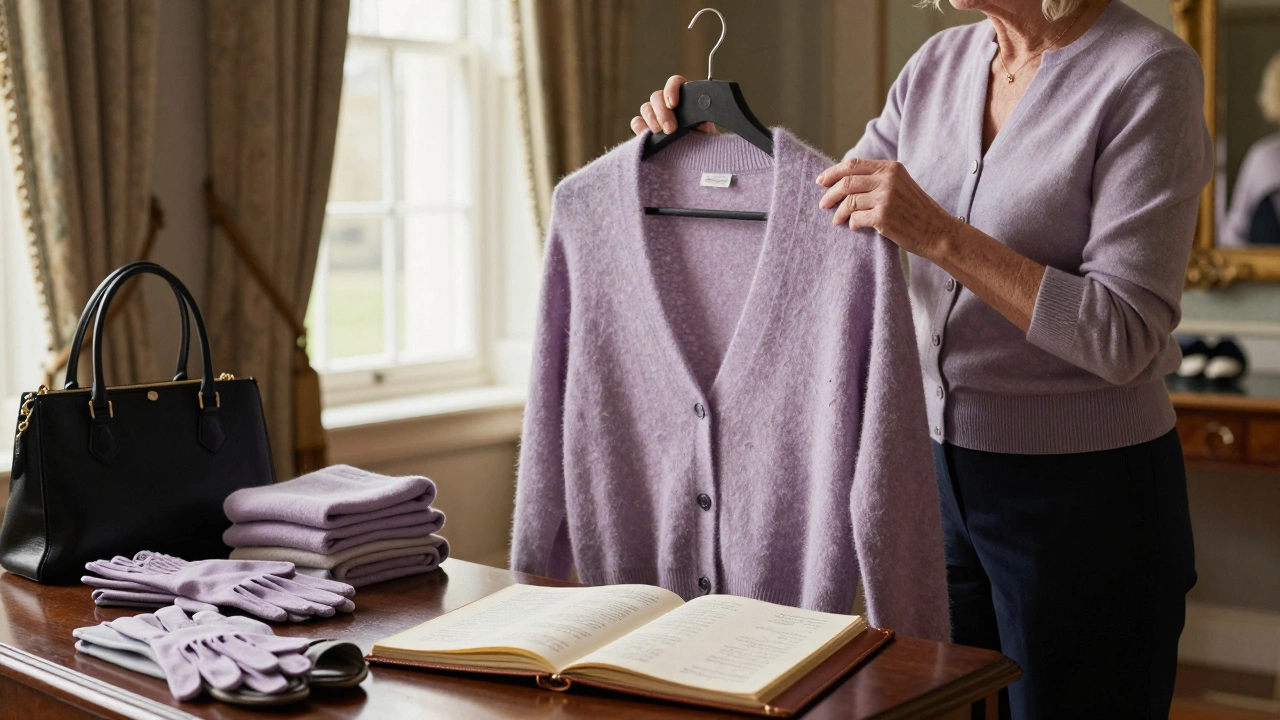
The Queen didn’t leave behind a closet full of unused designer gowns. Most of her personal clothing had already been worn, repaired, or repurposed over decades. What remained after her death was mostly functional: everyday items like underwear, socks, and nightgowns. These were not preserved. Instead, they were distributed to her staff as personal mementos. This is a long-standing royal tradition. Housekeepers, dressers, and gardeners who served her for 20, 30, or even 50 years were offered a few pieces of clothing as a token of appreciation.It’s not a giveaway in the modern sense. There’s no auction, no public sale. The items are given quietly, with dignity. One former dresser told a journalist that she received two of the Queen’s favorite cashmere cardigans-still smelling faintly of lavender, just as they always had. Another received a pair of gloves worn during a visit to Scotland. These weren’t valuable in monetary terms, but they carried emotional weight.
Why Not Sell Them?
You might wonder why the royal family didn’t auction off the Queen’s clothes. After all, celebrity wardrobes-like those of Princess Diana or Elizabeth Taylor-have sold for millions. But the monarchy operates under different rules. Selling royal clothing would violate the principle of dignity. The Crown doesn’t treat personal effects as commodities. Even if an item was worn only once, it’s still tied to the office of the monarch, not the individual.There’s also a legal layer. Under the Crown Property Act, items used for official duties belong to the Crown, not the person. That means even if the Queen had bought a dress with her own money, if she wore it to open a hospital or meet foreign dignitaries, it became part of the state’s heritage. The Royal Collection Trust has no authority to sell these items. They can only loan or display them.
What About Replicas and Reuse?
One of the most surprising things about the Queen’s wardrobe was how often she reused outfits. She famously wore the same hat multiple times, sometimes decades apart. Her dressmakers kept detailed notes on fabric patterns and dye batches so they could match colors perfectly when making replacements. After her death, the team stopped making new versions of her outfits. But they didn’t throw away the patterns. Those are now archived alongside the originals.Some of her more formal gowns-like the ones she wore for state banquets-were made with removable elements. A silk bodice could be taken off and reused on a different skirt. These pieces were carefully disassembled and stored. The fabric, lace, and embroidery were preserved in case they’re ever needed for future royal events. It’s not recycling in the eco-friendly sense. It’s conservation.
Where Can You See Her Clothes Today?
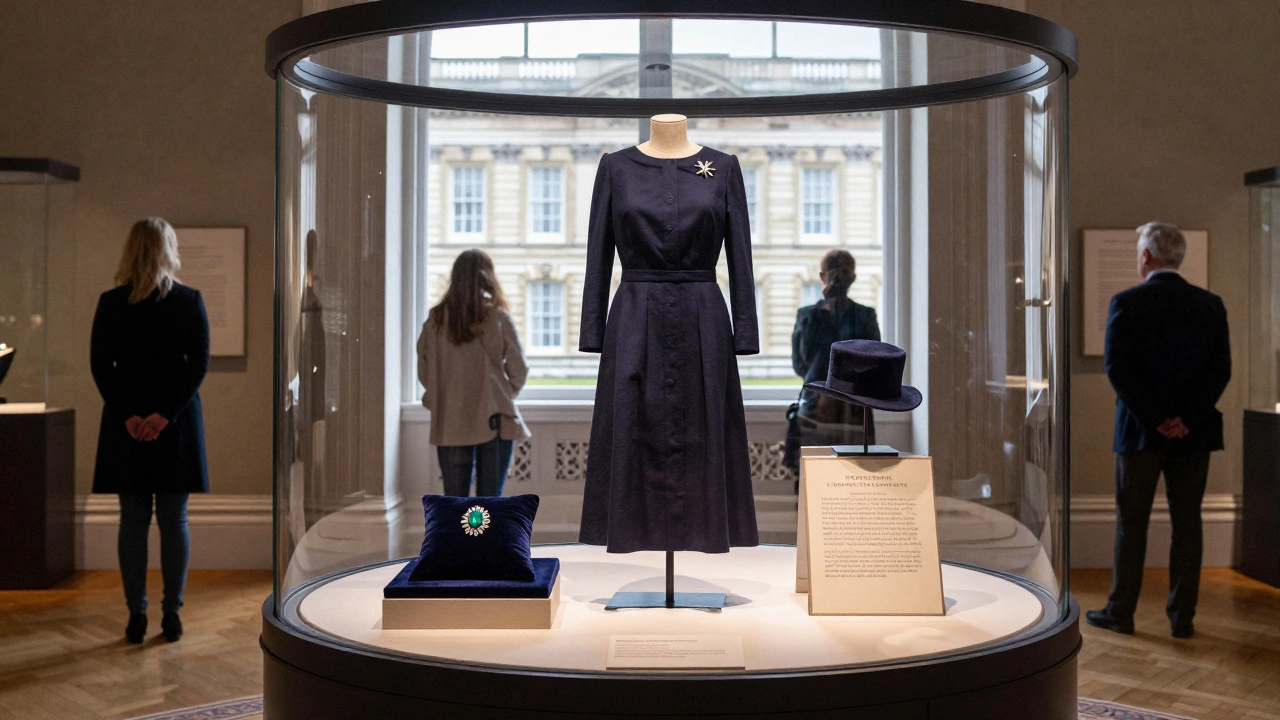
You won’t find Queen Elizabeth’s clothes in a department store. But you can see them in public. The Royal Collection Trust regularly rotates items from the archive into exhibitions at Buckingham Palace, Windsor Castle, and the Palace of Holyroodhouse. In 2023, a special exhibit titled Her Majesty’s Wardrobe opened in London. It featured over 50 pieces, including the emerald and diamond brooch she wore on her 90th birthday, the coat she wore during the 2012 Diamond Jubilee, and the simple navy dress she wore to the funeral of Prince Philip.These exhibits aren’t fashion shows. They’re historical displays. Each item is labeled with the date, location, and purpose of the event. There’s no glitz. No price tags. Just context. Visitors are encouraged to see the clothes as part of a life lived in service-not as objects of celebrity.
What Happened to Her Everyday Clothes?
The Queen’s everyday clothing-what she wore when she wasn’t in public-was handled differently. These weren’t official items. They were personal. Her nightgowns, slippers, and casual sweaters were distributed to her closest staff. Her dresser, Angela Kelly, received several pieces, including a pair of slippers the Queen had worn for over 20 years. Kelly later said she still wears them on quiet mornings, as a way of feeling close to her.Some items were donated to charities that supported causes the Queen cared about. A few woolen jumpers went to a women’s shelter in Scotland. A collection of hats went to a dementia care center in Norfolk, where residents were encouraged to wear them during activities. These weren’t publicized. No press releases. Just quiet acts of respect.
Why This Matters Beyond Fashion
The way the Queen’s clothes were treated tells us something deeper about the monarchy. It’s not about luxury. It’s about legacy. Her wardrobe was never meant to be admired for its cost or trendiness. It was meant to be seen as consistent, reliable, and enduring. The fact that her clothes are still being preserved, studied, and quietly reused reflects that philosophy.In a world where fast fashion dominates and clothes are thrown away after a few wears, the Queen’s approach feels almost radical. She wore the same coat for 30 years. She repaired her shoes. She matched her handbag to her hat-even when no one else noticed. That discipline wasn’t about vanity. It was about responsibility.
Her clothes didn’t disappear when she did. They became part of history. And in a way, they’re still with us-on display in museums, worn by staff in private moments, or quietly sitting in climate-controlled vaults, waiting for the next generation to understand why they mattered.
Were Queen Elizabeth’s clothes auctioned after her death?
No, none of Queen Elizabeth’s official clothing was auctioned. Items worn during public duties belong to the Crown, not the individual, and are preserved by the Royal Collection Trust. Personal items like everyday clothes were given to staff as mementos or donated quietly to charities, but never sold publicly.
Can the public see Queen Elizabeth’s clothes today?
Yes. Selected pieces from her wardrobe are displayed in rotating exhibitions at Buckingham Palace, Windsor Castle, and the Palace of Holyroodhouse. The 2023 exhibit Her Majesty’s Wardrobe featured over 50 items, including her coronation gown, signature hats, and everyday coats, all presented with historical context rather than as fashion objects.
Did Queen Elizabeth buy her own clothes?
She paid for her personal clothing using her private income, not public funds. However, any outfit worn for official duties-like state visits or parliamentary openings-became Crown property, regardless of who paid for it. Her dressmakers were paid by the royal household, and fabrics were sourced from British suppliers as part of supporting the domestic textile industry.
What happened to her hats and handbags?
Her hats and handbags were treated like official attire. Many were preserved in the Royal Collection, especially those worn during major events. Some were given to her long-time dressers and personal staff. A few were donated to care homes and charities, where they were used to bring comfort to residents, particularly those with dementia, who responded positively to familiar colors and textures.
Why didn’t the royal family donate all her clothes to charity?
Because many pieces were official state property, not personal gifts. Only personal, non-official items-like nightwear, underwear, or casual sweaters-were eligible for donation. Even then, donations were made quietly and selectively, not as a mass effort. The focus was on honoring the Queen’s legacy, not public relations.