 19
Feb,2026
19
Feb,2026
Wardrobe Size Calculator
Recommended Wardrobe Size
W: cm × H: cm × D: cm
Estimated Capacity:
Note: Based on article specifications, a basic wardrobe is typically 80cm wide, 200cm tall, and 60cm deep. This calculator adjusts recommendations based on your space and needs.
When people ask what a basic wardrobe is called, they’re usually trying to figure out the simplest, no-frills way to store clothes. It’s not about fancy walk-in closets or designer armoires. It’s about the thing you’ve probably had since your first apartment: a standalone piece of furniture with doors, shelves, and hanging space. That thing? It’s called a wardrobe. Not a closet. Not a dresser. Not a chest of drawers. A wardrobe.
Why ‘Wardrobe’ Is the Right Word
The word ‘wardrobe’ has been around for centuries. It comes from the Old French ‘garderobe,’ meaning ‘to keep clothes.’ Even today, in homes across Australia, the UK, and North America, ‘wardrobe’ is the term used for freestanding clothing storage. It’s not a regional quirk-it’s the standard term in furniture stores, home catalogs, and rental agreements.
Think about it: if you walk into IKEA or a local furniture shop and ask for a basic clothes storage unit, the salesperson won’t hand you a dresser. They’ll show you a wardrobe. It’s got hanging rods, maybe a few shelves, and sometimes a mirror. That’s the definition. No extra features. No built-in lighting. Just function.
Wardrobe vs Closet: What’s the Difference?
A lot of people mix up ‘wardrobe’ and ‘closet.’ But they’re not the same. A closet is built into the wall. It’s part of the house’s structure. You don’t move it. You can’t assemble it yourself. A wardrobe, on the other hand, is furniture. You buy it. You move it. You can take it with you when you relocate.
In small apartments in Melbourne, where built-in closets are rare, a wardrobe is the only option. It’s the solution for renters, students, and anyone living in a space that wasn’t designed with storage in mind. That’s why you’ll see them everywhere-from studio flats in Collingwood to beachside units in St Kilda.
What Makes a Wardrobe ‘Basic’?
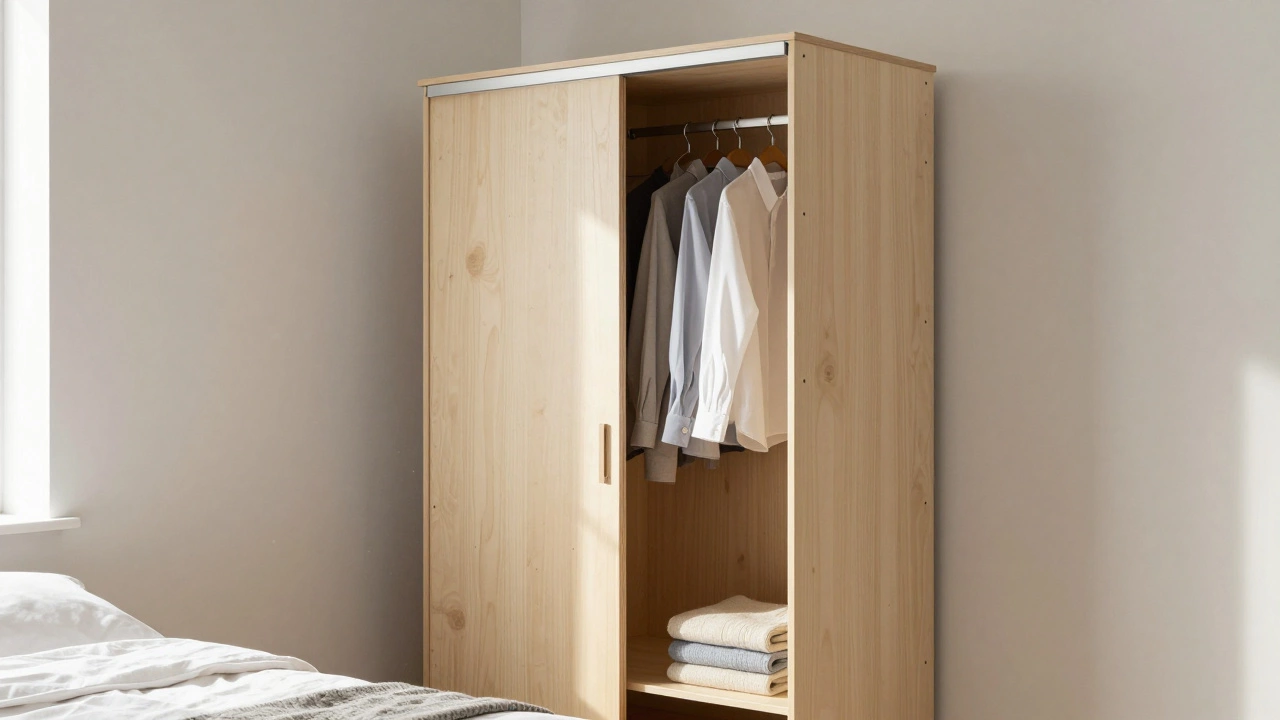
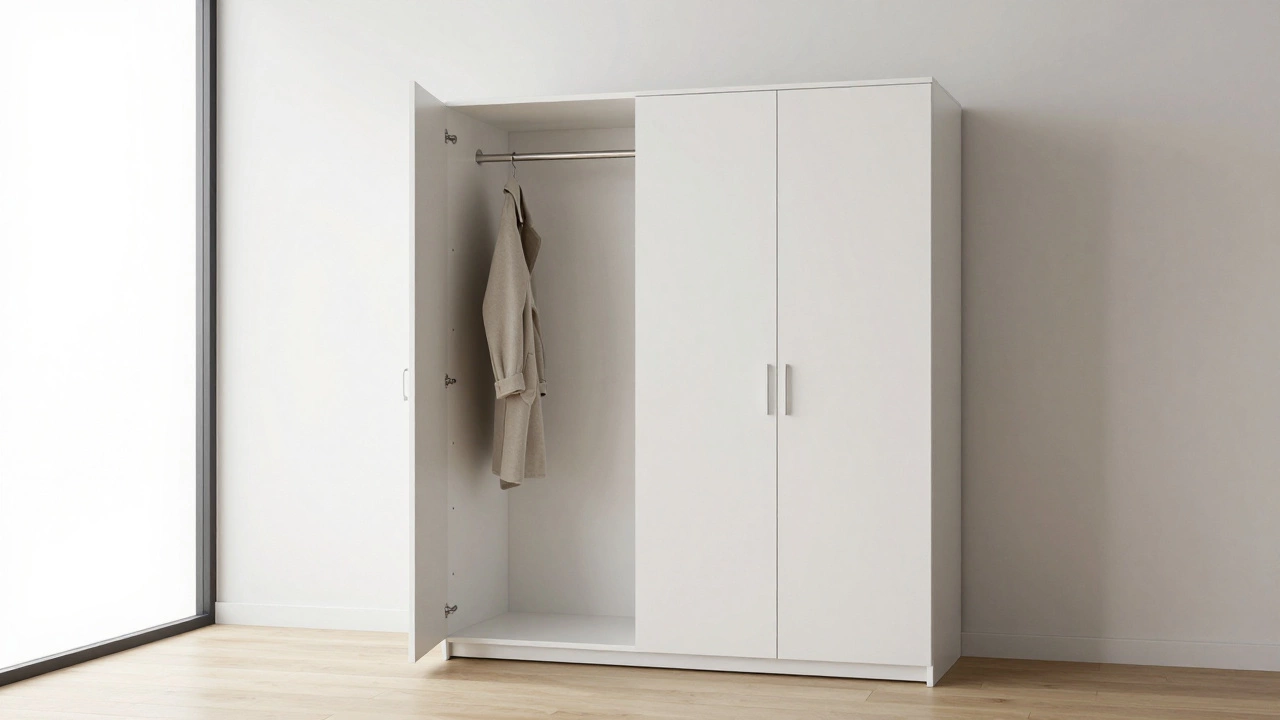
A basic wardrobe has four things:
- A frame, usually made of particleboard, MDF, or solid wood
- One or two doors that swing or slide open
- A hanging rod for shirts, dresses, and coats
- At least one shelf for folded clothes or shoes
That’s it. No drawers. No drawers inside drawers. No lighting. No jewelry trays. No shoe racks built into the bottom. Those are upgrades. The basic version? Just enough to keep your clothes off the floor and out of the sun.
Brands like IKEA, Freedom, and Harvey Norman all sell versions of this. The most common size? Around 80cm wide, 200cm tall, and 60cm deep. It fits in corners, against walls, or even in hallways. It doesn’t need a power outlet. It doesn’t need a plumber. Just a flat floor and a little space.
Why People Still Choose Basic Wardrobes in 2026
You might think that with all the smart home tech out there, people would have moved on. But no. Basic wardrobes are still the top-selling storage item in Australia. Why?
- They’re cheap. You can get a decent one for under $150.
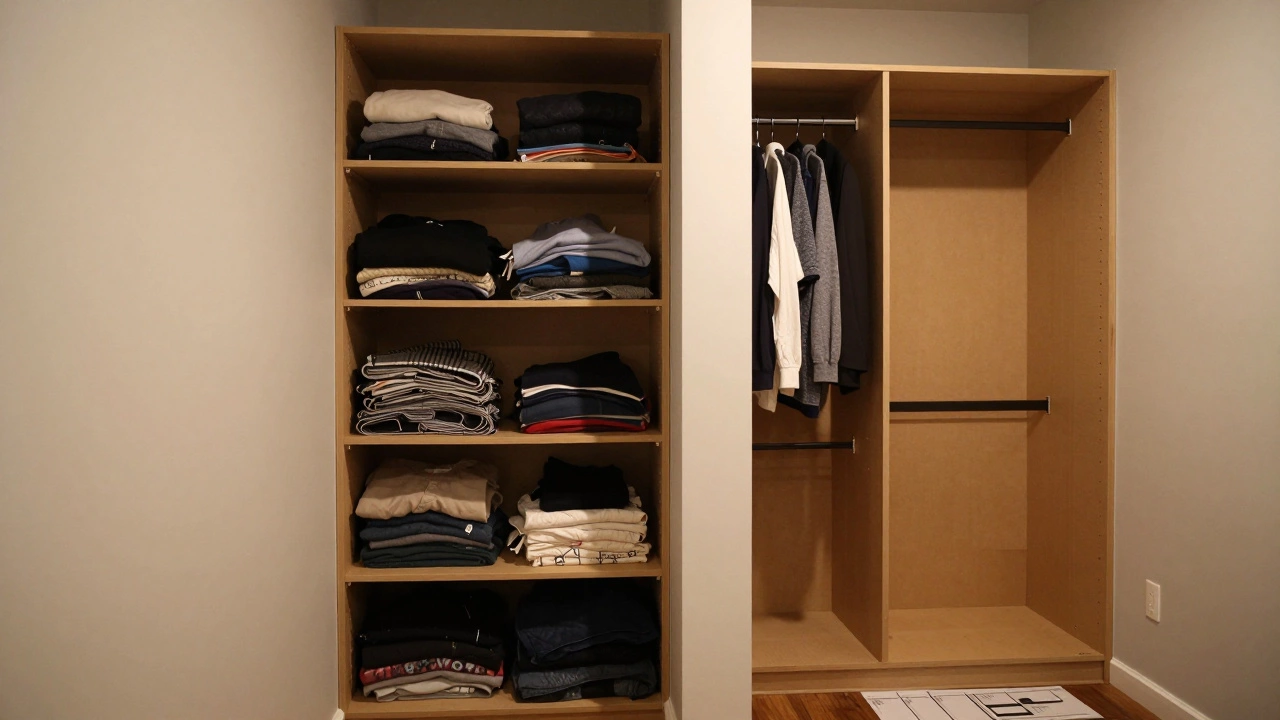
- They’re easy to assemble. No tools needed. Just follow the pictures.
- They’re flexible. Move them. Rearrange them. Take them to your next place.
- They’re quiet. No motors. No lights. No Bluetooth.
For people living in small spaces, or those who don’t want to spend hours organizing, the basic wardrobe is the quiet hero of home storage. It doesn’t ask for anything. It just holds your stuff.
The Rise of the Minimalist Wardrobe
There’s another reason the basic wardrobe is making a comeback: the minimalist movement. People are buying fewer clothes. They’re choosing quality over quantity. And they don’t need five shelves for t-shirts anymore.
A basic wardrobe fits perfectly with this mindset. It doesn’t encourage hoarding. It doesn’t have hidden compartments. It doesn’t tempt you to buy more just because you have space. It says: ‘This is enough.’
Studies from the Australian Bureau of Statistics show that households in Melbourne and Sydney are buying 18% fewer clothing items per year than they did in 2020. That shift means less need for complex storage. Just one good wardrobe does the job.
What to Look for When Buying One
If you’re shopping for a basic wardrobe, here’s what actually matters:
- Material: Solid wood lasts longer but costs more. MDF and particleboard are fine if you’re not planning to keep it for 20 years.
- Door type: Sliding doors save space. Hinged doors give better access. Pick based on your room layout.
- Hanging rod: Make sure it’s metal, not plastic. Plastic bends under heavy coats.
- Shelf depth: At least 40cm for folded sweaters. Shallow shelves mean you can’t stack things properly.
- Weight capacity: Check the specs. A good one holds 30-40kg on the hanging rod.
Don’t get fooled by extra features. Mirrors? Nice, but not necessary. Interior lighting? Overkill for a basic piece. A simple wardrobe is meant to be simple.
What It’s Not Called
Let’s clear up some confusion:
- It’s not a dresser. A dresser has drawers. A wardrobe doesn’t.
- It’s not an armoire. An armoire is decorative, often ornate. A basic wardrobe is plain.
- It’s not a closet. Closets are built-in. This is portable.
Using the wrong word doesn’t make you wrong-it just makes it harder to find what you need when shopping. If you say ‘closet’ in a furniture store, you’ll get shown a wall unit. If you say ‘wardrobe,’ you’ll get the right thing.
Final Thought: Keep It Simple
A basic wardrobe isn’t glamorous. It doesn’t show up on Instagram. But it’s one of the most useful pieces of furniture in any home. It doesn’t need to be smart. It doesn’t need to be loud. It just needs to hold your clothes.
In a world full of gadgets and upgrades, sometimes the best solution is the one that’s been around for centuries. A wardrobe. Just like your great-grandparents had. Simple. Reliable. Done.
Is a wardrobe the same as a closet?
No. A closet is built into the wall of your home and can’t be moved. A wardrobe is a freestanding piece of furniture you can buy, assemble, and take with you when you move. They serve the same purpose-storing clothes-but one is part of the house, and the other is furniture.
What’s the cheapest way to store clothes?
A basic wardrobe is often the cheapest practical option. You can find a functional one for under $150. Compare that to building a custom closet, which can cost $1,000 or more. If you’re renting or on a budget, a wardrobe gives you full storage without renovation.
Do I need a wardrobe if I have a closet?
Not necessarily. If your closet is large enough and well-organized, you probably don’t need one. But if your closet is small, cluttered, or lacks hanging space, a wardrobe can add extra storage without remodeling. It’s also useful for storing seasonal clothes or items you don’t use every day.
Can I use a wardrobe in a small room?
Yes. Basic wardrobes are designed for small spaces. Sliding-door models take up less floor space than hinged doors. Look for ones that are 80cm wide or less-they fit neatly in corners or beside beds. Many people in Melbourne apartments use them in bedrooms, living rooms, or even home offices.
What’s the difference between a wardrobe and an armoire?
An armoire is a decorative, often ornate cabinet that can store clothes, but it’s usually designed to look like furniture. It may have carvings, glass doors, or fancy legs. A basic wardrobe is plain, functional, and made for utility-not decoration. Armoires are more expensive and less common today.