 9
Jul,2026
9
Jul,2026
American Bedroom Storage Translator
Describe your storage unit below to find out what Americans call it.
The American Word Is:
--
--
You’ve probably watched an American TV show or read a novel and heard someone say, "I’m going to get dressed in my closet is a storage space within a room, typically used for clothes." If you’re from the UK, Australia, or many other parts of the world, that sentence might have confused you. You might be wondering: "Where is the door? Is it a hole in the wall?" The short answer is that there isn’t one single direct swap for the word "wardrobe" because American English splits the concept into two very different things depending on whether the storage is part of the house or a piece of furniture.
If you are looking for the built-in storage space in your bedroom, the American word is **closet**. If you are looking for the tall, standalone wooden cabinet with doors, the American word is usually **armoire** or sometimes just **dresser** (though dresser implies drawers). Understanding this distinction is crucial if you are buying furniture online from the US, reading American interior design blogs, or just trying to understand why your American friend doesn't own a "wardrobe."
The Built-In Solution: The Closet
In the United States, most residential homes-especially those built after the 1950s-are designed with built-in storage spaces directly into the walls of bedrooms. These are called walk-in closets or reach-in closets are built-in storage areas integrated into the home's structure. When an American says they put their clothes away, they mean they hung them up or folded them inside these recessed spaces.
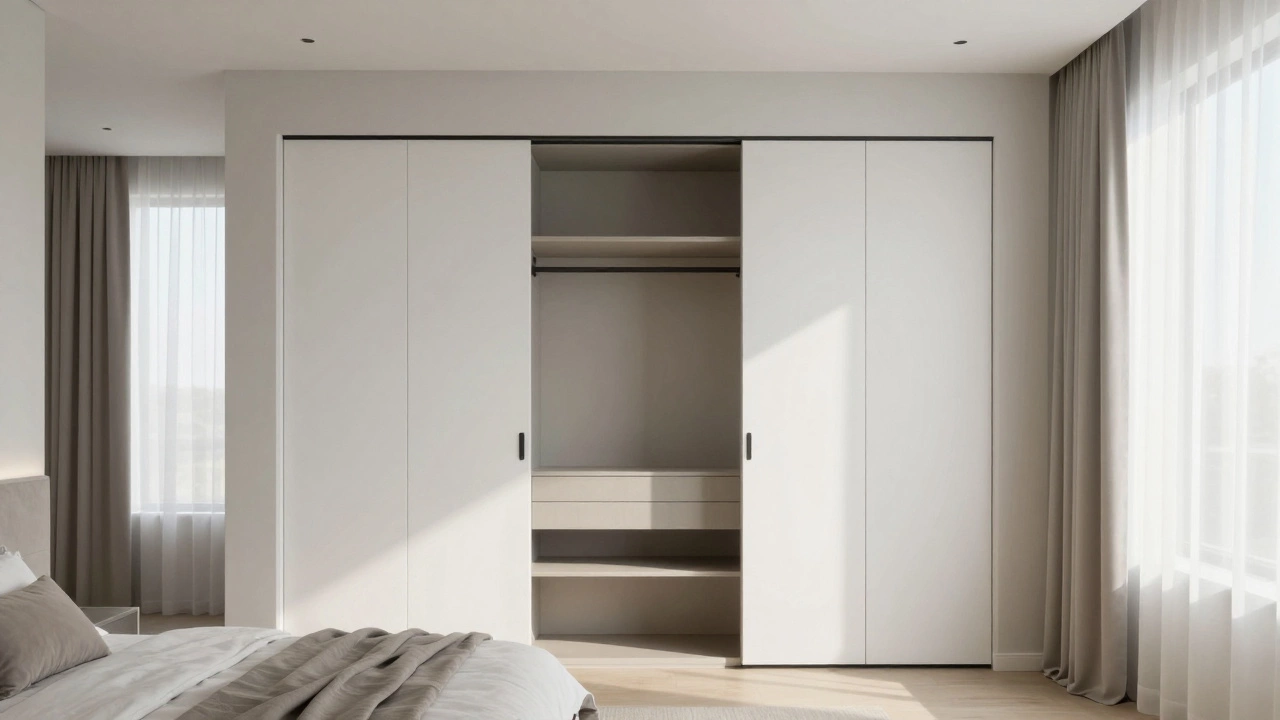
A standard reach-in closet is a shallow, built-in closet accessed by swinging doors. typically has sliding doors or hinged doors and contains a simple metal rod for hanging shirts and pants, plus maybe a shelf above it. It’s not a piece of furniture you buy; it’s part of the drywall and framing of the house. This is the primary reason the word "wardrobe" (as a noun for a room feature) rarely exists in American daily conversation. They don't need a separate cabinet because the house provides the storage.
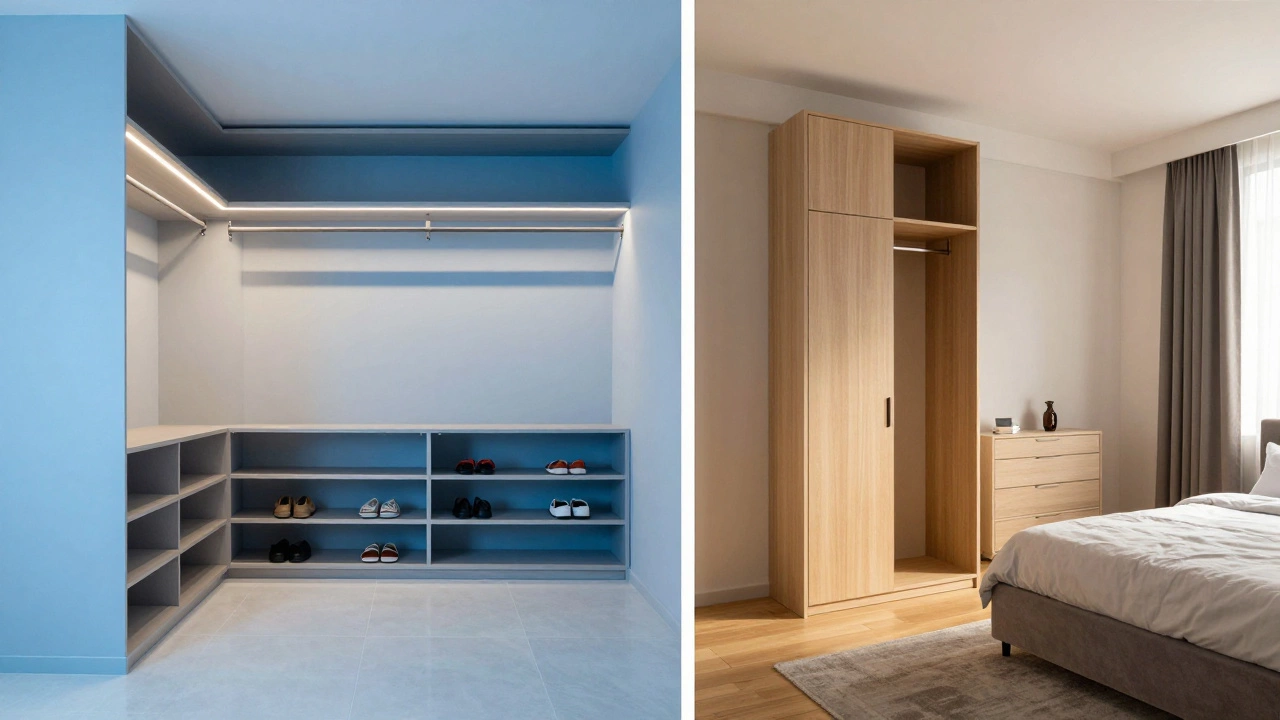
Luxury American homes often feature walk-in closets are large, room-sized storage spaces for clothing and accessories. which are essentially small rooms dedicated entirely to storage. These can include double rods, shoe racks, tie organizers, and even seating. For an American, a "master suite" without a walk-in closet is considered a significant downgrade in property value. This cultural expectation shapes how Americans think about bedroom layout: floor space is precious, so storage is hidden behind doors in the walls.
The Standalone Furniture: The Armoire
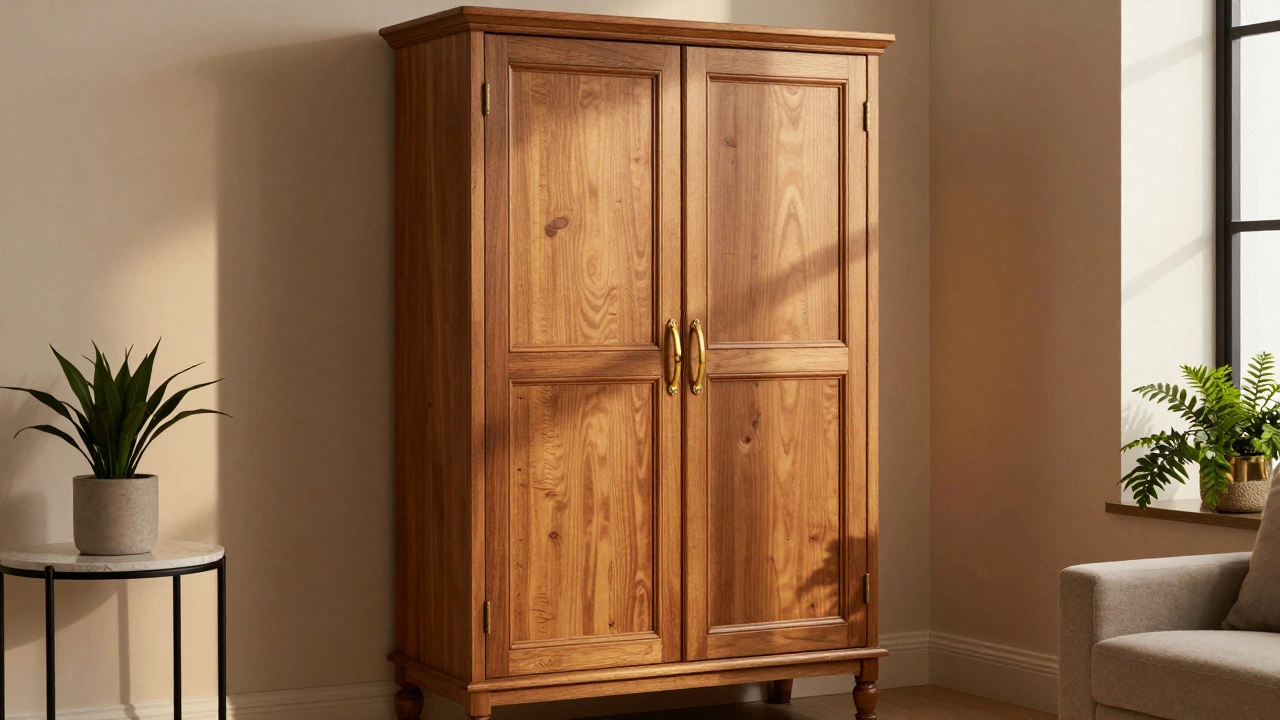
So, what do Americans call the tall, wooden, freestanding cabinet that holds clothes? The most accurate term is an armoire is a large, freestanding wooden cabinet with doors, used for storing clothes. The word comes from French, but it has been fully adopted into American English to describe exactly what the British call a wardrobe. You will see "armoire" listed on websites like Wayfair, IKEA, or Amazon when you search for standalone storage units.
However, language is messy. Many Americans simply refer to these pieces as "wardrobes" if they are familiar with the term, or they might call them "closets" loosely, even though that’s technically incorrect. In casual speech, you might hear someone say, "I bought a new closet," meaning they bought a new armoire. But if you look at product descriptions, "armoire" is the industry standard for the freestanding version.
An armoire typically features double doors, internal hanging rods, and shelves. often has ornate details, especially if it’s vintage or styled in a traditional aesthetic. Modern versions are sleeker, often made of particleboard or MDF with veneers, mimicking the look of high-end wood. Unlike a built-in closet, an armoire takes up floor space. This is why they are less common in modern American apartments, where square footage is expensive and minimalism is trendy. People prefer under-bed storage or multi-functional furniture over bulky armoires.
Other Confusing Terms: Dressers and Chests
To make matters more complicated, Americans use several other terms for bedroom storage that might overlap with what you expect from a wardrobe. A dresser is a wide, low piece of furniture with drawers for folding clothes. is a wide, low unit with drawers. You fold your clothes and put them in here. It does not have a hanging rod. If you try to hang a suit jacket in a dresser, you’ll fail miserably. Americans often pair a dresser with a mirror on top.
A chest of drawers is a tall, narrow unit with stacked drawers. is similar to a dresser but taller and narrower. Again, no hanging space. Then there is the buffet is a sideboard or storage unit often used in dining areas. which is usually for dining rooms, not bedrooms. The key takeaway is that if it has drawers and no hanging rod, it’s not a wardrobe/armoire equivalent. It’s a dresser.
Why the Difference Exists
The divergence between British/Australian "wardrobes" and American "closets" comes down to housing history and construction costs. In Europe and older Australian homes, building thick walls with deep recesses for storage was structurally difficult and expensive. Furniture makers solved this by creating sturdy, movable cabinets-the wardrobe-that could be placed against any wall. These wardrobes became status symbols, crafted from fine woods and decorated intricately.
In contrast, post-World War II America experienced a massive housing boom. Developers needed to build homes quickly and cheaply. Framing out shallow closets using standard 2x4 lumber was easy, fast, and added perceived value to the home without requiring skilled carpentry to build custom furniture. As a result, the built-in closet became the norm. By the time you moved into a new American suburban home, the storage was already there. You didn’t need to buy a wardrobe.
This historical shift means that today, if you rent an apartment in New York or Chicago, you likely won’t find space for a large armoire. The closets are small, and every inch of floor space is contested. In these cases, Americans turn to space-saving solutions like over-the-door organizers, vacuum-sealed bags, and slim-profile dressers rather than bulky armoires.
Comparison: Closet vs. Armoire vs. Wardrobe
| Feature | Built-In Closet (US) | Armoire (US) | Wardrobe (UK/Aus) |
|---|---|---|---|
| Installation | Part of the house structure | Freestanding furniture | Freestanding furniture |
| Space Requirement | Takes zero floor space | Takes significant floor space | Takes significant floor space |
| Customization | Fixed size; hard to change | Movable; can be rearranged | Movable; can be rearranged |
| Typical Contents | Clothes, shoes, seasonal items | Clothes, linens, sometimes luggage | Clothes, linens, sometimes luggage |
| Cost | Included in home price | $200 - $2,000+ | $200 - $2,000+ |
When to Use Which Term
If you are talking to an American about their home, ask if they have a "walk-in closet" or a "reach-in closet." Do not ask if they have a wardrobe, unless you specifically mean a piece of furniture. If you are shopping for furniture and want a standalone unit, search for "armoire" or "freestanding closet." Using the word "wardrobe" in an online search might yield results, but "armoire" will give you more precise matches for the tall, cabinet-style units.
If you are moving to the US from a country where wardrobes are standard, check the listing carefully. Look for photos of the closets. Are they deep enough for your long coats? Do they have shelves? If the closets are tiny (common in older city apartments), you may need to buy an armoire or a dresser to compensate for the lack of built-in storage. Don’t assume "bedroom" automatically means "plenty of storage."
Modern Trends: The Hybrid Approach
Recently, there has been a slight resurgence of freestanding storage in the US, driven by the rise of open-concept living and smaller urban apartments. Some designers are incorporating "slimline armoires" or "modular closet systems" that look like furniture but function like built-ins. These units often feature adjustable shelving and hanging rods, bridging the gap between the traditional American closet and the classic European wardrobe.
Additionally, with the popularity of DIY culture, some homeowners install "fake walls" or modular closet systems inside empty rooms to create walk-in closets where none existed before. This shows that while the terminology differs, the desire for organized, accessible storage is universal. Whether it’s called a closet, an armoire, or a wardrobe, the goal remains the same: keeping clothes tidy and out of sight.
Do Americans use the word wardrobe?
Yes, but rarely. Most Americans understand the word "wardrobe" from movies or books, but they primarily use "closet" for built-in storage and "armoire" for freestanding cabinets. Using "wardrobe" might sound slightly formal or foreign to some native speakers.
Is an armoire the same as a wardrobe?
Functionally, yes. Both are freestanding furniture pieces used to store clothes. The difference is purely linguistic and regional. "Armoire" is the preferred term in the US, while "wardrobe" is standard in the UK, Australia, and many other English-speaking countries.
What is a reach-in closet?
A reach-in closet is a built-in storage space in a wall that is too small to walk into. You stand outside and reach in to grab your clothes. It usually has sliding or hinged doors and contains a hanging rod and possibly a shelf.
Can I buy a wardrobe in the US?
You can, but you should search for "armoire" or "freestanding closet" to get better results. Major retailers like IKEA, Wayfair, and Amazon sell these items, often labeling them as armoires. If you search for "wardrobe," you might still find them, but the selection may be smaller.
Why don't all American homes have big closets?
Older homes, particularly those built before the 1950s, often lack built-in closets because they were constructed when wardrobes were the standard. Additionally, small urban apartments prioritize floor space, leading to smaller or fewer closets. In these cases, residents rely on dressers and armoires.