 22
Feb,2026
22
Feb,2026
Winter doesn’t mean you have to pack away your patio furniture just because the temperature drops. In Melbourne, where winters are mild but damp, many homeowners wonder what can stay outside without getting ruined. The answer isn’t simple-it depends on the material, how it’s made, and how much wear and tear it’s already seen. Some pieces can handle snow, frost, and rain with no problem. Others? They’ll crack, rust, or rot if you leave them out.
Teak Wood: The Gold Standard for Outdoor Durability
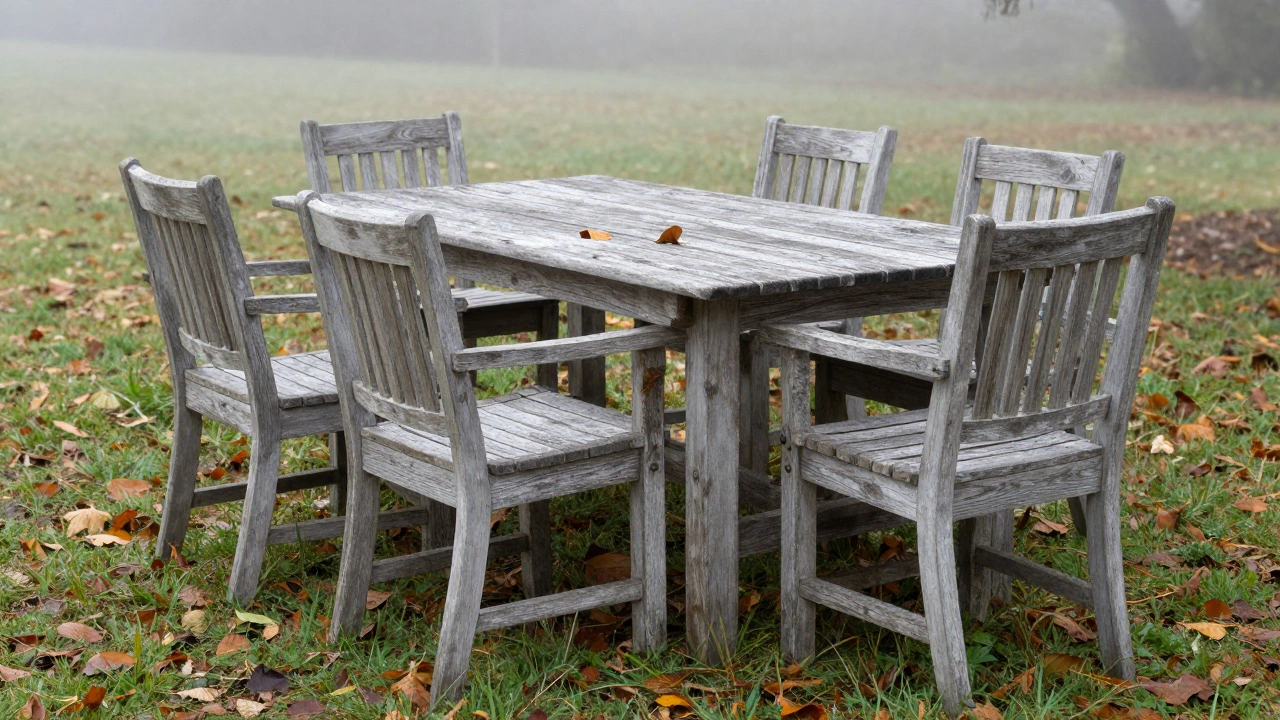
Teak is the go-to choice for people who want furniture that lasts decades. It’s naturally oily, which means it resists moisture, insects, and rot. You don’t need to treat it, cover it, or store it. Over time, teak turns a soft silver-gray color-that’s not damage, that’s its natural patina. Many teak tables and chairs in Melbourne parks have been outside for 20+ years and still look solid.
Real teak has a dense grain and feels heavy. If a piece is light and cheap-looking, it’s probably not teak. Some manufacturers sell "teak-look" furniture made from lower-grade wood or even plastic. Stick with solid, FSC-certified teak. Brands like Kingsley Bate and Tropitone use it because it doesn’t need a cover. Just sweep off leaves and let it be.
Aluminum: Lightweight, Rustproof, and Low-Maintenance
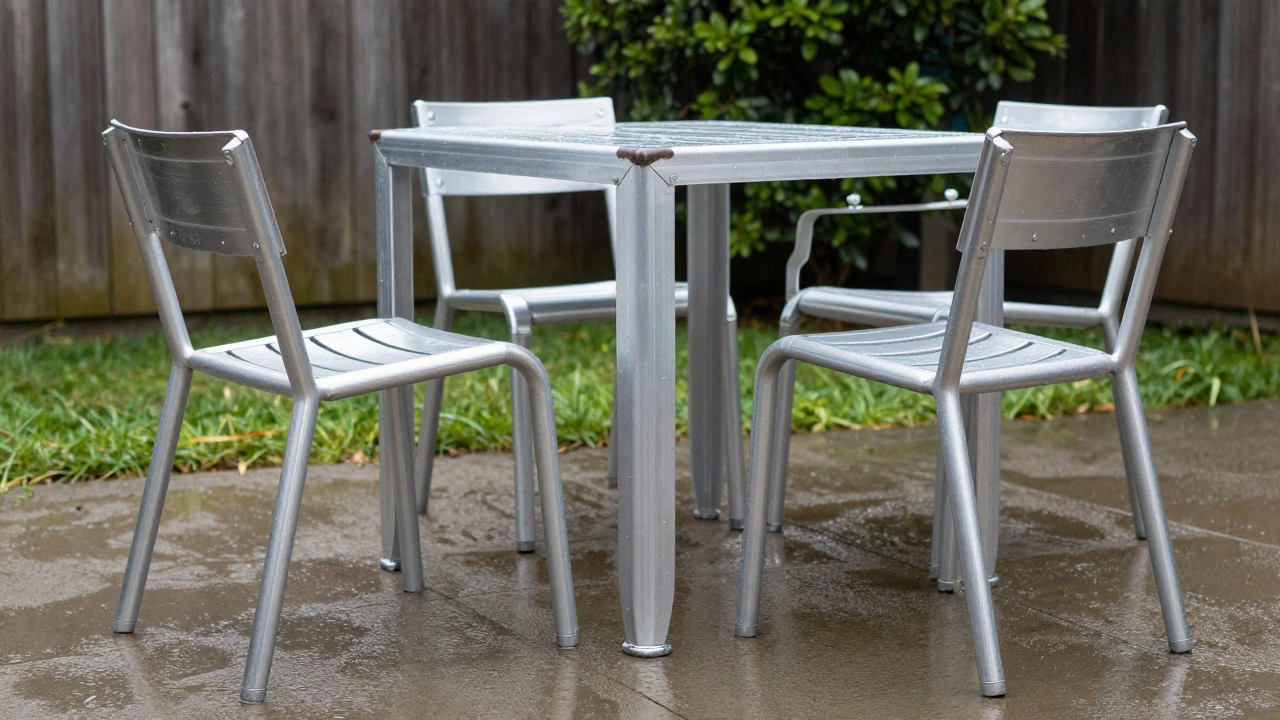
Aluminum patio furniture is everywhere for a reason. It doesn’t rust. It doesn’t warp. It doesn’t absorb water. Even in Melbourne’s wet winters, aluminum frames stay strong. Most are powder-coated, which adds a protective layer against scratches and UV damage.
The key is checking the finish. If the coating is chipped or peeling, moisture can get in and cause corrosion underneath. Look for furniture with welded joints instead of screws-those are less likely to loosen over time. Aluminum chairs, bistro sets, and sectional sofas are perfect for leaving out. Just wipe off condensation now and then. No covers needed.
Wrought Iron: Strong, But Watch Out for Rust
Wrought iron is heavy, classic, and built to last-if it’s done right. Older pieces from the 1980s or earlier often had thick, hand-forged frames that still look great today. But modern wrought iron? Many are thin, cheap, and painted with a thin coat that chips easily.
If your wrought iron has a clear powder coat or galvanized finish, it can stay outside. But if it’s just painted with regular enamel, rust will creep in. Check under the seat and armrests-those spots trap moisture. A quick spray of rust inhibitor once a year helps. Cover it if you live near the coast-salt air speeds up corrosion.
HDPE Wicker (Synthetic Rattan): The New Favorite
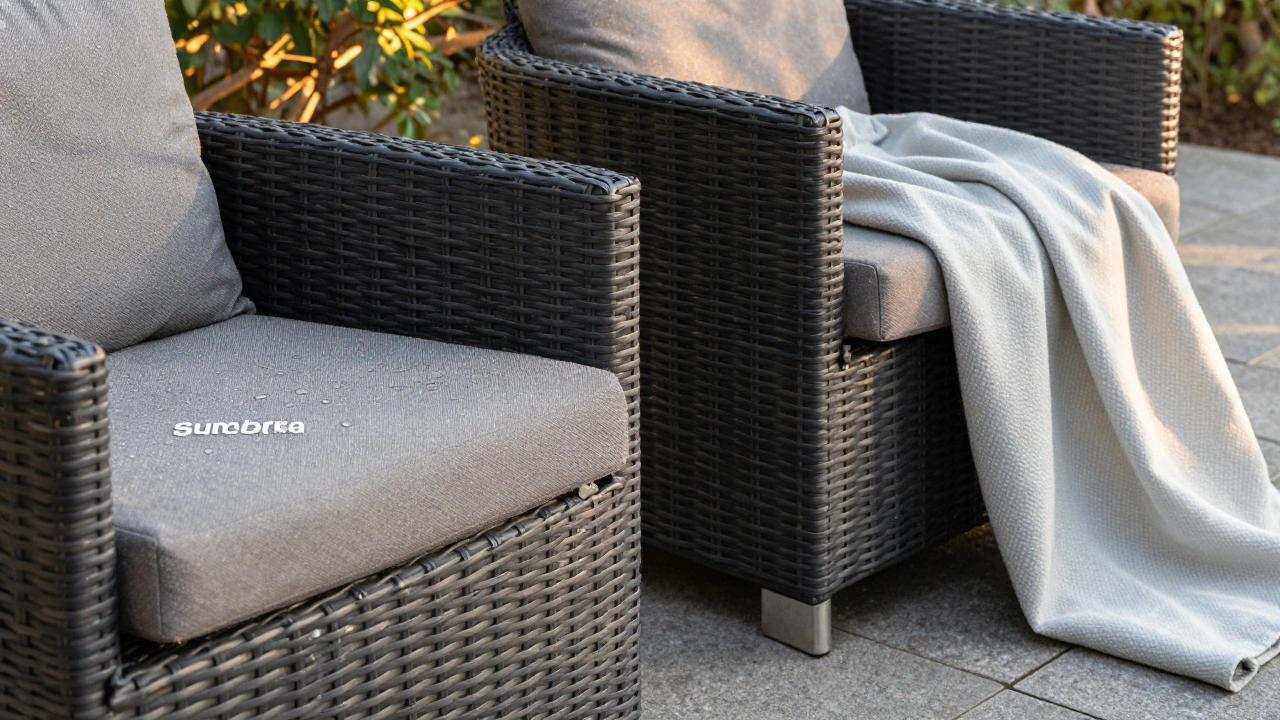
High-Density Polyethylene (HDPE) wicker is what most people buy now. It looks like natural rattan but is made from recycled plastic. It won’t crack in freezing temps, fade under sun, or rot in rain. The frames underneath are usually aluminum, so the whole set is weatherproof.
Not all wicker is equal. Cheap versions use PVC or low-grade PE. They get brittle in cold and turn white after a few winters. Look for HDPE with UV stabilizers and a 10-year warranty. Brands like Polywood and Tropitone use it. You can leave cushions on if they’re made with Sunbrella fabric. Otherwise, store them.
Cushions and Fabric: The Hidden Weak Point
Here’s the truth: even the best furniture can’t save bad cushions. If your cushions are cotton, polyester, or standard outdoor fabric, they’ll hold water. That leads to mold, mildew, and a nasty smell. After a few winters, they’ll fall apart.
Solution? Only leave out cushions made from solution-dyed acrylic fabric-Sunbrella, Outdura, or Perennials. These are designed to repel water, resist fading, and dry fast. Even then, don’t leave them out in heavy snow. A breathable cover helps, but storing them in a dry shed is better. You’ll double their lifespan.
What NOT to Leave Outside
Some materials just can’t handle winter. Here’s what you should bring in:
- Wicker made from natural rattan or cane - It soaks up moisture and cracks in cold.
- Wood like pine, cedar, or eucalyptus - Unless sealed with high-end oil every 6 months, it’ll warp and split.
- Cast aluminum with painted finishes - Thin paint peels, and rust forms underneath.
- Furniture with metal screws or bolts - Moisture gets in, rusts the hardware, and makes it impossible to take apart later.
- Upholstered pieces with foam cores - Foam holds water and turns into a sponge. Mold grows inside.
If you’re unsure, lift the piece. If it’s light and the finish looks thin, assume it’s not built for winter. Better safe than sorry.
Pro Tips for Melbourne Winters
Even if your furniture is weatherproof, Melbourne’s winters can be tricky. Rain, wind, and humidity combine to create damp conditions that wear things down slowly. Here’s what actually works:
- Elevate your furniture - Put it on pavers or bricks. This stops water pooling underneath and prevents rot.
- Use breathable covers - Not plastic tarps. Look for covers made of polyester with ventilation zippers. They let air move, so moisture doesn’t get trapped.
- Clear debris - Leaves, pine needles, and bird droppings hold moisture. Sweep them off weekly.
- Check for standing water - After rain, tip chairs upside down or shake cushions to drain water.
- Don’t stack - Stacking traps moisture between pieces. Leave space for airflow.
How Long Can You Really Leave It Out?
There’s no magic number. Teak and HDPE wicker can stay out for 10-20 years with zero care. Aluminum? 15+ years. But cushions? 3-5 years max if left out. The real rule: inspect it every spring. Look for cracks, rust spots, loose joints, or faded fabric. Fix small issues early. A little maintenance now saves you from replacing everything later.
Many people in Melbourne leave their teak and aluminum sets out year-round. They clean them once a year with soapy water. That’s it. No storage. No covers. Just smart choices.
Final Rule: Match the Material to Your Climate
What works in Sydney might not work in Ballarat. Melbourne’s winters are cool and wet, not freezing. You don’t need snow-proof gear-you need moisture-resistant gear. Focus on materials that shed water, don’t absorb it, and don’t rust. Skip the cheap sets. Invest in one good piece that lasts. It’s cheaper in the long run.
Ask yourself: If I left this outside for five winters, would I still want to use it? If the answer isn’t a clear yes, store it. Your future self will thank you.
Can I leave my patio cushions outside all winter?
Only if they’re made from solution-dyed acrylic fabric like Sunbrella or Outdura. Even then, it’s risky. Moisture gets trapped, mold grows, and the foam inside breaks down. For best results, store cushions indoors or use a breathable cover. Never leave standard polyester or cotton cushions outside.
Is teak furniture worth the price?
Yes-if you want furniture that lasts 20+ years with zero maintenance. Teak costs more upfront, but you won’t replace it. Cheaper woods like cedar or eucalyptus need oiling every few months and still crack over time. Teak’s natural oils make it immune to rot, insects, and weather. It’s the only wood that truly belongs outside year-round.
Should I cover my aluminum furniture in winter?
No, unless it’s in a coastal area with salt spray. Aluminum doesn’t rust, and powder-coated finishes are designed to handle rain and cold. Covers can trap moisture and cause condensation, which leads to dirt buildup and mildew. Just wipe it down once in a while. A clean, uncovered set lasts longer than a covered one.
What’s the difference between HDPE wicker and natural rattan?
HDPE wicker is synthetic plastic made from recycled materials. It’s flexible, fade-resistant, and won’t crack in cold or wet conditions. Natural rattan is plant-based. It absorbs moisture, swells, and cracks when frozen. HDPE lasts 10-15 years outside. Natural rattan lasts 2-4 years if left uncovered. Always choose HDPE for Melbourne winters.
Can I leave a metal-framed fire pit outside?
If it’s made of powder-coated steel or stainless steel, yes. But if it’s painted with regular enamel or has thin metal walls, rust will form. Empty out ashes after each use. Cover it with a breathable tarp or store it under a porch. Never leave a metal fire pit with water inside-it’ll rust from the inside out.