 22
Jan,2026
22
Jan,2026
Furniture Durability Calculator
How Long Will Your Furniture Last?
Answer these quick questions to see if your furniture will stand the test of time.
Estimated Lifespan
5-10 years
Based on your selections: Solid hardwood, dovetail joints, hardwood frame, high density foam, and stainless hardware typically last 30+ years. Your choices suggest moderate durability.
When you buy furniture, you don’t just want it to look good-you want it to still be standing when your kids graduate high school. Too many people buy cheap pieces that warp, wobble, or fall apart after two years. Then they wonder why their living room looks like a thrift store explosion. The truth? Not all furniture is built the same. Some pieces last 20, 30, even 50 years. Others barely make it through a move. So what actually makes furniture last?
Hardwood Is the Gold Standard
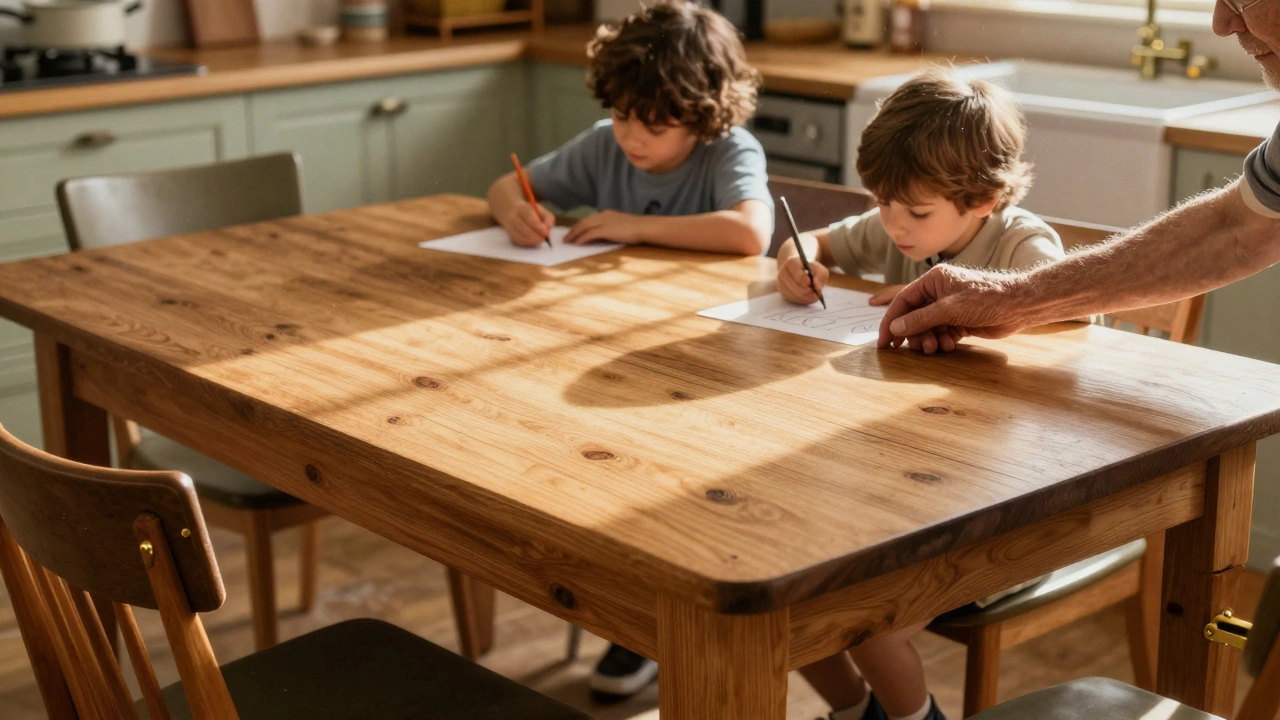
If you want furniture that lasts, start with solid hardwood. Not veneer. Not particleboard. Not MDF. Real wood-like oak, maple, walnut, or teak. These woods are dense, stable, and can handle years of use without cracking or warping. A solid oak dining table from the 1980s still sits in homes today, often refinished and passed down. That’s not luck. That’s material choice.
Compare that to a $300 IKEA bookshelf made of pressed wood. It holds up fine for a few years if you’re careful. But put a few heavy books on it, move it twice, and the joints start to loosen. The edges chip. The finish peels. It’s not built to be repaired. It’s built to be replaced.
Hardwood furniture has a simple advantage: it can be sanded and refinished. Scratches? Sand them out. Faded finish? Apply new oil or varnish. A solid wood dresser can go through five different looks over 40 years. A particleboard one? Throw it out.
Joinery Matters More Than You Think
Wood is only half the story. How the pieces are put together makes the other half. Look at the joints. If you see screws sticking out or nails holding things together, walk away. Those are temporary fixes.
Real durability comes from traditional joinery:
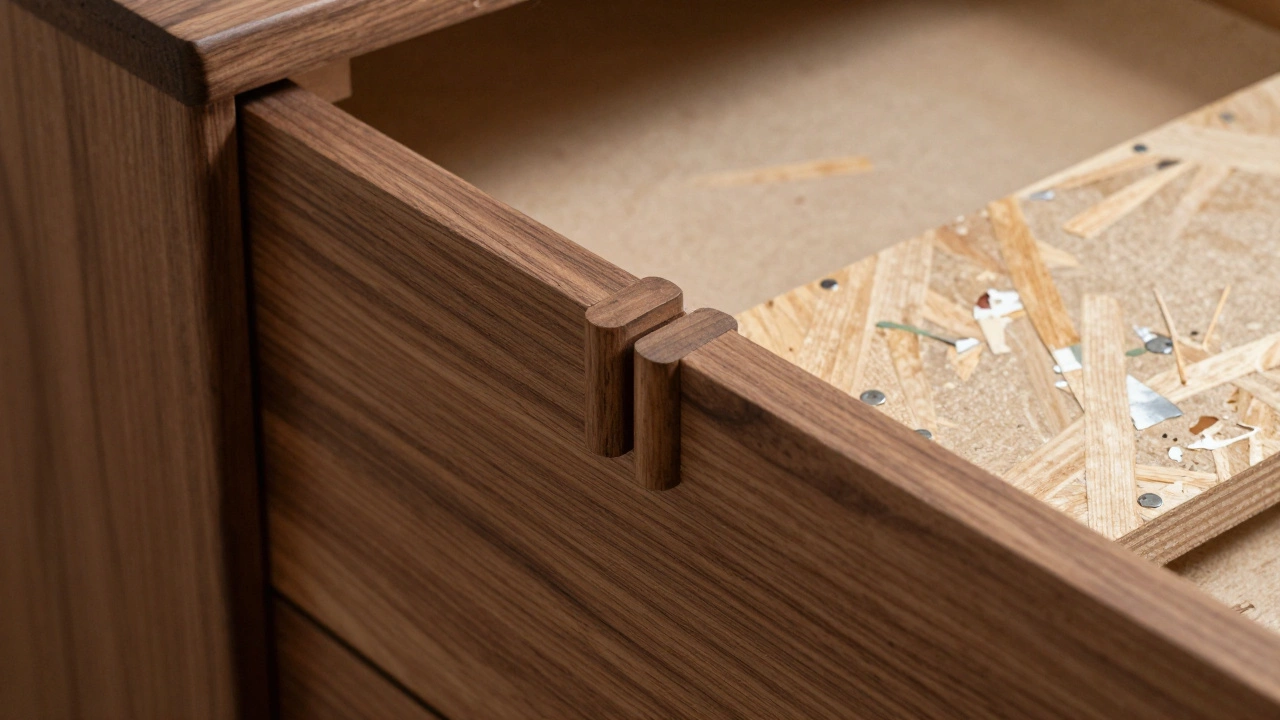
- Dovetail joints-interlocking wedge-shaped pins and tails-are the gold standard for drawers. They’re strong, resist pulling apart, and are used in high-end cabinetry for centuries.
- Mortise and tenon joints connect legs to frames in chairs and tables. They’re glued and clamped, creating a bond stronger than the wood itself.
- Corner blocks and bracing inside cabinets prevent racking. You won’t see them unless you look, but they stop the piece from twisting over time.
Check under the seat of a chair or inside a drawer. If you see glue, screws, or staples-skip it. If you see hand-cut wood joints, that’s a sign of craftsmanship, not mass production.
Frame Construction: Steel vs. Wood
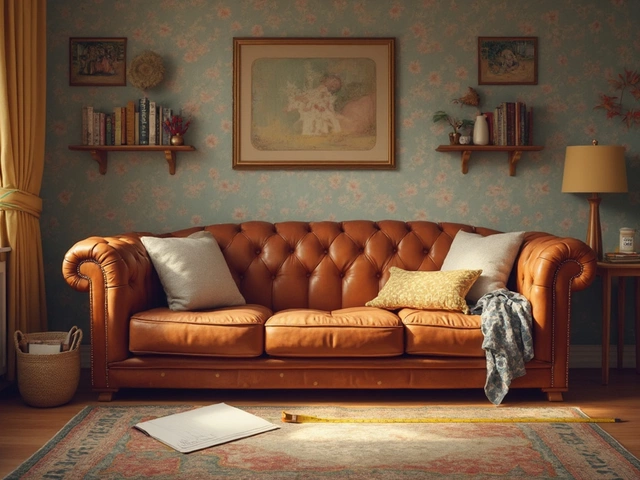
For sofas and sectionals, the frame is everything. A good frame is made from kiln-dried hardwood, not softwood or recycled lumber. It should be double-doweled and glued at every joint. Some high-end brands even use corner blocks reinforced with metal brackets.
Steel frames? They’re common in modern designs and can be durable-but only if they’re thick gauge (14-gauge or thicker). Thin steel bends. Thick steel holds up. Look for frames made from powder-coated steel, not bare metal. It resists rust and doesn’t squeak over time.
Here’s what to avoid: plastic or laminated particleboard frames. They’re used in budget sofas and are the #1 reason chairs collapse after a few years. One heavy person sitting wrong, and the whole structure gives way.
Upholstery: Fabric and Foam That Endures
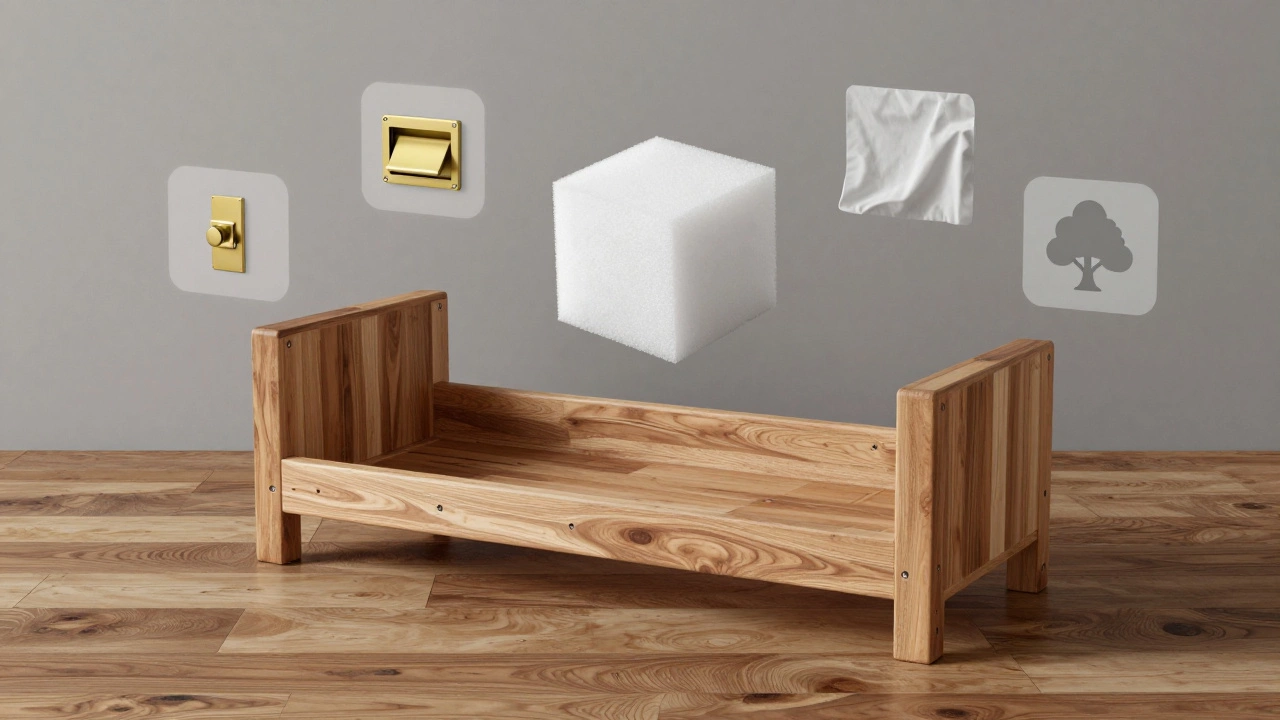
Even the best frame fails if the upholstery doesn’t hold up. Look for high-density foam in cushions. Anything under 1.8 lbs per cubic foot will flatten within a year. Premium sofas use 2.5 lbs or higher. That’s why a $2,000 sofa still looks new after five years, while a $600 one looks like a deflated balloon.
Fabric matters too. Performance fabrics like Crypton, Sunbrella, or solution-dyed acrylics resist stains, fading, and wear. They’re used in commercial spaces for a reason. Cotton and linen? Beautiful, but they pill and fade fast. If you have kids or pets, avoid them unless they’re blended with synthetics.
Check the backing. A well-made sofa has a dust cover on the bottom. That keeps debris out and keeps the springs from sagging. Skip anything without one.
Hardware: The Tiny Details That Make or Break It
Drawer slides, hinges, and handles might seem minor, but they’re the first things to fail. Ball-bearing slides are smooth and can handle 50,000+ open-close cycles. Cheap plastic slides? They jam after 2,000. That’s less than two years of daily use.
Look for brass or stainless steel hardware. It doesn’t rust. It doesn’t corrode. It doesn’t peel. Plastic handles turn brittle. Chrome plating flakes. Solid brass or stainless steel lasts decades.
Test drawers. Open and close them five times. Do they glide silently? Do they feel heavy and solid? If they rattle or stick, the furniture won’t last.
Where to Find Long-Lasting Furniture
You won’t find true durability at big-box stores. They’re designed for turnover, not legacy. Instead, look for:
- Local cabinetmakers who build to order. They use solid wood, real joinery, and offer repair services.
- Heritage brands like Stickley, Herman Miller, or Poltrona Frau. These companies have been making furniture since the 1800s. Their pieces are designed to outlive their owners.
- Secondhand markets-especially mid-century modern pieces. A 1960s teak sideboard from Denmark is often better built than anything new today.
Don’t assume new means better. A 30-year-old solid wood dining table from a garage sale might be in better shape than a brand-new particleboard one from a warehouse.
What to Avoid at All Costs
Here’s the short list of furniture you should never buy if you want it to last:
- Particleboard or MDF anything-especially for shelves, cabinets, or desks
- Plastic or ABS frame furniture
- Softwood like pine for structural pieces (it dents too easily)
- Furniture with visible staples or glue joints
- Anything labeled "assembly required" with only Allen wrenches and screws
- Upholstery with low-density foam (under 1.8 lbs/ft³)
If the price seems too good to be true, it is. You’re paying for convenience, not durability.
How to Tell If a Piece Is Built to Last
Before you buy, do this quick check:
- Look under the piece. Is there a dust cover? Is the bottom finished?
- Open drawers. Do they glide smoothly? Are the sides made of solid wood, not thin plywood?
- Shake the frame. Does it wobble? A sturdy piece won’t move.
- Check the legs. Are they attached with mortise and tenon or just screwed in?
- Ask: "Is this made from solid wood?" If they hesitate or say "it’s hardwood" without specifying, walk away.
These aren’t tricks. These are the same checks professional restorers use.
Why This Matters in the Long Run
Buying durable furniture isn’t about being fancy. It’s about being smart. A $1,200 solid wood dining table that lasts 40 years costs $30 a year. A $400 particleboard one that breaks in 4 years? That’s $100 a year. And you’re still buying replacements.
Plus, there’s the environmental cost. Every cheap piece you throw away adds to landfill waste. Solid wood furniture can be repaired, repurposed, or recycled. It doesn’t vanish after one use.
And then there’s the emotional side. Furniture that lasts becomes part of your story. Your kid draws on the table. Your dog sleeps on the sofa. Your grandkids sit at the same chair you did. That’s not just furniture. That’s heritage.
What type of wood lasts the longest in furniture?
Teak, oak, walnut, and maple are among the most durable hardwoods. Teak is especially resistant to moisture and insects, making it ideal for humid climates or outdoor use. Oak is dense and holds up well to daily wear. Walnut is slightly softer but still lasts decades with proper care. Avoid softwoods like pine for structural pieces-they dent and warp too easily.
Is solid wood furniture worth the higher price?
Yes-if you plan to keep it for more than five years. Solid wood can be repaired, refinished, and passed down. Particleboard and MDF cannot. Over 20 years, you’ll spend more replacing cheap furniture than you would on one solid wood piece. The upfront cost is higher, but the long-term value is far greater.
Can you fix furniture that’s already starting to fall apart?
If it’s made of solid wood and has good joinery, yes. Loose joints can be reglued. Scratches can be sanded and refinished. Broken legs can be replaced. Even warped drawers can be adjusted. The key is whether the core structure is intact. If the frame is broken or made of particleboard, it’s usually not worth fixing.
What’s the best way to care for long-lasting furniture?
Keep it out of direct sunlight to prevent fading. Use coasters and placemats to avoid water rings. Dust regularly with a soft cloth. For wood, apply a quality furniture oil or wax every 6-12 months. For upholstered pieces, vacuum cushions and rotate them monthly. Avoid harsh cleaners-just mild soap and water.
Are secondhand furniture pieces more durable than new ones?
Often, yes. Furniture from the 1950s to 1980s was commonly made with solid wood and traditional joinery. Mass production shifted to cheaper materials after the 1990s. A well-maintained mid-century dresser or armchair is usually more durable than a new budget piece. Always inspect for damage, but don’t assume old means worn out.
Next Steps: How to Start Building a Lasting Collection
Don’t try to replace everything at once. Start with one piece that gets the most use-the dining table, the sofa, the bed frame. Invest in that one. Then wait. Let it become part of your home. When you’re ready to replace something else, do the same. Over time, you’ll build a home full of furniture that doesn’t just look good-it lasts.
Quality isn’t expensive. It’s just not cheap. And that’s the difference between buying furniture and building a legacy.