 7
Dec,2025
7
Dec,2025
Mattress Comfort Assessment Tool
This tool helps you determine if your mattress might be the reason you sleep better on the sofa. Answer a few questions about your sleep experience and mattress.
Results will appear here after calculation
Ever lay down on your sofa and instantly feel like you’re sinking into a cloud-only to wake up hours later feeling more rested than you have in weeks? Meanwhile, your expensive mattress feels like a board you’re trying to balance on. You’re not alone. Thousands of people swear they sleep better on their sofa than their bed. But why? It’s not magic. It’s physics, psychology, and a little bit of habit.
Your Body Is Trying to Tell You Something
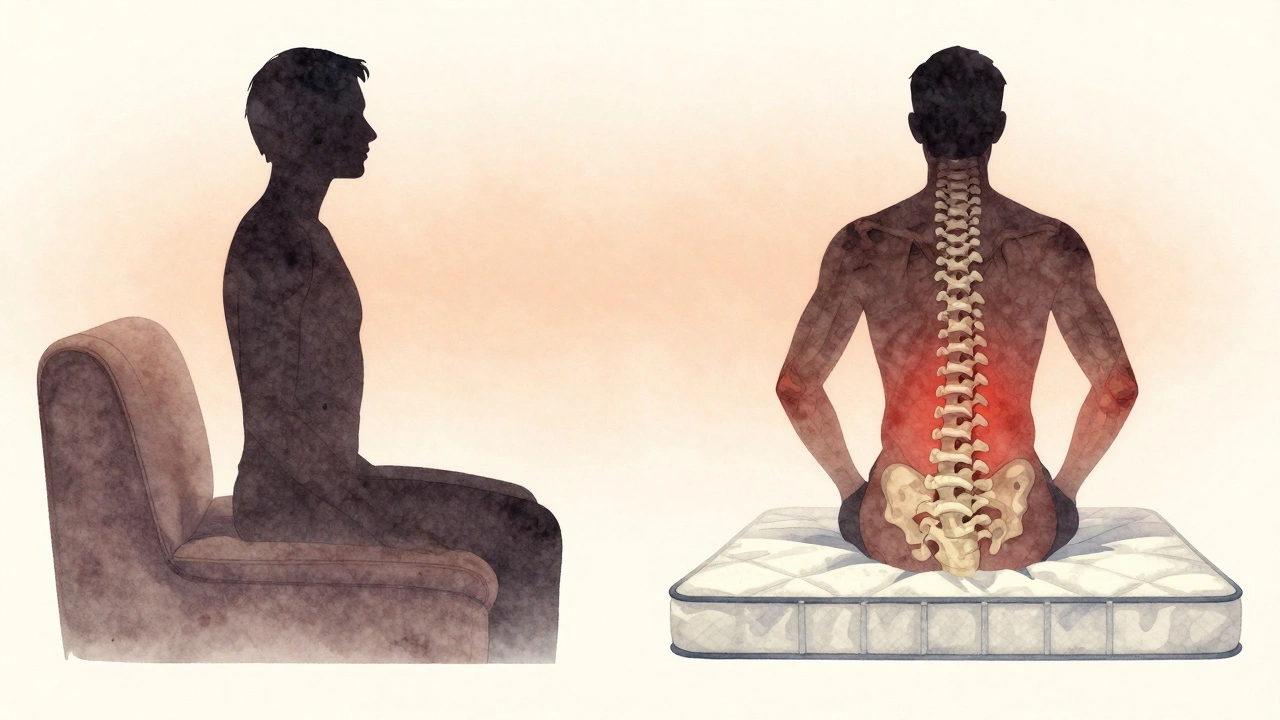
Your bed might look perfect-memory foam, cooling gel, adjustable base-but your body doesn’t care about marketing claims. It cares about comfort, pressure points, and how well your spine lines up. Many people find their sofa offers a more natural curve for their lower back. Sofas are often softer in the middle and slightly firmer at the edges, creating a gentle cradle. That’s not an accident. Furniture designers have been shaping seating for centuries to support the human form in a relaxed position.Compare that to a new mattress. If it’s too firm, it pushes on your hips and shoulders, creating pressure points that wake you up. If it’s too soft, your spine sinks into a C-shape, straining your neck and lower back. Neither feels right. But a sofa? It’s usually just right-enough give to hug your curves, enough support to keep you aligned.
The Psychology of the Sofa
There’s a reason you drift off on the sofa after dinner. It’s not just the TV. It’s the ritual. You’ve trained your brain to associate the sofa with winding down. You’re not in bed yet. You’re not thinking about tomorrow’s deadlines or the laundry pile. You’re in a liminal space-relaxed, safe, and mentally unburdened. That mental state is half the battle for sleep.Bedrooms, on the other hand, are full of triggers. Your phone. Your work laptop. That one sock you never found. Your brain sees the bed and thinks: stress, responsibility, insomnia. It’s called conditioned arousal. You’ve turned your bed into a place where you lie awake, scroll, and worry. Your sofa? It’s neutral. It doesn’t remind you of sleeplessness. It reminds you of comfort.
Temperature and Airflow Matter More Than You Think
Your bed might have a fancy cooling cover, but if your bedroom is stuffy, you’re still overheating. Most sofas sit in living rooms-areas with better airflow, lower humidity, and often cooler temperatures. Even a few degrees difference can make a huge impact on sleep quality. Studies show that core body temperature drops naturally before sleep. If your environment fights that drop, you’ll toss and turn.Also, let’s talk about sheets. Cotton sheets on a mattress can trap heat. But a sofa? You’re probably just in pajamas or sweatpants, with maybe a throw blanket. Less fabric = less heat buildup. That’s why you wake up cool and crisp on the sofa, even if your bed feels like a sauna.
The Weight Distribution Advantage
Most beds are designed for two people. That means the foam or springs are spread out to handle 300+ pounds of combined weight. But if you sleep alone, you’re only using a small portion of the surface. Your body sinks into the same spot every night, creating a permanent dip. Over time, that dip can misalign your spine.A sofa, especially a deep sectional or a loveseat, gives you more room to move. You can shift positions without hitting the edge. You’re not confined to a 36-inch-wide rectangle. You can curl up. Stretch out. Find your sweet spot. That freedom reduces muscle tension and lets your body relax deeper into sleep cycles.
It’s Not the Sofa-It’s the Bed
Let’s be honest: your bed might be the problem. If it’s older than 7-8 years, it’s lost its support. Even if it doesn’t sag, the internal structure has broken down. Memory foam breaks down faster than people think. Innerspring coils lose tension. Hybrid mattresses develop uneven spots. You don’t notice it because you’ve adapted. But your body remembers.Try this: sleep on the floor for one night-just a yoga mat or blanket. If you wake up feeling better, your bed is the issue. The sofa isn’t magic. It’s just not broken yet.
What to Do Next
If you’re consistently sleeping better on the sofa, don’t just accept it as a quirk. Fix the root cause.- Check your mattress age. If it’s over 7 years old, consider replacing it.
- Test your mattress firmness. Lie on your back. Can you slide your hand under your lower back? If yes, your spine isn’t supported.
- Try a topper. A 2-inch latex topper can add support without replacing the whole bed.
- Improve your bedroom environment. Lower the temperature to 65°F (18°C). Use blackout curtains. Remove electronics.
- Recondition your brain. Only use your bed for sleep and sex. No scrolling. No working. No watching TV.
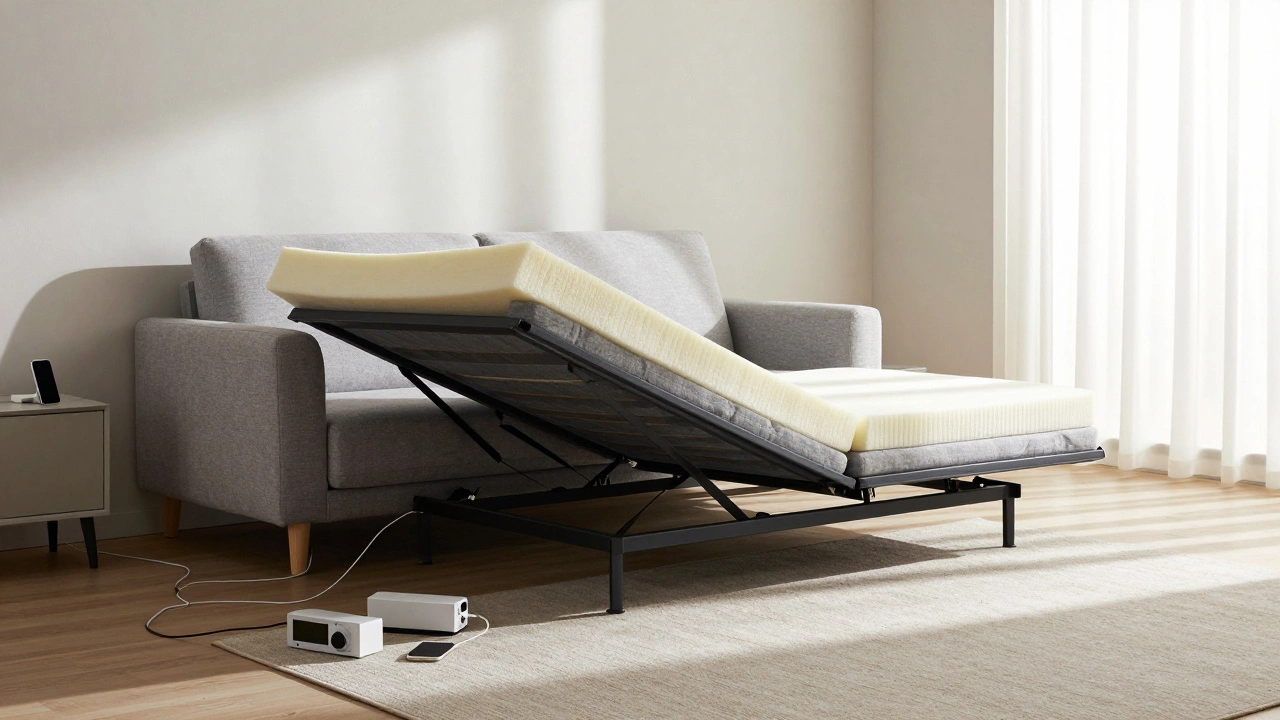
If you want a long-term solution that keeps the sofa comfort but gives you a proper bed, consider a sofa bed. Modern ones have high-density foam cores, reinforced frames, and adjustable bases. They’re not just fold-out couches-they’re engineered for nightly use. Brands like IKEA, Ashley, and Zinus now make sofa beds with 10-year warranties and sleep scores that match mid-range mattresses.
When to See a Doctor
If you’ve tried everything and still sleep better on the sofa, there might be a medical reason. Conditions like sleep apnea, restless leg syndrome, or chronic back pain can make lying flat unbearable. A doctor can run a sleep study or recommend a pillow or wedge to correct alignment. Don’t ignore persistent discomfort. Your sofa might be a band-aid, not a cure.Final Thought: Comfort Isn’t a Luxury-It’s a Necessity
Sleep isn’t about having the most expensive bed. It’s about having the right one for your body. Your sofa isn’t a failure. It’s a signal. Listen to it. Adjust your environment. Upgrade your mattress. Or, if it works, keep the sofa. There’s no rule that says you have to sleep in a bedroom. Some of the best sleepers in the world sleep on couches, in hammocks, or even in recliners. What matters isn’t where you sleep-it’s whether you wake up rested.Why do I feel more comfortable on the sofa than my bed?
You likely feel more comfortable on the sofa because it offers better pressure relief for your body shape, allows more freedom to shift positions, and isn’t associated with stress or insomnia like your bedroom might be. Sofas often have a natural curve that supports your spine better than a mattress that’s too firm or too soft.
Is sleeping on the sofa bad for my back?
Occasional sofa sleeping isn’t harmful, but doing it every night can strain your spine if the sofa lacks proper lumbar support. Deep, soft couches can cause your lower back to sink too far, leading to misalignment. If you sleep on the sofa regularly, choose one with a firm cushion and consider adding a lumbar roll or pillow for support.
Can a sofa bed be a good replacement for a regular bed?
Yes, if it’s designed for daily use. Modern sofa beds use high-density foam or innerspring systems that offer similar support to mid-range mattresses. Look for models with a solid frame, easy pull-out mechanism, and a warranty that covers sleep use-not just occasional guests. Avoid cheap fold-out couches with thin foam; they’ll collapse after a few months.
Why do I sleep deeper on the sofa even if it’s less supportive?
You’re probably sleeping deeper because your mind is more relaxed. Your brain associates the sofa with downtime, not stress. Bedrooms often trigger anxiety about sleep, work, or responsibilities. The sofa doesn’t carry that baggage. Mental calm can override physical discomfort, helping you reach deeper sleep stages even on a less-than-ideal surface.
Should I buy a new mattress if I sleep better on the sofa?
If you’re consistently sleeping better on the sofa, your mattress is probably the issue-not your preference. Test your current mattress: if it’s over 7 years old, sags in the middle, or feels too firm/soft, it’s time to replace it. Try a firm mattress topper first. If that doesn’t help, invest in a new one with medium-firm support and good pressure relief.