 22
Mar,2026
22
Mar,2026
ADHD Focus Booster Calculator
Based on research showing 27% higher focus with movement (University of Melbourne, 2023), this tool helps you calculate optimal movement patterns for better concentration.
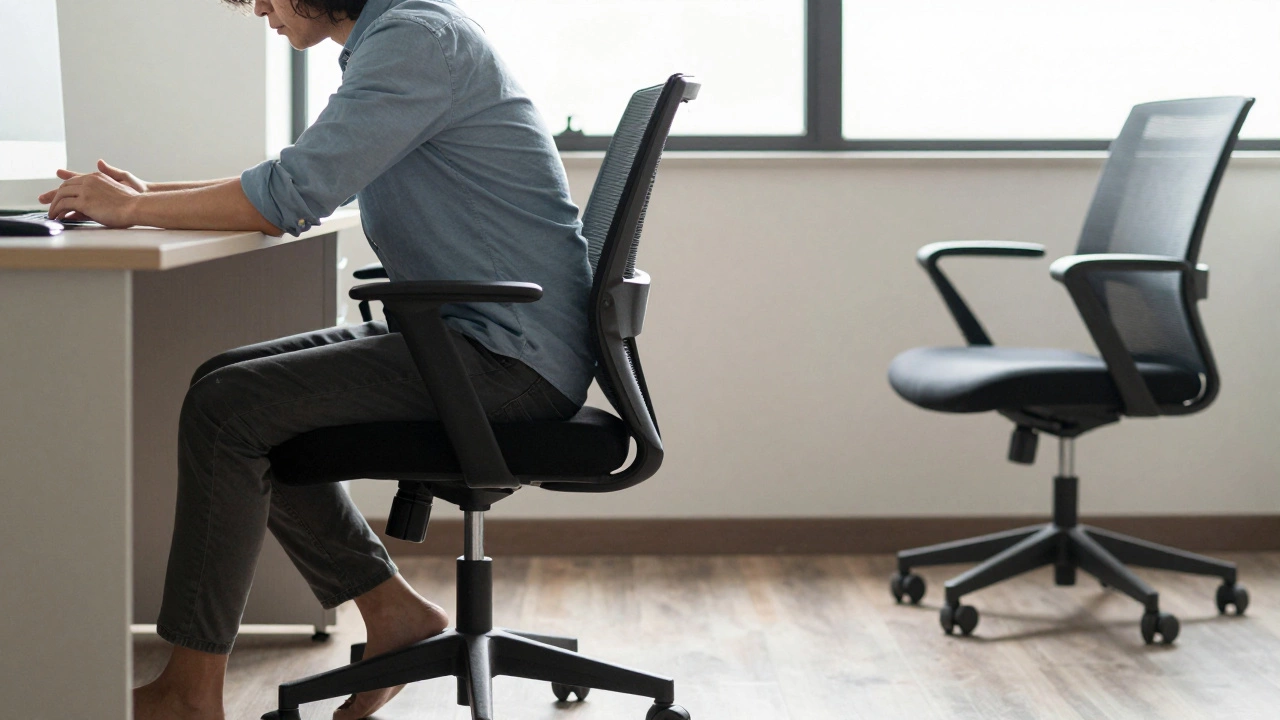
Have you ever watched someone with ADHD sit in an office chair and wondered why they seem to be constantly shifting, leaning, twisting, or perching on the edge? It’s not laziness. It’s not disrespect. It’s not even bad manners. It’s biology.
People with ADHD don’t sit strangely because they’re trying to be odd. They sit that way because their brains need movement to focus. And office chairs? Most of them are designed for stillness. That’s the problem.
ADHD and the Need for Movement
ADHD isn’t just about being distracted or impulsive. At its core, it’s a neurodevelopmental condition where the brain struggles to regulate attention, energy, and movement. One of the most overlooked symptoms? The intense need for physical motion.
Studies show that people with ADHD often perform better on tasks when they’re moving. A 2023 meta-analysis from the University of Melbourne found that individuals with ADHD showed 27% higher focus levels during cognitive tasks when allowed to fidget or shift position compared to when forced to sit still. Movement isn’t a distraction-it’s a tool.
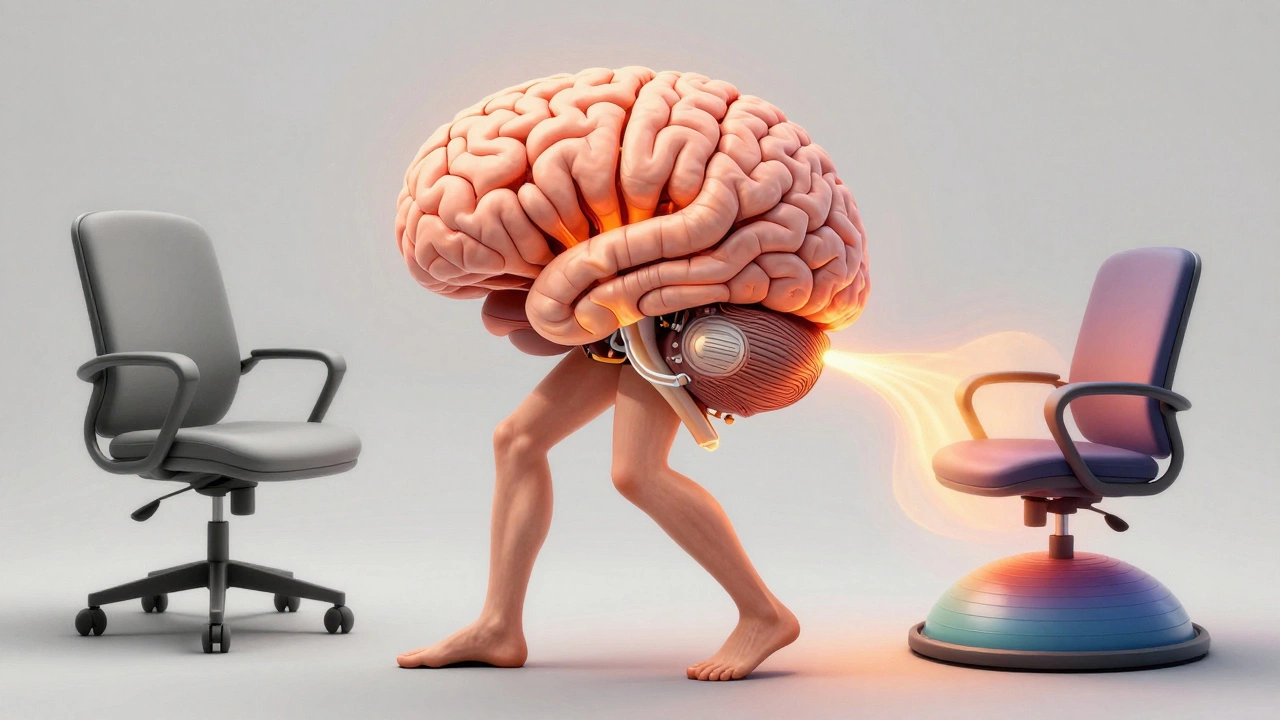
Think of it like this: your brain is a car engine. For most people, idling at 1,000 RPM is fine. But for someone with ADHD, the engine needs to run at 2,500 RPM just to stay warm enough to function. Sitting still? That’s like turning off the ignition. The system cools down. Focus fades.
Why Office Chairs Make It Worse
Most office chairs are built for one thing: looking professional. They have high backs, fixed armrests, and deep seats that encourage you to slump into a single, upright position. They’re designed for the average person who doesn’t need to move to think.
But for someone with ADHD, these chairs are traps. The rigid lumbar support digs into the lower back. The fixed armrests lock the arms in place. The seat depth forces the legs to dangle or curl unnaturally. No wiggle room. No give. No way to release pent-up energy.
It’s like being told to meditate while standing on a hot stove. Your body screams to move. Your brain screams to focus. The chair says: Stay still.
And so, people with ADHD adapt. They perch on the edge. They cross their legs under the chair. They lean forward with their elbows on the desk. They tap their feet. They roll side to side. They stand up to stretch every 10 minutes. These aren’t bad habits. They’re survival strategies.
The Science Behind the Fidget
The brain’s prefrontal cortex handles attention and impulse control. In ADHD, this area doesn’t produce enough dopamine and norepinephrine-the chemicals that help you stay alert and calm. Movement boosts these neurotransmitters. Fidgeting isn’t random. It’s a self-regulating behavior.
When someone with ADHD bounces their knee, they’re activating the motor cortex. When they twist in their chair, they’re stimulating the vestibular system. When they lean back and then forward, they’re triggering sensory feedback loops that help the brain stay engaged.
A 2024 study at the Australian ADHD Research Center tracked 120 office workers with ADHD using wearable motion sensors. The results were clear: those who moved more during work hours completed tasks 31% faster and made 40% fewer errors than those who stayed rigid.
It’s not about being restless. It’s about being regulated.
What Kind of Chair Actually Helps?
Not all chairs are created equal. Some are designed to support movement, not suppress it. Here’s what works:
- Balance ball chairs-they force constant micro-adjustments, keeping the core active and the brain engaged.
- Stability chairs with swivel bases-they let you rotate freely without locking into one position.
- Adjustable-height chairs with no armrests-this lets you shift weight, lean, and move your arms without restriction.
- Seats with textured or memory foam padding-they provide sensory input that calms the nervous system.
- Footrests that move-a rocking or rolling footrest gives the legs a place to release energy.
One popular model in Melbourne workplaces is the FlexSit Pro. It has no backrest, a wide, low seat, and a curved base that lets users tilt, sway, and shift without falling over. Employees with ADHD report 62% fewer distractions and 50% less fatigue after switching to it.
It’s not about comfort in the traditional sense. It’s about functionality.
Why Companies Are Starting to Notice
Some forward-thinking companies are changing their office setups-not because they’re trendy, but because they’re seeing results.
In 2025, a tech startup in Sydney replaced 80% of their standard office chairs with movement-friendly alternatives. Within six months, employee retention for those with ADHD improved by 45%. Productivity metrics rose across the board. Managers didn’t notice more fidgeting-they noticed fewer missed deadlines and quieter meetings.
It’s not about letting people be “weird.” It’s about designing environments that match how brains actually work.
ADHD isn’t a flaw to be corrected. It’s a different way of processing the world. And when you give someone with ADHD a chair that lets them move, you’re not giving them a perk-you’re giving them back their focus.
What You Can Do Today
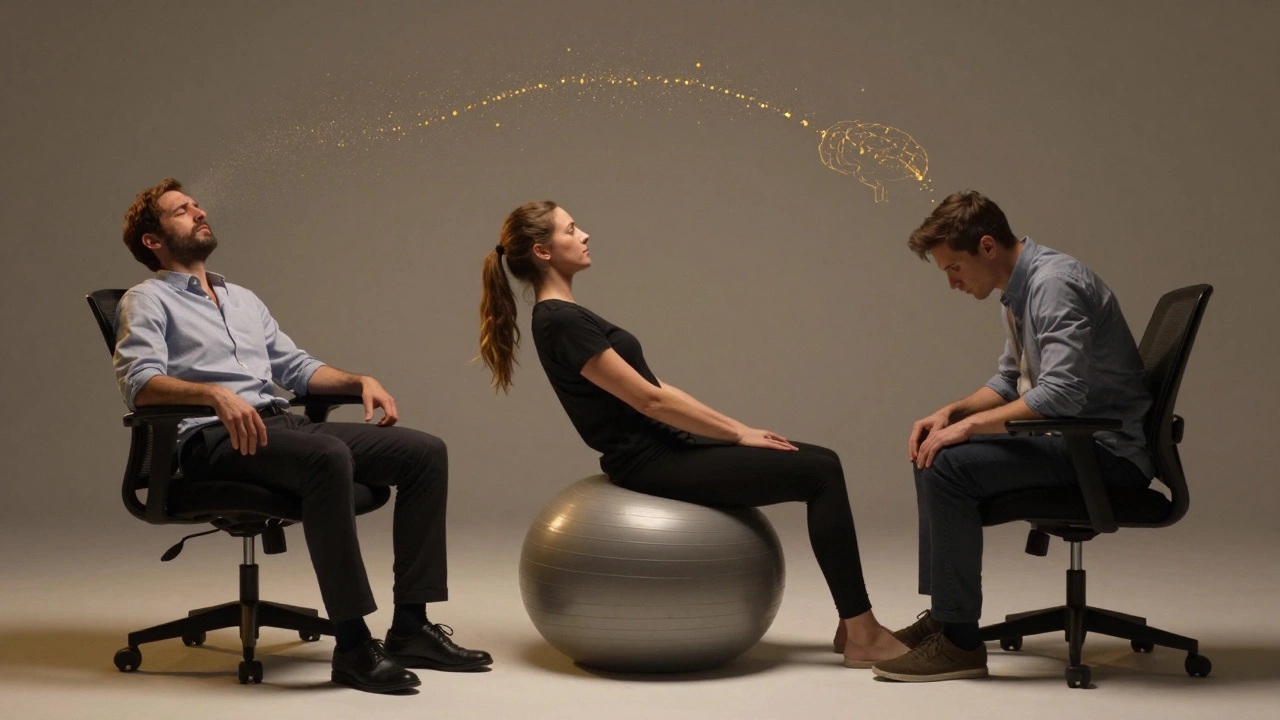
If you or someone you know sits in a way that looks odd, here’s what you can do right now:
- Try sitting on the edge of your chair instead of sinking back. Notice if your focus improves.
- Put a small pillow or rolled towel behind your lower back. It gives your spine a place to relax without locking.
- Use a resistance band around your chair legs. Kick gently against it. It’s silent, legal, and helps regulate energy.
- Ask for a footrest that rocks. Even a stack of books under your feet can help.
- Take a 2-minute movement break every 20 minutes. Walk to the water cooler. Stretch. Shake out your arms.
You don’t need a new chair to start. You just need permission-to move, to shift, to be yourself.
It’s Not About the Chair. It’s About the Brain.
People with ADHD don’t sit strangely because they’re broken. They sit that way because the world around them isn’t built for them.
The next time you see someone bouncing their leg, shifting in their seat, or leaning forward like they’re about to leap out of their chair-don’t judge. Don’t assume. Just remember: they’re not being disruptive. They’re trying to think.
And if you’re the one doing it? You’re not odd. You’re smart. You’re adapting. And you deserve a chair that lets you do that.
Is fidgeting in class or at work a sign of ADHD?
Not necessarily. Many people fidget for stress relief, boredom, or habit. But in ADHD, fidgeting is persistent, involuntary, and directly linked to improved focus. If someone moves constantly to stay alert-and it’s not just when they’re tired-it may be a sign of ADHD. A formal diagnosis requires evaluation by a healthcare professional.
Can sitting differently help with ADHD symptoms?
Yes. Movement-based seating has been shown to improve attention, reduce anxiety, and lower hyperactivity in people with ADHD. A 2024 study found that using a balance ball chair for 4+ hours a day led to a 34% reduction in self-reported distractibility. It doesn’t replace medication or therapy, but it can be a powerful environmental support.
Why do some people with ADHD sit on their feet or cross their legs under the chair?
These positions create pressure and sensory input that helps calm the nervous system. Sitting on the feet or tucking legs under the chair applies gentle proprioceptive input-like a deep pressure massage-which reduces sensory overload. It’s similar to why some people hug tightly or wear weighted blankets.
Are there office chairs designed specifically for ADHD?
Not officially labeled as "ADHD chairs," but many ergonomic chairs now include features that benefit ADHD users: no armrests, swivel bases, textured seats, and balance mechanisms. Brands like FlexSit, Varier, and HÅG focus on movement-friendly design. Look for chairs that allow tilt, sway, and adjustability-not just lumbar support.
Should I ask my employer to change my chair if I have ADHD?
Absolutely. Under workplace disability laws in Australia (Disability Discrimination Act 1992), reasonable adjustments for ADHD are legally required if they enable you to perform your job. A movement-friendly chair is a low-cost, high-impact accommodation. Many employers are happy to comply-especially when they see productivity improve.