 22
Nov,2026
Sofa Bed Lifespan & Cost Estimator
Input your details below to see how long your investment is likely to last and whether it's worth the money.
Pro Tip
- Use a mattress topper to extend foam life by up to 2 years.
- Lubricate hinges every 6 months with dry silicone.
- Avoid direct sunlight to prevent fabric fading and leather cracking.
You just dropped $1,500 on a sleek new sofa bed, and you’re already wondering: how long is this thing actually going to survive the daily grind of guests, kids jumping off it, and your own questionable posture while watching Netflix? It’s a fair question. Unlike a standard couch that sits pretty in the corner, a sofa bed is a piece of engineering designed to transform. That transformation mechanism is both its superpower and its biggest weakness.
The short answer? A decent quality sofa bed lasts anywhere from 5 to 10 years. But that range is huge, right? Why does one last five years and another hit the decade mark? It comes down to three things: what it’s made of, how often you open it, and whether you treat it like furniture or like a torture device. Let’s break down exactly what kills these beds, what keeps them alive, and when it’s time to let go.
The Real Lifespan Breakdown by Quality Tier
Not all sofa beds are created equal. You can spot the difference in the price tag, but more importantly, in the materials. Here is what you can realistically expect based on what you bought.
| Quality Tier | Price Range (AUD) | Typical Lifespan | Common Failure Point |
|---|---|---|---|
| Budget / Big Box | $300 - $800 | 3 - 5 Years | Mechanism jamming; foam sagging |
| Mid-Range / Retail | $900 - $2,000 | 5 - 8 Years | Upholstery wear; hinge loosening |
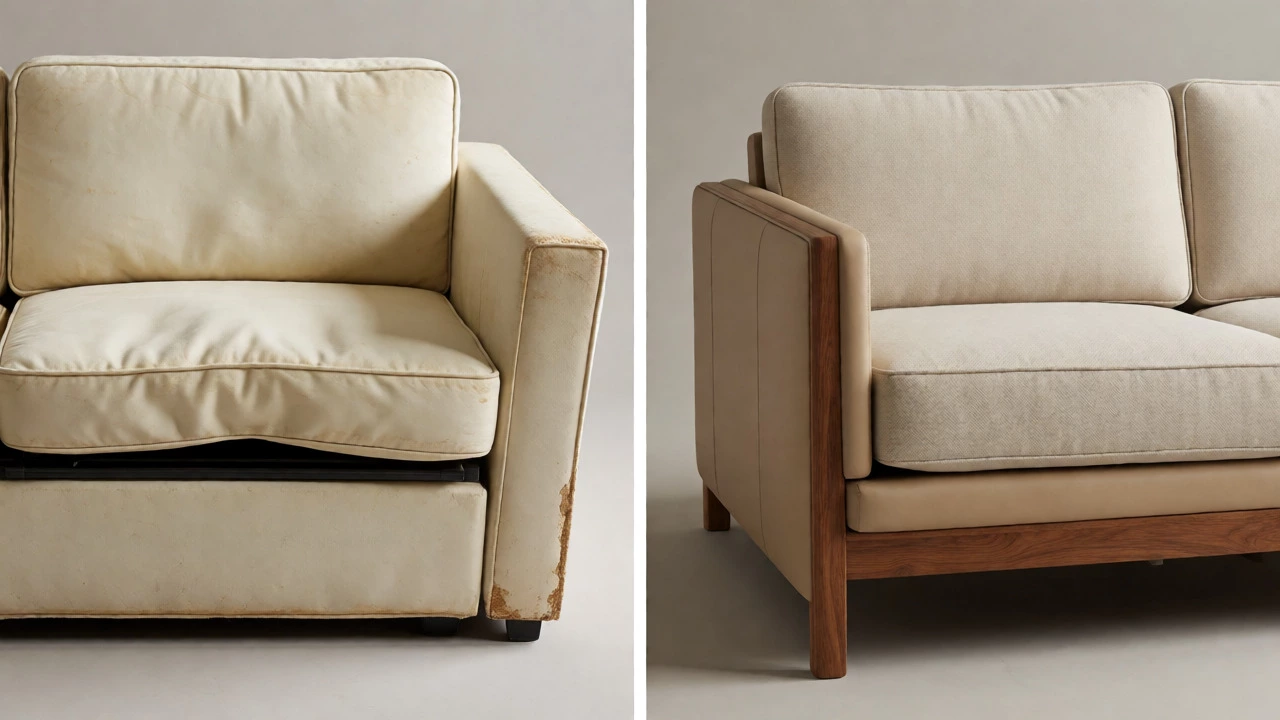
| High-End / Designer | $2,500+ | 8 - 12+ Years | Cosmetic wear; fabric fading |
If you grabbed a flat-pack sleeper from a big-box store for under $600, don’t expect it to handle weekly guest stays. These units often use particleboard frames and thin, low-density foam. The mechanism is usually a simple pull-out bar that bends under stress. They are fine for occasional use-think twice a year-but they aren't built for the daily fold-and-unfold routine.
On the flip side, high-end models from brands like Natuzzi or custom Australian makers use hardwood frames (kiln-dried oak or beech) and high-resilion foam cores. These are built to be opened every night. If you’re using your sofa bed as your primary bed, investing in this tier isn't just luxury; it's cost-per-night math.
What Actually Kills a Sofa Bed?
Furniture doesn't just "wear out" randomly. It fails at specific weak points. Understanding these helps you shop smarter and maintain better.
The Mechanism: The Heartbeat of the Beast
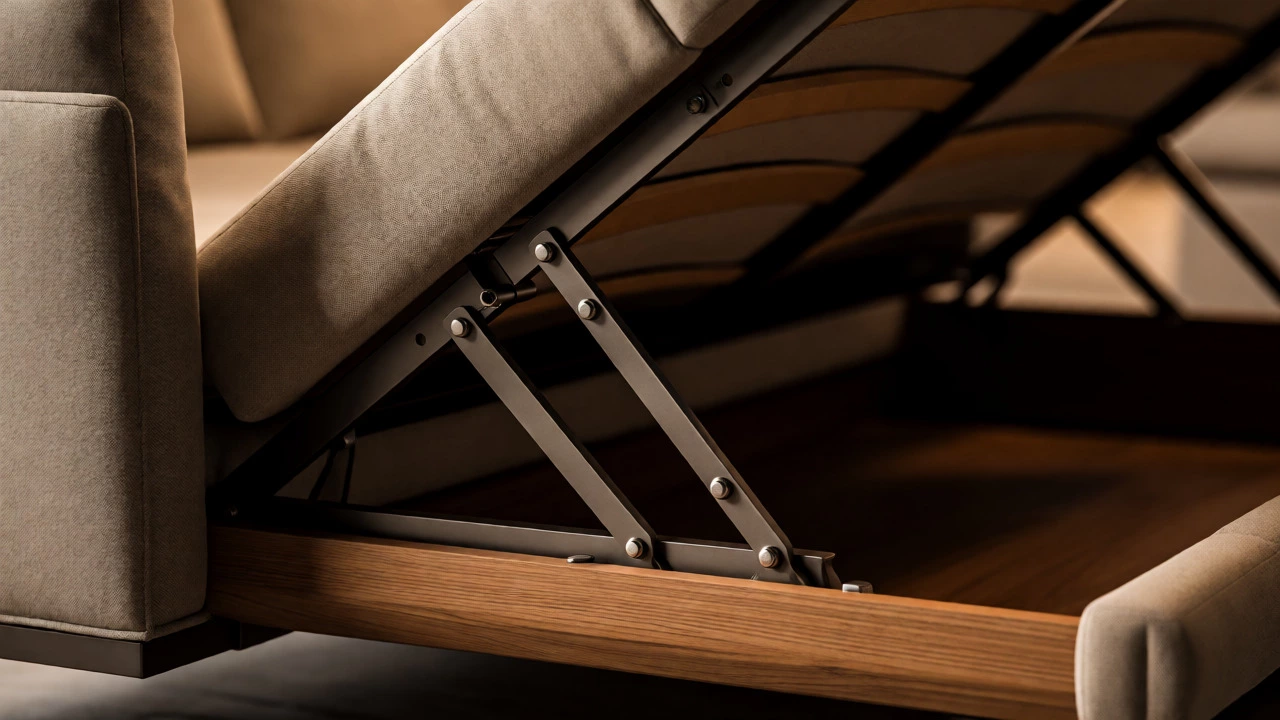
The conversion mechanism is where 70% of failures happen. Whether it’s a click-clack style, a pull-out trundle, or a complex sectional converter, moving parts break. Cheap metal hinges rust or bend. Plastic gears crack. If you hear a grinding noise or feel resistance when opening it, stop forcing it. Forcing a stuck mechanism snaps the internal cables or breaks the latch. Once the latch breaks, the bed won't stay closed, and you’ve got a wobbly mess.
The Foam: The Comfort Killer
Sofa beds take a beating because the seat cushion doubles as the mattress. This means it gets compressed vertically (sitting) and horizontally (lying down). Standard polyurethane foam loses its bounce quickly. Within two years, a cheap foam core turns into a pancake. High-density foam (density above 1.8 lbs/cubic foot) holds up much longer. Memory foam tops help with comfort but can trap heat and degrade faster if exposed to direct sunlight near windows.
The Frame: Structural Integrity
A wobbly frame ruins everything. Particleboard frames swell if they get wet (spilled wine, anyone?) and lose structural integrity over time. Hardwood frames are robust but can still suffer from loose joinery. Screws loosen as the wood expands and contracts with Melbourne’s humidity changes. Regular tightening is essential.
Usage Frequency: How Often Are You Sleeping On It?
This is the biggest variable. There is a massive difference between a sofa bed used for emergency sleepovers and one used as a nightly bed.
- Occasional Use (1-2 times a month): Your sofa bed will likely outlive its upholstery. The mechanism rarely cycles, so mechanical failure is low risk. Focus on protecting the fabric from dust and sun.
- Regular Use (Weekly): Expect 5-7 years. The mechanism sees enough stress to require lubrication and careful handling. Foam compression becomes noticeable after year 3.
- Daily Use (Nightly): Treat it like a mattress. Replace it every 5-8 years depending on quality. Daily cycling wears out hinges and latches rapidly. If you sleep on it every night, buy the best mechanism you can afford.
If you’re in a small apartment in Fitzroy or Richmond and this is your main bed, do not skimp on the mechanism type. Look for steel-reinforced hinges and gas-lift assists if possible. They reduce the strain on your arms and the unit itself.
Proven Ways to Extend the Life of Your Sofa Bed
You can’t change the past, but you can definitely influence the future of your furniture. Here are practical steps that add years to your investment.
Lubricate Moving Parts
Once every six months, spray a dry silicone lubricant on the hinges and rails. Avoid WD-40-it attracts dust and gumming up the works later. Dry silicone keeps things sliding smoothly without leaving an oily residue that stains fabric.
Rotate the Cushions
If your sofa bed has removable seat cushions, rotate them weekly. Flip them over and swap left for right. This ensures even wear. If the cushions are fixed, try to vary where you sit. Always sitting on the same spot creates a permanent dip.
Protect the Fabric
Direct sunlight fades fabric and dries out leather, causing cracks. In Australia, UV damage is real. Keep your sofa bed away from south-facing windows or use UV-filtering blinds. Also, vacuum the crevices monthly. Crumbs and pet hair accelerate fabric abrasion and attract pests.
Use a Mattress Topper
This is the single best hack for comfort and longevity. A 5cm memory foam or latex topper protects the underlying foam from body oils and sweat. It also adds a layer of comfort that masks minor sagging. When the topper wears out, replace it for $100 instead of buying a new sofa bed for $1,500.
Signs It’s Time to Replace Your Sofa Bed
Don’t cling to a broken chair. Here are the red flags that mean repair isn’t worth it.
- The "Hammock" Effect: If you lie down and roll toward the center, the support springs are shot. No amount of pillows fixes this.
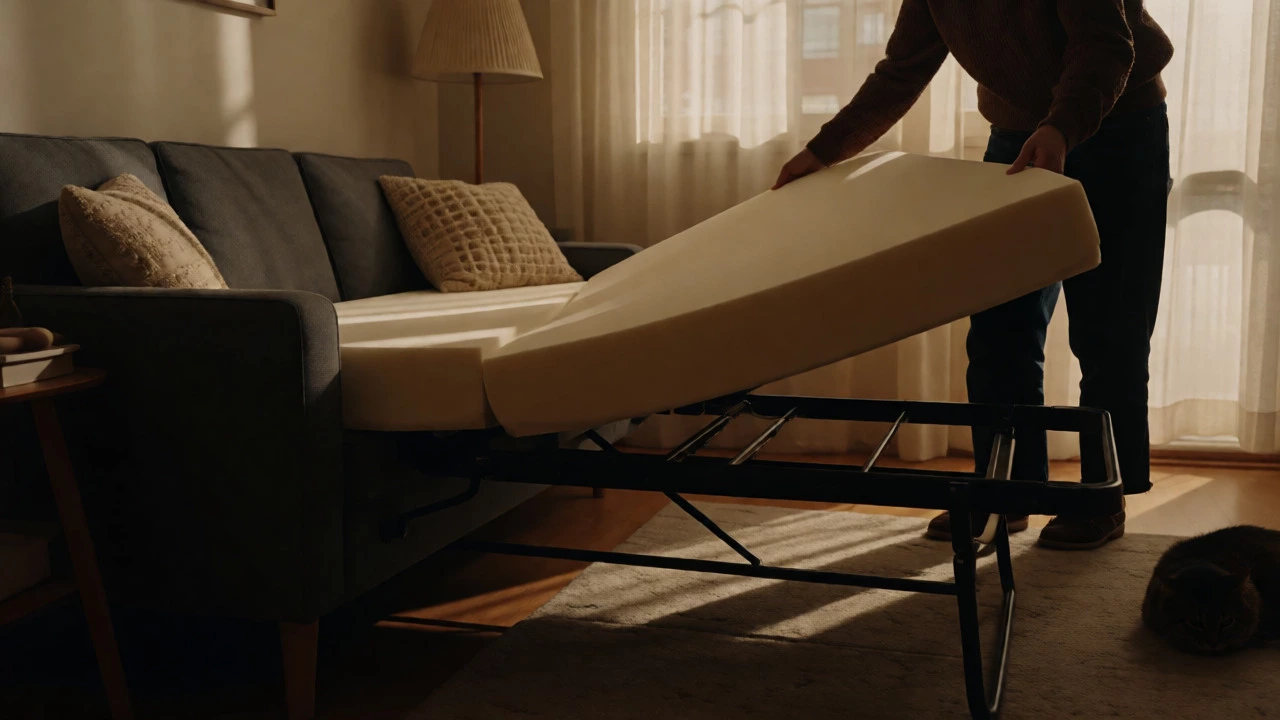
- Stuck Mechanism: If it takes two people and swearing to open it, the internal linkage is bent. Repair costs often exceed 50% of a new unit’s price.
- Visible Spring Protrusion: If you can feel individual coils poking through the fabric, the padding layers have failed. This is painful and damages the upholstery from the inside out.
- Fabric Tears at Stress Points: Small rips at the corners where the bed folds are hard to patch invisibly. They expand quickly with use.
Repair vs. Replace: The Cost Calculation
Should you fix it or bin it? Run this quick mental check:
- Is the frame solid? If the wood is cracked or rotted, replace. Wood repairs are expensive and rarely perfect.
- Is the mechanism available? Call the manufacturer. If they discontinued the model, finding parts is a nightmare. If parts are unavailable, replace.
- Is the fabric replaceable? Reupholstering costs $800-$1,500. If your sofa bed cost $1,200, reupholstering is almost buying a new one. Only reupholster if the frame and mechanism are premium quality.
In most cases, replacing a mid-range sofa bed is cheaper and less hassle than repairing it. Save repairs for high-end designer pieces with sentimental value or exceptional build quality.
Frequently Asked Questions
Do sofa beds last longer than regular sofas?
Generally, no. Regular sofas have fewer moving parts and their cushions only experience vertical compression. Sofa beds have complex mechanisms and their cushions undergo multi-directional stress. A high-quality regular sofa might last 15 years, whereas a high-quality sofa bed typically caps out around 10-12 years due to mechanical wear.
Can I replace just the mattress part of my sofa bed?
It depends on the design. Some modular sofa beds allow you to unzip and replace the foam core. Others have the foam sewn directly into the cover or glued to the frame. Check your user manual. If the foam is integral, you’ll need a professional upholsterer or a topper solution.
Which sofa bed mechanism is the most durable?
The "click-clack" mechanism is simple but prone to breaking if forced. Pull-out trundles are sturdy but heavy. The most durable for daily use are often the Italian-style lift mechanisms (like those found in Natuzzi or similar high-end brands) which use gas struts and reinforced steel linkages. They distribute weight evenly and have fewer failure points.
Does pet ownership shorten sofa bed life?
Yes, significantly. Pet claws snag fabrics, especially microfiber and velvet. Pet oils degrade foam faster. If you have pets, choose performance fabrics (like Crypton or Sunbrella) and keep nails trimmed. Leather is tough but scratches easily. Microfiber is scratch-resistant but collects fur.
How do I know if my sofa bed is high quality before buying?
Check the frame material (hardwood > plywood > particleboard). Ask about the foam density (ask for lbs per cubic foot; higher is better). Test the mechanism yourself-open and close it 5 times. Listen for squeaks. Check the warranty: reputable brands offer 5-10 years on frames and mechanisms. If the warranty is only 1 year, expect a shorter lifespan.