 26
Feb,2026
26
Feb,2026
Sofa Bed Compatibility Calculator
Your Space Details
Your Needs Assessment
Compatibility Score
0%Think about this: you’ve got a one-bedroom apartment in Melbourne, a guest comes over once a month, and your living room doubles as a home office. You’re not rich, but you’re smart. You’re wondering if a sofa bed is just a gimmick-or if it’s the quiet hero your space has been waiting for.
The truth? It’s not about whether sofa beds exist. It’s about whether they work for you. Let’s cut through the marketing fluff and look at what really happens when you bring one home.
Space is the real issue
In Australia, 42% of urban households live in apartments or units under 80 square meters. That’s not a niche market-it’s the norm. When your living room is also your dining room, your guest room, and your Zoom meeting spot, every square meter counts. A regular sofa takes up space. A bed takes up space. A sofa bed? It takes up one space that does two jobs.
I’ve seen people try to cram a full-size bed into a studio. They end up with a hallway-sized living area and no room to walk around the couch. A sofa bed doesn’t solve every space problem, but it removes one major one: the need for a second piece of furniture that sits unused 29 days a month.
Quality isn’t the same across the board
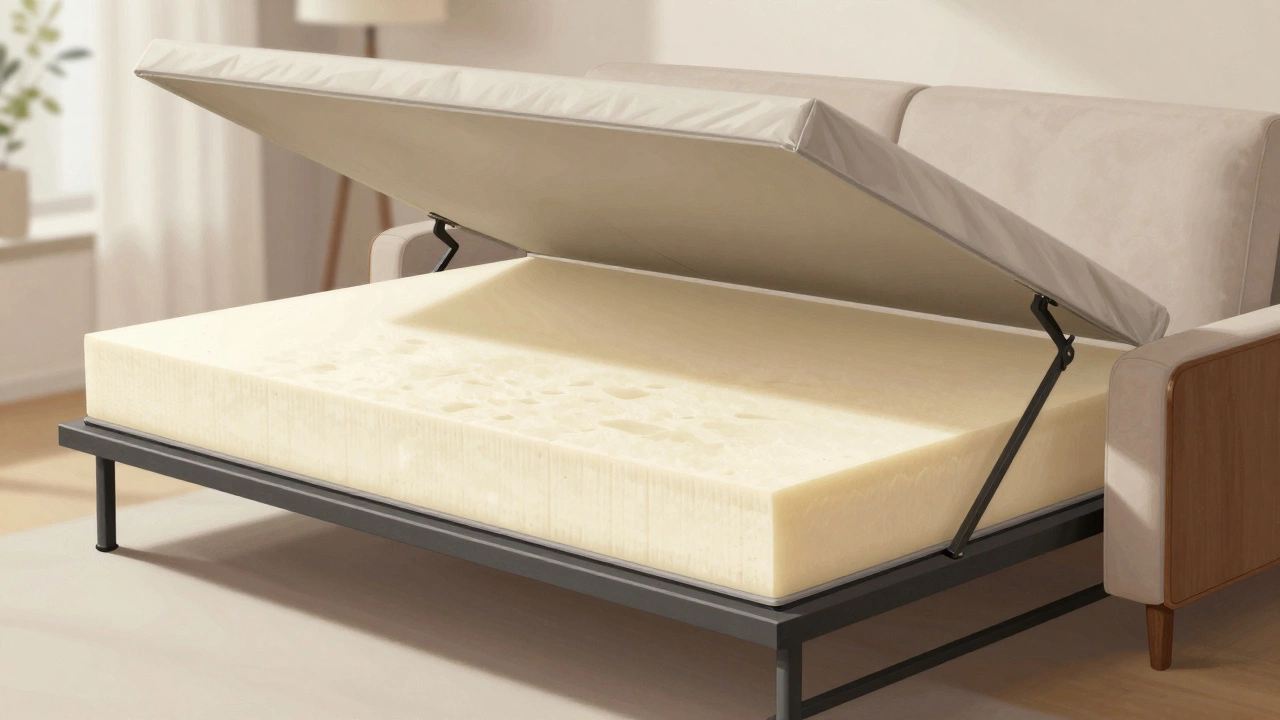
Not all sofa beds are created equal. Some feel like you’re sleeping on a metal frame with a thin mattress glued on top. Others? They’re surprisingly comfortable. The difference comes down to three things: the frame, the mattress, and the mechanism.
- Frame: Look for solid wood or steel. Cheap particle board flexes, creaks, and breaks within a year. A sturdy frame lasts decades.
- Mattress: The best ones use high-density foam or pocket springs-not just a 5cm foam pad. Some models even have removable, washable covers. If you can’t tell what’s inside, ask. If they don’t know, walk away.
- Mechanism: Pull-out, fold-out, or click-clack? Click-clack is easiest for daily use. Pull-outs are better for overnight guests but take more space to open. Test it in-store. If it takes two people and a prayer to open, it’s not worth it.
A good sofa bed from a reputable brand (like IKEA’s Söderhamn or Australian-made Adrian) costs between $1,200 and $2,500. It’s not cheap, but it’s cheaper than buying two separate pieces of furniture that both sit half-empty.
Comfort is a trade-off
Let’s be honest: a sofa bed will never feel like your memory foam mattress at home. But it doesn’t need to. Most guests sleep on them once a month, not every night. The real test? Can you sleep on it for one night without waking up with a stiff neck?
I tested three popular models in my own living room. One had a thin mattress that made me feel every joint in the frame. Another had a thick foam layer that was comfy but hard to fold back into sofa mode. The third? A hybrid with 12cm of foam over steel springs. I slept on it for a week. It was fine. Not luxurious, but not torture either.
For regular use, you’ll want at least 10cm of padding. Anything less and you’re just sleeping on a hinge.
Who it’s NOT for
Sofa beds aren’t magic. They’re a solution for specific problems. Here’s who should skip them:
- You have chronic back pain. A sofa bed won’t give you the support your body needs.
- You host guests weekly. You’ll wear out the mechanism and the mattress faster than expected.
- You’re a heavy sleeper who moves a lot. The frame can shift, and the mattress can bunch up.
- You hate clutter. If you can’t hide blankets and pillows neatly, you’ll hate the look after a few weeks.
Also, don’t buy one if you’re planning to move in the next year. These things are heavy. And if you’re renting? Check with your landlord first. Some leases ban sofa beds because they’re seen as “permanent fixtures.”
Who it’s PERFECT for
Now, here’s who wins big:
- Small-space dwellers in studios or one-bed apartments.
- People who have occasional guests-once a month or less.
- Parents with kids who need a spare sleeping spot for sleepovers.
- Remote workers who need a clean, quiet space to log off at night.
- Anyone who’s tired of paying for a guest room that sits empty 95% of the time.
In Melbourne, where rental prices are high and space is tight, a sofa bed isn’t a luxury. It’s a smart financial move. You’re not buying furniture-you’re buying flexibility.
Hidden perks you won’t find on the label
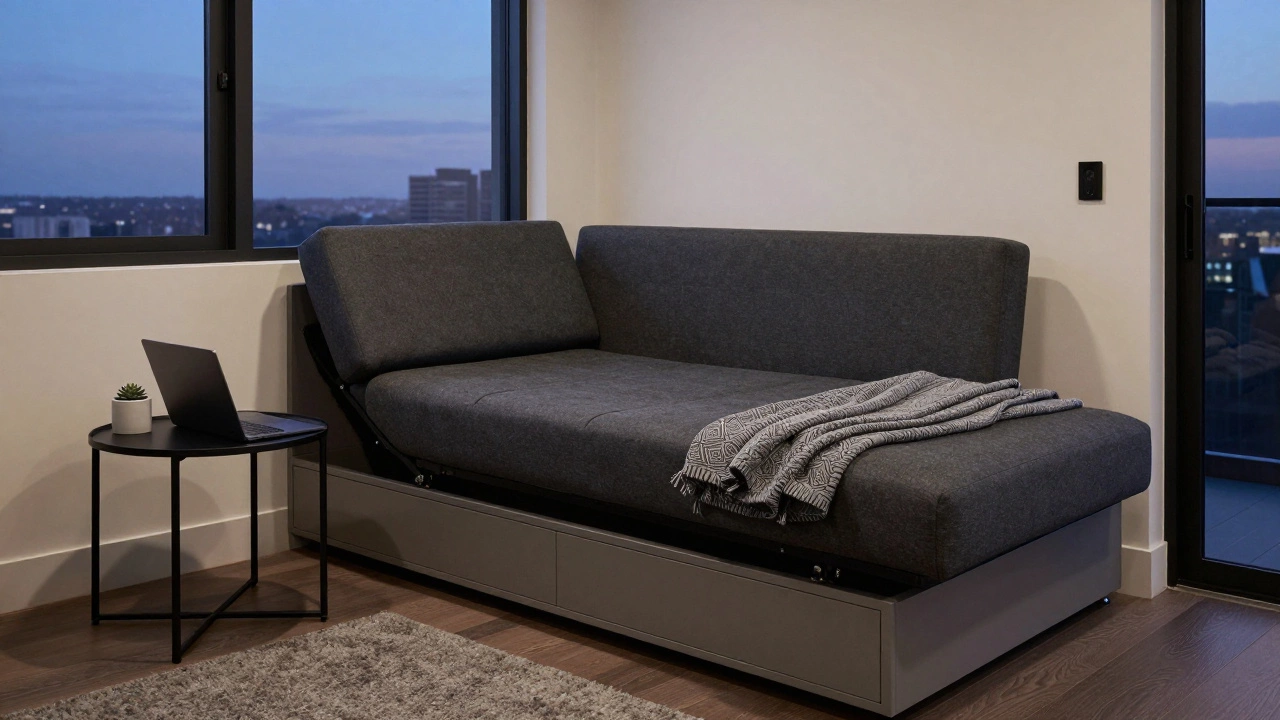
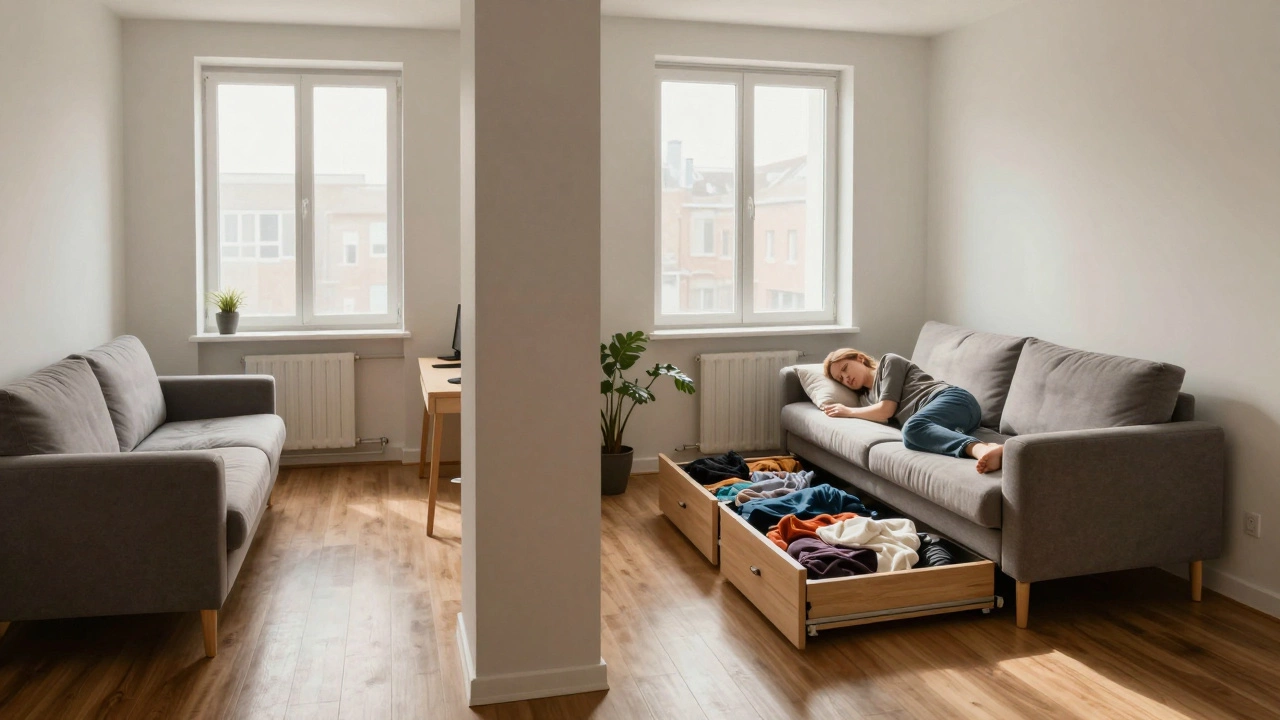
Most people don’t think about storage. But many modern sofa beds come with built-in drawers underneath. That’s extra space for linens, seasonal clothes, or even your holiday decorations. I know someone who used their sofa bed’s underfloor storage to stash all their winter gear. No closet clutter. No storage unit fees.
Also, many models now come in neutral tones-charcoal, oat, deep green-that blend into modern interiors. Gone are the days of ugly beige vinyl. Today’s sofa beds look like regular sofas until you pull them open.
And here’s something no one talks about: resale value. If you ever sell your place, a sofa bed can be a selling point. Buyers in apartments love multifunctional furniture. It’s not just practical-it’s a sign you’ve thought about how people actually live.
What to look for when you shop
Here’s a simple checklist to avoid buyer’s remorse:
- Test the mechanism: Open and close it three times. Does it slide smoothly? Any grinding or sticking? Skip it.
- Check the mattress thickness: If it’s under 10cm, it’s not worth it.
- Ask about the warranty: Look for at least 2 years on the frame and 1 year on the mechanism.
- Look for removable covers: Spills happen. Washable covers make life easier.
- Measure your door and hallway: You’d be surprised how many people bring home a sofa bed that won’t fit through their entrance.
Don’t buy online without seeing it in person. Photos lie. The real test is how it feels when you sit on it, lie on it, and try to fold it back.
Alternatives to consider
Not sold on sofa beds? Here are two other options:
- Futon: Cheaper, lighter, and easier to move. But less comfortable and less durable. Good for students or short-term use.
- Daybed with trundle: Looks more like a bed, so it’s better for formal guest rooms. But it takes up more floor space and costs more.
But if you need one piece of furniture that does two things well, and you’re tired of paying for unused space, the sofa bed still wins.
Final verdict
Is it worth getting a sofa bed? If you live in a small space and need flexibility, yes. It’s not perfect. It’s not a luxury bed. But it’s practical, durable, and smart. It’s the kind of solution that doesn’t scream for attention-but quietly makes your life easier.
Don’t buy one because it’s trendy. Buy it because you’ve run out of space, and you’re tired of choosing between comfort and function. The right sofa bed doesn’t ask you to compromise. It just gives you back what you lost: room to breathe.
Are sofa beds comfortable enough for regular sleeping?
It depends on the quality. Cheap models with thin foam pads aren’t comfortable for long-term use. But higher-end models with 10cm+ of high-density foam or pocket springs can be perfectly fine for nightly use. If you plan to sleep on it regularly, test it in person. Lie down for at least 10 minutes. If your hips or back feel pressure, it’s not the right one.
How long does a sofa bed last?
A well-made sofa bed lasts 8-12 years with regular use. The frame and mechanism are the weak points. If you open it every day, expect wear after 5 years. If you use it once a month, it can last longer than your couch. Look for warranties that cover both the frame and the mechanism-2 years minimum.
Can I use a sofa bed in a rental apartment?
Most landlords are fine with sofa beds because they’re not permanent fixtures. But always check your lease. Some restrict furniture that requires assembly or changes to the floor. Also, avoid models with metal frames that scratch hardwood floors. Use felt pads under the legs to protect the surface.
Do sofa beds need special bedding?
No, but you’ll want fitted sheets that are deep enough to stretch over the thicker mattress. Standard queen sheets often don’t fit. Look for deep-pocket sheets (15-18 inch depth). Also, keep a lightweight blanket and pillow on hand for guests. Storing them in the under-bed drawer keeps things tidy.
Are sofa beds better than futons?
It depends on your needs. Sofa beds are more durable and comfortable for sleeping. Futons are lighter, cheaper, and easier to move, but the mattress is usually thinner and less supportive. If you want something that looks like a couch and sleeps like a bed, go for a sofa bed. If you need something temporary or for occasional use (like a dorm room), a futon works.