 9
Mar,2026
9
Mar,2026
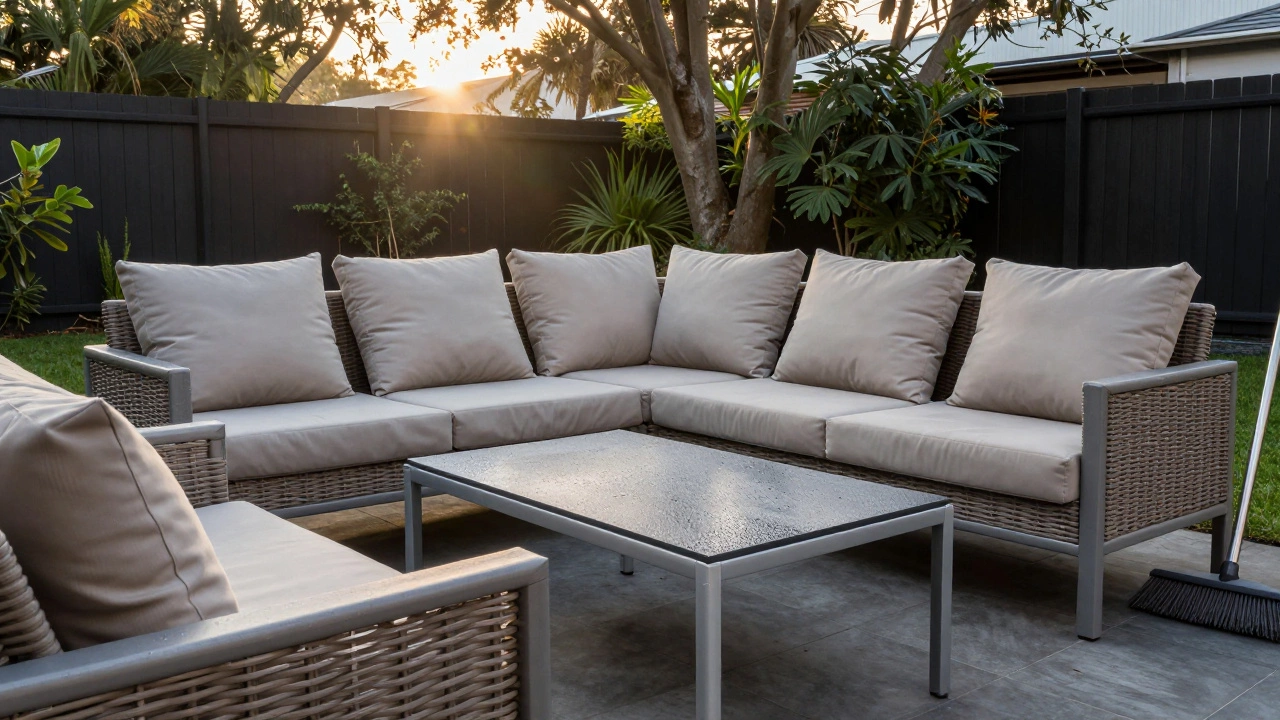
Living in Melbourne, you know what the weather can do. One day it’s sunny and warm, the next you’re dodging hailstones and wind that feels like it’s trying to steal your umbrella. If you’ve ever woken up to a layer of dust, bird droppings, or worse - a soggy cushion - you’ve probably asked yourself: Should I cover my patio furniture every night? The short answer? No, you don’t need to cover it every single night. But there’s a smarter way to protect your investment without turning your backyard into a storage locker.
Why Covering Every Night Isn’t Necessary
Covering your patio furniture every night sounds like a good habit. But in reality, it’s often more trouble than it’s worth. Covers trap moisture. When you put a cover on in the evening and leave it on until morning, you’re creating a mini greenhouse. Condensation builds up under the fabric, and that dampness seeps into your cushions, frames, and even the joints of your furniture. Over time, this leads to mold, mildew, and rust - especially on metal frames or foam-filled cushions.
In Melbourne’s climate, nighttime temperatures can drop sharply, even in summer. That cool air meets the warmth trapped under the cover, and boom - you’ve got condensation. You might think you’re protecting your furniture, but you’re actually accelerating its decay.
When You Should Use Covers
Covers aren’t the enemy. They’re a tool - and like any tool, they work best when used at the right time. Here’s when you should reach for them:
- Before heavy rain - If a storm is forecast, a waterproof cover will keep your cushions dry and prevent water from soaking into the padding.
- During extended dry spells - If it hasn’t rained in over a week and your furniture is dusty, a cover can shield it from pollen, leaves, and airborne dirt.
- During winter months - From May to August, Melbourne’s weather turns cold and wet. A breathable, UV-resistant cover can help prevent fading, cracking, and moisture buildup over weeks of non-use.
- Before long absences - If you’re heading away for a weekend or longer, a cover gives you peace of mind.
But here’s the key: remove the cover as soon as the weather clears. Let everything air out. Even 15 minutes of morning sun can dry out trapped moisture.
What Happens If You Don’t Cover at All?
Many people in Melbourne skip covers entirely - and their furniture lasts just fine. Why? Because modern outdoor furniture is built to handle the elements. High-quality pieces use materials like:
- Aluminum frames - Rust-resistant and lightweight
- PE rattan - UV-stable, flexible, and waterproof
- Outdoor-grade fabric - Mildew-resistant, quick-drying, and colorfast
- High-density foam cushions - Designed to drain water instead of soaking it up
These materials aren’t fragile. They’re engineered to sit outside. A few months of rain, sun, and wind won’t destroy them. What will? Neglect. Leaving cushions on the ground. Not cleaning off bird droppings. Letting dirt build up for months. That’s what kills outdoor furniture faster than any weather.
The Real Enemy: Dirt and Moisture, Not Rain
The biggest threat to your patio set isn’t rain - it’s what the rain carries. Pollen, dust, leaves, bird droppings, and even salt from sea breezes (if you’re near the coast) stick to surfaces. Over time, this grime gets baked into the fabric or etched into wood and metal. That’s why regular cleaning matters more than daily covering.
Here’s a simple routine that works for most Melbourne households:
- Wipe down surfaces with a damp cloth once a week - especially after windy days.
- Brush off leaves and debris with a soft broom.
- Once a month, hose down cushions and frames with plain water. Let them dry in the sun.
- Store cushions indoors during prolonged rain or winter.
That’s it. No covers needed every night. Just a little attention.
What About Cushions?
Cushions are the most vulnerable part of your set. Even the best outdoor fabric can’t fight constant dampness. Here’s what to do:
- Choose cushions with drain holes - they let water escape instead of trapping it.
- Flip cushions weekly so both sides get sun exposure.
- Store them in a dry, ventilated spot (like a shed or under a bench) during winter.
- Don’t leave them on the furniture overnight after rain - even if the cover is on.
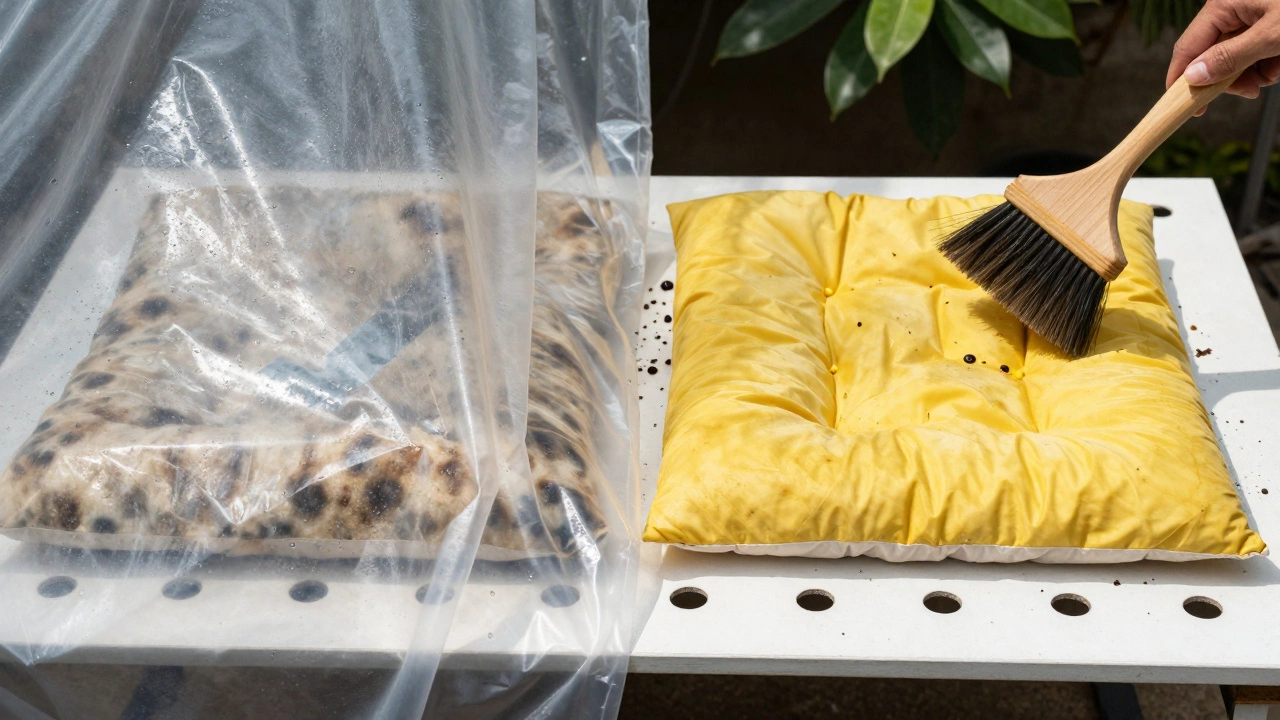
Some people use waterproof cushion storage bags. That’s fine - but only if you dry the cushions first. Wet cushions in a sealed bag? That’s a mold factory.
What Covers Actually Work?
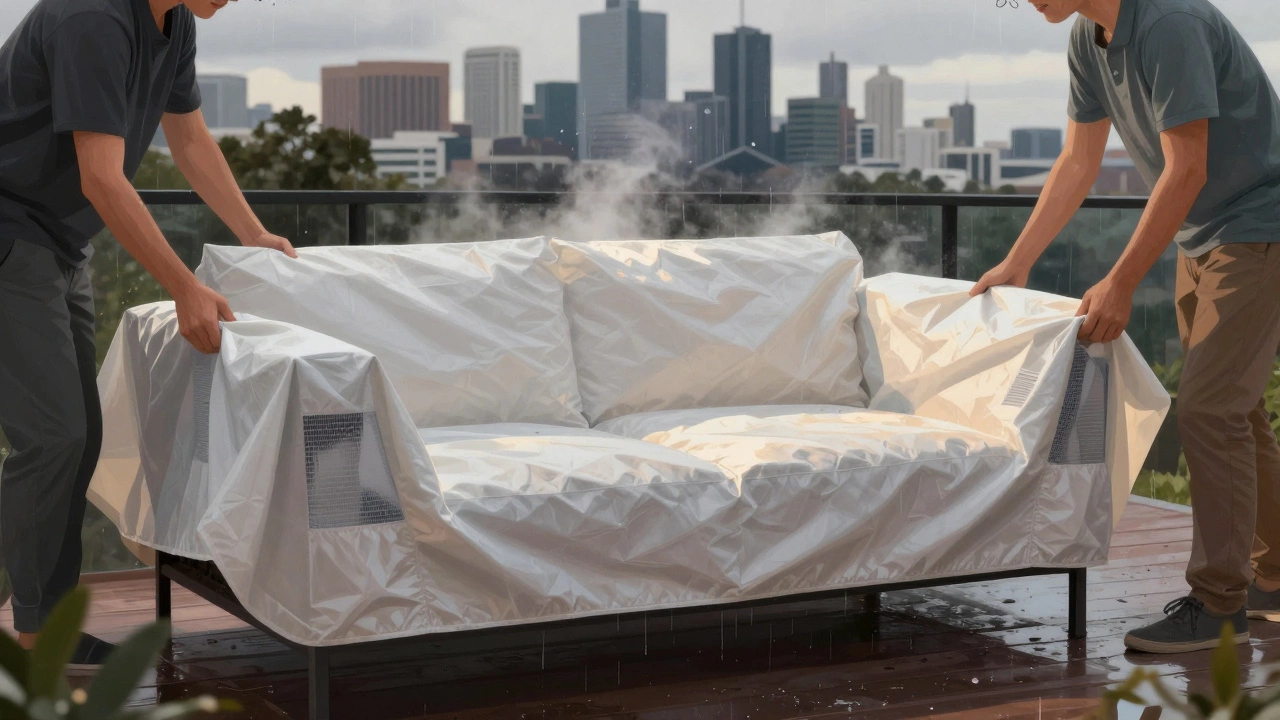
If you do use covers, not all are created equal. Avoid cheap plastic tarps. They’re not breathable, they crack in the sun, and they trap moisture like a plastic bag over a plant.
Look for covers made of:
- 600D polyester - Durable, water-resistant, and UV-stable
- Mesh vents - Let air circulate to prevent condensation
- Elastic hems or straps - Keep them snug in wind
- Waterproof backing - But not fully sealed - you still need airflow
Brands like Sunbrella, TropiCane, and even quality Australian-made options from companies like Gardenlife or Bunnings’ own range do this right. Pay attention to the weave - if it feels like a tent, it’s too thick. You want something that lets air through.
What’s the Real Cost of Covering Every Night?
Let’s talk time and effort. Covering and uncovering your furniture every day? That’s 365 chores a year. If you’ve got a large set - a sofa, two chairs, a table, and cushions - that’s 10 minutes a day. That’s over 60 hours a year. Time you could spend enjoying your backyard, not managing it.
And then there’s the cost of replacement. A single set of outdoor cushions can cost $300-$600. A damaged frame? $500+ to replace. If you’re covering every night and trapping moisture, you’re not saving money - you’re spending it faster.
Final Rule: Think Smart, Not Constant
There’s no magic rule that says you must cover your furniture every night. Melbourne’s weather is tough, but your furniture is tougher. What matters most is:
- Choosing quality materials
- Keeping it clean
- Letting it breathe
- Using covers only when the weather turns serious
Think of your patio like a garden. You don’t put a plastic dome over every plant. You mulch, you water, you prune. You let nature do its thing - and you step in only when needed. Your outdoor furniture works the same way.
So no, you don’t need to cover your patio furniture every night. But yes, you should care for it - smartly, simply, and without overdoing it.
Do I need to cover my patio furniture in summer?
Not unless you’re expecting heavy rain or a dust storm. In Melbourne’s summer, sun and wind are the main concerns - and most outdoor furniture handles them fine. A quick rinse once a week and letting cushions dry in the sun is enough. Covers can actually trap heat and moisture, leading to mildew.
Can I leave cushions outside overnight?
Yes, if they’re made for outdoor use. Modern cushions use quick-dry foam and UV-resistant fabric. But if rain is forecast, bring them in or cover them. Overnight dew won’t hurt them - but soaking rain will. If cushions feel heavy or smell musty, they’ve absorbed too much moisture and need to dry out.
What’s the best way to store patio furniture for winter?
Clean everything first - hose off dirt, let it dry completely, then cover with a breathable, ventilated cover. Store cushions indoors if possible. If you must leave them outside, elevate them off the ground on blocks or a wooden pallet to prevent moisture wicking. Never leave them on damp concrete.
Are cheap covers worth buying?
No. Cheap plastic covers trap moisture, crack in the sun, and blow away in wind. They’re worse than no cover at all. Spend $50-$80 on a proper 600D polyester cover with vents and elastic hems. It’ll last 3-5 years. A $20 tarp won’t last a season.
Does covering furniture extend its life?
Only if done right. Covering during storms or long absences helps. Covering every night? Not really. Regular cleaning, proper drainage, and letting furniture dry in the sun are far more effective. The best way to extend life is to use quality materials and avoid trapping moisture.