 21
Jun,2026
21
Jun,2026
Garden Furniture Protection Selector
Answer three simple questions to get personalized recommendations for protecting your garden furniture and flooring.
Your Personalized Protection Plan
You’ve just invested in a beautiful new dining set for your terrace. It looks great, but there’s one nagging question: what do you put under it? Leaving heavy metal or wooden frames directly on concrete, stone, or even grass can lead to scratches, stains, and moisture buildup that ruins both your furniture legs and your flooring. The right base isn’t just about aesthetics; it’s about longevity.
Choosing the wrong material can trap water against aluminum or steel legs, causing rust within months. On softer surfaces like decking or natural stone, uneven weight distribution can cause cracking or sinking. Whether you have a small balcony with composite tiles or a sprawling backyard with pavers, understanding how to protect your ground surface while keeping your garden furniture stable is essential for any homeowner.
Key Takeaways
- Hard Surfaces: Use felt pads, rubber feet, or clear plastic coasters to prevent scratching and noise on concrete, tile, or wood decks.
- Soft/Uneven Ground: Opt for interlocking deck tiles, gravel bases, or artificial turf to provide stability and drainage on grass or dirt.
- Weather Protection: Always use breathable covers during winter or long periods of non-use to prevent mold and UV damage.
- Material Matters: Avoid trapping moisture under metal legs; ensure air circulation to prevent corrosion and rot.
Protecting Hard Surfaces: Concrete, Stone, and Tile
If your patio is made of poured concrete, slate, or ceramic tiles, your primary enemies are scratches and standing water. Heavy cast iron chairs or wrought iron tables exert significant pressure on small contact points. Without protection, dragging these pieces across the surface will etch permanent marks into the stone.
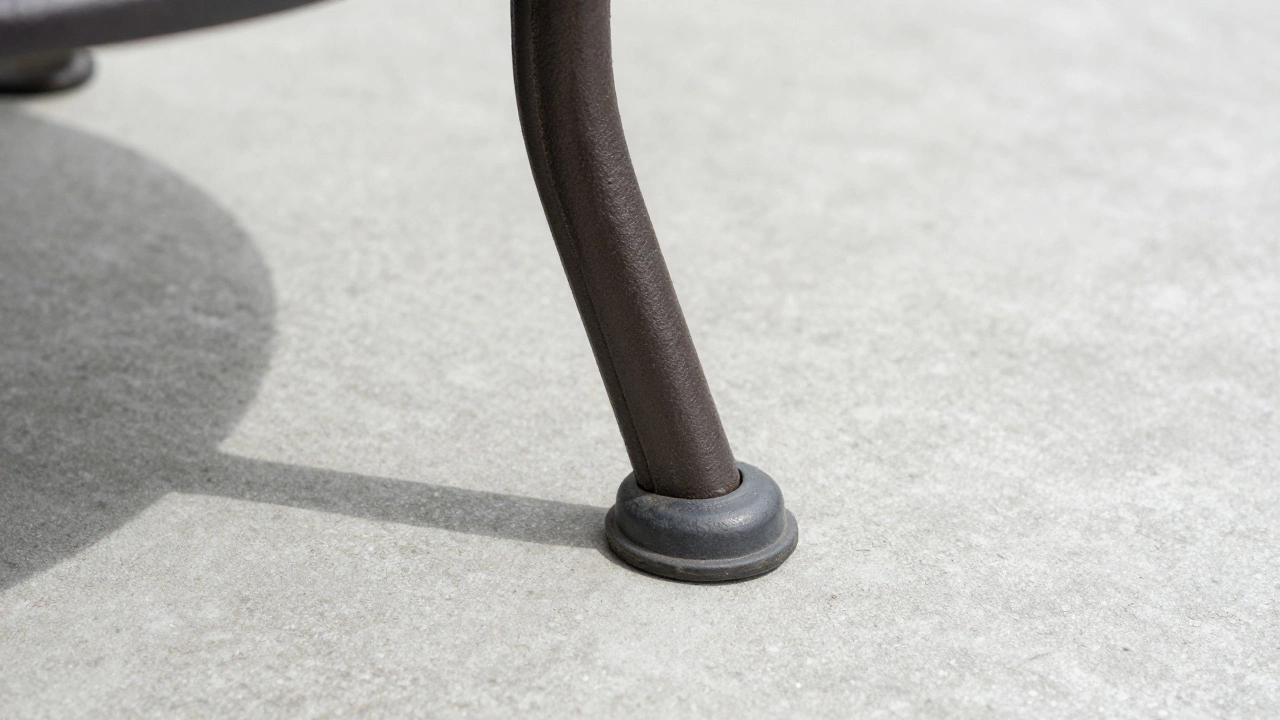
The simplest solution is adhesive felt pads. These are cheap, easy to apply, and effective for lighter furniture like side tables or armchairs. However, for heavier items like a full dining set, standard felt pads can compress and fail over time. In these cases, look for heavy-duty rubber feet caps. These slip over the existing legs of your furniture and distribute weight more evenly. They also dampen sound, so you won’t hear that annoying clatter when someone pulls out a chair.
For a more invisible option, consider clear plastic or acrylic furniture coasters. These are often used indoors for glass tables but work wonders outdoors too. They create a barrier between the metal leg and the hard surface, preventing micro-scratches. Just ensure they are UV-resistant, as cheap plastic can yellow and become brittle after a season of sun exposure.
A common mistake is using solid rubber mats that cover the entire footprint of the table. While this protects the floor, it traps condensation underneath. If rain runs down the legs and pools under a non-breathable mat, you create a humid environment perfect for algae growth on stone or rust on metal. Always choose materials that allow air to circulate.
Solutions for Wooden Decks and Composite Flooring
Wooden decks require a different approach than stone. Wood is porous and susceptible to water damage. When metal legs sit directly on wood, especially if it rains, moisture can wick up into the timber, leading to rot or warping over time. Composite decking is more resistant to rot but can still stain from tannins leaching out of untreated wood furniture or from rust stains.
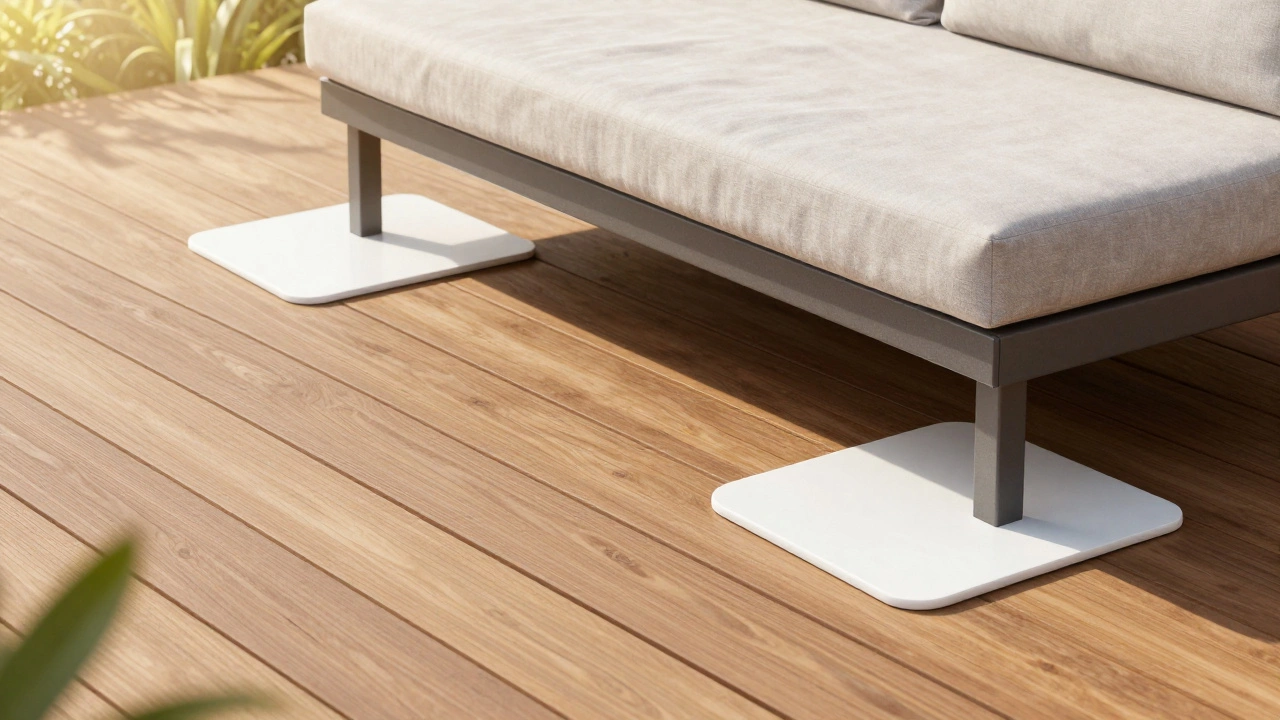
For wooden decks, large-area protective pads are ideal. Unlike small feet caps, these are flat discs or squares placed under each leg. Look for pads made from high-density polyethylene (HDPE) or specialized deck protectors. These materials are waterproof and won’t absorb moisture. They spread the load over a wider area, reducing the risk of indentations in softer woods like pine or cedar.
If you have a dining table with a central pedestal rather than four legs, you need a larger base protector. A circular pad specifically designed for pedestal tables ensures the entire foot of the table is supported. This prevents rocking and distributes the weight of the table plus the food and people sitting around it.
Another consideration is movement. Wind can cause lightweight furniture to shift slightly. On a deck, this shifting can act like sandpaper. Adding a layer of grip tape under your protective pads can help keep everything in place without damaging the deck finish.
Managing Soft Ground: Grass, Dirt, and Sand
Placing furniture directly on grass seems natural, but it’s actually problematic. The weight of the furniture kills the grass underneath due to lack of sunlight and soil compaction. Over time, you’ll be left with bald patches that are difficult to regrow. Additionally, soft ground is unstable. Chairs sink in, making them wobbly and uncomfortable.
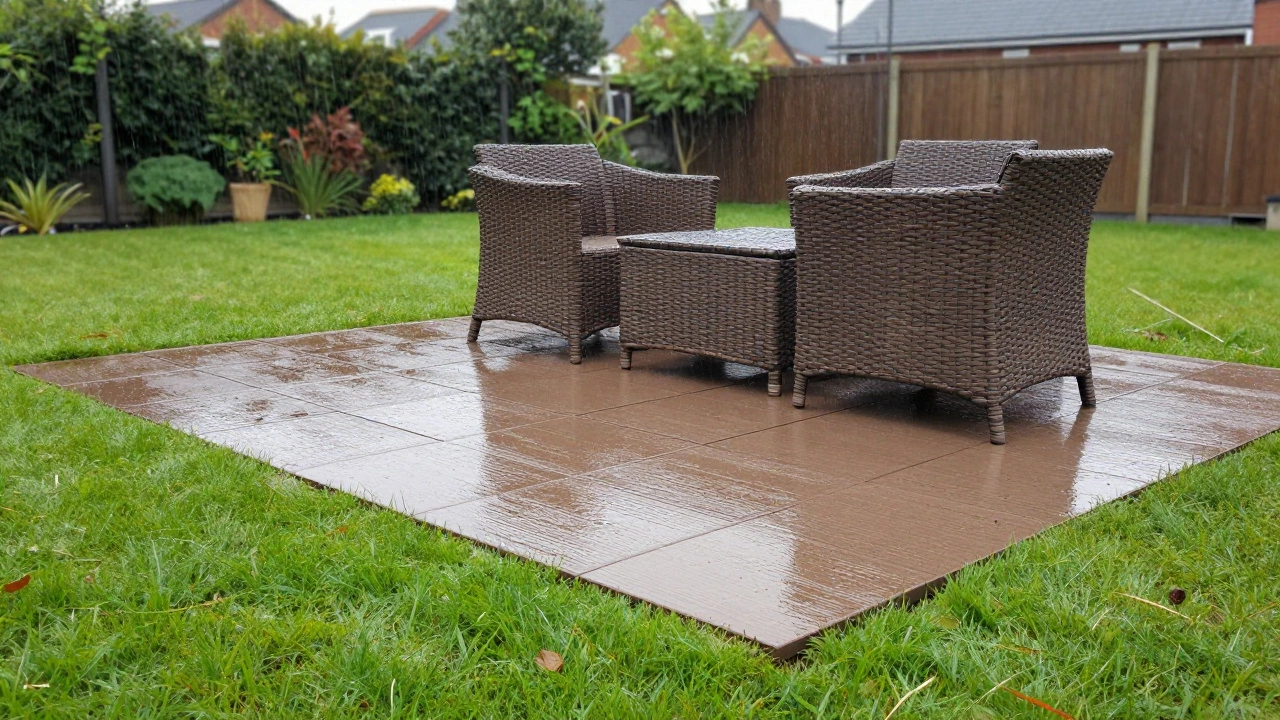
The best solution for grassy areas is to create a hardstanding base. You don’t need to pour concrete. Interlocking plastic deck tiles are an excellent alternative. These snap together to form a solid platform. They elevate the furniture slightly above the ground, allowing grass to breathe underneath while providing a stable surface. They are also permeable, meaning rainwater can drain through, preventing puddles.
If you prefer a more natural look, a layer of compacted gravel works well. Lay down a weed membrane first to stop grass growing up through the stones, then add a 2-3 inch layer of sharp sand or pea gravel. Compact it firmly. This creates a firm base that drains well. Place your furniture on top, perhaps with small stone pavers under each leg for extra stability.
For sandy areas, such as poolside loungers, the issue is sinking. Here, wide-base loungers are better than thin-legged ones. If you already have thin-legged furniture, use large plastic saucers or purpose-made sand anchors under the legs. These increase the surface area, preventing the legs from digging into the sand every time someone sits down.
Winter Storage and Long-Term Protection
In regions with harsh winters, leaving furniture outside exposed to snow and ice is risky. Snow accumulation adds immense weight, which can bend frames. Ice can freeze onto metal joints, expanding and causing cracks. Even if your furniture is rated for all-weather use, prolonged exposure degrades finishes and fabrics.
Before storing furniture, clean it thoroughly. Dirt and organic matter trapped under cushions or in crevices hold moisture, leading to mold. Once dry, use breathable furniture covers. Avoid plastic tarps, as they trap humidity inside, creating a greenhouse effect that promotes rust and mildew. Instead, opt for covers made from polyester with a waterproof coating and ventilation holes.
If you’re storing furniture in a shed or garage, don’t place it directly on the concrete floor. Concrete releases moisture vapor, which can affect wood and metal. Use pallets or plastic shelving to keep the furniture elevated. This allows air to circulate around all sides, keeping everything dry until spring.
For those who leave furniture out year-round, applying a protective wax or sealant in autumn can help. For metal furniture, a light coat of automotive wax repels water. For wood, a fresh layer of teak oil or exterior varnish restores the protective barrier lost during summer UV exposure.
Comparison of Protective Options
| Option | Best Surface | Pros | Cons |
|---|---|---|---|
| Felt Pads | Tile, Concrete | Cheap, silent, easy to install | Wear out quickly, not for heavy items |
| Rubber Feet Caps | Deck, Stone | Durable, shock-absorbing, anti-slip | Can discolor in sun, may stick to hot surfaces |
| Clear Plastic Coasters | Glass, Polished Stone | Invisible, protects against scratches | Can slide easily, UV degradation |
| Interlocking Deck Tiles | Grass, Dirt | Creates stable platform, drains water | Higher upfront cost, installation required |
| Breathable Covers | All (for storage) | Prevents UV damage, keeps dust off | Bulky to store, must be secured against wind |
Maintaining Your Setup
Protection isn’t a one-time task. Check your furniture feet and pads regularly. Rubber can crack, felt can disintegrate, and plastic can warp. Replace worn-out protectors immediately to prevent damage to your underlying surface.
Also, monitor the levelness of your ground. Settling soil or shifting paving stones can make furniture unstable. If you notice wobbling, adjust the feet or re-level the base. For deck tiles, ensure the locking mechanisms are secure and no tiles are lifting.
Finally, consider the aesthetic impact. Bright orange rubber feet might clash with your elegant rattan set. Choose neutral colors like black, grey, or brown for your protectors. Many brands offer discreet options that blend in with the furniture legs, maintaining the visual appeal of your outdoor space.
Can I put garden furniture directly on concrete?
You can, but it's not recommended for long-term use. Metal legs can scratch and etch concrete over time, especially if dragged. Moisture trapped between the leg and concrete can also cause staining. Using rubber feet or felt pads provides a protective buffer that extends the life of both the furniture and the patio.
What is the best way to protect wooden decks from furniture?
Use large-area HDPE deck protectors or rubber pads under each leg. These materials are waterproof and distribute weight evenly, preventing indentations and rot. Avoid placing furniture directly on wood, as trapped moisture can lead to decay and mold growth over time.
How do I stop garden furniture from sinking into grass?
Install interlocking deck tiles or a gravel base beneath the furniture. These create a solid, elevated platform that distributes weight and allows drainage. Alternatively, use large plastic saucers under individual legs to increase surface area and reduce pressure on the soil.
Should I cover my garden furniture in winter?
Yes, if you live in an area with snow, ice, or heavy rain. Use breathable, waterproof covers to protect against UV damage, moisture, and debris. Avoid plastic tarps as they trap humidity, which can cause rust and mold. Ensure covers are securely fastened to prevent them from blowing away in wind.
Do furniture pads make a difference for heavy cast iron sets?
Absolutely. Cast iron is extremely heavy and has small contact points. Without pads, it can crack stone tiles or dent wooden decks. Heavy-duty rubber feet or thick felt pads are essential to distribute the weight and prevent structural damage to your flooring.