 25
May,2026
25
May,2026
Bookcase Aesthetic Simulator
Design Analysis
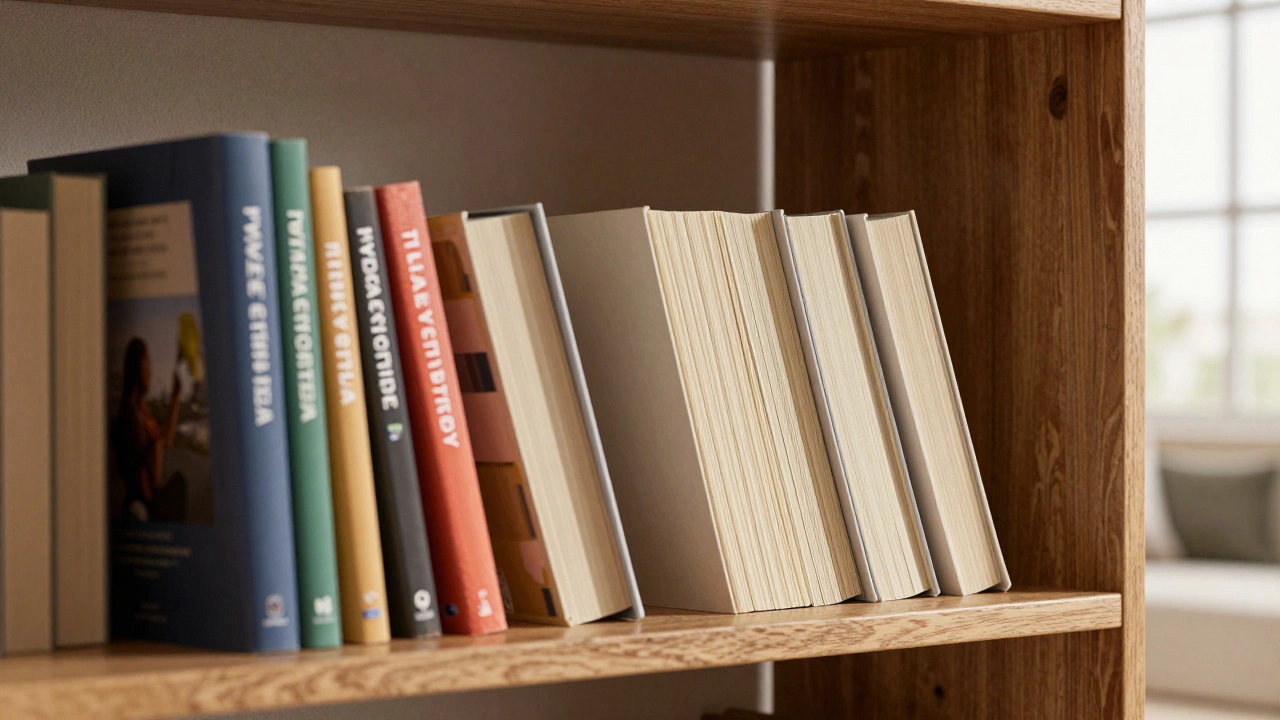
Have you ever walked past a beautifully styled bookshelf and noticed something odd? Some of the books are facing forward, showing off their colorful spines, while others are turned completely around. Their covers face out, or worse, they’re just blank white pages staring back at you. It looks messy, right? Like someone forgot to finish organizing.
But here’s the secret: it’s not a mistake. In fact, flipping books backward is one of the most common tricks in interior design. Designers do this on purpose to make a room look more expensive, cozy, and intentional. If you’ve been struggling to make your bookcase look like it belongs in a magazine, this might be the missing piece of the puzzle.
The Visual Weight of Spines
To understand why we turn books around, we first have to talk about visual noise. Think about a standard library shelf. Every spine has different fonts, colors, sizes, and textures. When you line up fifty books with bright reds, deep blues, and bold yellow titles, your eye gets overwhelmed. It’s chaotic. That chaos creates what designers call "visual clutter."
Now, imagine turning half those books around so you see the page edges instead. Most book pages are a similar shade of cream, white, or beige. By exposing the pages, you create a block of neutral color. This acts as a visual breather. It gives your eyes a place to rest between the loud, colorful spines.
This technique relies on contrast. If every book faces forward, the shelf looks uniform but busy. If every book faces backward, the shelf looks dull and boring. But when you mix them, you create rhythm. You break up the pattern. It’s the same reason architects use different materials on a building facade-stone, glass, wood-to keep things interesting without being overwhelming.
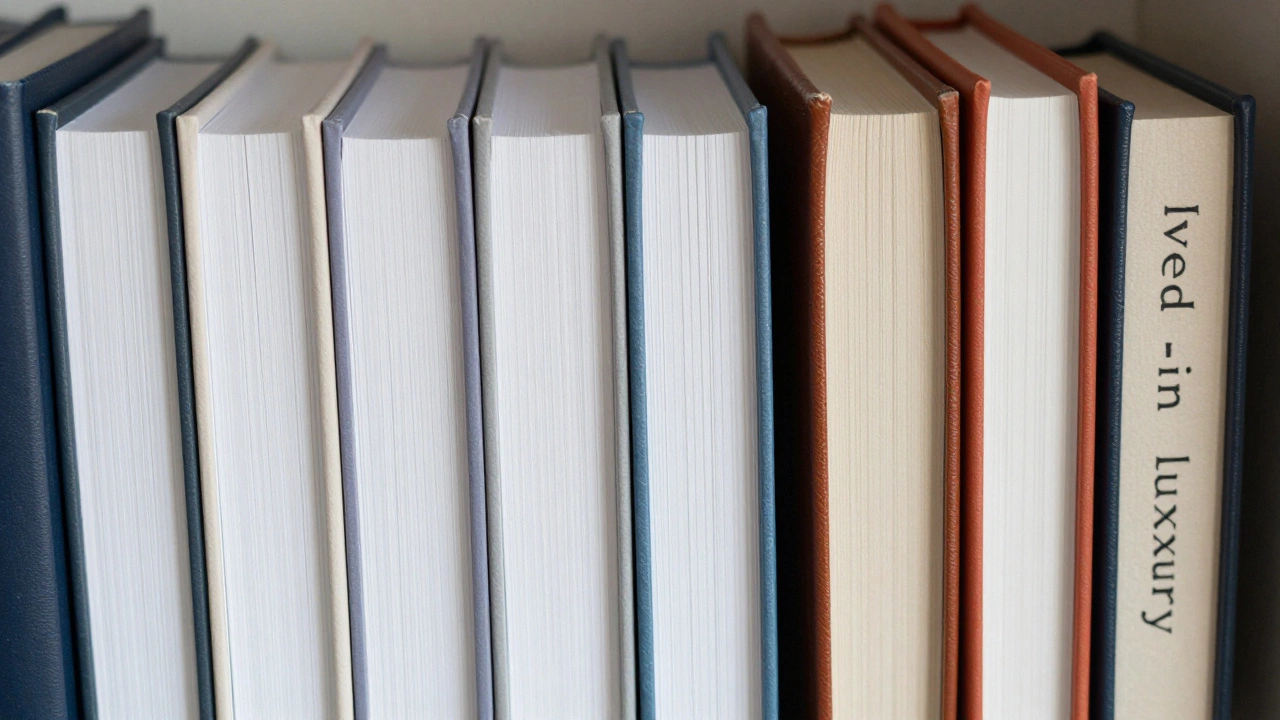
Mimicking the "Lived-In" Look
There is a specific aesthetic trend called "lived-in luxury." It’s popular because perfectly symmetrical rooms can feel cold, sterile, and museum-like. Nobody wants their living room to feel like a showroom where you aren’t allowed to touch anything. We want spaces that feel human.
When you leave some books facing backward, it signals activity. It suggests that someone actually reads these books. It implies that a book was pulled out, read, and then shoved back in quickly because the reader was in a hurry. This imperfection makes the space feel warmer and more inviting.
Consider the difference between a hotel lobby and a family den. The hotel lobby has perfect symmetry. The family den has a stack of magazines, a throw blanket draped over the armchair, and a few books lying flat or facing sideways. The latter feels more comfortable. Turning books backward helps replicate that casual, relaxed vibe without actually making a mess.
Creating Color Palettes and Texture
Designers often use bookcases as a canvas for color coordination. However, relying solely on book spines is risky. What if you buy a new book with a neon green spine that clashes with your sofa? Or what if your favorite novel has a plain black cover?
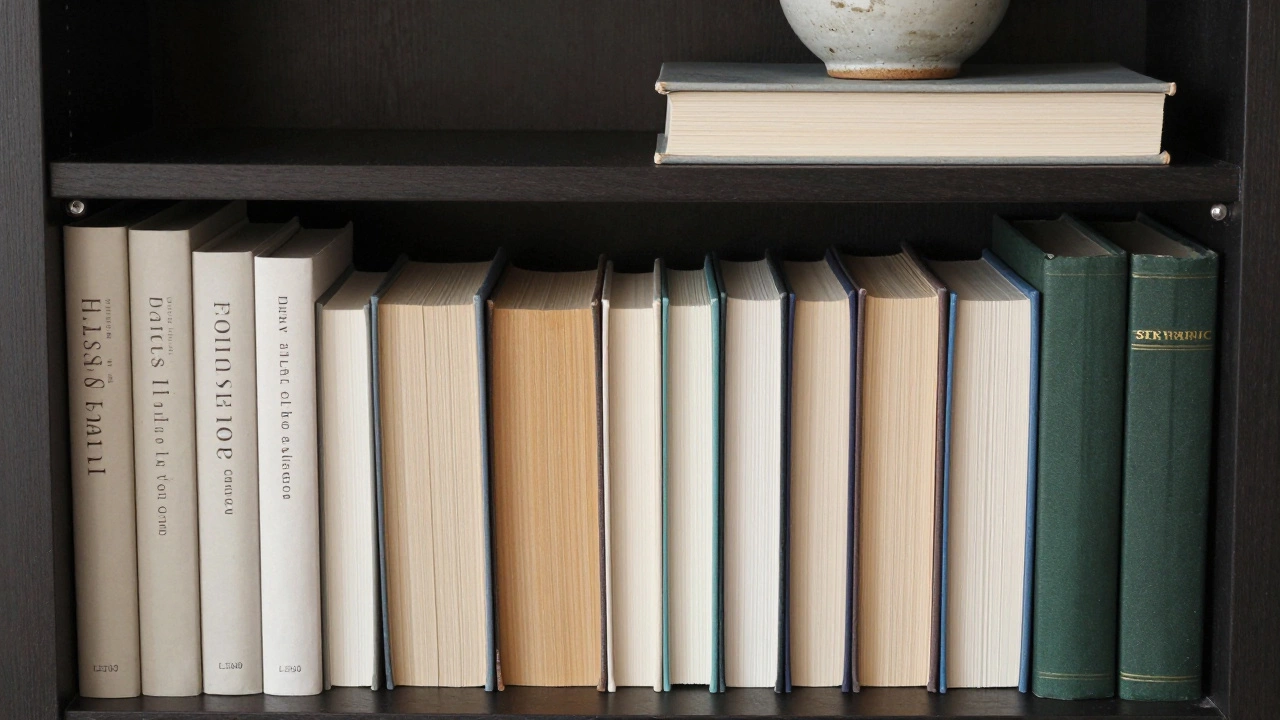
By turning books backward, you introduce texture. The layered pages of a thick hardcover create a soft, fibrous edge. This contrasts nicely with the smooth leather of a binder or the glossy finish of a picture frame. You can group books by the color of their pages. Older books might have yellowed, sepia-toned pages, while new ones are stark white. Grouping these together creates subtle gradients that are pleasing to the eye.
You can also use this trick to hide ugly spines. Let’s be honest-not all book covers are beautiful. Some textbooks or academic papers have drab, institutional designs. Turning them backward hides the ugly design and turns them into decorative blocks of neutral tone. It’s a practical way to curate your display without throwing away books you love.
The Rule of Thirds and Balance
So, how many books should you turn backward? There isn’t a strict law, but there is a general guideline known as the rule of thirds. Aim for roughly one-third of your shelf space to feature items that break the pattern. This could be books facing backward, stacked horizontally, or interspersed with small objects like candles, plants, or photo frames.
If you have a long shelf, try this pattern:
- Section 1: Vertical books facing forward (showing spines).
- Section 2: A cluster of 3-4 books facing backward (showing pages).
- Section 3: Horizontal stack of books topped with an object.
- Section 4: More vertical books facing forward.
This variety prevents the eye from scanning straight across the shelf. Instead, your gaze moves up, down, and across, exploring the different elements. It keeps the viewer engaged. If everything is uniform, the brain processes it instantly and moves on. Variety demands attention.
Practical Tips for Execution
Implementing this style doesn’t require professional training. You can do it yourself in under an hour. Here are some practical steps to get the look right:
- Sort by Height First: Before worrying about direction, group your books by height. Tall books next to short books create awkward gaps. Keep similar heights together for a cleaner base.
- Check the Page Edges: Not all page edges are pretty. If a book has dog-eared corners, coffee stains, or torn pages, don’t turn it backward. Hide those flaws by keeping the spine out. Only showcase books with clean, intact pages.
- Mix Directions Randomly: Avoid alternating strictly left-right-left-right. That looks too rigid. Instead, create small clusters. Two books forward, three backward, one forward. Randomness feels more natural.
- Use Bookends Wisely: If you have a lot of heavy books facing backward, they might lean over time. Use sturdy bookends to keep them upright. Decorative bookends can also serve as another visual anchor point.
- Don’t Overdo It: If more than 50% of your books are facing backward, the shelf starts to look empty or neglected. Keep the majority facing forward to maintain the function of the bookcase as a storage unit.
Common Mistakes to Avoid
Even with good intentions, it’s easy to go wrong. One common error is mixing books of vastly different thicknesses when facing them backward. A thin paperback next to a massive encyclopedia will look disjointed. Try to match the thickness of the books you turn around so they form a cohesive block.
Another mistake is ignoring the lighting. If your bookcase is in a dark corner, the white pages won’t reflect enough light to create that "breathing room" effect. In dim areas, stick to colorful spines to add vibrancy. Save the backward-facing trick for well-lit shelves where the texture of the pages can be appreciated.
Finally, don’t forget accessibility. While aesthetics matter, a bookcase is still functional. If you turn all your frequently read books backward, you’ll spend forever searching for the title you need. Keep your daily readers facing forward. Use the backward technique for books you rarely open but love to look at.
Is it bad to put books backwards in a bookcase?
No, it is not bad. In fact, it is a recommended interior design technique. Putting books backward reduces visual clutter, adds texture, and creates a more relaxed, lived-in atmosphere. Just ensure the pages are clean and undamaged before displaying them.
How many books should I face backward?
A good rule of thumb is the rule of thirds. Aim for about 30% of your shelf items to break the pattern. This includes books facing backward, horizontal stacks, and decorative objects. This balance keeps the shelf interesting without looking messy.
Does putting books backward damage them?
Generally, no. As long as the books are supported by bookends or adjacent books, standing them on their fore-edge (the side opposite the spine) is safe. However, avoid stacking heavy items on top of books that are lying flat, as this can crack the spines over time.
Can I mix paperback and hardcover books facing backward?
Yes, but be mindful of thickness. Hardcovers usually have thicker page blocks than paperbacks. Mixing them randomly can look uneven. Try to group books of similar thickness together when turning them backward to create a solid, uniform block of color and texture.
What if my book spines are ugly?
Turning them backward is the perfect solution! If a book has a dull, clashing, or damaged spine, flip it around to show the pages. This hides the unattractive cover while still allowing the book to contribute to the height and volume of your shelf display.