 6
Jul,2026
6
Jul,2026
Sleep Surface Health Calculator
Enter Details
Configure your setup to see potential health impacts.
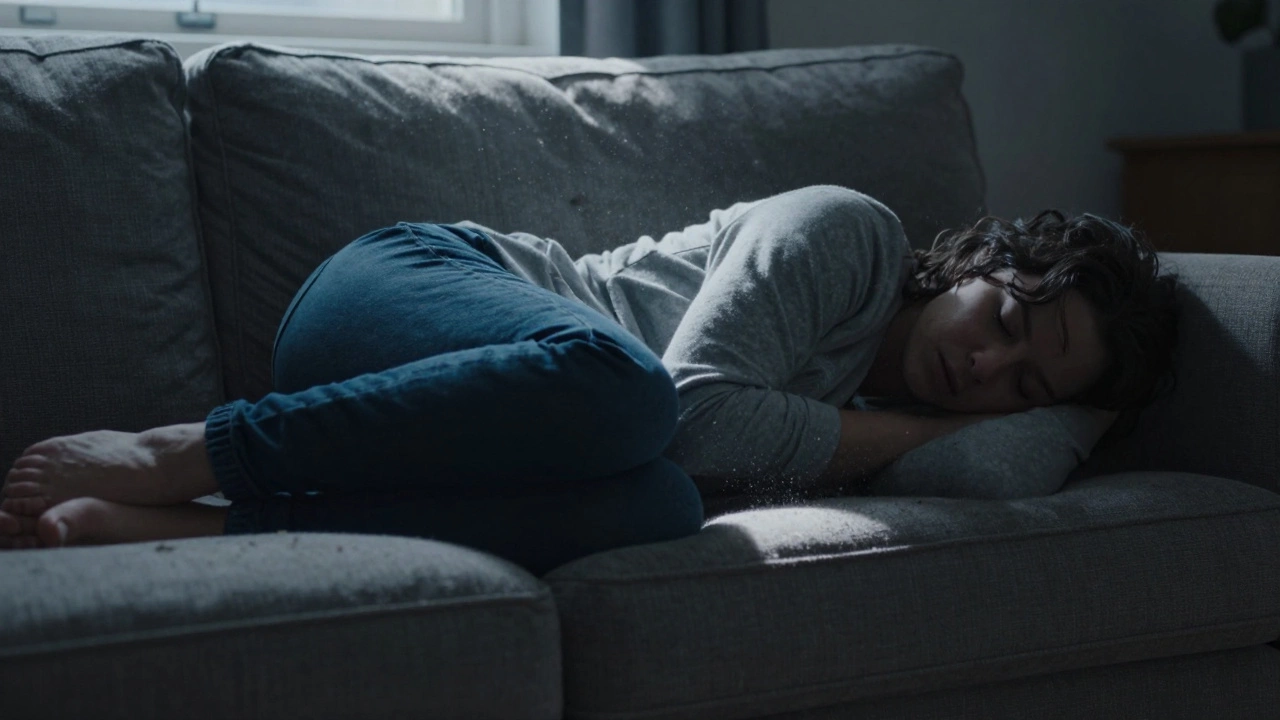
You’re exhausted. It’s been a long day, and your bed is in another room. So, you do what millions of people do every night: you flop onto the couch, pull up a throw blanket, and drift off. It feels convenient. It feels cozy. But when you wake up with a stiff neck, a throbbing lower back, or that strange sense of grogginess that coffee can’t fix, it’s not just bad luck. It’s physics.
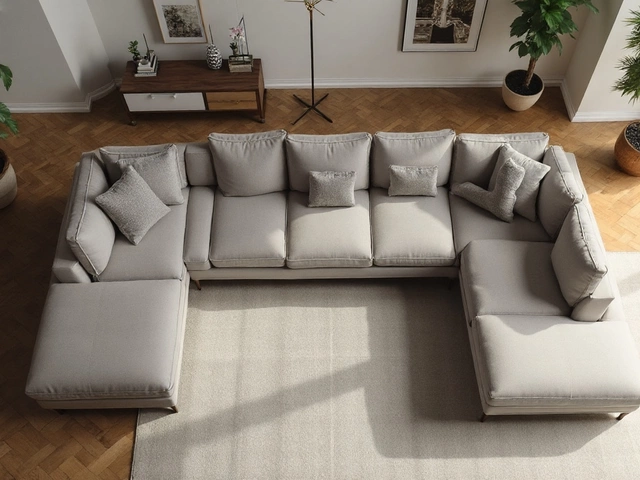
Sleeping on a standard sofa is one of the most common causes of temporary musculoskeletal pain. While a dedicated sofa bed is a piece of furniture designed to convert from a seating area into a flat sleeping surface offers a compromise, a regular couch is structurally hostile to human anatomy during sleep. Understanding why this happens isn’t just about comfort; it’s about protecting your spine and ensuring you actually get restorative rest.
The Anatomy of a Bad Night’s Sleep
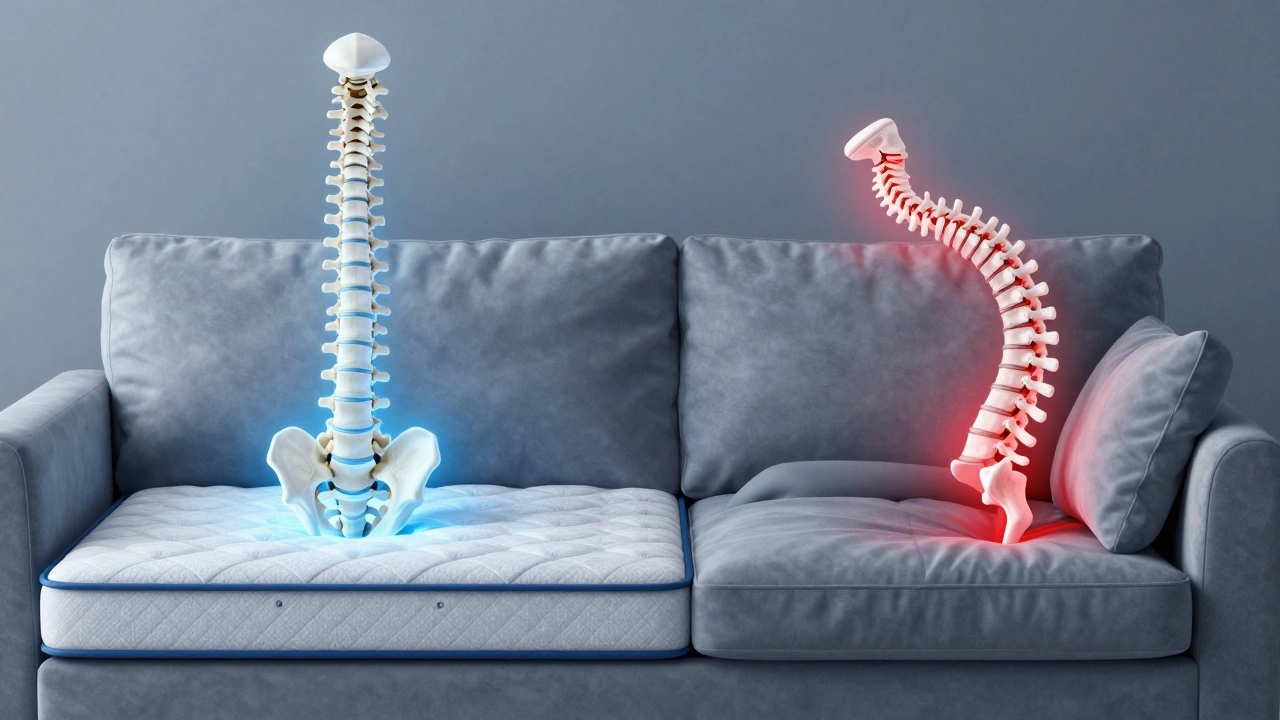
To understand why the couch hurts, you have to look at how your body is built. Your spine isn’t a straight rod; it has natural curves. The cervical spine (neck) curves inward, the thoracic spine (upper back) curves outward, and the lumbar spine (lower back) curves inward again. These S-shapes act as shock absorbers for your body.
When you lie on a firm, flat mattress, these curves are supported. When you lie on a typical sectional or loveseat, those curves are forced out of alignment. Most sofas have a seat depth that is too shallow for an adult’s legs, causing your knees to bend sharply and your hips to tilt forward. This position strains the psoas muscle, which connects your lower spine to your thighs. The result? Lower back pain that radiates down your legs.
Then there’s the head. Sofas rarely come with adequate head support unless you prop yourself up against armrests. This forces your neck into extreme flexion (chin to chest) or extension (head hanging back). Holding your neck in either of these positions for six hours creates immense tension in the sternocleidomastoid and trapezius muscles. That “wry neck” you feel in the morning is essentially a minor muscle spasm caused by static loading.
Firmness vs. Support: The Critical Difference
A common misconception is that a firmer surface is always better for sleep. In reality, you need support, not just hardness. A good mattress distributes weight evenly, keeping the spine neutral. A sofa cushion, however, often consists of high-density foam wrapped in polyester fiberfill. Over time, this material compresses unevenly.
If you sleep on your side, your shoulders and hips sink deeper than your waist. Without the buoyancy of memory foam or latex found in quality mattresses, your spine bends laterally. Imagine holding a ruler horizontally and pressing down on both ends while leaving the middle unsupported-that’s what happens to your vertebrae on a sagging couch cushion. This lateral bending compresses the discs between your vertebrae, potentially leading to long-term disc degeneration if done habitually.
Furthermore, sofas are designed for sitting, not lying down. The density of the foam is calibrated to hold your weight upright. When you lie down, your entire body weight shifts to a different contact area, causing the foam to bottom out. You end up sleeping on the wooden frame or metal springs beneath the upholstery, which creates pressure points on your hips, shoulders, and heels.
Breathing Issues and Air Quality
It’s not just about bones and muscles; it’s also about air. When you sleep on a couch, especially in a reclined position, your diaphragm doesn’t move as freely as it does on a flat plane. This restricted movement can lead to shallower breathing, reducing oxygen intake and disrupting your sleep cycles. For anyone prone to snoring or mild sleep apnea, sleeping on a couch can exacerbate these conditions because the lack of proper head elevation keeps the airway partially obstructed.
Additionally, consider the environment. Couches are dust magnets. They collect pet dander, skin cells, and microscopic mites far more readily than a mattress encased in a protective cover. Breathing in these allergens directly into your face for hours can trigger histamine responses, leading to congestion, dry eyes, and interrupted REM sleep. You might wake up feeling tired not because of your back, but because your immune system was working overtime all night.
Why Sofa Beds Are Different (But Still Not Perfect)
This brings us to the distinction between a regular couch and a sofa bed. A click-clack sofa is a type of sofa where the backrest folds down to create a continuous flat surface with the seat. These are significantly better than sleeping on a standard couch because they provide a flatter plane. However, even the best sofa beds have limitations.
Most sofa beds use thin mattresses, often no thicker than four inches. This means you still feel the seams and the underlying mechanism. If you’re a side sleeper, you’ll likely feel the edge of the mattress digging into your hip. If you’re a stomach sleeper, your lower back may arch excessively due to the lack of lumbar support. While a sofa bed is a necessary evil for guest rooms or small apartments, it should be viewed as a temporary solution, not a permanent primary bed.
| Feature | Standard Couch | Sofa Bed | Quality Mattress |
|---|---|---|---|
| Spinal Alignment | Poor (Curved/Sagged) | Moderate (Flat but Thin) | Excellent (Neutral) |
| Pressure Relief | Low (Hard Points) | Moderate | High (Even Distribution) |
| Durability for Sleep | None | Medium (Mechanism Wear) | High (7-10 Years) |
| Allergen Accumulation | High | High | Low (With Protector) |
The Impact on Sleep Quality
Physical pain is only half the story. The other half is sleep architecture. Humans cycle through light sleep, deep sleep, and REM (Rapid Eye Movement) sleep. Deep sleep is crucial for physical repair, while REM is vital for mental processing and memory consolidation.
When you are uncomfortable-whether due to back pain, cold feet (because your legs are dangling), or poor air quality-your brain triggers micro-arousals. These are brief awakenings that you might not remember, but they fragment your sleep cycles. You spend less time in deep sleep and REM. This explains why you can sleep eight hours on a couch and still feel like you’ve had two. Your body never entered the restorative phases it needed.
Chronic fragmentation leads to cognitive decline, irritability, and weakened immunity. It’s a vicious cycle: you’re too tired to exercise, so your back gets weaker, making the couch seem more appealing, which ruins your sleep further. Breaking this cycle starts with recognizing that convenience is costing you health.
What To Do If You Must Sleep on a Couch
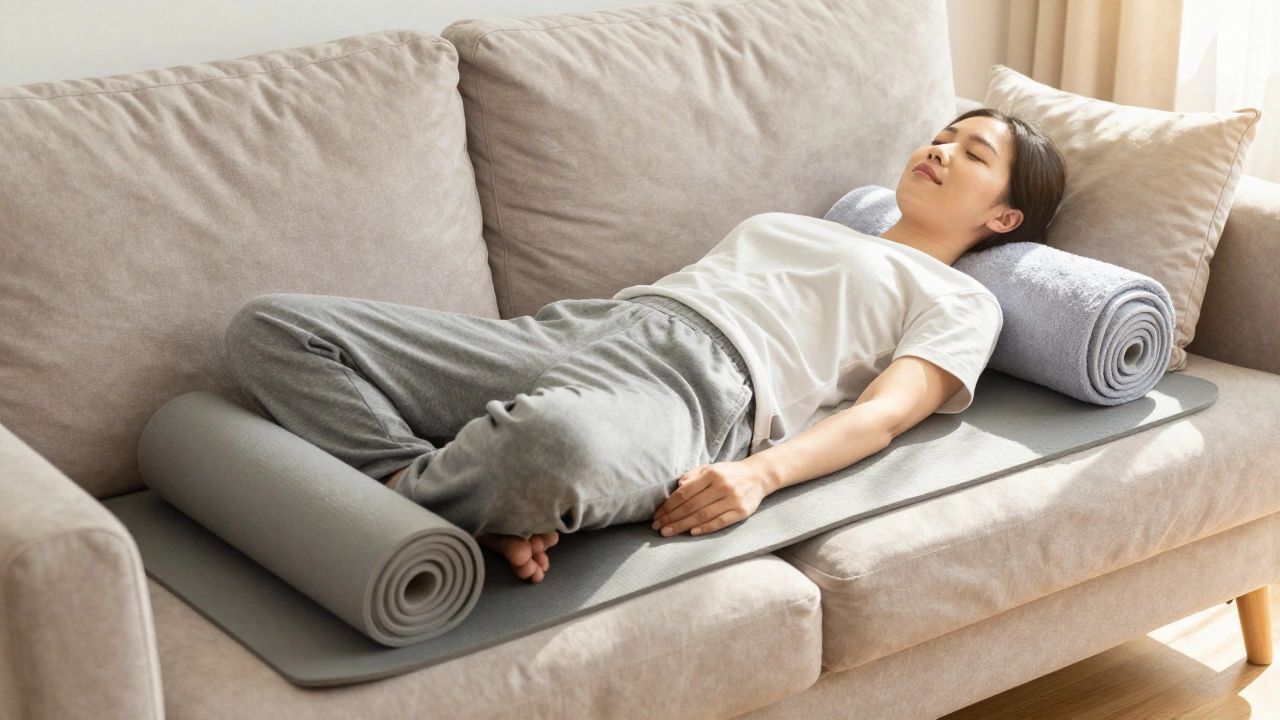
Life happens. Sometimes you don’t have a choice. If you find yourself stuck on the couch, here are practical steps to minimize damage:
- Use Pillows Strategically: Place a firm pillow under your knees if you’re on your back to flatten the lumbar curve. If you’re on your side, hug a pillow to keep your top shoulder from collapsing forward.
- Create a Flat Surface: If possible, remove loose cushions and place a yoga mat or a folded blanket over the seat to reduce sinking into the foam.
- Watch the Neck: Use a travel pillow or rolled-up towel to support the natural curve of your neck. Avoid letting your head hang off the edge of the sofa.
- Keep it Short: Treat couch sleeping as a maximum 4-hour affair. Anything longer increases the risk of stiffness and joint inflammation.
Investing in Better Sleep Solutions
If you frequently host guests or live in a space where a traditional bedroom isn’t feasible, consider upgrading your furniture strategy. Instead of a standard couch, look for a pull-out sofa with a full-size innerspring or hybrid mattress mechanism. These models often accommodate a queen-sized mattress, offering near-bed-quality sleep.
Alternatively, a futon with a thick, high-resilience foam topper can bridge the gap between affordability and comfort. The key is to prioritize the sleeping surface over the aesthetic of the living room furniture. Your spine will thank you.
Is it okay to sleep on the couch once in a while?
Yes, occasional couch sleeping is generally harmless for healthy adults. However, you may experience temporary stiffness or soreness the next day. Listen to your body and stretch gently upon waking to alleviate tension.
Does sleeping on a couch cause scoliosis?
No, sleeping on a couch will not cause structural scoliosis (a curvature of the spine present from birth or developed during growth). However, it can cause functional scoliosis, where the spine temporarily curves due to muscle imbalance and pain, which resolves once proper posture is restored.
Why do I wake up with a headache after sleeping on the sofa?
Headaches are often caused by tension in the neck and upper back muscles. Poor head support on a couch forces your neck into an awkward position, straining the suboccipital muscles at the base of the skull. This tension refers pain to the head, resulting in a tension-type headache.
Are sofa beds better than regular couches for sleeping?
Yes, significantly. Sofa beds provide a flatter, more continuous surface than a standard couch, which helps maintain better spinal alignment. However, they are still not as supportive as a dedicated mattress, especially if the mattress component is thin or low-quality.
How can I make my couch more comfortable for overnight guests?
Add a thick mattress topper (at least 3 inches) to fill gaps and provide cushioning. Use extra pillows to support the head, neck, and knees. Ensure the surface is as flat as possible by removing any loose, squishy cushions that cause sagging.