 15
Jun,2026
15
Jun,2026
Coffee Table Height Compatibility Checker
Enter measurements in inches.
Perfect Match
The heights are within the ideal range for comfortable use.
You’ve just dragged that beautiful mid-century modern coffee table is a low table typically placed in front of a sofa for holding drinks, books, and decorative items into your living room. You step back, squint, and notice something bothering you. It looks slightly taller than your sofa seat. Specifically, it’s about two inches higher. Panic sets in. Did you ruin the aesthetic? Is this a crime against interior design? Or are you just overthinking it?
The short answer is: yes, a coffee table can be two inches higher than your couch. In fact, depending on the depth of your seating and the style of your home, it might even look better that way. But before you settle in with your remote control, let’s break down why this happens, when it works, and when you should probably rethink your layout.
The Golden Rule of Living Room Proportions
Interior designers have long debated the ideal relationship between a sofa is a piece of furniture designed for seating multiple people, usually upholstered in fabric or leather and its accompanying table. The traditional guideline suggests that the top of the coffee table should be level with the sofa cushions, or within one to two inches below them. This creates a visual line that guides the eye smoothly across the seating area without jarring interruptions.
Why does this rule exist? Ergonomics. When your table is at cushion height, your legs rest naturally on the floor while your arms reach comfortably forward to grab a drink or a book. If the table is significantly lower, you’re hunching. If it’s significantly higher, you’re lifting your shoulders. A two-inch difference is negligible for most adults. It’s barely noticeable unless you’re measuring it with a tape measure.
However, "cushion height" is a tricky metric. Sofa seats sag. New sofas are firm; old ones are soft. A brand-new sectional might have a seat height of 18 inches, but after a year of use, those cushions compress to 16.5 inches. If your coffee table is 18.5 inches high, it started out perfect but now sits two inches above the actual sitting surface. This dynamic shift is why rigid rules often fail in real-world homes.
When Two Inches Higher Actually Works
There are specific scenarios where having a coffee table two inches higher than your couch not only works but enhances the space. Understanding these contexts helps you decide if your current setup is a mistake or a feature.
- Deep-Seat Sofas: Modern sofas, especially sectionals and recliners, often have deeper seats (24 inches or more). With deep seating, your legs extend further forward. A slightly higher table provides a better landing spot for your feet if you like to prop them up, or simply keeps the surface closer to your torso for easier access. Think of it like a desk: if you sit far back, a lower surface feels unreachable.
- Minimalist or Industrial Styles: Sleek, glass-top tables or metal-frame designs often look too fragile if they are too low. A slightly elevated profile adds presence without bulk. In an industrial loft setting, a 20-inch table paired with an 18-inch sofa creates a deliberate, architectural contrast that feels intentional rather than accidental.
- Small Spaces: In cramped apartments, verticality matters. A taller, narrower coffee table draws the eye upward, making the ceiling feel higher. If your sofa is bulky and low-profile, a slightly taller table balances the visual weight, preventing the room from feeling like it’s sinking into the floor.
- Storage Needs: Many modern coffee tables include drawers or shelves. To accommodate these features without making the table excessively wide, manufacturers often increase the height. If you need that storage, the extra two inches are a worthy trade-off for functionality.
When It Becomes a Problem
Not every situation forgives a height mismatch. There are clear red flags where a two-inch discrepancy becomes annoying or aesthetically displeasing.
If your sofa has very thin, firm cushions (common in some European-style designs), the seat height might be consistent, but the visual line is stark. A table that towers over a slim-profile sofa looks disjointed. Imagine a delicate dining chair next to a heavy armchair-the proportions clash. Similarly, if you have children or pets who frequently jump onto the sofa, a higher table edge becomes a hazard. They might bump their heads or knock things off more easily because the surface is less stable relative to their movement.
Another issue arises with legroom. If your sofa is particularly low (under 17 inches) and your coffee table is standard height (18-20 inches), your knees might hit the underside of the table when you lean back. This is especially true for shorter individuals. Measure the distance from the sofa seat to the floor, then check the clearance under the table. If there’s less than 12 inches of vertical space between the sofa cushion and the table bottom, you’ll feel cramped.
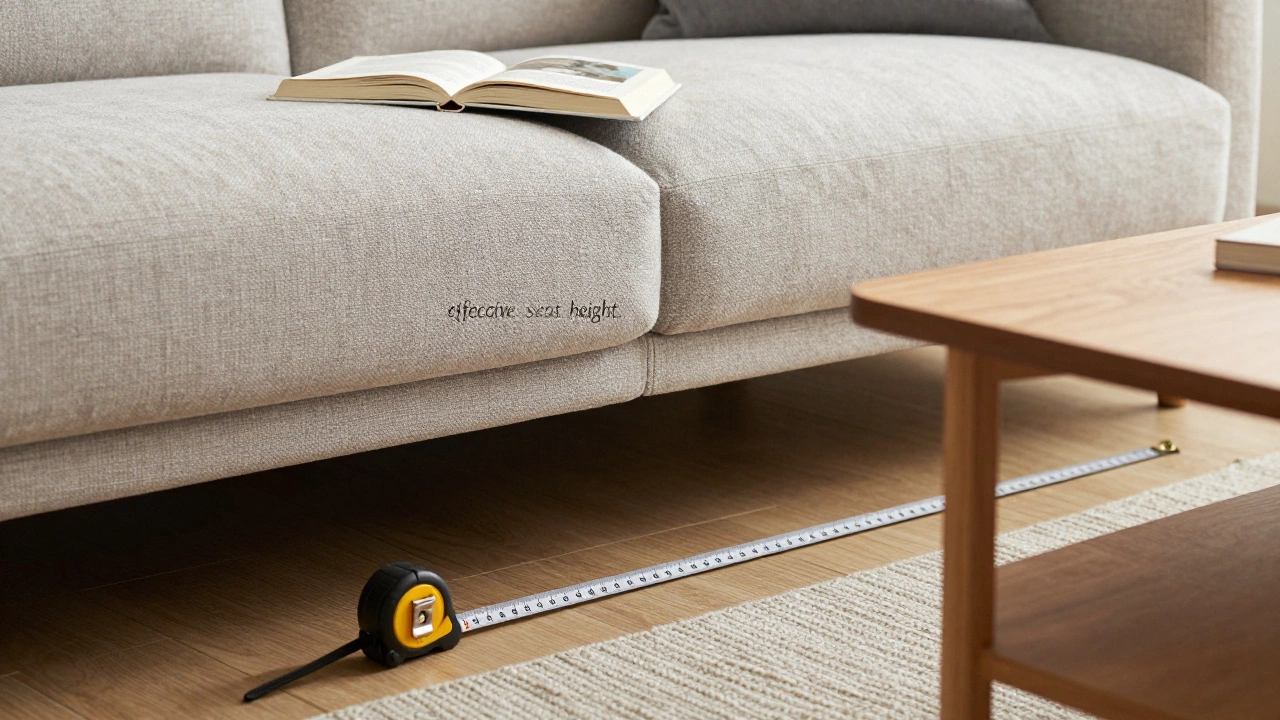
Measuring for Success: A Practical Guide
Before you buy or rearrange, take accurate measurements. Don’t rely on the box specs alone-manufacturers often list the highest point (including legs or decor) rather than the usable surface height.
- Measure Your Sofa Seat: Place a book on the cushion where you normally sit. Press down gently to simulate body weight. Measure from the floor to the top of the book. This is your "effective seat height."
- Measure the Coffee Table Surface: Use a tape measure from the floor to the tabletop. Ignore any lip or rim; focus on the flat surface where you’d place a mug.
- Check the Depth: Measure how far forward the table extends. A deeper table (20+ inches) allows for a slightly higher height because your arms reach further. A shallow table (15 inches) should be lower to stay within easy reach.
- Assess Leg Clearance: Ensure there’s at least 10-12 inches between the sofa seat and the underside of the table. This prevents knee collisions and allows air circulation.
If your effective seat height is 18 inches and your table is 20 inches, you’re in the "two inches higher" zone. Ask yourself: Does my sofa have deep seats? Do I value storage? Is the style modern? If yes to any, proceed. If no, consider alternatives.
| Sofa Type | Avg. Seat Height | Ideal Table Height | Verdict on +2 Inches |
|---|---|---|---|
| Traditional Firm Sofa | 18-19 inches | 16-18 inches | Risky - may feel too tall |
| Modern Deep Sectional | 16-17 inches | 17-19 inches | Excellent - improves reach |
| Recliner/Lounge Chair | 15-16 inches | 16-18 inches | Good - matches relaxed posture |
| European Slim Profile | 17-18 inches | 15-17 inches | Poor - disrupts sleek lines |
Fixing the Mismatch Without Buying New Furniture
If you already own both pieces and the two-inch difference bothers you, don’t rush to the store. Several low-cost adjustments can harmonize the heights.
Add Cushion Toppers: If your sofa is too low, add 1-2 inch foam toppers to the seat cushions. This raises the effective sitting height, bringing it closer to the table level. It also increases comfort, which is a win-win.
Use Table Legs or Risers: If the table is too low, insert wooden blocks or specialized furniture risers under the legs. Just ensure the table remains stable and doesn’t wobble. For a permanent fix, replace existing legs with longer ones if the design allows.
Adjust Rug Placement: Sometimes the issue isn’t height but perception. Pulling the rug tighter under the furniture can create a unified base, making height differences less apparent. A large area rug anchors both pieces, suggesting they belong together despite minor dimensional variances.
Layer Decor: Place books, trays, or stacked magazines on the coffee table to raise the functional surface. This is a temporary hack but works well for styling photos or entertaining guests. Conversely, lowering the visual impact of a high table involves placing low-profile items (like a shallow bowl) rather than tall vases.
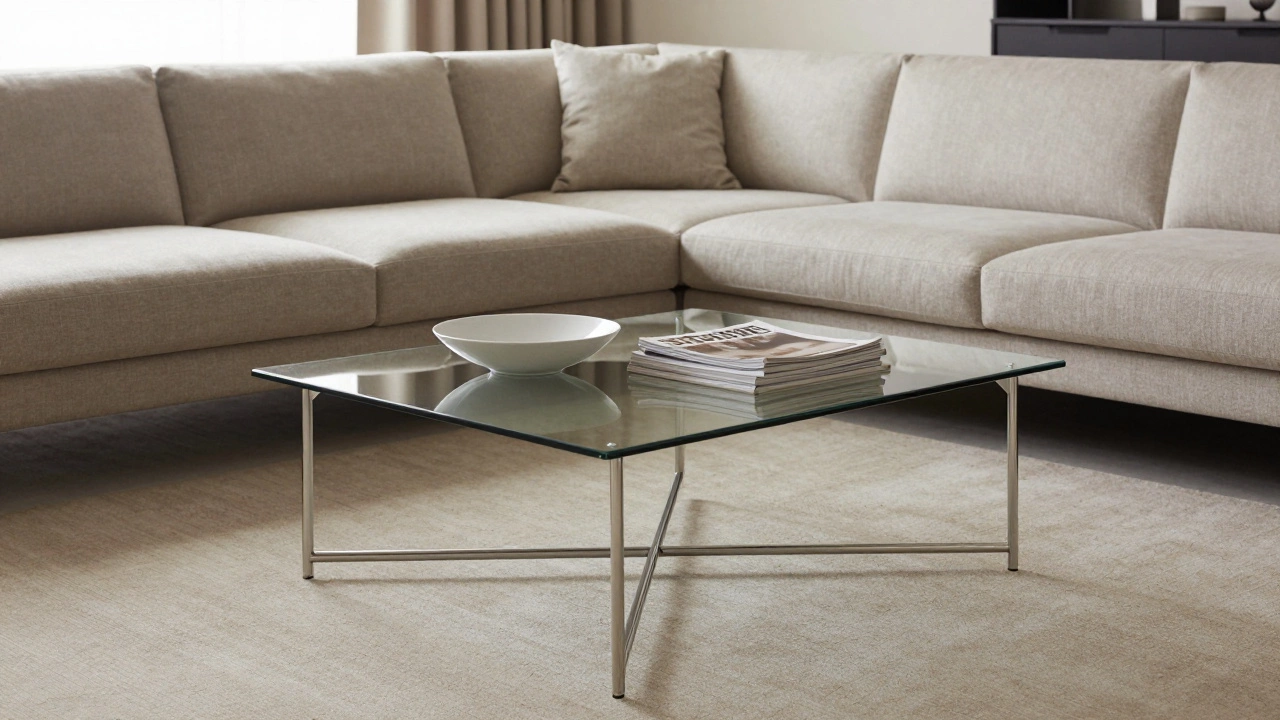
Style Considerations Beyond Dimensions
Height is only one part of the equation. The visual weight of the materials matters just as much. A heavy oak table that is two inches higher than a light linen sofa will dominate the space. A glass-top table with thin metal legs, even if higher, feels airy and unobtrusive.
Consider the silhouette. Chunky, blocky tables demand strict adherence to height rules because their mass is obvious. Delicate, open-frame tables forgive deviations because they occupy less visual space. If your table has intricate carvings or bold colors, keep the height close to the sofa to avoid distraction. If it’s neutral and simple, you have more freedom to experiment.
Lighting also plays a role. Under-table lighting or lamps placed near the coffee table can draw attention away from height discrepancies. Shadows soften edges, making transitions between furniture pieces smoother.
Final Thoughts on Flexibility
Interior design is not architecture. Walls don’t move, but furniture does. Rules are guidelines, not laws. A two-inch difference is small enough to ignore in most cases. Focus on comfort, function, and personal taste. If you can sit back, reach your drink without stretching, and enjoy the view, your setup is working. Stop measuring and start living.
Is it bad if my coffee table is higher than my sofa?
No, it is not inherently bad. A coffee table up to two inches higher than the sofa seat is generally acceptable, especially with deep-seated sofas or modern styles. The key is ensuring comfortable reach and adequate legroom. Avoid tables that are more than three inches higher, as this can cause ergonomic strain and visual imbalance.
What is the ideal height for a coffee table?
The ideal height is typically between 16 and 18 inches. This range aligns with most standard sofa seat heights (17-19 inches). The goal is to have the table surface level with or slightly below the sofa cushions for easy access and visual harmony.
How do I measure the correct height for my coffee table?
Measure from the floor to the top of your sofa cushions while sitting normally. Then measure your coffee table from the floor to the tabletop. Compare the two numbers. Aim for the table to be within 1-2 inches of the sofa seat height. Also check leg clearance: ensure at least 10-12 inches between the sofa seat and the table’s underside.
Can I use a dining table as a coffee table?
It depends on the height. Standard dining tables are 28-30 inches high, which is too tall for most sofas. However, some low-profile dining tables or drop-leaf tables might work if they are around 20 inches. Be cautious of sharp corners and ensure the scale fits your living room. Using a dining table as a coffee table often looks awkward unless it’s a specific rustic or farmhouse style.
Does the depth of the coffee table matter?
Yes, depth affects usability. A deeper table (20+ inches) allows for more storage and display but requires more floor space. A shallower table (15-18 inches) is better for small rooms. Depth should complement height: deeper tables can support slightly higher profiles because your arms reach further forward. Always leave at least 12-18 inches of walking space between the table and other furniture.
How can I make a coffee table look shorter?
To visually lower a coffee table, place low-profile items on it, such as shallow bowls or flat trays. Avoid tall vases or stacked books. You can also place the table on a dark rug, which grounds it visually. Adding horizontal lines, like a long runner or side tables at the same height, can distract from the vertical dimension. Painting the legs a lighter color than the top can also reduce visual weight.
Is it okay to have different heights for end tables and coffee tables?
Yes, mixing heights is common and stylish. End tables are often slightly taller than coffee tables (by 1-3 inches) to provide lamp placement without blocking views. As long as the overall arrangement feels balanced and functional, varying heights add interest. Avoid extreme differences that create tripping hazards or obstruct sightlines.