 21
Sep,2026
21
Sep,2026
American Furniture & Pronunciation Quiz
Can you navigate the subtle differences between British and American furniture terminology? Test your ear and your cultural fluency below.
Pronunciation Tip
US: ward-ROBE (Stress on 2nd syllable)
UK: WARD-robe (Stress on 1st syllable)
Scenario 1: The Apartment Hunt
You are looking at a rental listing in New York City. You want to know if there is enough space for your hanging clothes inside the wall structure. What term should you ask about?
Scenario 2: The Online Search
You need to buy a large, freestanding wooden cabinet with doors for your bedroom because your apartment lacks built-ins. To get the best results on US retail sites, which search term is most accurate?
Scenario 3: The Fashion Chat
An American stylist asks, "What's in your wardrobe this season?" They are referring to:
Scenario 4: Pronunciation Check
To sound like a native American speaker when saying the word, where should you place the vocal stress?
Quiz Complete!
You scored 0 out of 4.
Remember: In the US, Closet = Built-in/Architectural. Wardrobe = Freestanding/Fashion Collection.
You walk into a furniture store in New York or Chicago. You ask for a wardrobe. The salesperson looks at you blankly. They might think you want to buy a coat rack. Or they might just be confused because that word isn't part of their daily furniture vocabulary. This confusion happens constantly between British, Australian, and American English speakers. It’s not just about how you pronounce the word. It’s about whether the object even exists under that name in their mental dictionary.
If you are shopping for storage solutions in the United States, or just trying to understand American TV shows better, you need to know the real deal. Americans do say "wardrobe," but they use it differently than people in London or Sydney. Understanding this distinction saves you time, money, and awkward social interactions. Let's break down exactly how Americans handle this term, what they call these pieces instead, and why the difference matters.
The Pronunciation Trap: Where Does the Stress Go?
First, let’s tackle the sound itself. In many non-American dialects, particularly British Received Pronunciation, the stress often lands on the first syllable: WARD-robe. It sounds crisp, formal, and distinct. If you try this in a busy Los Angeles furniture showroom, you might get strange looks. Why? Because the standard American pronunciation shifts the weight to the second syllable: ward-ROBE.
This shift is common in American English for compound words where the second element retains its independent stress pattern. Think of "underground" versus "underGROUND." When Americans say it, the 'o' in robe is pronounced with an open 'oh' sound, similar to the word "robe" by itself. The 'w' is soft, almost blending into the vowel. It flows as one smooth unit: /ˈwɔːr.droʊb/. Notice the lack of hard stops. It’s casual. If you stress the first syllable too heavily, you sound like you are reciting a script from a period drama. You sound distant. To blend in, relax your jaw and let the emphasis fall naturally on the back half of the word.
Wardrobe vs. Closet: The Big American Divide
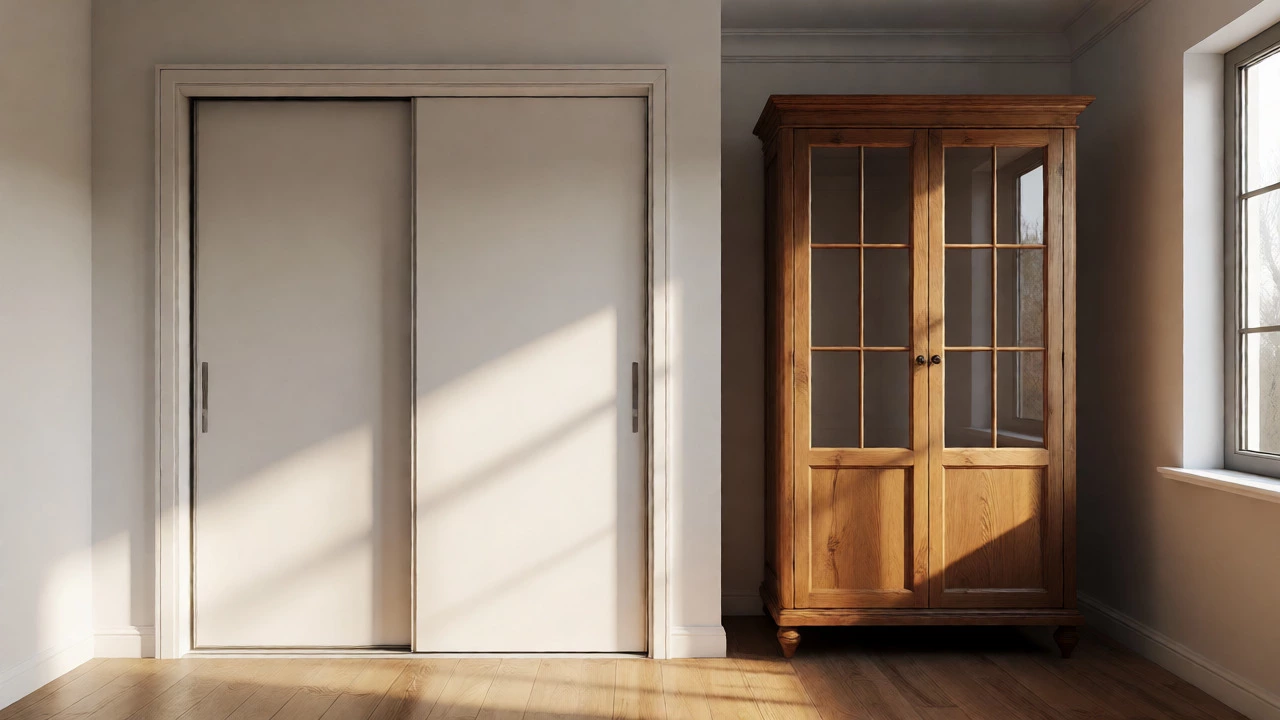
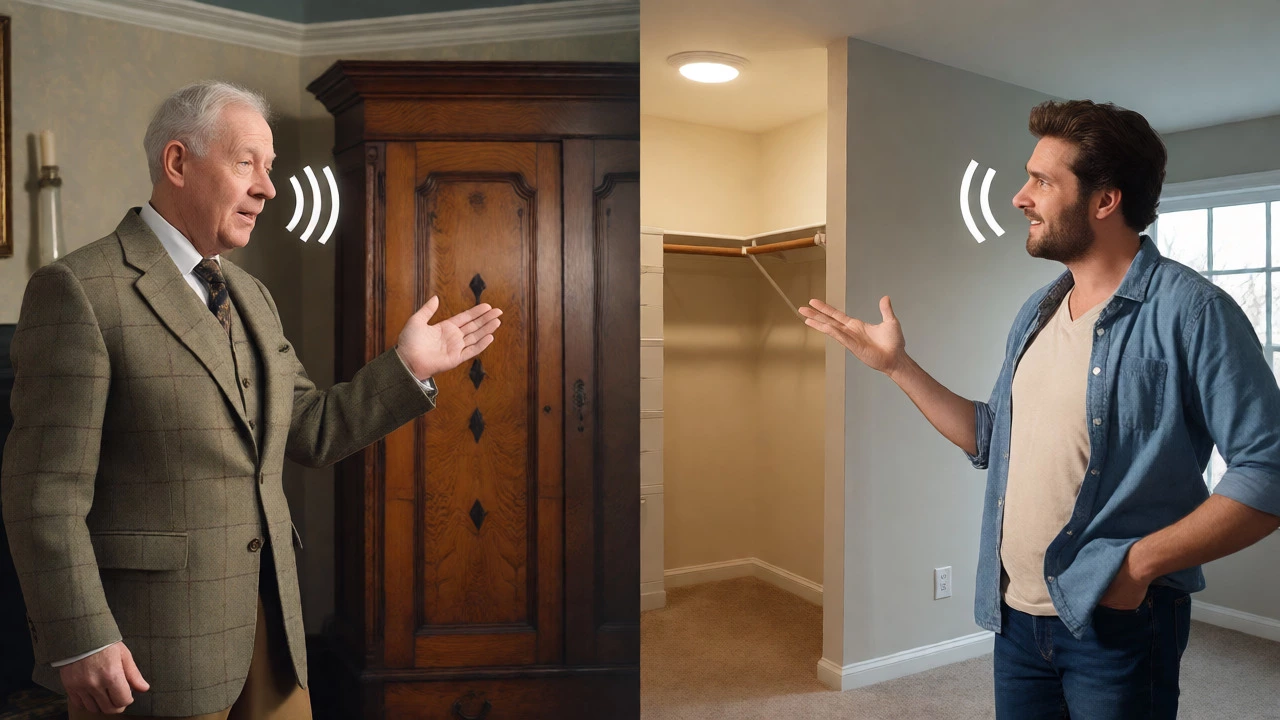
Here is the critical piece of information most international visitors miss. In the US, the word "closet" dominates the conversation. A closet is typically a built-in space within the walls of a bedroom or hallway. It has doors, shelves, and hanging rods. It is part of the house structure.
A wardrobe, in American usage, refers specifically to a freestanding piece of furniture. It is a large cabinet used for storing clothes. It can be moved. It is bought separately from the house.
Why does this matter? If you tell an American landlord you want more "wardrobe space," they might think you want to buy new furniture. If you say you want more "closet space," they know you are talking about the architecture of the room. In American real estate listings, "walk-in closet" is a major selling point. "Walk-in wardrobe" is rarely used unless the property is marketed as luxury European-style. The functional job-to-be-done here is clear: identify if the storage is structural (closet) or movable (wardrobe).
| Feature | Closet (US Standard) | Wardrobe (US Specific) |
|---|---|---|
| Installation | Built into walls; permanent | Freestanding; portable |
| Common Usage | Everyday speech; real estate ads | Furniture catalogs; fashion industry |
| Pronunciation Focus | N/A (Different word) | wor-DROHB (stress on 2nd syllable) |
| Typical Location | Bedrooms, hallways | Guest rooms, older homes, apartments without closets |
When Do Americans Actually Use the Word "Wardrobe"?
So, if everyone says "closet," who actually uses "wardrobe"? Two main groups. First, the fashion and entertainment industries. Actors have "wardrobe departments." Designers talk about building a "capsule wardrobe." Here, the word doesn’t refer to the wooden box holding the clothes. It refers to the collection of clothes itself. If you ask an American stylist, "What is in your wardrobe?", they will show you their outfits, not their furniture.
Second, older generations or specific regional dialects. In parts of the Northeast or among older homeowners, "wardrobe" might still refer to a large armoire or chest. But even then, they might call it an "armoire" if it’s ornate and antique. If it’s a simple IKEA-style cabinet, they’ll likely call it a "dresser" or a "storage unit." Using "wardrobe" for a generic storage cabinet can make you sound slightly out of touch with current American retail trends. Major retailers like Wayfair or Amazon list these items under "Armoires" or "Clothing Storage," not usually "Wardrobes."

Regional Nuances: Is It Different in Texas vs. New York?
While American English is fairly uniform regarding this specific vocabulary, there are subtle regional flavors. In the South, you might hear terms like "presser" for a tall, narrow cabinet used for ironing and storing clothes. This is a niche term, mostly heard among older residents. In New England, colonial history influences language. You might hear "china cabinet" or "linen press," but again, these are specific types of storage, not general synonyms for wardrobe.
In urban centers like San Francisco or Seattle, the influence of tech culture and minimalist design means people prefer functional terms. "Storage," "unit," or "system" are common. The romantic notion of a "wardrobe" feels outdated to younger demographics who view furniture as utilitarian. If you are moving to a city apartment, expect to discuss "built-ins" rather than wardrobes. The job-to-be-done here is adapting your vocabulary to the local culture. Don’t force archaic terms if the locals don’t use them.
Shopping Tips: What to Search For in the US
If you are buying furniture online in America, typing "wardrobe" into a search bar yields mixed results. You will see some actual cabinets, but also lots of clothing racks and fashion blogs. To get accurate results, you need to use the correct entity names. Here is a quick cheat sheet for your next purchase:
- For freestanding tall cabinets: Search for "Armoire," "Tall Cabinet," or "Clothing Armoire." These terms bring up solid wood or particleboard units with doors.
- For low storage with drawers: Search for "Dresser" or "Chest of Drawers." Note: Americans rarely put hangers in dressers. That’s for folded clothes.
- For open hanging spaces: Search for "Clothing Rack" or "Garment Rack." This is the cheap metal pipe solution students love.
- For custom fitted solutions: Search for "Custom Closet Systems." Brands like California Closets dominate this market.
Using these specific terms ensures you find the physical object you want, not a definition of a concept. This precision prevents buyer’s remorse. You won’t end up with a coat rack when you wanted a closed cabinet.
Why the Confusion Persists in Media
Hollywood reinforces the disconnect. In movies set in old mansions, characters speak of their "wardrobes." This sets a tone of elegance and history. In modern sitcoms, characters complain about their "closets being full." This reflects reality. Most Americans live in houses with built-in closets. The idea of a standalone wardrobe is seen as either luxurious (custom millwork) or desperate (renting an apartment with no closet). Therefore, the word carries connotations. Saying "I bought a new wardrobe" implies you spent significant money on a statement piece. Saying "I organized my closet" implies routine maintenance.
Understanding these connotations helps you communicate intent. If you tell an American friend you are "updating your wardrobe," they assume you bought new clothes. If you say you are "installing a new wardrobe," they assume you are doing home improvement work. The verb changes the meaning entirely. Be precise with your verbs to avoid misunderstanding.
Practical Exercise: Test Your Ear
Next time you watch an American film, listen for the word. You will notice it appears less than you think. Listen for "closet" instead. Then, look for scenes in high-end dramas. There, you might hear "wardrobe" used correctly for both the furniture and the clothing collection. Try repeating the word after native speakers. Mimic the stress on the second syllable. ward-ROBE. Feel the difference? It sounds softer, less authoritative, more integrated into casual speech. Practice this until it feels natural. It’s a small detail, but it signals cultural fluency instantly.
Do Americans ever use the word "wardrobe" for furniture?
Yes, but it is less common than "closet" or "armoire." Americans use "wardrobe" primarily to describe a freestanding piece of furniture, often in contexts involving fashion or luxury interiors. For everyday storage, "closet" (built-in) or "dresser" (drawers) are preferred.
Is the pronunciation different from British English?
Yes. British English typically stresses the first syllable (WARD-robe), while American English stresses the second syllable (wor-DROBE). The vowel sounds also differ slightly, with the American version having a more relaxed, open 'o' sound in the second syllable.
What is the difference between a closet and a wardrobe in the US?
In the US, a "closet" is a built-in architectural feature within a wall. A "wardrobe" is a freestanding piece of furniture that can be moved. Closets are permanent; wardrobes are portable.
Should I use "wardrobe" or "closet" when renting an apartment in New York?
Use "closet." Landlords and agents in New York prioritize "closet space" as a key metric for apartment value. Asking about "wardrobe space" might confuse them or imply you need to buy separate furniture.
Are there other names for wardrobes in American English?
Yes. Common alternatives include "armoire" (often decorative or antique), "chest of drawers" (if primarily for folded items), "cabinet," and "storage unit." Regional terms like "presser" exist but are rare.