 23
Mar,2026
23
Mar,2026
Posture-to-Core-Engagement Calculator
How Your Posture Counts
Every hour of proper sitting posture engages your core muscles like 100 tiny ab curls, as explained in the article.
Your Core Engagement
Based on the article's finding: 1 hour of good posture = 100 core contractions
core contractions per day
Why This Matters
Maintaining proper posture isn't just about feeling better—it engages your core muscles continuously throughout the day, helping reduce abdominal protrusion by repositioning your internal organs. Over time, this creates a flatter appearance without needing extra workouts.
Everyone talks about crunches, planks, and diet changes to flatten your stomach. But what if you could start making progress while sitting-no gym required? The truth is, your office chair isn’t just a place to rest your butt. It’s a hidden tool for tightening your core, improving digestion, and even reducing belly fat over time-if you use it right.
Why Sitting Wrong Makes Your Stomach Look Bigger
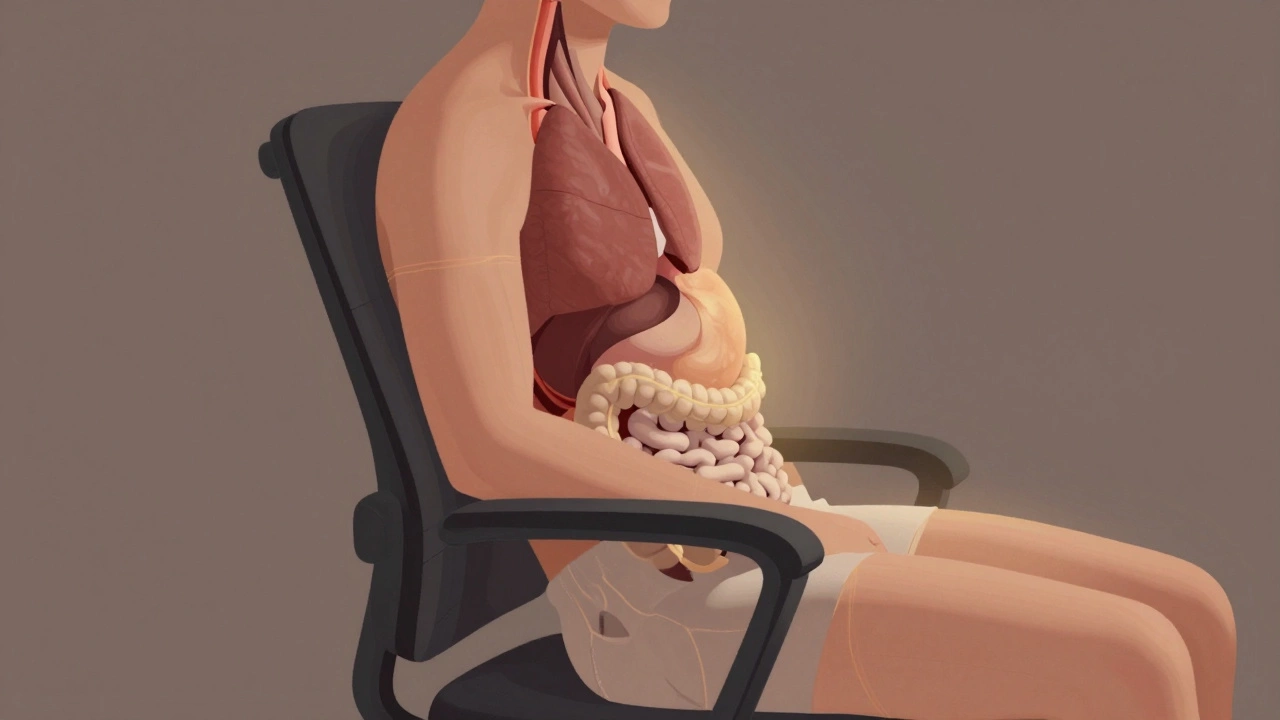
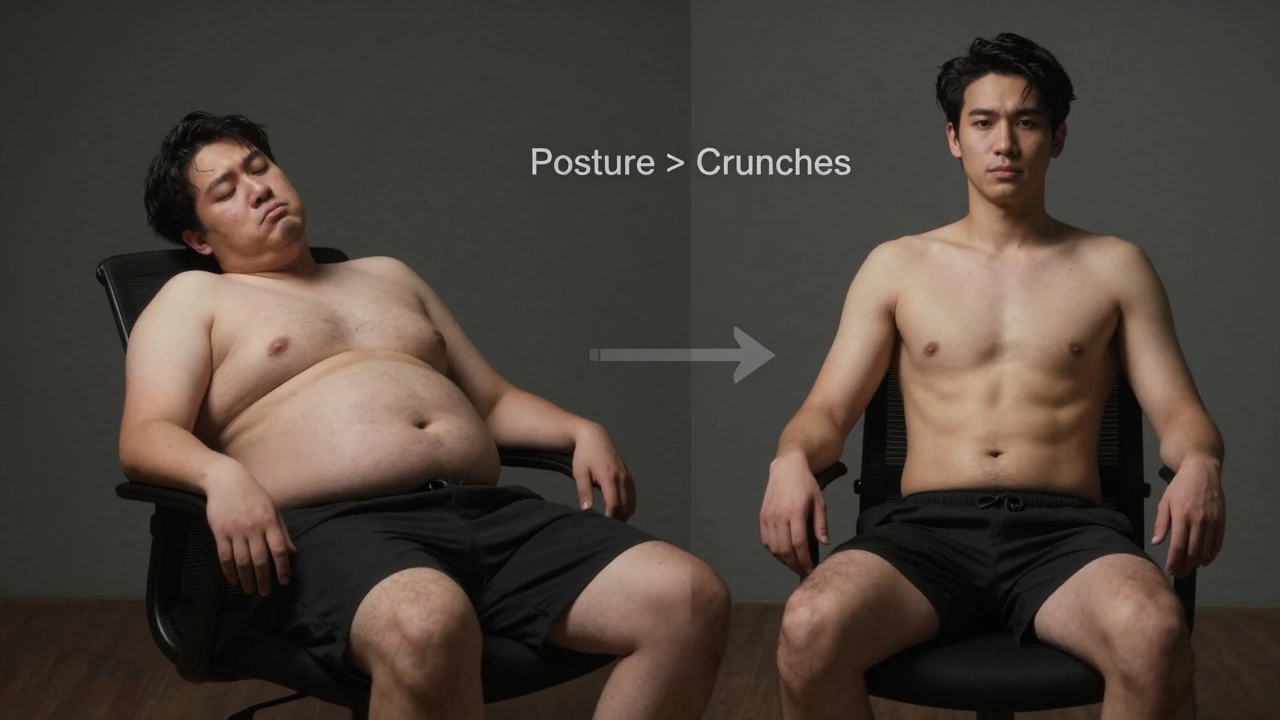
Slouching in your chair doesn’t just hurt your back. It pushes your organs forward, creating a visible bulge that looks like belly fat. This isn’t fat-it’s your intestines and stomach being squished out of place by poor posture. A 2023 study from the University of Toronto found that people who sat with a rounded lower back for more than six hours a day had 22% more abdominal protrusion than those who maintained neutral spine alignment. That’s not weight gain. That’s posture.
Think about it: when you slump, your pelvis tilts backward, your ribs flare out, and your abs go slack. Your core muscles stop working. They’re not toned-they’re turned off. And when your core is inactive, your stomach doesn’t just look bigger. It starts to feel heavier, bloated, and sluggish.
The Three Rules of Sitting to Flatten Your Stomach
It’s not about squeezing your abs all day. That’s exhausting and ineffective. Instead, focus on these three simple rules:
- Keep your hips slightly higher than your knees
- Engage your lower abs by gently drawing your belly button toward your spine
- Let your shoulders relax back, not down
Let’s break each one down.
1. Elevate Your Hips
Your pelvis is the foundation of your posture. If it’s tilted too far back, your spine curves unnaturally, and your stomach pushes outward. The fix? Make sure your hips are a little higher than your knees. This creates a slight natural arch in your lower back-exactly where your core needs to activate.
Most office chairs are too low. Use a cushion, folded towel, or a small footrest under your feet to tilt your pelvis forward. You’ll feel your lower abs engage naturally. No force. No strain. Just alignment.
2. Activate Your Lower Abs (Gently)
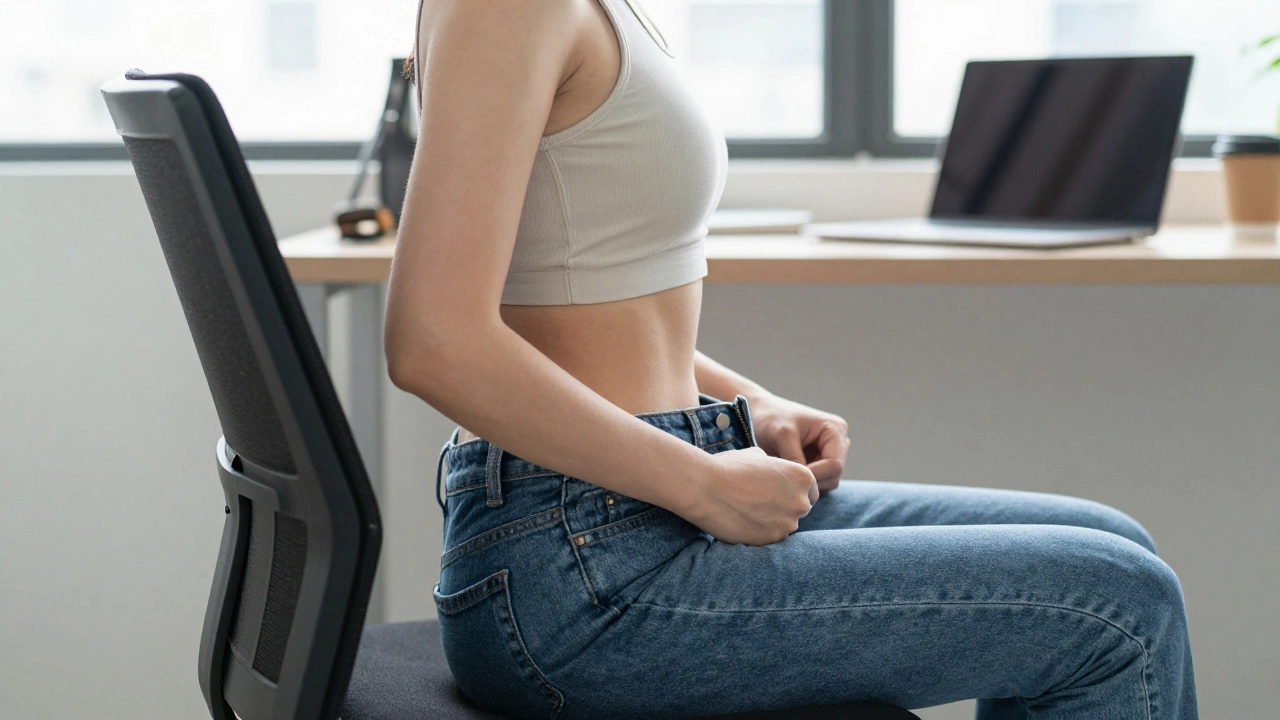
You don’t need to suck in like you’re posing for a photo. Just imagine you’re zipping up a tight pair of jeans from your pubic bone to your belly button. That’s a light, continuous contraction-not a full crunch.
Try this: take a deep breath in. As you exhale, softly pull your lower belly inward. Hold it for 3-5 seconds. Release. Repeat five times. Do this every hour. Over time, your body learns to hold this position without thinking. That’s how posture becomes automatic.
3. Open Your Chest, Not Your Shoulders
When you slump, your shoulders roll forward, and your ribcage collapses inward. This compresses your diaphragm and digestive organs. The result? Slower digestion, more bloating, and a puffier stomach.
Instead, let your shoulder blades drop gently down your back. Imagine a string pulling the top of your head toward the ceiling. Your chest should feel open, not pushed out. This gives your internal organs room to sit where they belong-not pressed against your abdominal wall.
What Kind of Chair Works Best?
Not all chairs are built to help you engage your core. Here’s what to look for:
- Adjustable lumbar support - Keeps your lower spine in its natural curve
- Seat depth that fits your body - There should be 2-3 inches between the edge of the seat and the back of your knees
- Sturdy base with five wheels - Prevents tipping and lets you move without twisting
- Seat that’s slightly tilted forward - Encourages pelvic alignment (some ergonomic chairs have this built-in)
Brands like Herman Miller, Steelcase, and Humanscale have models designed with posture-first engineering. But you don’t need to spend $1,000. Even a $100 chair with good lumbar support and adjustable height can make a huge difference.
If you’re stuck with a cheap chair, add a rolled towel behind your lower back. It’s not glamorous-but it works.
How Long Until You See Results?
Don’t expect overnight changes. But within 7-10 days of consistent posture correction, most people notice:
- Less bloating after meals
- Improved digestion (fewer gas and constipation issues)
- A flatter, tighter appearance in the lower abdomen
- Less fatigue from slumping
After 30 days, many report their stomach looks 1-2 inches smaller-not because they lost weight, but because their organs are in the right place and their muscles are firing again. That’s posture doing the work.
Common Mistakes People Make
Even when people try to sit better, they mess it up. Here are the top three mistakes:
- Squeezing too hard - Tensing your abs like you’re doing a hundred sit-ups causes tension in your neck and shoulders. It’s unsustainable and counterproductive.
- Leaning back too far - Reclining in your chair lets your spine collapse. You might feel relaxed, but your core shuts down completely.
- Forgetting to breathe - Holding your breath while trying to “pull in” your stomach cuts off oxygen and triggers stress hormones that actually promote belly fat storage.
The key? Gentle. Consistent. Breathable.
What Else Helps?
Posture alone won’t melt away fat. But when combined with small habits, the effect multiplies:
- Drink more water - Dehydration causes bloating. Aim for 2-3 liters a day.
- Stand up every 45 minutes - Walk for 2 minutes. Stretch your hips. Your digestive system needs movement.
- Watch your sugar intake - Refined carbs and sugary drinks swell your gut. Swap soda for sparkling water with lemon.
- Chew slowly - Eating too fast fills your stomach with air. Take 20 minutes per meal.
These aren’t diet hacks. They’re lifestyle tweaks that work with your posture, not against it.
Final Thought: Your Chair Is Your Workout Tool
You don’t need to sit on a yoga ball or do ab exercises at your desk. You just need to sit correctly. Every hour you spend in proper alignment is like doing 100 tiny, silent ab curls. Over a workday, that’s 500+ contractions. Over a month? Thousands.
Your stomach doesn’t need more crunches. It needs better posture. And the best part? You’re already sitting down. All you have to do is sit smarter.
Can sitting correctly really flatten your stomach without exercise?
Yes, but not by burning fat. Proper sitting posture repositions your internal organs and engages your core muscles, which reduces abdominal protrusion caused by slouching. This makes your stomach appear flatter without losing weight. It’s about alignment, not calorie burn.
How often should I check my posture while sitting?
Set a reminder every 45-60 minutes. That’s when your muscles start to fatigue and your posture slips. Use the 3-rule check: hips higher than knees, lower abs gently engaged, shoulders relaxed back. It takes less than 10 seconds.
Is a standing desk better for flattening your stomach?
Standing can help reduce pressure on your abdomen, but only if you don’t lean on the desk or lock your knees. Many people stand with poor posture too-hunched shoulders, forward hips. The real advantage of a standing desk is the ability to shift positions. Use it to alternate between sitting (with good posture) and standing, not as a magic fix.
Why does my stomach feel bloated even when I sit up straight?
Bloating often comes from digestion issues, not posture. Eating too fast, drinking carbonated drinks, or consuming processed foods can cause gas buildup. Combine good posture with slower eating, more water, and less sugar to reduce bloating. Posture helps, but it’s not the only factor.
Do I need a special chair to see results?
No. A basic chair with adjustable height and a way to support your lower back (like a rolled towel) is enough. What matters is how you sit-not the brand on the chair. Many people with expensive ergonomic chairs still slouch. Technique beats equipment every time.