 3
Aug,2026
3
Aug,2026
Office Posture & Movement Health Score
Posture Checklist
Movement Habits
Your Health Score
Check items above to calculate your score
Personalized Tips
Start checking items to receive personalized recommendations.
You’ve probably heard the old saying that "sitting is the new smoking." It’s catchy, but it’s also a bit of an exaggeration. However, there is a kernel of truth buried in that phrase. If you spend eight hours a day glued to your desk, your body isn’t just resting; it’s actively changing how it processes energy. You might be wondering if your posture is directly causing that stubborn layer of fat around your midsection. The short answer? Not exactly. But your sitting habits play a huge role in where your body stores fat and how efficiently it burns calories.
Let’s get one thing straight right away: no specific sitting position will magically melt belly fat while you’re typing emails. Spot reduction is a myth. You can’t tell your body to burn fat from your stomach by crunching your abs or slouching in a certain way. However, the way you sit affects your metabolism, your hormone levels, and your willingness to move throughout the day. By optimizing your office chair setup and breaking up long periods of stillness, you create an environment where your body is less likely to store visceral fat-the dangerous kind that wraps around your organs.
The Myth of "Belly-Fat-Burning" Posture
First, let’s debunk the idea that there is a secret "anti-belly-fat" pose. Many people believe that sitting up perfectly straight engages their core enough to burn calories. While good posture does engage your deep abdominal muscles (like the transverse abdominis) to stabilize your spine, the calorie burn is negligible. You aren’t going to lose weight just by sitting tall.
However, bad posture contributes to belly appearance in two indirect ways:
- Anterior Pelvic Tilt: When you slouch or sit with rounded shoulders, your pelvis often tilts forward. This pushes your lower abdomen out, making your belly look larger even if your body fat percentage hasn’t changed. Correcting this tilt through better posture can instantly make your waistline appear flatter.
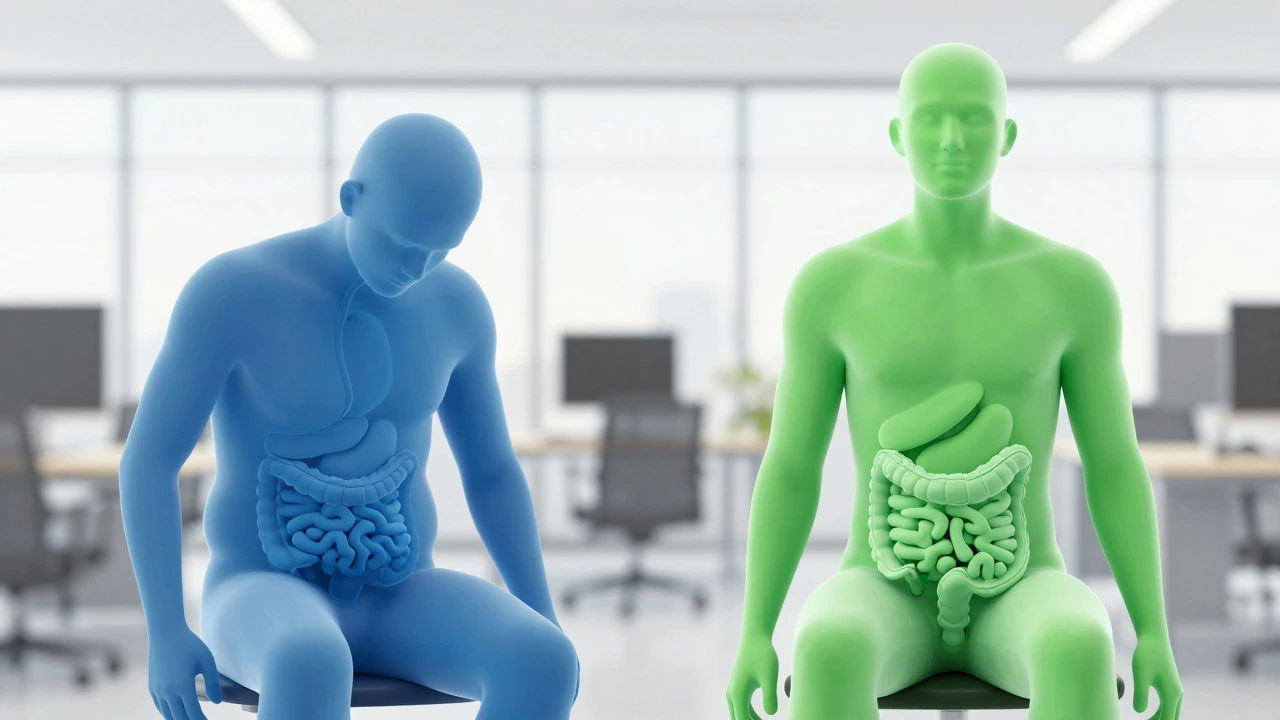
- Digestive Issues: Slouching compresses your digestive tract. This can lead to bloating, constipation, and gas retention, all of which add temporary bulk to your midsection. Sitting upright gives your internal organs room to function properly, reducing bloat.
So, while posture won’t burn fat, it prevents the visual illusion of extra weight and supports better digestion. That’s a win worth pursuing.
How Prolonged Sitting Increases Visceral Fat
If posture doesn’t burn fat, why do sedentary jobs correlate with higher belly fat? The culprit is visceral fat, fat stored deep inside the abdomen around vital organs like the liver and intestines. Unlike subcutaneous fat (the pinchable fat under your skin), visceral fat is metabolically active. It releases inflammatory chemicals and hormones that can disrupt your body’s ability to regulate blood sugar and insulin.
When you sit for long periods without moving, several things happen at a cellular level:
- Lipoprotein Lipase Activity Drops: This enzyme helps break down fats in your bloodstream. Studies show that prolonged inactivity reduces its activity by up to 90%, meaning your body is less efficient at clearing fat from your blood.
- Insulin Resistance Rises: Muscles are major consumers of glucose. When they’re inactive, your cells become less sensitive to insulin. Your pancreas pumps out more insulin to compensate, and high insulin levels signal your body to store fat-particularly in the belly area.
- Cortisol Levels Fluctuate: Chronic stress combined with inactivity can elevate cortisol, a hormone that encourages fat storage in the abdominal region.
This isn’t about being "lazy." It’s about biology. Even if you eat a perfect diet, sitting for eight continuous hours sends signals to your body to conserve energy and store fat. The solution isn’t just about how you sit, but how often you stop sitting.
The Ideal Sitting Position for Metabolic Health
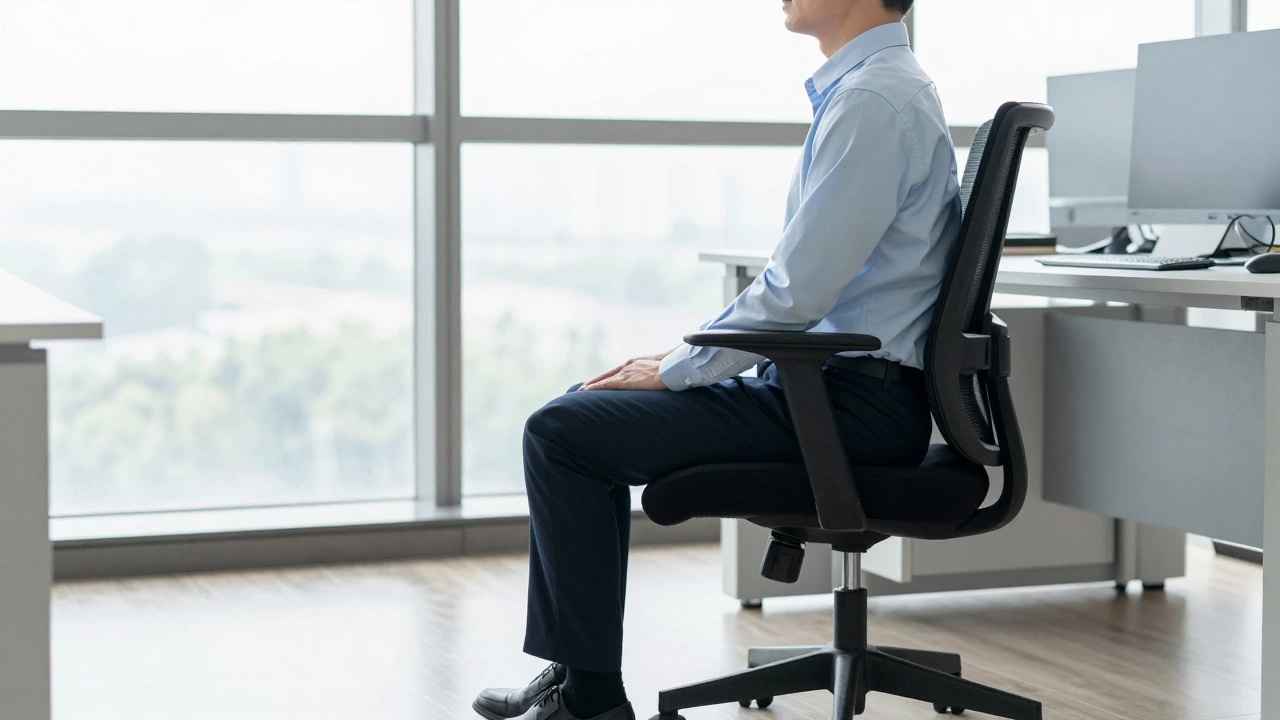
Since you have to sit, let’s make sure you’re doing it in a way that minimizes harm and maximizes metabolic efficiency. The goal is neutral alignment. This means your bones are stacked correctly, requiring minimal muscle effort to hold you up, which reduces fatigue and keeps your diaphragm free to breathe deeply.
| Body Part | Correct Position | Why It Matters |
|---|---|---|
| Feet | Flat on the floor, hip-width apart | Promotes circulation and stability |
| Knees | Slightly lower than hips, forming a 90-100 degree angle | Prevents pressure behind the knees |
| Hips | Pushed back into the chair, supported by the seat pan | Ensures the lumbar spine is supported |
| Lower Back | Supported by lumbar adjustment or a small cushion | Maintains natural spinal curve, prevents slouching |
| Shoulders | Relaxed, not hunched toward ears | Reduces tension in the neck and upper back |
| Elbows | Resting lightly on armrests or desk, close to body | Keeps shoulders down and relaxed |
| Monitor | Top of screen at eye level, arm's length away | Prevents forward head posture |
A key tip here is the "100-degree rule." Some ergonomists argue that a slight recline (around 100-110 degrees) puts less pressure on your discs than sitting at a rigid 90 degrees. If your chair allows it, try leaning back slightly. This opens up your chest, improves breathing, and can actually reduce strain on your lower back.
The Real Secret: Breaking Up Sedentary Time
If posture is the foundation, movement is the roof. You can have the perfect ergonomic setup, but if you don’t move, you’ll still face metabolic risks. The most effective strategy to avoid belly fat accumulation isn’t a special pose-it’s interrupting your sitting time.
Research suggests that standing or walking for just three minutes every 30 minutes can significantly improve blood sugar control and lipid metabolism compared to sitting continuously for an hour. Here’s how to implement this without losing productivity:
- The 30-3 Rule: Set a timer. Every 30 minutes, stand up, stretch, or walk for 3 minutes. Use this time to grab water, use the restroom, or just pace around your office.
- Walking Meetings: If a meeting doesn’t require a screen, take it while walking. Even a slow stroll boosts circulation and engages large muscle groups.
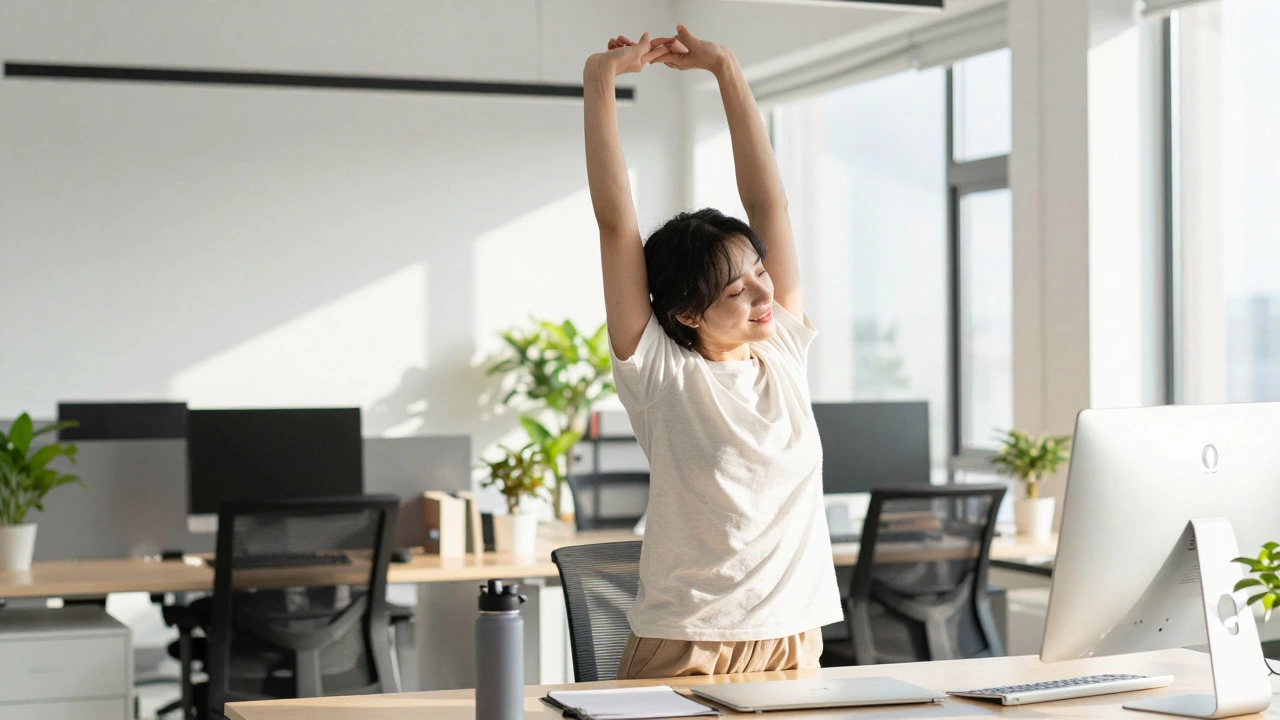
- Desk Stretching: Simple movements like torso twists, shoulder rolls, and seated leg lifts keep your muscles active and prevent stiffness.
Think of your body like a car engine. Idling for too long causes buildup and inefficiency. Regularly revving the engine-even briefly-keeps everything running smoothly.
Choosing the Right Office Chair
Your chair is your primary tool for maintaining healthy posture. A cheap, flat-bottomed chair forces you to work harder to stay upright, leading to fatigue and slouching. Look for these features:
- Adjustable Lumbar Support: This is non-negotiable. It should fit the natural curve of your lower back. If your chair lacks this, buy a separate lumbar cushion.
- Seat Depth Adjustment: You should have 2-4 fingers of space between the edge of the seat and the back of your knees. Too much pressure on the thighs cuts off circulation.
- Armrest Adjustability: Armrests should allow your elbows to rest at a 90-degree angle without raising your shoulders.
- Synchronous Tilt Mechanism: This allows the backrest and seat to recline together, maintaining proper posture even when you lean back.
If you’re considering a standing desk, a workspace that allows you to alternate between sitting and standing positions, know that it’s not a cure-all. Standing for eight hours straight can cause its own issues, like varicose veins and foot pain. The best approach is a sit-stand hybrid routine. Aim for a ratio of 1:1 or 2:1 (sitting to standing) depending on your comfort level.
Diet and Lifestyle Factors Beyond the Chair
Let’s be realistic: no amount of postural correction will offset a poor diet. To truly manage belly fat, your office habits need to align with your lifestyle choices.
Hydration: Dehydration slows down metabolism. Keep a water bottle at your desk. Often, we mistake thirst for hunger, leading to unnecessary snacking.
Sleep Quality: Poor sleep increases ghrelin (the hunger hormone) and decreases leptin (the fullness hormone). If you’re sleeping less than seven hours, your body craves high-calorie foods, contributing to weight gain.
Stress Management: High cortisol levels from chronic stress directly promote visceral fat storage. Practice deep breathing exercises during your breaks. Box breathing (inhale 4 seconds, hold 4, exhale 4, hold 4) can lower stress hormones quickly.
Common Mistakes to Avoid
Even well-meaning people make errors that undermine their efforts. Watch out for these:
- Crossing Your Legs: This restricts blood flow and can raise blood pressure temporarily. It also tilts your pelvis, throwing off your spinal alignment.
- Sitting on Your Wallet: A classic mistake. It creates uneven pressure on your hips, leading to pelvic tilt and lower back pain over time.
- Ignoring Pain: If your chair hurts your back, it’s not supporting you correctly. Adjust it or replace it. Pain leads to compensatory movements that worsen posture.
- Relying on Core Activators: Some chairs claim to "activate your core" by being unstable. While they may engage muscles slightly, they often lead to fatigue and poor form. Stability is generally better for long-term health.
Putting It All Together: A Daily Routine
Here’s a simple plan to integrate these principles into your workday:
- Morning Setup: Adjust your chair height so feet are flat. Ensure lumbar support hits your lower back. Position your monitor at eye level.
- Hourly Check-In: Every hour, reset your posture. Roll your shoulders back, tuck your chin slightly, and plant your feet firmly.
- Micro-Breaks: Every 30 minutes, stand up for 2-3 minutes. Walk to the printer, get water, or do some stretches.
- Lunch Break: Step away from your desk. Go for a 15-minute walk outside. Sunlight and movement boost mood and metabolism.
- Evening Wind-Down: After work, do 10 minutes of stretching or yoga to counteract the effects of sitting. Focus on hip flexors and hamstrings, which tighten from prolonged sitting.
Remember, consistency beats intensity. Small, frequent adjustments to your sitting habits will yield better results than occasional intense workouts. Your body thrives on regular movement and proper alignment.
Can sitting up straight really burn belly fat?
Not directly. Sitting up straight engages your core muscles slightly, but the calorie burn is minimal. However, good posture improves digestion, reduces bloating, and corrects anterior pelvic tilt, which can make your belly appear flatter. The real fat loss comes from a calorie deficit created by diet and overall physical activity, not just posture.
Is it better to sit or stand all day?
Neither extreme is ideal. Sitting all day increases the risk of visceral fat and metabolic issues. Standing all day can lead to joint pain and varicose veins. The best approach is to alternate. Aim to stand or move for at least 2-3 minutes every 30 minutes of sitting. A sit-stand desk is helpful for this flexibility.
What is the best chair position for digestion?
Sit upright with your hips pushed back and your lower back supported. Avoid slouching or crossing your legs, as these positions compress your abdominal cavity and can slow down digestion, leading to bloating. Keeping your spine aligned allows your diaphragm to move freely, aiding both breathing and digestive function.
Does sitting increase cortisol levels?
Sitting itself doesn’t directly spike cortisol, but prolonged inactivity combined with work stress can contribute to higher cortisol levels over time. Cortisol promotes fat storage in the belly area. Regular movement breaks help mitigate stress responses and keep cortisol levels in check.
How often should I adjust my office chair?
You should adjust your chair whenever you change tasks or feel discomfort. Ideally, set it up once at the start of the day according to the ergonomic guidelines (feet flat, knees at 90 degrees, lumbar support aligned). If you switch between sitting and standing, re-evaluate your posture each time you return to the chair.