 15
Oct,2026
15
Oct,2026
Office Chair Value Calculator
Stop guessing. Enter your details below to see exactly how much that high-end chair costs you per hour of work, and get a personalized recommendation.
Your Usage Profile
The Verdict
Enter your data and click calculate to see results.
True Cost Per Hour
This is what you pay for every hour you sit in this specific chair.
Total Investment Over Life
You’ve been sitting in that $80 plastic chair from the warehouse club for three years. Your lower back screams every time you stand up, and your shoulders feel like they’re trying to escape your neck. You see people raving about chairs costing $1,000 or more, and you wonder if it’s just marketing hype or if there’s actual science behind the price tag. The short answer? Yes, but only if you actually use it correctly and choose the right model for your body.
Here is the reality: your spine is not designed to stay static for eight hours. When you sit poorly, the pressure on your lumbar discs increases by up to 40% compared to standing. A cheap chair might hold your weight, but it rarely holds your posture. That’s where the investment comes in. But before you swipe your credit card, let’s break down exactly what you are paying for, who actually needs it, and when you should probably stick with something cheaper.
The Real Cost of Sitting Wrong
Think about your workday. How many times do you shift positions because you’re uncomfortable? Now imagine doing that subtly, constantly, for five days a week. This isn’t just about comfort; it’s about physiology. Poor seating leads to musculoskeletal disorders, which account for a massive chunk of workplace compensation claims globally. In Australia alone, back injuries are among the top reasons for lost work time.
A generic chair forces your body into a shape dictated by the manufacturer’s cheapest mold. If your legs are longer than average, your knees might be higher than your hips, tilting your pelvis backward and flattening your natural lumbar curve. If you’re shorter, your feet dangle, cutting off circulation. These aren’t minor annoyances. Over time, they lead to chronic tension headaches, sciatica, and reduced lung capacity because your diaphragm can’t expand fully.
High-end chairs don’t just add padding. They offer adjustability. We’re talking about seat depth, armrest height, tilt tension, and lumbar support intensity. This adjustability allows the chair to adapt to *you*, rather than forcing you to adapt to the chair. It’s the difference between wearing a one-size-fits-all t-shirt and having a suit tailored to your measurements. One fits loosely and awkwardly; the other moves with you.
What Are You Actually Paying For?
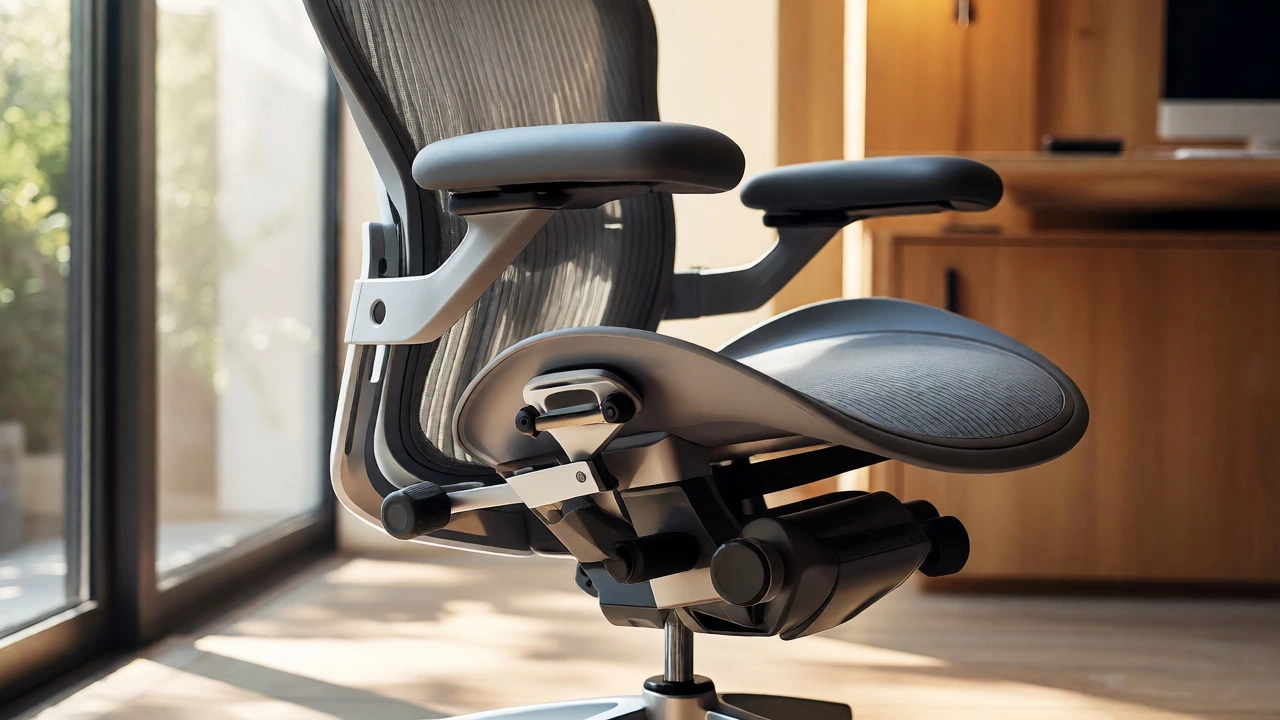
When you look at a Herman Miller Aeron, an iconic ergonomic office chair known for its breathable mesh design and precise adjustability, you aren’t just buying foam and fabric. You are buying engineering. Let’s dissect the components that drive the price up.
First, consider the materials. Cheap chairs use low-density polyurethane foam that compresses within six months. High-end models often use suspension systems like elastomeric mesh or high-resilience foam that retains its shape for ten years or more. The frame matters too. Plastic frames crack under stress; aluminum or steel frames endure. Then there’s the mechanism. A basic chair has a simple tilt lock. Premium chairs feature synchro-tilt mechanisms that allow your back to recline while keeping your feet flat on the floor, maintaining proper blood flow.
Lumbar support is another major differentiator. On budget chairs, this is often a separate cushion you strap on. On premium chairs, it’s integrated into the backrest and adjustable in height and depth. This ensures the support hits the exact curve of your spine, regardless of your height. Without this, you’re essentially guessing where your spine needs help.
| Feature | Budget Chair ($50-$150) | Mid-Range ($300-$600) | Premium ($1,000+) |
|---|---|---|---|
| Adjustability | Seat height only | Height, tilt, basic armrests | Full range (depth, arms, lumbar, tilt) |
| Material Durability | Low-density foam, vinyl/plastic | Medium-density foam, fabric/mesh | High-resilience foam, proprietary mesh, metal |
| Lumbar Support | Fixed or none | Fixed contour | Adjustable height and depth |
| Warranty | 1 year | 3-5 years | 10-12 years |
| Resale Value | Negligible | Moderate | High (e.g., used Aerons sell well) |
Who Really Needs a Premium Chair?
Not everyone needs a $1,500 chair. If you work from home two days a week and spend the rest of the time moving around, a mid-range chair is likely sufficient. However, certain profiles benefit massively from the upgrade.
If you have pre-existing back issues, such as herniated discs or scoliosis, the precision adjustability of a premium chair is non-negotiable. Standard chairs simply cannot accommodate spinal irregularities without causing pain. Similarly, if you are very tall (over 6’2") or very short (under 5’2"), off-the-shelf furniture often fails you. Premium brands typically offer size variations-like the Aeron coming in sizes A, B, and C-ensuring the seat pan length matches your thigh length.
Consider your screen time. If you spend more than six hours a day seated, the cumulative load on your joints becomes significant. Studies suggest that even small improvements in posture can reduce muscle fatigue significantly over an eight-hour period. For knowledge workers, coders, and designers, the chair is their primary tool. You wouldn’t use a dull knife to cut surgical incisions, so why use a poor chair for critical thinking?
The Hidden Benefits Beyond Back Pain
It’s not just about avoiding pain. There’s a cognitive component to comfort. Discomfort is distracting. Every time you shift, cross your legs, or rub your neck, your brain registers a micro-interruption. These interruptions fragment focus. A chair that supports you physically allows you to remain in a state of flow longer.
There’s also the psychological aspect. Walking into a home office with a quality piece of furniture signals professionalism to yourself. It sets a boundary between "relaxing on the couch" and "working." This mental shift can improve productivity. Furthermore, high-quality chairs often have better aesthetics. Brands like Steelcase are a global leader in office furniture known for innovative designs like the Leap and Gesture chairs create pieces that look intentional, not like leftover corporate surplus. This contributes to a workspace you actually want to be in.
Common Pitfalls to Avoid
Buying an expensive chair doesn’t guarantee success if you set it up wrong. Many people buy a premium chair and keep it in the factory default settings, which are rarely perfect for any specific individual.
- Ignoring Seat Depth: If the front edge of the seat presses against the back of your knees, circulation is restricted. You need about two to three fingers of space between the seat edge and your calves.
- Wrong Armrest Height: If your shoulders are shrugged up to reach the armrests, you’ll develop trapezius tension. They should be low enough to let your shoulders relax.
- Static Sitting: Even the best chair can’t fix immobility. Premium chairs encourage movement through dynamic tilt mechanisms. Use them. Lean back, lean forward, twist slightly. Motion is lotion for your joints.
Another trap is buying based on brand alone. Just because it’s a famous name doesn’t mean it fits your body type. Always try before you buy if possible. Sit in it for at least fifteen minutes. Does your lower back feel supported after ten minutes? Do your thighs feel numb? These are red flags no matter the price tag.

Alternatives and Compromises
If the sticker shock is too much, there are middle-ground options. Brands like Autonomous and a direct-to-consumer brand offering ergonomic chairs at lower price points have disrupted the market by selling online-only, cutting out retail overhead. Their chairs often mimic the features of premium models at half the cost.
You can also look at the second-hand market. Because premium chairs are built to last, they hold value incredibly well. A used Herman Miller Aeron from three years ago might still have nine years of life left and cost 50% less than new. Check local Melbourne Facebook Marketplace groups or specialized office liquidation sites. Just inspect the mesh for sagging and the gas lift for smooth operation.
Alternatively, consider accessories. If you love your current chair but lack support, a high-quality external lumbar pillow or a seat cushion can help. It won’t fix bad geometry, but it can alleviate symptoms temporarily while you save for the real deal.
Making the Decision
So, is it worth it? Calculate the cost per hour. A $1,200 chair lasting ten years costs roughly $0.06 per hour if you work 2,000 hours a year. Is peace of mind and physical comfort worth six cents an hour? For most people, yes.
However, don’t buy it as a magic bullet. Pair your new chair with good habits. Stand up every hour. Stretch your hip flexors. Adjust your monitor height so your eyes are level with the top third of the screen. The chair is a tool, not a cure-all. But it is a powerful tool that removes friction from your day, allowing you to focus on your work instead of your ache.
How long does a good office chair last?
A high-quality ergonomic chair typically lasts 7 to 12 years with daily use. Premium brands often offer warranties ranging from 5 to 12 years, reflecting their confidence in durability. Budget chairs usually degrade within 1 to 3 years as foam compresses and mechanisms fail.
Is mesh better than leather for office chairs?
Mesh is generally superior for temperature regulation and consistent support, especially in warmer climates like Melbourne summers. Leather offers a luxurious feel and easier cleaning but can retain heat and may crack over time if not maintained. Mesh also provides better breathability, reducing sweat during long sessions.
Can a good chair fix existing back pain?
A good chair can alleviate symptoms and prevent further aggravation by promoting neutral spine alignment. However, it will not "fix" structural issues like herniated discs or severe scoliosis on its own. It works best in conjunction with physical therapy, exercise, and ergonomic adjustments to your desk setup.
Should I buy a new or used premium chair?
Used premium chairs are an excellent value proposition. Since these chairs are built with durable materials like aluminum and high-grade mesh, they withstand years of use. Ensure the gas lift functions smoothly and the mesh is not torn or excessively stretched. Buying used can save you 40-60% compared to retail prices.
Do I need a headrest on my office chair?
Headrests are beneficial if you recline frequently, as they support the cervical spine and reduce neck strain. However, for upright working postures, they can sometimes push your head forward if not adjusted perfectly. Many ergonomists recommend skipping the headrest unless you plan to lean back often during tasks.