 1
Nov,2026
Coffee Table Shape Finder
Answer the questions below to find out which coffee table shape fits your lifestyle and space best.
Your Space & Lifestyle
Select your preferences and click "Find My Match" to see your recommendation.
You’ve picked out the perfect sofa. The rug ties the room together. But then you hit a wall staring at empty space in the center of your living room. Should it be a round coffee table or a square coffee table? It’s not just about aesthetics; it’s about physics, flow, and how you actually use the room. Choosing wrong can make a spacious area feel cramped or turn a cozy nook into an obstacle course.
Most people default to what they saw in a magazine or what their parents had. But interior design isn’t one-size-fits-all. A round table softens edges and improves traffic flow, while a square table maximizes surface area and aligns with rectilinear architecture. This guide breaks down exactly when to choose which shape, based on real-world usage scenarios rather than vague style rules.
The Case for Round Coffee Tables
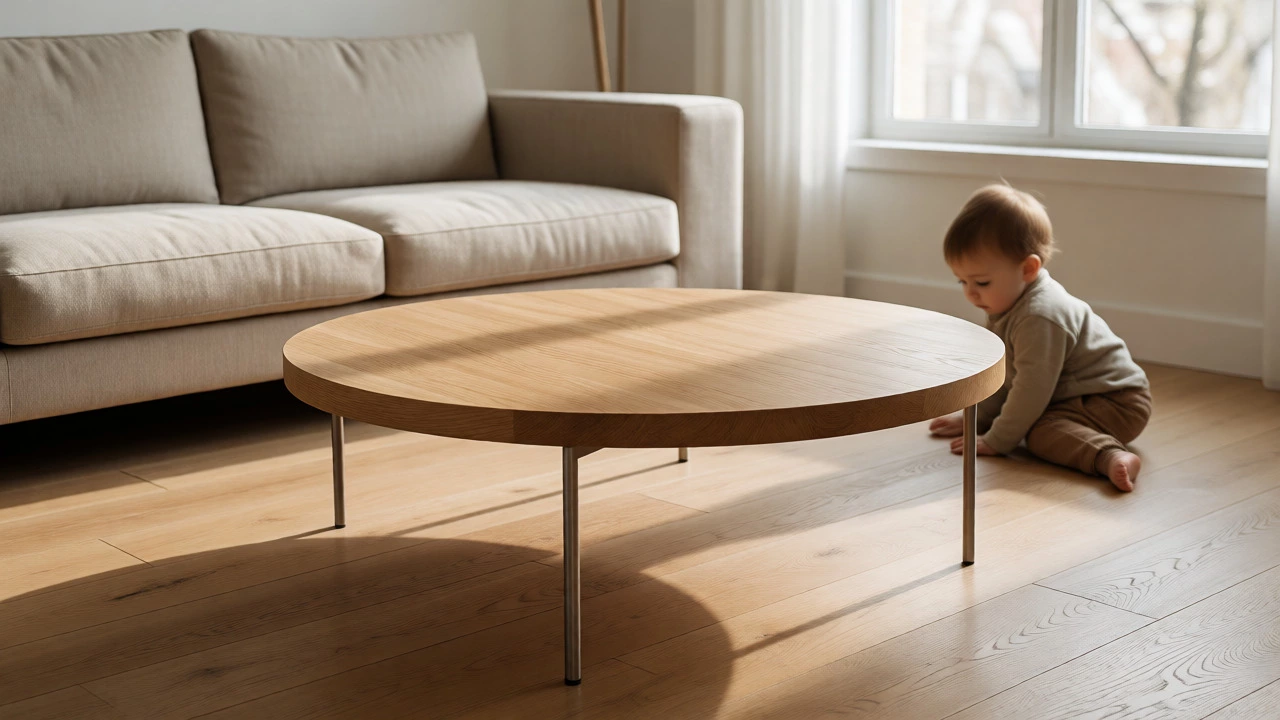
If your living room feels tight or if you have small children running around, a round table is often the safer bet. Why? Because circles don’t have corners. In high-traffic areas, sharp edges are hazards. You’ve probably bumped your shin against a wooden corner at least once this year. A round coffee table eliminates that risk entirely.
Beyond safety, round tables improve spatial perception. Curves soften the rigid lines of modern architecture. Most rooms are built as boxes-square floors, rectangular walls, straight ceilings. Adding a circular element introduces visual relief. It makes the room feel more organic and less like a grid. If your sofa has boxy arms or your TV stand is ultra-modern and linear, a round table balances the composition.
There’s also the "flow" factor. When you walk around a square table, you navigate right angles. You slow down, adjust your path, and sometimes clip a corner. With a round table, you glide past it. This subtle difference matters in open-plan homes where the living area connects directly to the kitchen or dining zone. People naturally move in arcs, not zig-zags. Matching your furniture to human movement patterns reduces friction in daily life.
Why Square Coffee Tables Win on Utility
Square tables aren’t just outdated relics; they’re efficiency machines. If you need maximum usable surface area within a specific footprint, go square. Geometry dictates that a square encloses more area than a circle of the same diameter. For example, a 40-inch square table offers 1,600 square inches of surface. A 40-inch round table offers roughly 1,256 square inches. That’s nearly 35% more space for your books, remotes, and snacks.
Alignment is another strong suit. Most sofas, sectionals, and rugs are rectangular. Placing a square table parallel to these elements creates clean sightlines. It looks intentional and organized. If you prefer a structured, minimalist look, square tables reinforce order. They fit snugly against the front of a sofa without awkward gaps, whereas round tables leave curved dead zones between the fabric and the wood or glass.
Consider storage too. Many square tables come with drawers or lower shelves that run flush with the frame. These compartments are easier to organize because they don’t taper toward the center. You can stack magazines neatly in a square drawer; try doing that in a round basket, and things slide around. If you’re clutter-prone, the geometric predictability of a square table helps keep chaos contained.
Matching Shape to Room Size and Layout
Size matters more than shape in small spaces. In a compact apartment, every inch counts. A large round table can dominate a small room, making it hard to place other furniture. Conversely, a small square table might get lost visually in a vast loft. Here’s how to decide based on dimensions:
- Small Rooms (under 12x12 feet): Choose a small round table or a nested set of square tables. Round shapes prevent visual blocking. If you choose square, ensure it’s slim-profile so it doesn’t consume width.
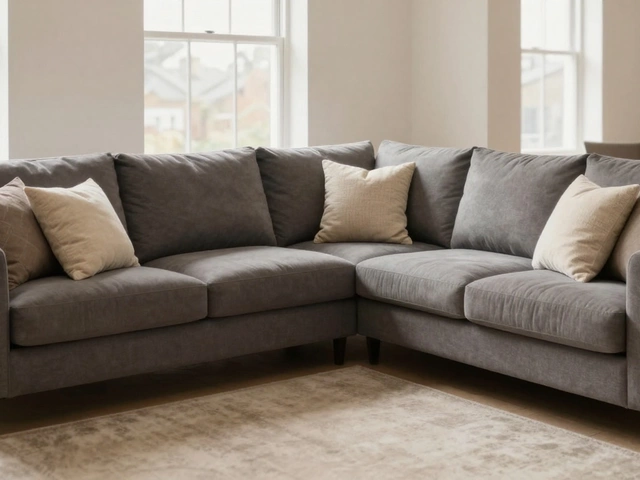
- Medium Rooms (12x15 to 15x18 feet): Both shapes work. Look at your seating arrangement. If you have an L-shaped sectional, a square or rectangular table fills the negative space better. If you have two facing sofas, a round table centers the conversation.
- Large/Open Plan Areas: Go big. A oversized square table anchors a huge sectional. A massive round table defines a separate lounge zone within a larger hall.
A common mistake is buying a table based on height alone, ignoring the footprint. Measure the distance from the front of your sofa to the nearest walking path. You need at least 18 inches of clearance for comfortable legroom. If your sofa sits close to a TV stand, a square table fits tighter into that gap. A round table requires more breathing room around its perimeter to avoid feeling crowded.
Lifestyle Factors: Kids, Pets, and Hosting
Your daily habits should dictate the purchase. Do you host dinner parties where drinks spill? Are you prone to tripping over legs? Let’s look at practical scenarios.
Families with Young Children: Round is king. Toddlers don’t watch where they’re going. A cornered table is a bruise waiting to happen. Additionally, round tables allow kids to sit anywhere around the perimeter without bumping knees into each other. There’s no "head" of the table, promoting equal access.
Pet Owners: If you have a dog that likes to chew furniture legs, consider material over shape. However, round tables often have fewer exposed corners for dogs to gnaw on. Cats, on the other hand, love flat surfaces. A square table provides stable landing spots for feline companions who want to supervise your news reading.
Entertainers: If you frequently serve food on the coffee table, square wins again. Plates stack better on flat, aligned surfaces. Serving trays fit neatly on square tops. With a round table, platters tend to slide off the curved edge unless you’re careful. If you’re hosting game nights, board games require flat, stable bases-another point for the square.
Visual Balance and Interior Style
Design is about contrast. If everything in your room is straight-lined, adding a curve creates interest. If your home is already full of arches, curves, and organic shapes, a square table adds necessary structure.
| Interior Style | Recommended Shape | Reasoning |
|---|---|---|
| Modern Minimalist | Square/Rectangular | Reinforces clean lines and symmetry. |
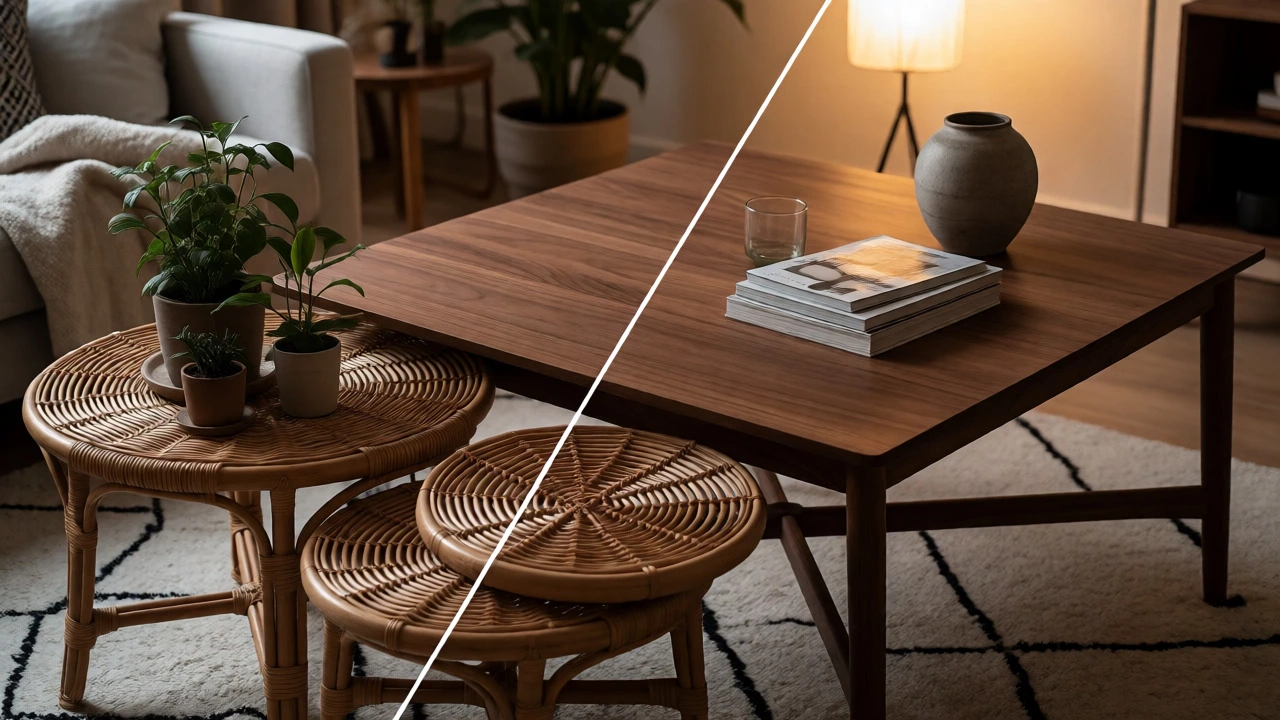
| Bohemian | Round/Organic | Adds softness to layered textiles and plants. |
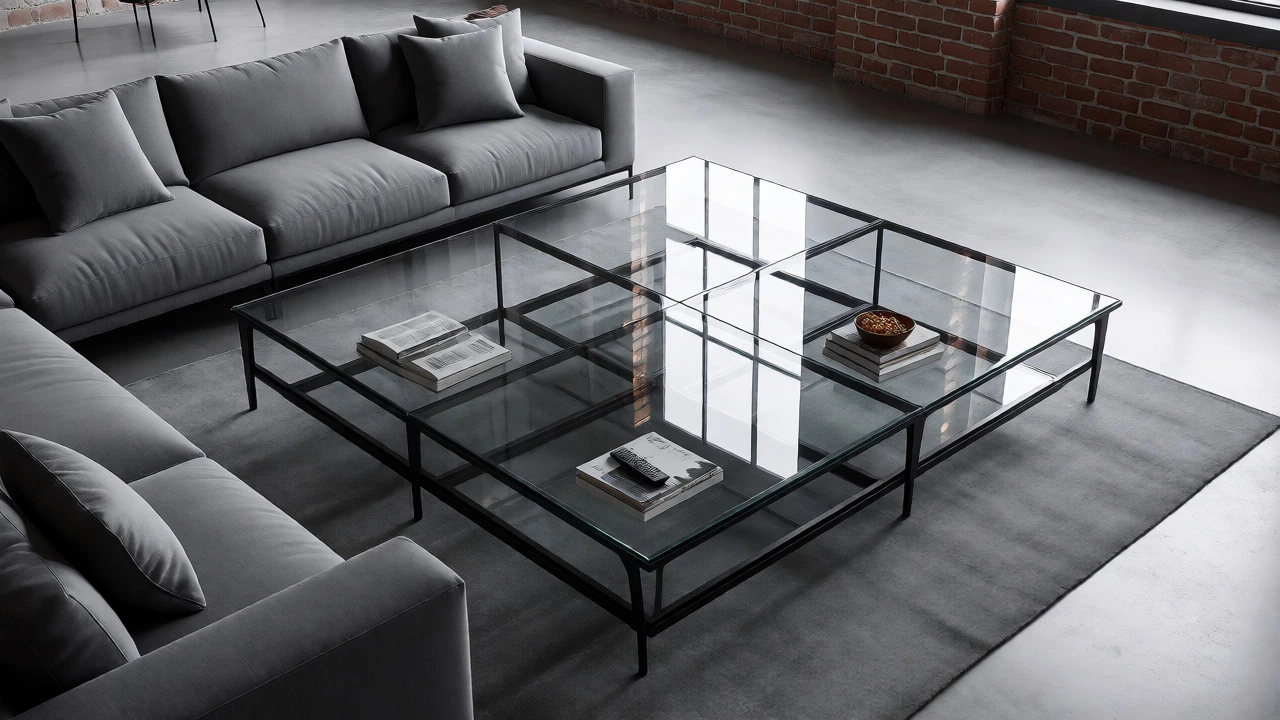
| Industrial | Square | Matches metal frames and brick structures. |
| Scandinavian | Round | Complements light woods and airy layouts. |
| Traditional | Both | Depends on existing moldings and fireplace shape. |
Notice how the recommendation shifts based on surrounding elements. Don’t buy a table in isolation. Look at your rug. Is it rectangular? A round table on a rectangular rug creates a dynamic tension that designers love. A square table on a rectangular rug looks safe but potentially boring. Experiment with mock-ups using cardboard cutouts before spending money.
Material Interactions with Shape
The material changes how the shape performs. Glass round tables appear lighter because they reflect light evenly around the curve. Wood round tables show grain continuity, which looks luxurious but expensive. Metal round tables can feel cold unless warmed up with accessories.
Square glass tables offer crisp reflections and highlight the floor underneath. Wooden square tables showcase joinery and craftsmanship. If you’re worried about scratches, round wooden tables hide wear better on the edges since there are no vulnerable corners. Square wooden tables, however, suffer most damage at the four points of contact with daily use.
Glass tops are slippery. On a round table, items slide toward the edge more easily due to the curvature. On a square table, items stay put longer until they hit the stop of the rim. If you plan to display heavy vases or stacks of books, stability favors the square geometry slightly.
Making the Final Decision
Stop agonizing over trends. Trends change; your living room stays the same for years. Ask yourself three questions:
- Do I need more surface area? Yes → Square.
- Do I have sharp corners causing injuries or discomfort? Yes → Round.
- Is my room dominated by straight lines? Yes → Add a Round table for balance. No → Stick with Square for harmony.
Remember, you can always change accessories. A square table can hold round trays to soften its look. A round table can hold square books to add structure. But the base shape sets the tone for the entire room. Choose the one that solves your biggest pain point-whether that’s safety, storage, or style.
Does a round coffee table make a room look bigger?
Generally, yes. Round tables eliminate visual barriers created by corners, allowing eyes to travel smoothly across the room. They also take up less perceived bulk in tight quarters compared to a bulky square table of similar size.
Which is better for a sectional sofa?
Square or rectangular tables usually pair better with L-shaped sectionals because they fill the rectangular void created by the sofa's angle. However, if the sectional is U-shaped or very large, a round table can centralize the seating area and improve conversation flow.
Are round coffee tables harder to keep clean?
Not necessarily. They lack crevices where dust collects, which is an advantage. However, crumbs can roll off the curved edge more easily onto the floor. Square tables contain messes better within their boundaries.
Can I mix round and square tables?
Absolutely. Using a large square main table with smaller round side tables creates visual interest. Just ensure the heights are consistent (usually within 1-2 inches of the sofa seat) to maintain functionality.
What size should my coffee table be relative to my sofa?
Aim for the table to be about two-thirds the length of your sofa. Regardless of shape, leave 14-18 inches between the table and the sofa for comfortable legroom. This rule applies to both round and square options.