 3
Sep,2026
3
Sep,2026
Patio Cushion Weatherproof Checker
Find out if you need to bring your cushions in or if they can handle the elements.
Select your options and click Check Safety to see recommendations.
Here is the hard truth: unless you live in a desert or your patio is under a permanent, sealed roof, leaving patio cushions outside year-round is usually a bad idea. It’s not just about them getting wet; it’s about what happens to the foam inside and the fabric on the surface when they sit in dampness for days. I’ve seen plenty of beautiful sets ruined by mold that started as a tiny black spot nobody noticed until it was too late.
But here is the nuance most people miss: you don’t always have to run them inside every time a cloud looks suspicious. The decision depends entirely on three things: your local climate, the material quality, and how often you actually use the space. If you are in Melbourne like me, where the weather can change four times in an hour, the rules are stricter than if you were living in sunny Perth.
The Real Enemy Isn't Rain, It's Moisture Trapping
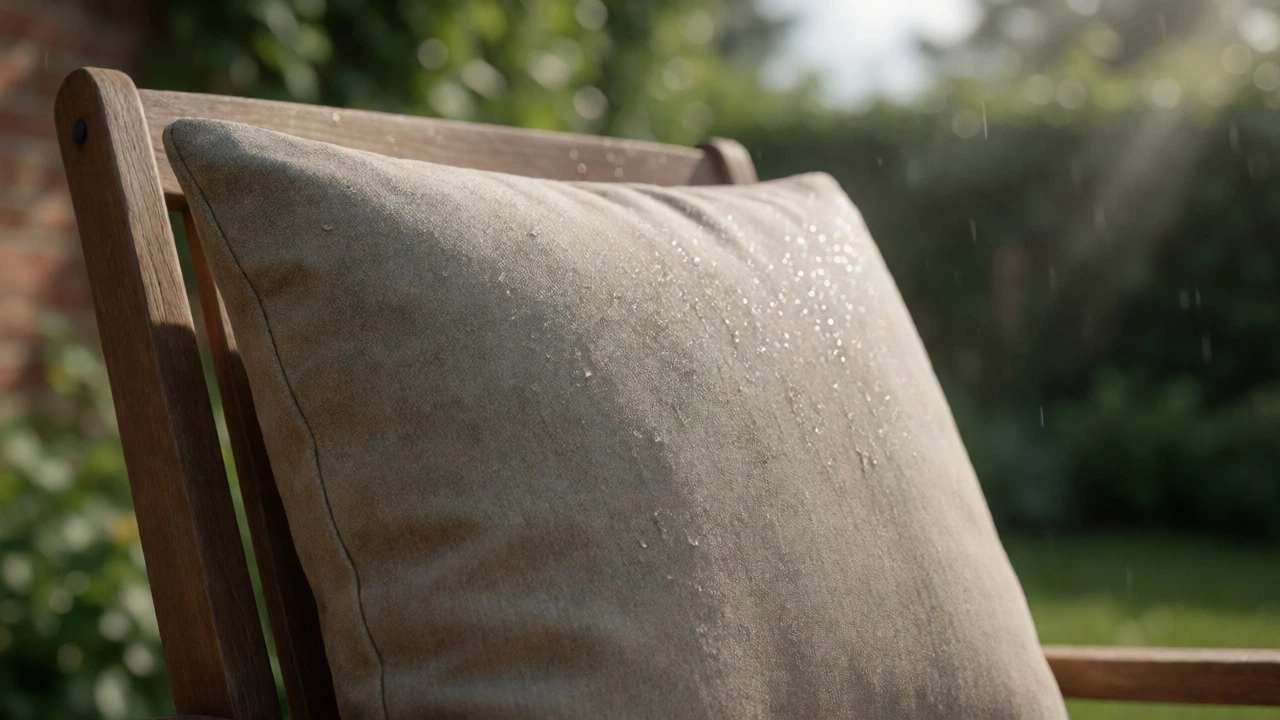
Think about what happens when rain hits a cushion. Water doesn’t just bounce off; it soaks into the fabric and gets trapped in the foam core. Most standard outdoor foams are open-cell, meaning they act like a sponge. They absorb water quickly but dry out incredibly slowly. If a cushion stays damp for more than 48 hours, you are creating the perfect breeding ground for mold and mildew.
Mold isn’t just ugly; it eats away at the fibers of the fabric and breaks down the foam structure from the inside out. Once that black spotting starts, you can’t really wash it out completely without damaging the waterproof coating. So, the question isn't "will it get wet?" Yes, it will. The question is "how long does it stay wet?"
Material Matters More Than You Think
Not all cushions are created equal. If you bought cheap foam pads from a big-box store, treat them like indoor furniture with a tan. They aren’t built to survive a week-long drizzle. However, if you invested in high-end marine-grade vinyl or solution-dyed acrylic fabrics, you have more leeway.
Let’s break down the common materials:
- Solution-Dyed Acrylic (e.g., Sunbrella): These are the gold standard. The color is part of the fiber, not printed on top, so they resist UV damage and mildew much better. You can leave these out during light rain showers, but heavy storms still warrant covering them.
- Vinyl or PVC: Totally waterproof on the surface, but terrible for breathability. Water pools on top and seeps into seams. If the backing isn’t mesh, condensation builds up underneath, rotting the wood frame below.
- Quick-Dry Foam: This is a game-changer. Unlike traditional foam, this has an open-cell structure that allows water to pass straight through rather than being absorbed. If you have quick-dry foam, you can often leave cushions out after rain because they dry in minutes, not days.
| Material Type | Water Resistance | Drying Time | Mold Risk | Best For |
|---|---|---|---|---|
| Standard Polyester | Low | Slow (24-48 hrs) | High | Sheltered patios |
| Solution-Dyed Acrylic | Medium-High | Moderate (12-24 hrs) | Low-Medium | All-season use |
| Vinyl/PVC | High (Surface) | Fast (Surface only) | Medium (Trapped moisture) | Poolside areas |
| Quick-Dry Foam Core | N/A (Core) | Very Fast (<1 hr) | Very Low | Rainy climates |
The Melbourne Factor: Why Location Changes Everything
If you live in a dry climate like Arizona or parts of inland Australia, you might get away with leaving cushions out for weeks. But in coastal or temperate zones like Melbourne, Sydney, or London, humidity is your constant companion. Even if it isn’t raining, the air is thick with moisture. Overnight dew settles on your furniture, and if there’s no breeze to evaporate it, your cushions wake up damp.
I learned this the hard way with my first set of teak chairs. I thought the timber was fine, but the cushions underneath developed a musty smell within two months. The issue wasn’t rain; it was lack of airflow. In humid environments, even "water-resistant" covers can trap sweat-like condensation against the fabric if they aren’t breathable.
When Is It Safe to Leave Them Out?
You don’t need to be paranoid. Here are the specific scenarios where leaving cushions outside is perfectly fine:
- Light Showers: If it’s a brief summer shower and the sun comes out immediately after, let them dry naturally. The heat helps kill bacteria before mold takes hold.
- Full Sun Exposure: Direct sunlight is a natural disinfectant. UV rays help inhibit mold growth. If your patio gets 6+ hours of direct sun, you’re safer than someone in a shaded courtyard.
- Quick-Dry Technology: As mentioned, if your cushions have quick-dry foam cores, they are designed to handle getting soaked. Just ensure they are placed upright or propped up so gravity helps drain the water.
- Winter Storage: Counter-intuitively, leaving them out in winter can sometimes be okay if the weather is cold and dry, provided you protect them from snow accumulation which adds weight and prolonged moisture.
How to Protect Your Investment Without Being a Slave to the Weather
If you hate dragging cushions inside every evening, you need a system. Relying solely on "weather-resistant" claims is risky. Here is a practical routine that saves money and stress.
Use Breathable Covers, Not Tarps
Never use plastic tarps to cover cushions. Plastic traps heat and moisture, turning your cushion into a sauna for mold spores. Instead, buy fitted covers made from breathable polyester or canvas. These allow air circulation while keeping rain off. Ensure the cover fits snugly so wind doesn’t blow it away, but loose enough to let vapor escape.
Elevate and Airflow
Moisture accumulates at the bottom of the cushion where it touches the chair seat. Use slatted wooden chairs or metal frames with gaps. This allows air to circulate underneath. If your furniture has solid seats, place small blocks or tennis balls under the corners of the cushions to create an air gap. It sounds silly, but it makes a massive difference in drying speed.
Regular Maintenance Routine
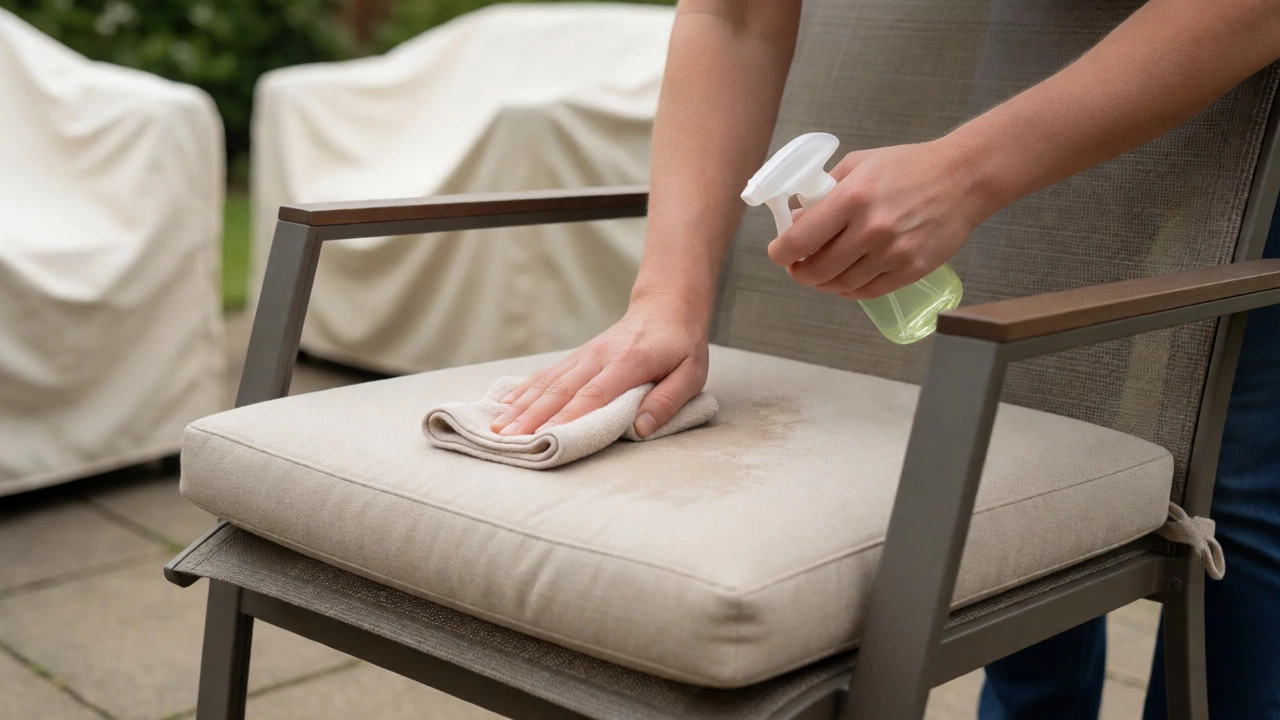
Don’t wait for the stain to appear. Every month, check your cushions for dark spots. Vacuum them with a brush attachment to remove pollen and dirt, which feed mold. If you see early signs of mildew, clean it immediately with a mixture of warm water and mild soap. Scrub gently with a soft brush. Do not use bleach unless the manufacturer specifies it, as it can strip protective coatings.

The Cost-Benefit Analysis: Store vs. Cover
Is it worth buying a storage box? Let’s look at the numbers. A decent outdoor storage box costs between $100 and $300. A replacement set of high-quality cushions can cost $500 to $1,500. If you skip storage and ruin one set every two years due to mold, you are spending more than the cost of the box.
However, if you have limited space, a large deck box doubles as seating. It keeps cushions dry, safe from pets, and ready for guests. In contrast, bringing cushions inside daily can be annoying, especially if you have a large sectional sofa. For those users, investing in premium quick-dry cushions and high-quality breathable covers is the smarter financial move than daily hauling.
Signs Your Cushions Are Already Compromised
How do you know if you’ve waited too long? Look for these red flags:
- Lumpiness: The foam has broken down unevenly due to repeated wetting and drying cycles.
- Musty Odor: A sour or earthy smell that doesn’t go away after airing out indicates deep-seated mold.
- Fabric Discoloration: Grey or black speckles that won’t scrub off mean the fibers are damaged.
- Frame Rust/Rot: Check the furniture beneath. If your wicker is splitting or metal is rusting, the trapped moisture from the cushions is likely the culprit.
If you spot these issues early, you might save the fabric with professional cleaning, but the foam usually needs replacing. At that point, ask yourself: is it cheaper to replace the foam inserts or buy new covers? Often, re-foaming is half the price of a new set.
Final Verdict: What Should You Do?
So, should you leave patio cushions outside? For most people in variable climates, the answer is "sometimes." Treat them like delicate instruments. During dry spells, leave them out to enjoy the sun. During rainy seasons or overnight dew-heavy periods, cover them. If you want true peace of mind, upgrade to quick-dry foam and breathable covers. It’s an upfront cost that pays off in longevity.
Remember, outdoor furniture is an investment in your lifestyle. Don’t let laziness or ignorance shorten its life. A little attention now saves hundreds of dollars later. And honestly, sitting on a dry, fresh-smelling cushion feels infinitely better than settling onto a damp, moldy one.
Can I wash outdoor cushions in a washing machine?
It depends on the fabric. Removable covers labeled "machine washable" can usually be washed on a gentle cycle with cold water. However, never put the foam core in the washing machine. It acts like a sponge, absorbs too much water, and can tear apart during the spin cycle. Always air dry covers flat to maintain their shape.
Does rain ruin outdoor furniture?
Rain itself rarely ruins high-quality outdoor furniture instantly, but prolonged exposure without drying causes damage. Water leads to rust on metal, rot in untreated wood, and mold in textiles. Regular maintenance and proper drainage are key to preventing long-term damage.
How do I stop my patio cushions from molding?
The best prevention is airflow. Store cushions vertically when not in use to allow air circulation. Clean them regularly to remove organic matter like pollen and bird droppings that feed mold. Use breathable covers instead of plastic, and bring them inside during extended periods of rain or high humidity.
Are Sunbrella cushions truly waterproof?
Sunbrella and similar solution-dyed acrylic fabrics are water-resistant, not fully waterproof. They repel water well and dry quickly, but they will eventually soak through if left in heavy rain for too long. They are highly resistant to fading and mildew, making them superior to standard polyester, but they still benefit from protection during storms.
What is the best way to store patio cushions in winter?
Clean and dry the cushions thoroughly before storing. Place them in a cool, dry area such as a garage, shed, or basement. Avoid attics if they get very hot, as extreme temperatures can degrade foam. If using an outdoor storage box, ensure it has ventilation holes to prevent condensation buildup.