 17
Sep,2026
17
Sep,2026
Living Room Furniture Matcher
Stop buying matching sets! Use this tool to see if your current or planned furniture mix creates visual interest or accidental chaos.
1. Define Your Pieces
2. Check Harmony Factors
Ready to Analyze
Select your furniture types and harmony factors above, then click "Analyze My Mix" to get expert advice.
You walk into a showroom or scroll through Instagram, and you see it: the perfect set. The TV stand is identical to the coffee table, right down to the wood grain and leg shape. It looks safe. It looks coordinated. But does it look interesting? Probably not.
Here is the truth that most furniture salespeople won't tell you: your TV stand does not have to match your coffee table. In fact, forcing them to match often makes a living room feel like a hotel lobby from 1995. You are allowed to mix metals, woods, and styles. You just need a strategy so it doesn't look like a garage sale exploded in your lounge.
The Myth of the Matching Set
For decades, furniture was sold in suites. You bought the sofa, the armchairs, the coffee table, and the TV unit all from one collection. This made shopping easy. It removed the risk of buying something that clashed. But it also killed personality.
When every piece matches perfectly, the eye slides over the room without stopping. There is no tension, no contrast, and no focal point. Modern interior design thrives on layering. Think of your living room as an outfit. You wouldn't wear a suit where the jacket, trousers, shirt, and shoes are all the exact same shade of navy with the same texture. You'd mix textures and tones. Your furniture should do the same.
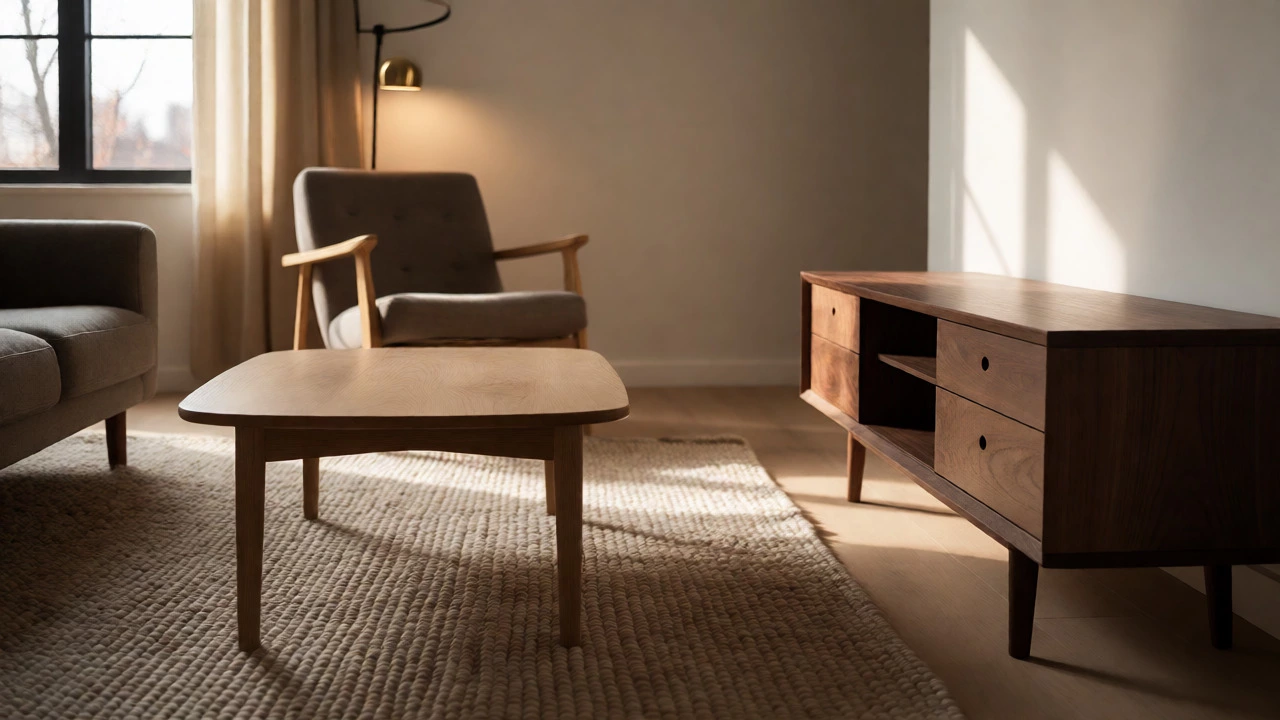
Mixing your media console and central table allows you to create depth. A dark walnut TV stand against a lighter oak coffee table creates visual separation. A metal-framed table next to a wooden cabinet adds industrial chic vibes. The goal isn't chaos; it's curated contrast.
How to Mix Woods Without Making a Mistake
The biggest fear people have when mixing furniture is clashing wood tones. "I have a cherry TV stand, can I use a pine coffee table?" Yes, but you need rules. If you ignore these, you might end up with a muddy, dated look.
Rule 1: Vary the Undertones. Wood has undertones-warm (red, orange, yellow) or cool (gray, brown, green). Mixing warm woods with other warm woods usually works well. Mixing a very red mahogany with a very gray ash can look jarring unless you bridge them with a third element. Aim for at least two distinct wood tones if you want a layered look, but keep the undertones harmonious.
Rule 2: Add Space Between Them. If your TV stand and coffee table are right next to each other, any slight mismatch in stain color will look like a mistake. Give them breathing room. Place a rug between them or separate them with seating. Distance helps the eye perceive them as intentional choices rather than accidental mismatches.
Rule 3: Use a Unifying Element. If you have a light oak coffee table and a dark walnut TV stand, bring in a third object that ties them together. Maybe it's a leather sofa in a mid-tone brown, or a brass lamp base that appears near both pieces. This shared accent tells the brain, "These different things belong together."
Beyond Wood: Mixing Materials and Styles
Matching sets limit you to one material family. Breaking free lets you play with glass, metal, stone, and rattan. This is where your living room gets its character.
Consider the weight of the materials. A heavy, solid oak entertainment center feels grounded. Pairing it with a delicate glass-top coffee table prevents the room from feeling too bulky. The transparency of the glass keeps the space open while the wood provides stability. This balance of "heavy" and "light" is crucial for small rooms.
Style mixing is another powerful tool. A modern, minimalist TV stand with clean lines pairs beautifully with a vintage, rustic coffee table. The contrast highlights the best features of both. The sleekness of the modern piece makes the rustic table feel cozy, not cluttered. Conversely, the warmth of the vintage piece softens the coldness of the modern media unit.
| TV Stand Material | Best Coffee Table Partner | Why It Works |
|---|---|---|
| Dark Walnut / Mahogany | Light Oak / Ash | High contrast creates visual interest without clashing. |
| White Lacquer / Painted | Natural Wood / Rattan | Adds warmth to sterile white surfaces; organic texture. |
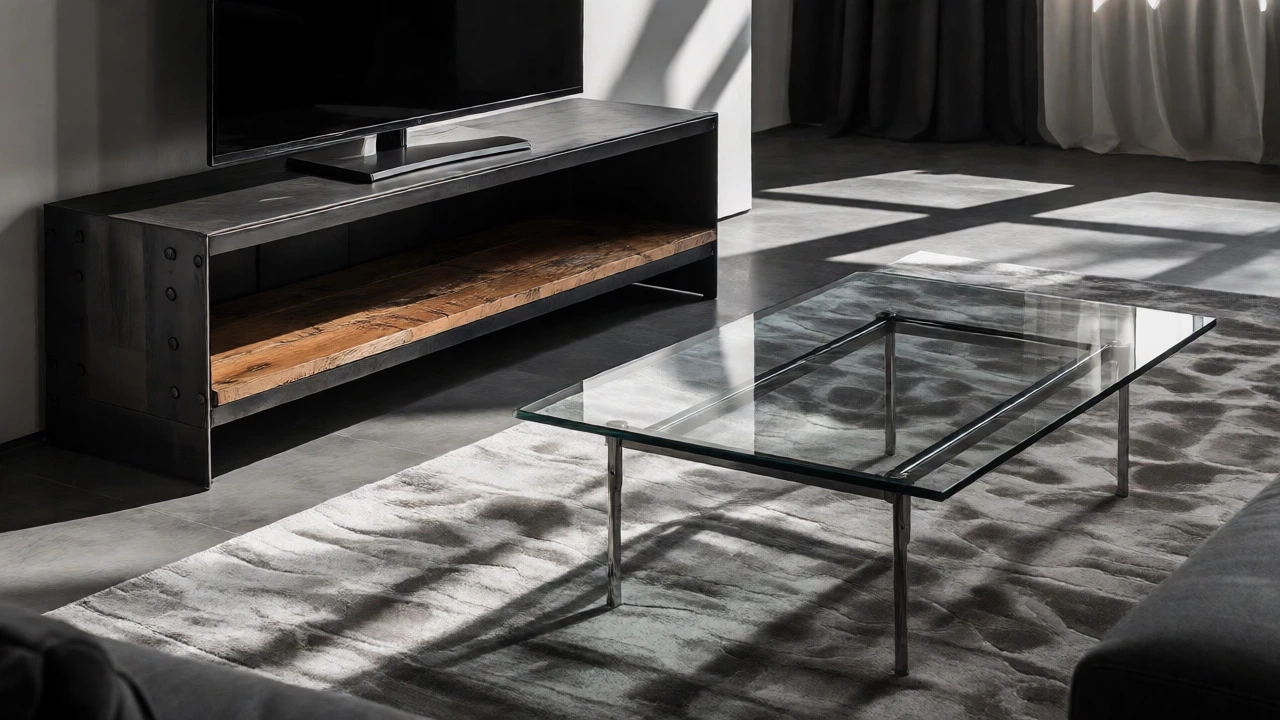
| Black Metal / Industrial | Glass / Marble | Softens hard edges; reflects light in dark spaces. |
| Mid-Century Teak | Modern Chrome / Acrylic | Blends retro charm with contemporary sleekness. |
The Role of Scale and Proportion
Even if your styles clash intentionally, bad proportions will ruin the vibe. A massive, chunky TV stand dwarfing a tiny, dainty coffee table looks unbalanced. The coffee table will seem insignificant, lost in the shadow of the media unit.
Measure before you buy. The general rule of thumb is that your coffee table should be roughly half the length of your sofa. But how does it relate to the TV stand? Ideally, the height of the coffee table should be within 1-2 inches of the seat cushion height of your sofa. The TV stand height depends on your screen size, but visually, they should feel like peers, not parent and child.
If your TV stand is tall and narrow, choose a wider, lower coffee table to ground the arrangement. If your TV stand is low and wide (like a floating shelf), a taller, narrower coffee table can add vertical interest. Balance the visual weight across the room.
Color Coordination Strategies
You don't need matching colors, but you do need a cohesive palette. Here are three simple ways to coordinate your living room furniture without buying a set:
- The 60-30-10 Rule: 60% of the room is your dominant color (walls, large sofa). 30% is secondary (TV stand, curtains). 10% is accent (coffee table, cushions). Your coffee table can be the 10% pop of color that contrasts with the 30% TV stand.
- Monochromatic Textures: Keep everything in shades of gray, but change the materials. A charcoal wool rug, a slate gray stone coffee table, and a matte black metal TV stand. Same color family, totally different vibes.
- The Bridge Color: Pick one color that appears in both pieces. Maybe the TV stand has brass handles, and the coffee table has brass legs. Or the TV stand is blue, and the coffee table has blue books stacked on it. That single link connects them mentally.
Practical Scenarios: What Works Where
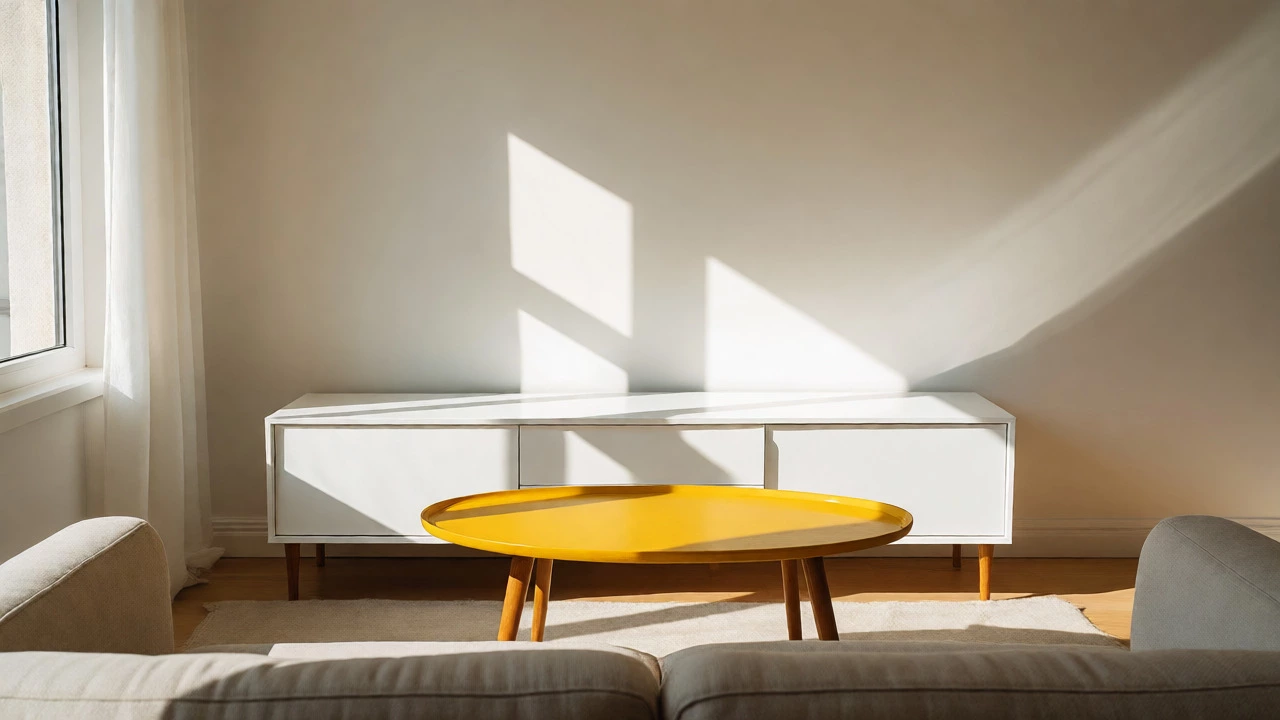
Let's look at real-world examples. Imagine you live in a Melbourne apartment with limited space. You have a white IKEA Besta unit as your TV stand. It’s functional but boring. You buy a reclaimed timber coffee table with thick legs. Suddenly, the room feels warmer and more lived-in. The white unit recedes visually, making the room feel bigger, while the wood table anchors the seating area.
Now consider a suburban home with high ceilings. You have a large, dark grey sectional sofa. You pair a black steel-frame TV console with a marble-top coffee table. The black console blends with the shadows and tech equipment, while the marble table catches the light and adds luxury. No matching required, just smart placement.
What about rental properties? If you can't paint walls, use your furniture to define zones. A bright yellow coffee table in front of a neutral beige TV stand can zone off the conversation area. It draws the eye inward, away from the blank walls.
Common Pitfalls to Avoid
While breaking the rules is great, there are wrong ways to do it.
Avoid Random Mismatches: Don't just buy whatever looks good in isolation. A Victorian-style ornate coffee table next to a ultra-modern, boxy TV stand can look ridiculous if there's no connecting thread. Ensure there is at least one commonality-style era, color, or material.
Ignore Lighting: Dark wood looks different under warm incandescent bulbs versus cool LED strips. Test your pairing in your actual room lighting. A TV stand that looks black might actually be deep brown, which could clash with a reddish-brown coffee table under certain lights.
Forget Function: A stunning glass coffee table is useless if you have kids who spill juice everywhere. A beautiful antique chest as a TV stand is great until you realize it has no ventilation for your gaming console. Practicality always trumps aesthetics.
Frequently Asked Questions
Is it okay to have different wood finishes in the same room?
Yes, absolutely. In fact, varying wood finishes is recommended for a layered, designer look. Just ensure the undertones (warm or cool) complement each other, and use other elements like rugs or artwork to tie the room together.
Should my coffee table match my side tables?
Not necessarily. Side tables are often smaller and less visible. You can match the coffee table to the TV stand, or vice versa, but side tables offer a great opportunity to introduce a third style or material. For example, use metal side tables with wooden larger pieces.
How do I make mismatched furniture look intentional?
Use repetition. Repeat a specific color, metal finish, or texture throughout the room. If your TV stand has gold accents, put gold frames on the wall and a gold vase on the coffee table. This visual rhythm convinces the eye that the differences are deliberate.
Does the TV stand need to be the same height as the coffee table?
No. TV stands vary greatly depending on screen size and storage needs. Coffee tables are typically lower (around 40-45cm) to align with sofa seats. As long as the proportions feel balanced relative to the sofa and rug, the heights don't need to match.
Can I mix modern and traditional furniture?
Yes, this is called eclectic or transitional design. The key is balance. Don't go 50/50. Choose one style as the dominant theme (e.g., mostly modern) and use the other (traditional) as accents. Too much of both creates visual noise.