 23
Jul,2026
23
Jul,2026
Small Wardrobe Finder
What are your requirements?
Recommended For You
Why this fits:
Enter your details to find the perfect storage solution.
You’ve probably stood in a cramped bedroom or a narrow hallway, staring at a pile of clothes with nowhere to put them. You need storage, but a full-sized wardrobe feels like overkill. It blocks the light, eats up floor space, and makes the room feel claustrophobic. So, what do you call that smaller, more manageable piece of furniture? The answer isn’t just one word. It depends on the shape, the function, and sometimes even where it came from historically.
Getting the name right matters. If you’re searching online for "small wardrobe," you might miss out on better options labeled as "hall trees" or "compact armoires." Understanding these terms helps you find exactly what fits your space without wasting time clicking through irrelevant results. Let’s break down the specific names for small wardrobes so you can pick the right one for your home.
The Armoire: A Compact Classic
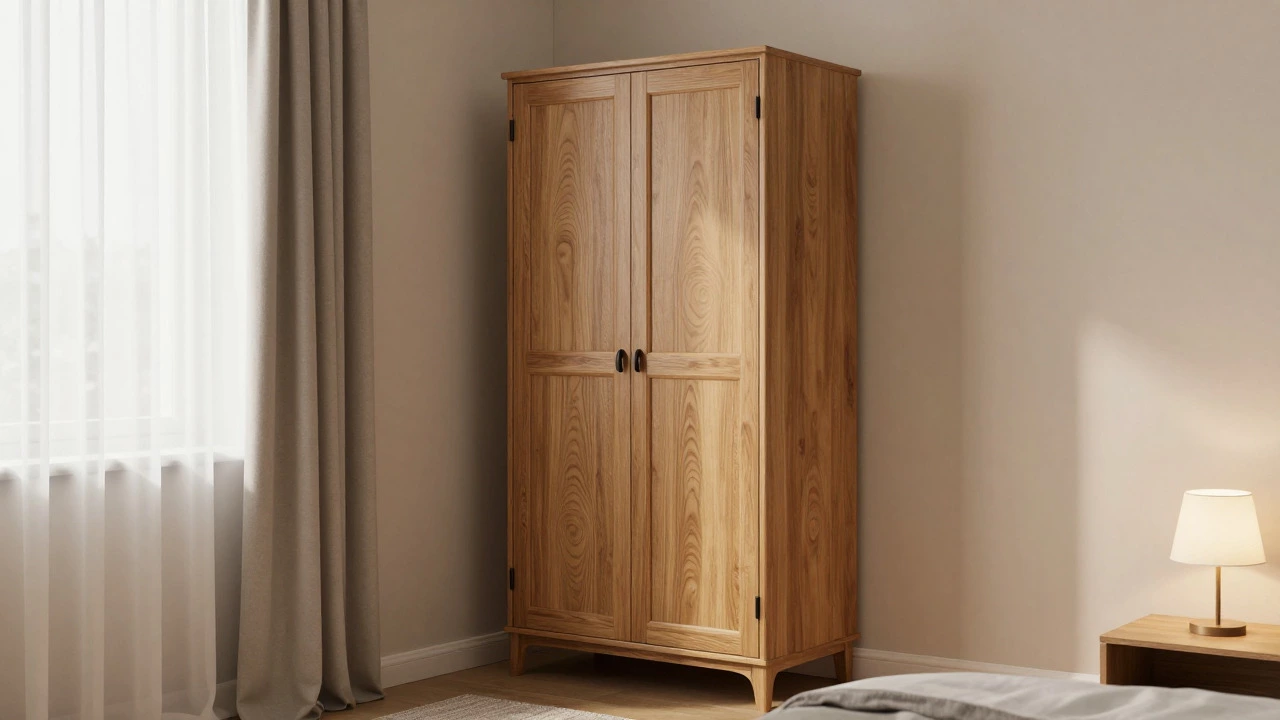
When people think of a traditional, freestanding wardrobe, they often picture an Armoire is a large, ornate wooden cabinet used for storing clothes, originally designed to protect garments from moths and dust. While the word "armoire" usually brings to mind massive, antique pieces, modern versions come in much smaller sizes. A small armoire typically stands about 5 to 6 feet tall and is significantly narrower than a standard built-in closet.
The key difference between a generic small wardrobe and an armoire is the style. Armoires tend to have decorative doors, often with panels or molding, giving them a furniture-like appearance rather than looking like a utility box. In Australia, where space in inner-city apartments can be tight, a slimline armoire is a popular choice because it offers hanging space without dominating the room. Look for models with bi-fold doors if you have limited wall clearance, as they don’t require the swing radius of hinged doors.
Chests of Drawers vs. Wardrobes
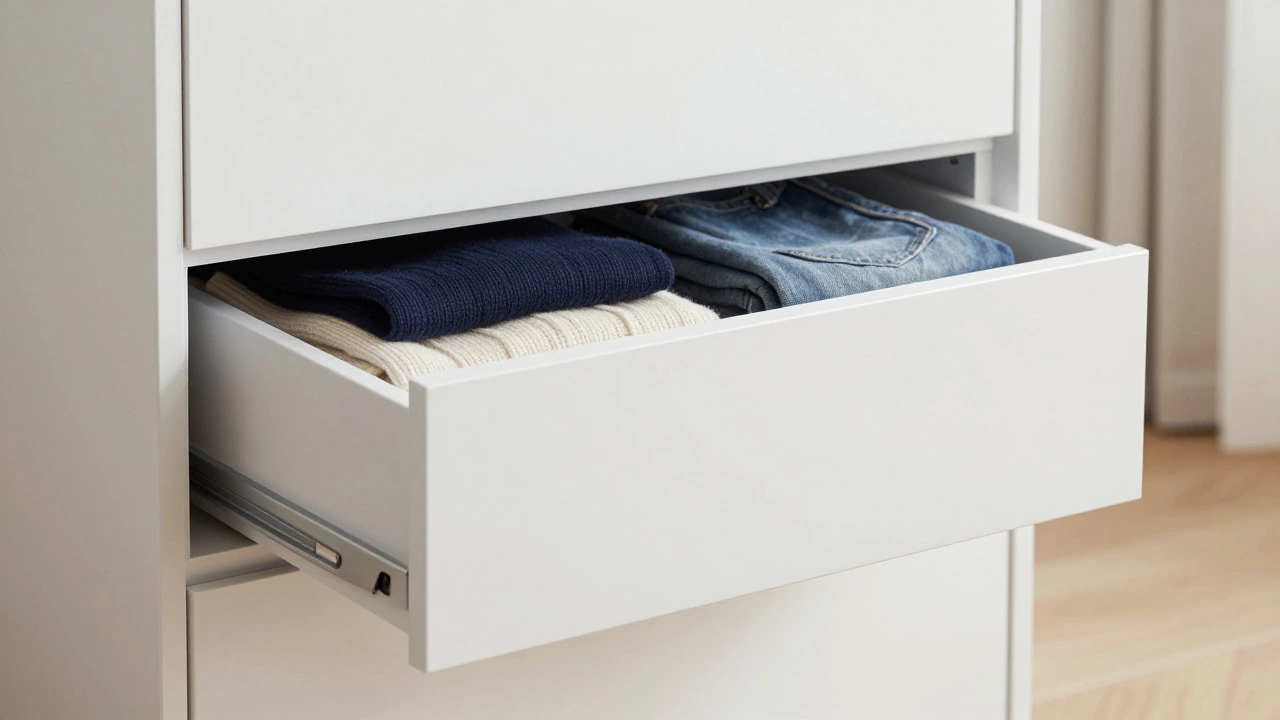
If your primary need is storing folded clothes rather than hanging shirts and dresses, you might not actually need a wardrobe at all. A Chest of drawers is a piece of furniture consisting of a stack of drawers used for storing clothing and other items. This is often the best alternative to a small wardrobe when floor space is premium real estate.
Why consider this switch? Hanging rods take up vertical volume inside a cabinet. By using drawers, you utilize that internal space more efficiently for sweaters, jeans, and linens. A tall chest of drawers (often called a longboy) can hold nearly as many items as a small wardrobe but has a smaller footprint. If you are trying to decide between the two, ask yourself how many items you wear on hangers daily. If it’s less than ten, skip the wardrobe and go for the drawers.
Hall Trees and Entryway Storage
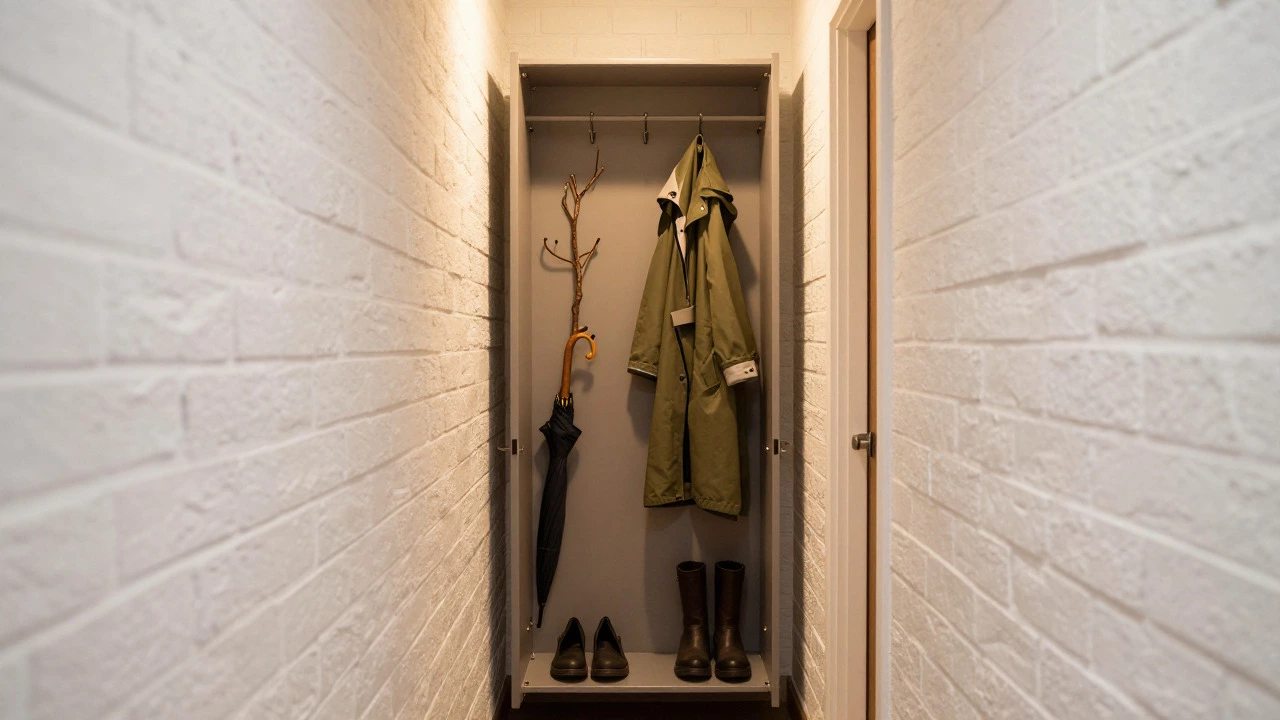
Have you ever seen a narrow unit by the front door with hooks and maybe a small shelf or drawer? That’s a Hall tree is a tall, narrow piece of furniture designed for storing coats, hats, umbrellas, and shoes near an entryway. While technically distinct from a bedroom wardrobe, hall trees serve the same core function: storing outerwear and accessories in a compact form factor.
In Melbourne homes, where we deal with four distinct seasons, a hall tree is essential. You need somewhere to stash winter coats and rain jackets without cluttering the living area. Modern hall trees often include closed compartments-essentially mini-wardrobes-to hide bulky items behind doors. If you are looking for a "small wardrobe" specifically for coats and bags, search for "hall tree with storage" instead. You’ll find units that are only 15 to 20 inches wide, perfect for tight hallways.
Compact Closets and Closet Organizers
Sometimes, the best "small wardrobe" isn’t a piece of furniture you buy, but a system you install. If you have a tiny alcove or a narrow nook, a Closet organizer is a modular system of shelves, rods, and baskets designed to maximize storage within existing closet spaces. can turn dead space into functional storage.
For renters who can’t drill holes everywhere, there are tension-pole organizers that fit between walls or inside existing closets. These systems allow you to create double-hanging rods, effectively doubling your capacity without adding any external furniture. This is a crucial distinction: if you already have a closet frame, you don’t need a wardrobe; you need organization. This approach keeps the visual clutter low while maximizing utility.
Comparison of Small Storage Solutions
| Furniture Type | Primary Use | Typical Width | Best For |
|---|---|---|---|
| Small Armoire | Hanging clothes | 30-40 inches | Bedrooms with moderate space |
| Chest of Drawers | Folded clothes | 20-30 inches | Tight spaces, knits & denim |
| Hall Tree | Coats & accessories | 15-25 inches | Entryways, narrow halls |
| Closet Organizer | Maximizing existing space | Variable | Renters, small closets |
Choosing the Right Size for Your Space
Before you buy, measure your room. Not just the width, but the depth and height. A common mistake is buying a wardrobe that is too deep, forcing you to walk around it awkwardly. Standard wardrobes are often 24 inches deep. For smaller rooms, look for "slimline" models that are 18 to 20 inches deep. They still accommodate most hangers but leave more breathing room in the room.
Also, consider the door mechanism. Hinged doors need about 90 degrees of clearance to open fully. Bi-fold or sliding doors are superior for tight spaces. If you place a small wardrobe against a wall where a door opens into the room, a sliding-door unit is non-negotiable. Check the manufacturer’s specifications for "clearance required" to avoid installation headaches later.
Material and Durability Considerations
Not all small wardrobes are created equal. Particleboard is cheap and lightweight, making it easy to move, but it can sag under heavy loads or swell if exposed to humidity. Solid wood or engineered wood with a high-pressure laminate finish is more durable. In humid climates, like parts of coastal Australia, moisture-resistant materials are a smart investment. Look for sealed edges on shelves and drawers to prevent warping over time.
If you rent, weight matters. A heavy solid wood armoire might scratch floors or be difficult to relocate. Lightweight metal-framed wardrobes with fabric covers are gaining popularity for their portability and affordability. They lack the heft of wood but offer a clean, modern look that blends into various interior styles.
Styling Tips for Small Wardrobes
A small wardrobe shouldn’t look like an afterthought. Integrate it into your room’s design. If you choose a white or light-colored unit, it will visually recede, making the room feel larger. Adding legs to the base of the wardrobe creates a sense of airiness, allowing light to pass underneath. Avoid dark, bulky designs if your room is already crowded. Mirrored doors on small armoires can also trick the eye into perceiving more space, though they reflect everything in the room, so keep the surrounding area tidy.
Frequently Asked Questions
What is the smallest type of wardrobe available?
The smallest dedicated wardrobe-style furniture is typically a narrow hall tree or a slimline armoire, which can be as narrow as 15 to 20 inches. These units focus on vertical storage to minimize their footprint on the floor.
Is an armoire the same as a wardrobe?
Functionally, yes, both store clothes. However, an armoire is generally a freestanding, often more decorative piece of furniture, whereas "wardrobe" is a broader term that can include built-ins. Historically, armoires were standalone cabinets, while wardrobes could refer to the collection of clothes itself or the structure holding them.
Can I use a chest of drawers instead of a small wardrobe?
Yes, especially if you prefer folding clothes. Chests of drawers often have a smaller footprint and can store more items in a given volume than a wardrobe with hanging rods. They are ideal for sweaters, jeans, and casual wear.
How deep should a small wardrobe be?
Standard depth is 24 inches. For small spaces, look for slimline models that are 18 to 20 inches deep. This is sufficient for most hangers while saving valuable floor space in tight rooms.
What is a good small wardrobe for a rental apartment?
Lightweight, portable options like fabric-covered metal wardrobes or flat-pack particleboard units are best for rentals. They are easy to assemble, disassemble, and move without damaging walls or floors. Ensure they have anti-tip kits for safety.
Do bi-fold doors save more space than sliding doors?
Bi-fold doors require minimal clearance outside the cabinet, similar to sliding doors. However, sliding doors can be easier to operate and seal better against dust. Both are superior to hinged doors in tight spaces where wall clearance is limited.