 2
Feb,2026
2
Feb,2026
Chigger Repellent Selector
Choose your situation
Chiggers don’t live in your garden furniture-but they sure can make it unusable. These tiny red mites, barely visible to the naked eye, crawl onto your skin when you sit on grassy patches near your deck or patio. They don’t burrow in, but they latch on, inject saliva, and cause intense itching that lasts for days. If you’ve ever had to cancel a weekend BBQ because your legs were covered in angry red bumps, you know how annoying they are. The good news? You don’t need harsh chemicals to keep them away. Chiggers hate certain smells, and using them around your garden furniture can make your outdoor space much more enjoyable.
What Are Chiggers, Really?
Chiggers are the larval stage of harvest mites, not insects. They’re found in damp, grassy, and wooded areas-especially where vegetation is thick and the soil stays moist. In Melbourne, they’re common in late spring and early summer, right when people start using their garden furniture again after winter. They don’t bite. Instead, they use their mouthparts to pierce the skin and dissolve tissue, which they then suck up. That’s what causes the itchy welts.
Chiggers don’t live on humans or animals. They drop off after a few days, but the itching can last up to two weeks. They’re not dangerous, but they’re a serious nuisance. And they’re not attracted to your furniture itself-they’re attracted to the people sitting on it. So the goal isn’t to kill chiggers in your furniture. It’s to keep them from getting close to it in the first place.
Smells Chiggers Hate (And How to Use Them)
Chiggers rely on smell to find hosts. They’re drawn to carbon dioxide, body heat, and certain skin chemicals. But they avoid strong, aromatic plants and oils. Here are the top smells they hate-and how to use them around your garden furniture.
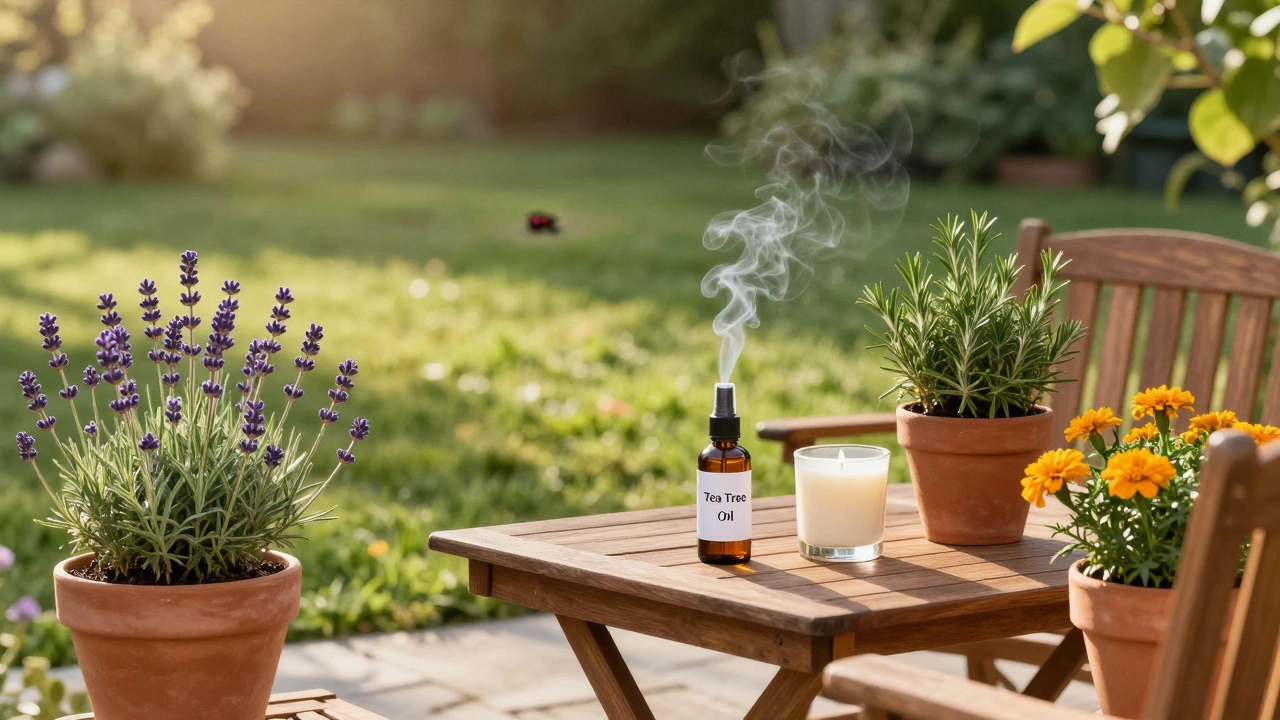
- Tea tree oil - A 2021 study from the University of Queensland found tea tree oil repelled chiggers by over 90% in field tests. Mix 10 drops with 100ml of water in a spray bottle. Spritz your patio stones, the legs of your chairs, and the ground within a 1-meter radius of your seating area. Reapply every 3 days, or after rain.
- Citronella - Used in candles and torches for mosquitoes, citronella works just as well on chiggers. Place citronella candles around your outdoor table. The smoke doesn’t need to be thick-just enough to create a light aromatic barrier. You can also buy citronella-infused garden stakes that slowly release the scent.
- Neem oil - This is a natural pesticide derived from the neem tree. It doesn’t kill chiggers on contact, but it disrupts their life cycle and repels them. Mix 2 tablespoons of neem oil with 1 liter of water and a teaspoon of dish soap. Spray the grass and soil near your furniture. Avoid spraying directly on fabric cushions-test a small area first.
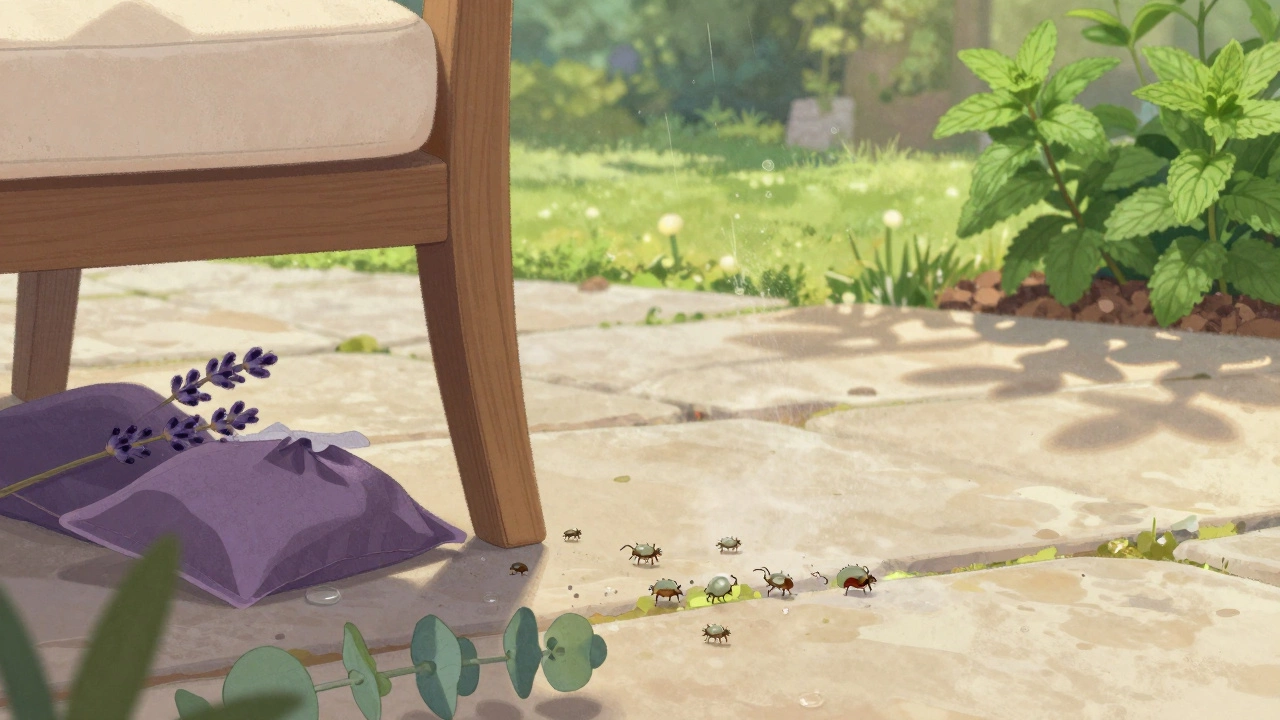
- Lavender - Lavender plants are beautiful, fragrant, and chigger-resistant. Plant them in pots around your patio or along the edges of your garden path. Dried lavender sachets tucked under your furniture cushions also help. The scent lingers for weeks.
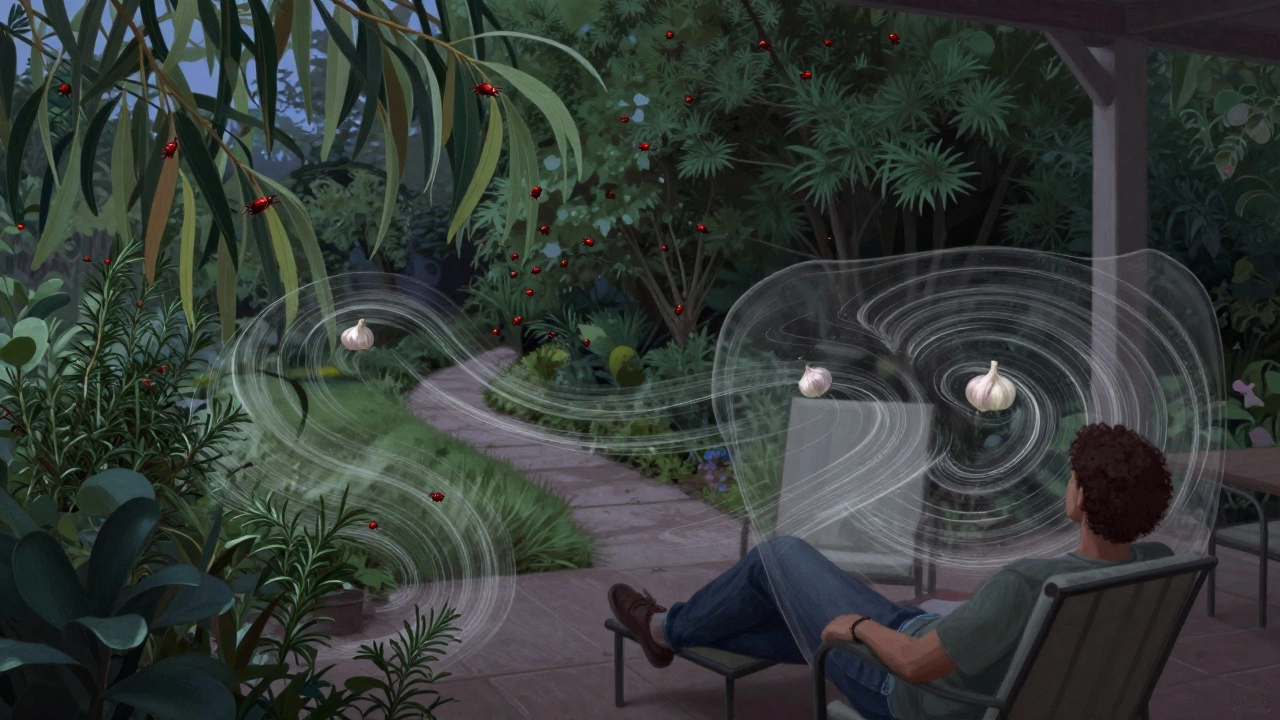
- Garlic - Yes, garlic. Crush a few cloves and steep them in boiling water overnight. Strain and pour the liquid into a spray bottle. Spray the perimeter of your seating area. The smell fades after a day or two, but it’s strong enough to confuse chiggers during their peak activity hours-early morning and late afternoon.
Don’t rely on just one. Combine two or three for better results. For example, plant lavender near your furniture and spray tea tree oil on the ground. The layered scent makes it harder for chiggers to find their way in.
What Doesn’t Work (And Why)
There are a lot of myths out there. Let’s clear them up.
- DEET-based sprays - They work on mosquitoes, but not reliably on chiggers. Plus, they’re harsh on fabric and can damage your garden furniture cushions.
- Essential oil diffusers - These are great indoors, but outdoors, the scent disperses too quickly. They’re useless for open-air spaces.
- Wearing socks over shoes - This is a trick for hikers in tall grass. It doesn’t help if you’re sitting on a chair with your legs bare.
- Apple cider vinegar - No scientific evidence supports this. It might smell weird to you, but chiggers don’t care.
Stick to proven methods. If something sounds like a home remedy from the 1990s, it probably doesn’t work. Stick to the oils and plants that have been tested.
How to Clean and Protect Your Garden Furniture
Even if you use repellents, chiggers can still hitch a ride on your clothes or pet fur. Here’s how to keep your furniture clean and chigger-free:
- Shake out cushions before using them. Chiggers can hide in the seams.
- Wipe down metal or wooden frames with a damp cloth after each use. Rinse with water mixed with a drop of tea tree oil.
- Store cushions indoors when not in use. Don’t leave them on the deck overnight.
- If you have a pet that lounges on your furniture, brush them outside before they come in. Chiggers can jump from pets to cushions.
- Wash outdoor cushions every two weeks in hot water with a teaspoon of neem oil added to the wash cycle.
These steps take less than 5 minutes but can cut your chigger exposure by 80%.
Landscaping Tips to Keep Chiggers Away
Your garden layout matters more than you think. Chiggers thrive in dense, humid spots. Trim back overgrown bushes near your patio. Keep grass cut short-under 3 inches. Remove leaf piles and rotting wood near your seating area. These are chigger breeding zones.
Plant chigger-repelling plants in a border around your garden furniture:
- Lavender
- Marigolds
- Rosemary
- Peppermint
- Eucalyptus
These plants don’t just smell good-they create a natural barrier. Place them in pots along the edges of your deck or between your chairs. You’ll reduce chigger presence without spraying anything.
What to Do If You Get Bitten
Even with all the precautions, you might still get bitten. Here’s what to do:
- Take a hot shower immediately. Use soap and scrub gently. This removes any chiggers still on your skin.
- Apply calamine lotion or hydrocortisone cream. Avoid scratching-it leads to infection.
- Wear loose clothing. Tight clothes rub against the bites and make them worse.
- Don’t use bleach, alcohol, or nail polish. These don’t help and can damage your skin.
Most bites heal in 7-10 days. If they get worse, swell, or ooze, see a doctor. But most of the time, it’s just an itch you can outwait.
Final Tip: Timing Is Everything
Chiggers are most active between 9 a.m. and 4 p.m., especially on warm, humid days. Avoid sitting on your garden furniture during those hours if your yard is near tall grass or bushes. Wait until late afternoon or evening. The cooler temperatures and lower light make it harder for chiggers to find you.
With the right smells, smart landscaping, and a little routine care, your garden furniture can be a peaceful escape-not a chigger trap. You don’t need to give up your summer evenings. You just need to outsmart the mites.