 30
Aug,2026
30
Aug,2026
Wardrobe & Closet Etymology Quiz
Think you know why we call it a "wardrobe"? Take this quick quiz to test your understanding of its medieval origins, linguistic roots, and modern usage.
Quiz Results
You probably open yours every morning. You toss clothes in, maybe hang a dress, and shut the door. But have you ever stopped to wonder why we call it a wardrobe? It doesn't look like a "guard" or a "robe," does it? Well, actually, it does. The name is a literal description of its original job: guarding your robes.
This isn't just trivia for a pub quiz. Understanding where the word comes from changes how you view these pieces of furniture. It shifts them from being mere storage boxes to historical artifacts that survived centuries of fashion and architectural change. If you've ever argued with a friend about whether it's a wardrobe or a closet, this story settles it once and for all.
The Literal Meaning Behind the Name
Let's break down the word itself. It’s a compound of two older English words: warderobe, which came from the Old French garderobe. Here, garder means "to keep" or "to guard," and robe refers to clothing or garments. So, quite simply, a wardrobe is a place to keep your clothes safe.
In the Middle Ages, this wasn't just about tidiness. Clothing was incredibly expensive. A single velvet doublet could cost as much as a small house today. Losing one to moths, damp, or theft was a financial disaster. Therefore, the piece of furniture needed to be secure. It had to guard the valuable textiles inside. Hence, the name stuck.
Before the term "wardrobe" became common in English around the late 15th century, people used different terms. They might have called it a "press" (from the French presse, meaning to press or store) or a "cupboard." But as clothing became more varied and valuable, the specific need to "guard robes" led to the specialized term we use now.
From Mobile Chests to Fixed Rooms
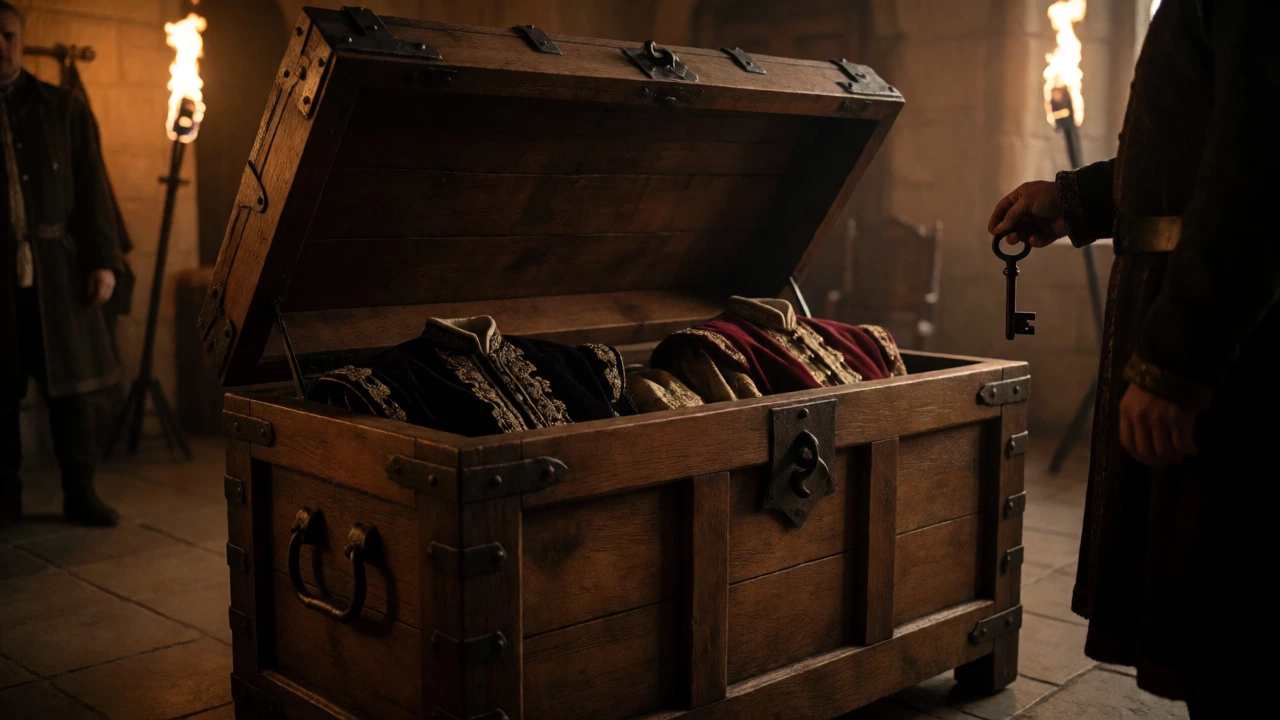
Here is the part most people miss: early wardrobes weren't built into walls. They were mobile. In medieval castles and manor houses, nobility moved frequently between estates. They couldn't leave their best clothes behind. So, they commissioned large, heavy chests on wheels or with sturdy handles. These were portable rooms for clothes.
These early versions were often made of oak. Oak is durable, smells good (which repels insects), and looks imposing. They were designed to be locked. The keyholder-often a trusted servant-was literally the "warden" of the clothes. This reinforces the "guarding" aspect of the etymology.
As architecture changed in the 17th and 18th centuries, homes became more permanent. People started building smaller, dedicated rooms for dressing. These rooms were also called wardrobes because they served the same function: storing and guarding clothes. Over time, the room shrank in size until it became a tall cabinet against the wall. The name followed the function, even as the form changed completely.
Wardrobe vs. Closet: Why the Confusion?
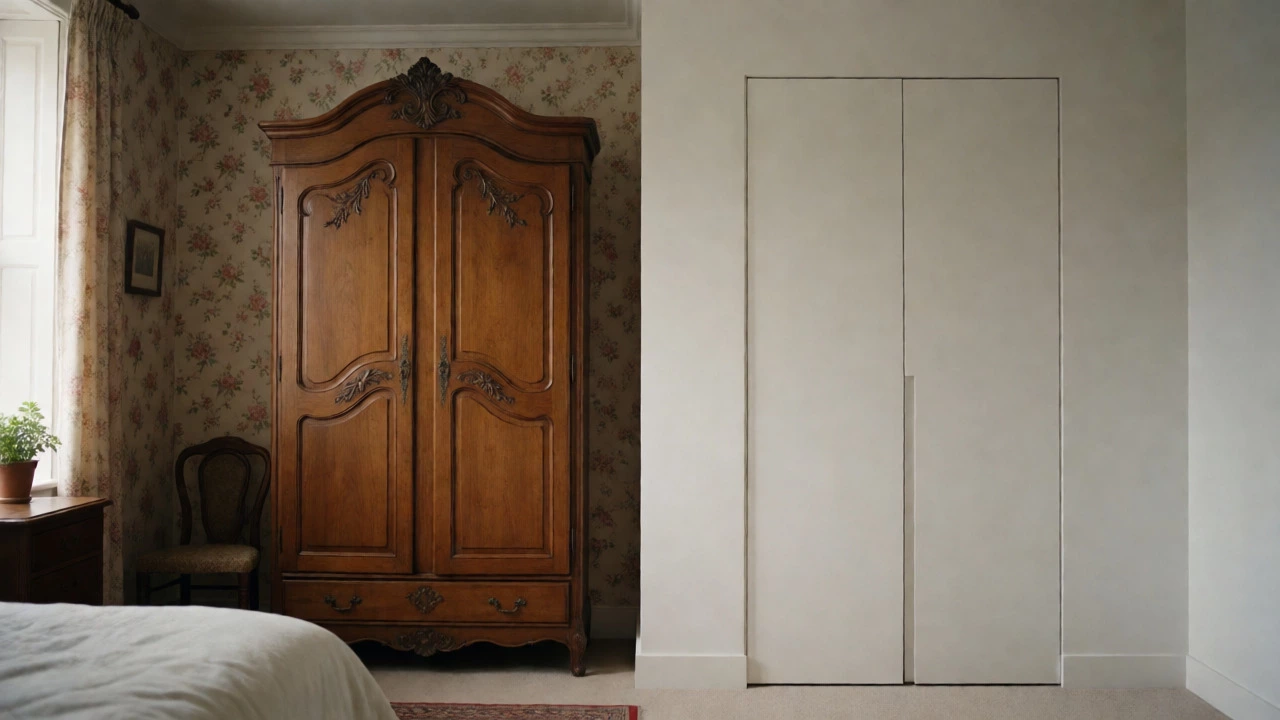
If you live in Australia or the UK, you say "wardrobe." If you live in the US, you likely say "closet." Why the split? It’s not just geography; it’s history.
The word "closet" comes from the Latin clausum, meaning "closed space." Originally, a closet was any small, private room used for study or prayer-not necessarily for clothes. Think of the "water closet" (an old term for a toilet). It was a closed space for water-related activities. Over time, in America, the term shifted to mean specifically a built-in storage space for clothes.
In Britain and its former colonies (like Australia), the term "wardrobe" remained dominant for freestanding cabinets. Americans preferred "closet" for built-ins and "wardrobe" only for large, ornate, freestanding antique pieces. This linguistic divide explains why an American might walk into an Australian home, see a freestanding wooden cabinet, and ask, "Where is the closet?" while the homeowner points at the "wardrobe" and thinks they’re crazy.
| Feature | Wardrobe | Closet |
|---|---|---|
| Etymological Root | Old French garderobe (guard + robe) | Latin clausum (closed space) |
| Original Function | Portable storage for valuable garments | Private room for study or prayer |
| Modern Form | Usually freestanding, movable furniture | Usually built-in, fixed to the structure |
| Primary Region | UK, Australia, New Zealand, parts of Europe | USA, Canada |
| Portability | High (can be moved during a move) | Low (part of the real estate) |
The Role of Fashion in Naming Furniture
Furniture names often reflect what people wore at the time. When men wore long coats and women wore voluminous gowns, you needed height. Tall wardrobes emerged in the Victorian era to accommodate floor-length skirts and top hats. The name didn't change, but the dimensions did.
Consider the Armoire. This is another type of wardrobe, specifically a large, decorative cupboard originating in France. While "wardrobe" implies utility and guarding, "armoire" implies display and status. Both serve the same purpose, but the naming reflects cultural attitudes toward clothing. One is practical storage; the other is a statement piece.
In the 20th century, fashion became more casual. Jeans and t-shirts don't need hanging space like ballgowns do. This led to the rise of shelves and drawers within wardrobes. Yet, we still call them wardrobes. Language has inertia. Once a term is established, it sticks even if the technology evolves. We still call it a "dial" when we push buttons on a phone. Similarly, we call it a "wardrobe" even if it holds nothing but socks and boxers.
How Modern Design Honors the History
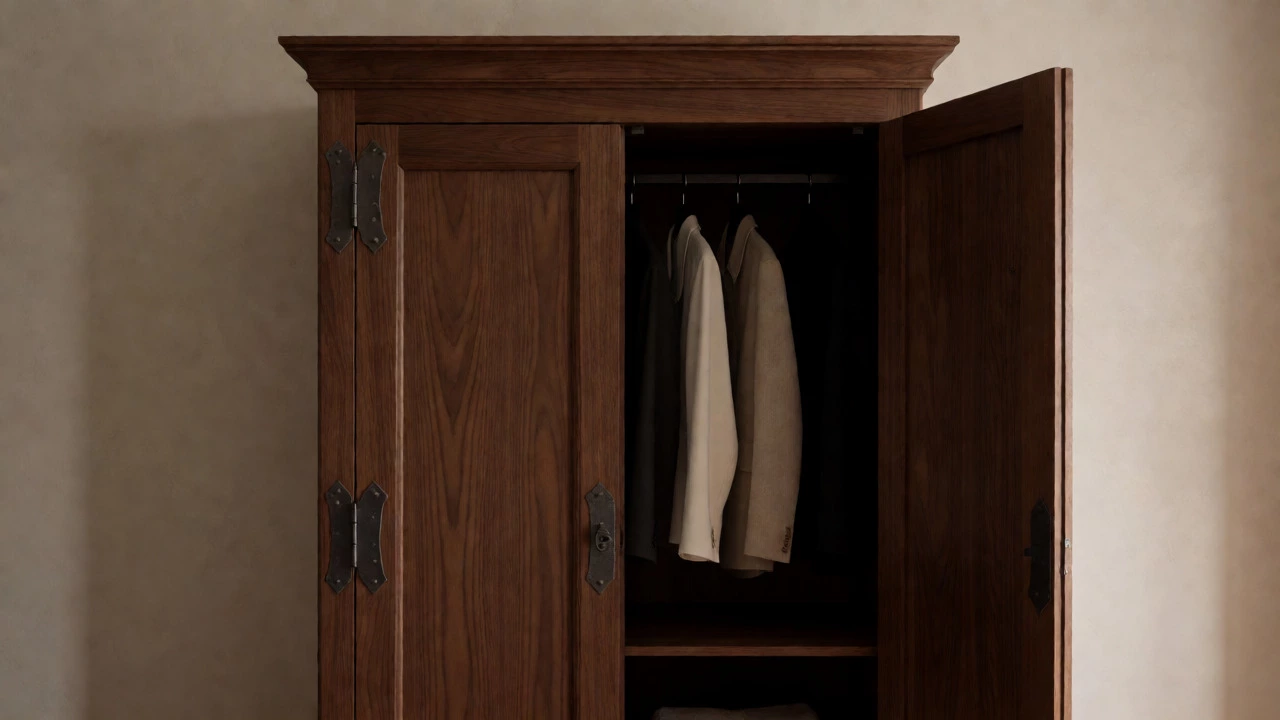
Today, interior designers often play with these historical roots. Walk into a high-end boutique in Melbourne or London, and you’ll see modern interpretations of the medieval chest. Heavy wood, iron hinges, and lock mechanisms are back in style. Why? Because they evoke that sense of security and value associated with the original "guarding" concept.
When you buy a quality wardrobe today, you aren't just buying wood and screws. You're buying into a tradition of protecting your personal assets. That’s why cheap particleboard wardrobes feel flimsy-they fail the "guard" test. They creak, wobble, and let dust in. A solid wood wardrobe feels substantial because it aligns with the etymological promise: it will protect your clothes for decades.
If you are looking to replace your current unit, consider the mechanism. Do you want sliding doors (modern, space-saving) or hinged doors (traditional, better seal)? Hinged doors offer a tighter closure, keeping out dust and pests better than many sliding tracks. This brings us full circle to the original intent: protection.
Common Misconceptions About Wardrobe Origins
Many people think "wardrobe" comes from "ward" (as in hospital ward) and "robe." It doesn't. There is no medical connection here. Another myth is that it relates to "wardens" who guarded castles. While related linguistically through the idea of guarding, the specific object is tied to clothing, not military defense.
Also, some believe that closets and wardrobes are the same thing everywhere. As we saw, the distinction is real and affects how homes are marketed. In the US, a "walk-in closet" adds significant property value. In Australia, a "built-in wardrobe" does the same. Knowing the terminology helps if you are moving internationally or reading foreign real estate listings.
Is there a difference between a wardrobe and an armoire?
Yes. An armoire is a specific type of wardrobe, typically larger, more ornate, and originally French. Armoires often feature intricate carvings and were used to store linens and clothes in bedrooms. A wardrobe is a broader term for any tall, enclosed storage unit for clothes, usually simpler in design.
Why do Americans say closet instead of wardrobe?
The term "closet" originated from the Latin word for "closed space," referring to private rooms. In the US, housing trends favored built-in storage spaces rather than freestanding furniture. Thus, "closet" became the standard term for built-ins, while "wardrobe" remained common in the UK and Commonwealth countries for freestanding units.
Did medieval people really move their wardrobes?
Yes, wealthy medieval families moved frequently between estates. Their wardrobes were essentially large, reinforced chests on wheels or with strong handles, designed to be transported by servants. This portability was essential for transporting valuable clothing and textiles safely.
What is the oldest known word for a clothes storage unit?
Before "wardrobe," terms like "press" (from the French presse) and "coffer" were common. A coffer was a strongbox for valuables, including clothes. The term "wardrobe" began appearing in English records in the late 1400s as clothing became more distinct from general household goods.
Does the material of a wardrobe affect its name?
No, the name remains the same regardless of material. However, historically, oak was preferred for its durability and insect-repelling scent. Today, materials range from MDF and particleboard to solid pine or walnut. The material affects quality and price, but not the etymological definition.