 2
Nov,2026
Senior Sleep Position & Recliner Angle Finder
Elevated Back (30-45°)
This angle uses gravity to keep stomach contents down while allowing muscle relaxation.
Slide below to visualize how different angles affect comfort and health outcomes based on your selection above.
Recliner Feature Checklist
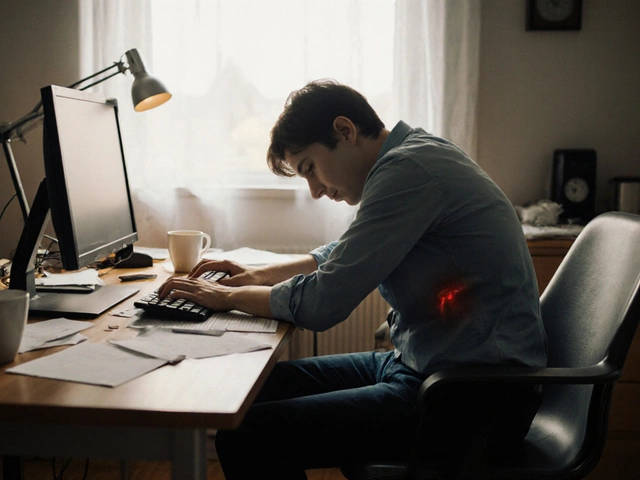
You wake up at 3 AM. Again. Not because of a noise, but because your back feels like it’s been twisted into a pretzel, or that burning sensation in your chest is back with a vengeance. If you’re over 60, you know this struggle. Traditional flat mattresses often fight against the natural changes our bodies go through as we age. Stiff joints, weaker muscles, and conditions like GERD (acid reflux) make lying perfectly horizontal uncomfortable, even painful.
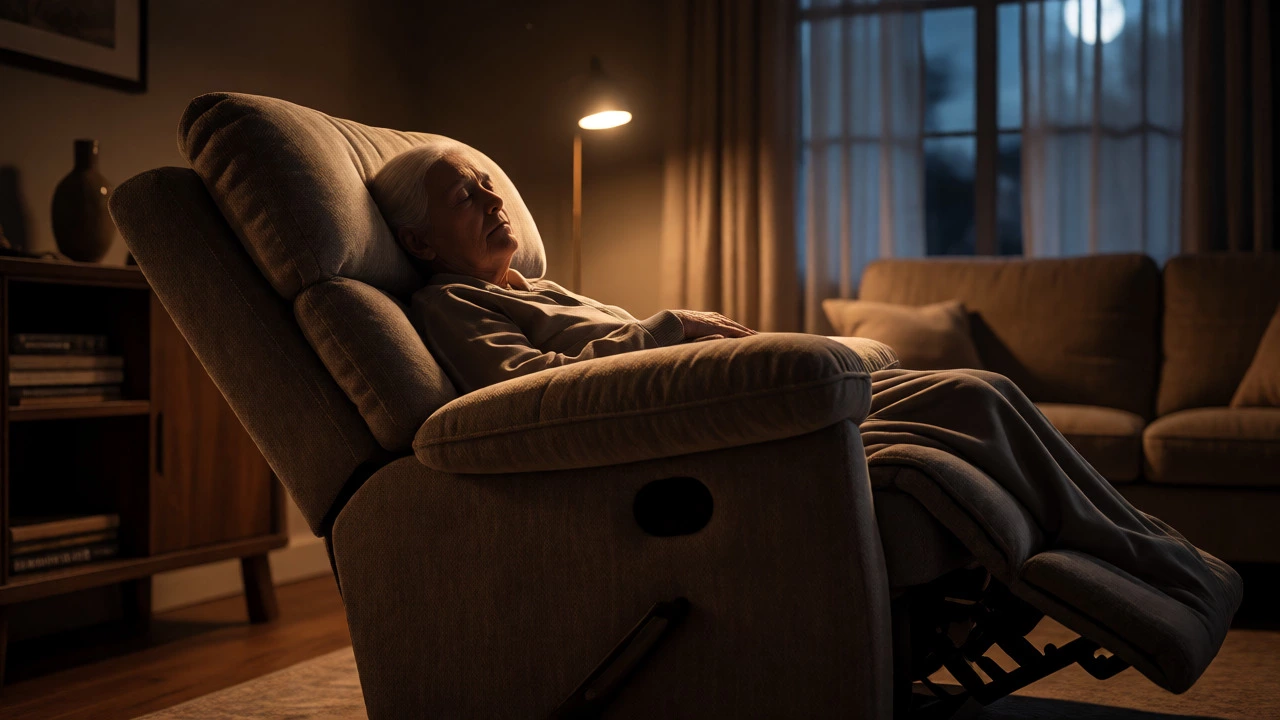
So, what’s the fix? Is it a new mattress? Extra pillows? Or is it time to consider something different? Many seniors are finding that their best night’s sleep isn’t on a bed at all, but in a high-quality recliner chair. But not just any position works for everyone. The right angle can mean the difference between tossing and turning and waking up refreshed.
| Position | Best For | Risk Factor | Recliner Suitability |
|---|---|---|---|
| Elevated Back (30-45°) | Acid Reflux, Snoring, Heart Failure | Neck strain if unsupported | Excellent |
| Side Sleeping (Semi-Reclined) | Shoulder Pain, Pregnancy (historical), Hip Comfort | Arm numbness | Good with side support |
| Back Sleeping (Flat) | Spinal Alignment (if healthy) | Worsens Apnea & Reflux | Poor (unless head elevated) |
Why Lying Flat Becomes Harder With Age
When you’re young, gravity doesn’t seem to matter much. You can sleep on your back, stomach, or side without thinking about it. As we hit our 60s and 70s, physiology shifts. Our esophageal sphincter-the muscle valve that keeps stomach acid where it belongs-weakens. When you lie flat, acid flows back up more easily, causing heartburn that jolts you awake. This is why elevating the upper body is often the first recommendation from doctors for GERD sufferers.
Then there’s breathing. Aging tissues lose elasticity, which can narrow airways. This makes snoring and obstructive sleep apnea more common. Lying flat allows the tongue and soft palate to collapse backward, blocking airflow. Propping yourself up helps keep those passages open. It’s simple physics, really. Gravity pulls the blockage down, away from the throat.
Joint stiffness is another culprit. Arthritis in the hips or knees makes bending legs toward the chest painful. A traditional bed forces a certain degree of flexion that might aggravate inflamed joints. A recliner allows for a neutral hip angle, reducing pressure on the lower spine and pelvis.
The Elevated Position: The Gold Standard for Reflux and Breathing
If you suffer from heartburn or mild sleep apnea, an elevated sleeping position is likely your best friend. This isn’t about sitting upright at 90 degrees like you’re watching TV. That’s too vertical for deep sleep. Instead, aim for an incline between 30 and 45 degrees.
This angle uses gravity to keep stomach contents down while still allowing your body to relax into sleep. In a power recliner, this is easy to achieve. You don’t need to stack three pillows, which tend to slide off during the night and leave you unsupported by morning. A good recliner holds the angle consistently. Look for models with infinite positioning controls so you can find that sweet spot where your chest is clear but your neck isn’t strained.
For those with congestive heart failure, elevation is often medically prescribed. Fluids accumulate in the lungs when lying flat, making breathing difficult (orthopnea). Sleeping in a recliner reduces this fluid shift, easing breathlessness. Always check with your cardiologist, but many patients report significantly better rest after switching from a flat bed to a reclined setup.
Side Sleeping: Adjusting for Shoulder and Hip Pain
Not everyone wants to sleep on their back. Side sleeping is popular because it opens the airway and can be easier on the lower back than stomach sleeping. However, standard side sleeping on a firm mattress can crush the shoulder joint or misalign the hips.
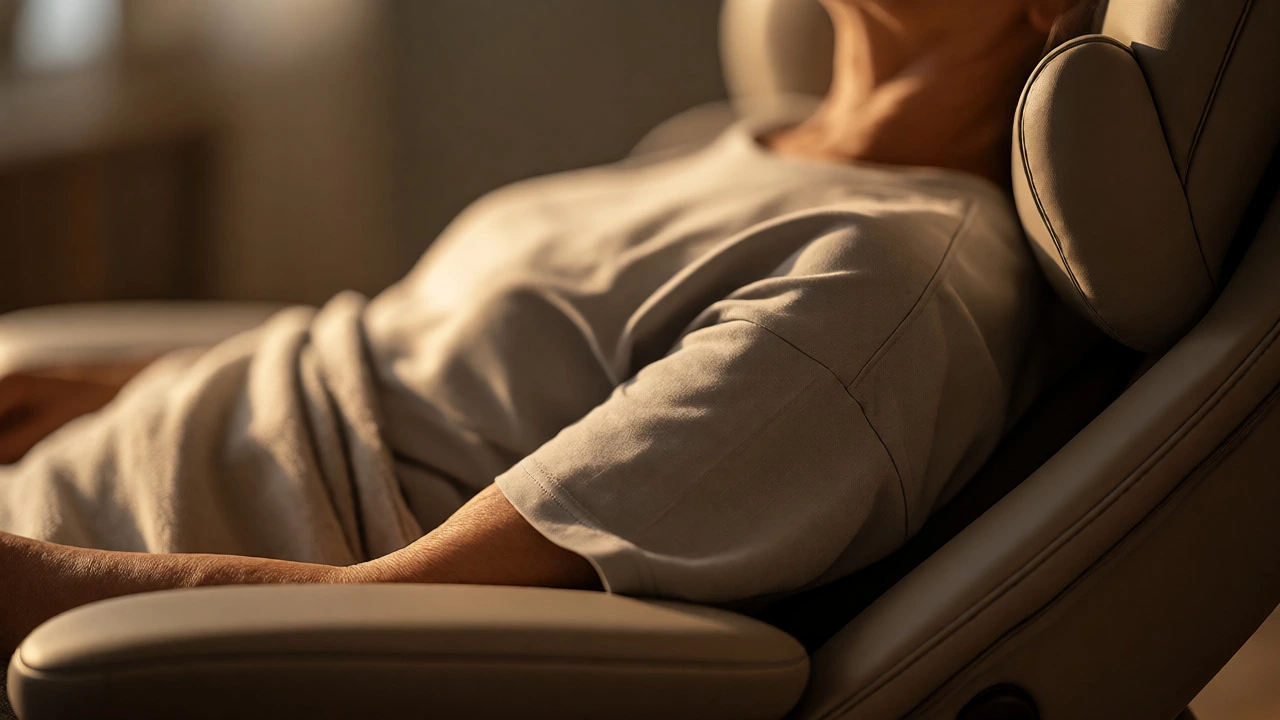
In a recliner, true side sleeping is tricky. Most chairs are designed for front-facing use. But you can modify the position. Use a wedge pillow specifically designed for side sleeping in a reclined chair. This supports the torso and prevents you from rolling onto your back or face. Some modern "sleep recliners" have wider seats that allow for a semi-side position, keeping the spine aligned while relieving pressure on one hip.
Be careful with arm placement. Dangling an arm over the side of a standard recliner cuts off circulation quickly. Choose a chair with padded armrests and ensure your arms rest comfortably within the seat boundaries. If you must sleep on your side, look for a recliner with a swivel base; this lets you turn slightly to align your body with the chair’s contour rather than fighting against it.
Stomach Sleeping: The Rare Exception
Very few seniors should sleep on their stomachs. This position twists the neck and arches the lower back excessively, which is tough on aging spines. If you absolutely cannot fall asleep otherwise, a recliner offers a compromise. You can lean forward slightly, resting your forehead on a cushioned headrest, effectively taking the weight off your lower back. It’s not ideal, but it’s safer than twisting on a flat surface.
Choosing the Right Recliner for Sleep
Not every recliner is built for overnight use. A cheap living room chair will destroy your back by morning. Here is what actually matters when shopping for a sleep-friendly recliner:
- Lumbar Support: This is non-negotiable. Your lower spine has a natural curve. A good sleep recliner has adjustable lumbar support or a built-in cushion that fills the gap between your back and the chair. Without it, you’ll wake up with spasms.
- Headrest Height: Ensure the headrest supports your neck, not just your skull. If your chin drops to your chest, you’ll wake up with a stiff neck. Adjustable headrests are worth the extra cost.
- Footrest Angle: Elevating the feet helps reduce swelling (edema) in the ankles and calves, a common issue for seniors. Look for a footrest that extends fully and locks securely.
- Upholstery Material: Leather can stick to skin if you sweat. Fabric is breathable but harder to clean. Microfiber or performance fabrics offer a middle ground-breathable yet durable.
- Mechanism Type: Power recliners are generally better for seniors than manual lever ones. They require less physical effort to adjust, which matters if you have arthritis in your hands or shoulders.
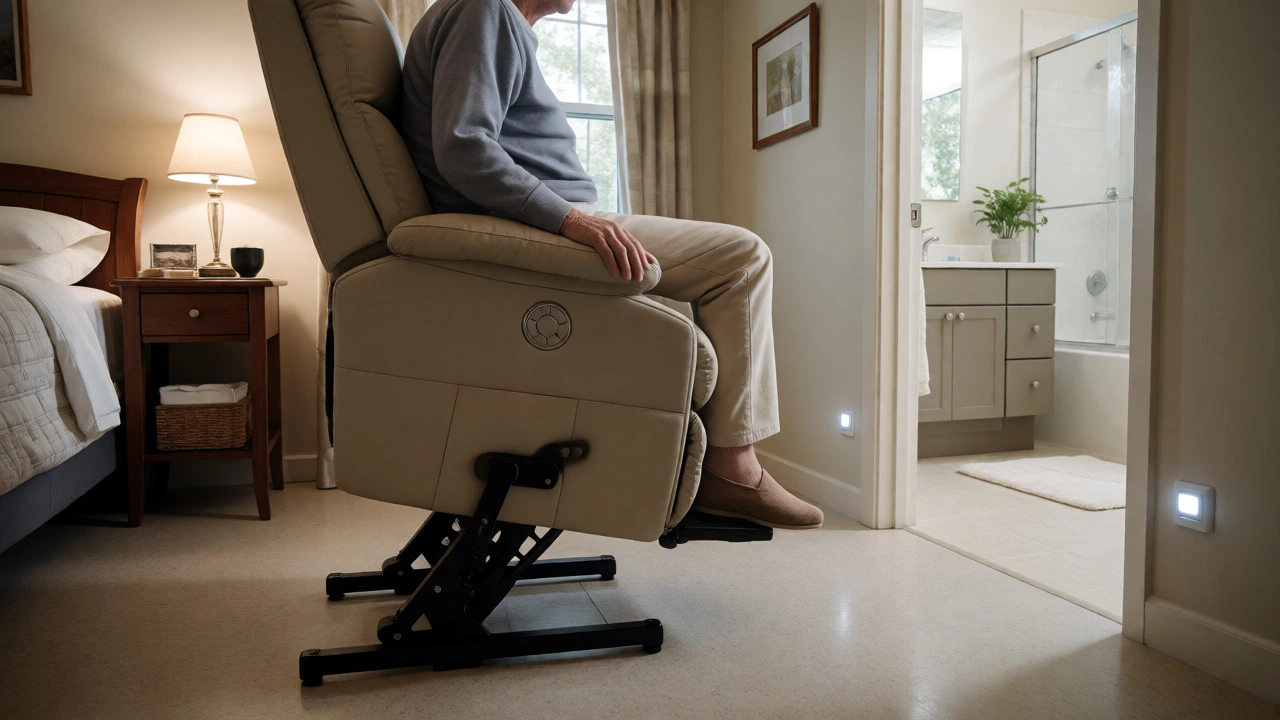
Safety First: Getting In and Out Safely
Comfort means nothing if you can’t get out of the chair safely. Falls are a leading cause of injury for people over 65. A heavy, low-slung recliner can be a trap. You need leverage.
Consider a lift chair. These electric recliners slowly raise you to a standing position. They eliminate the need to push up with weak leg muscles. While they are more expensive, the peace of mind is invaluable. Also, ensure the chair sits on a stable, non-slip surface. Avoid placing it on thick rugs that might bunch up under the feet.
Lighting matters too. If you wake up at 3 AM needing the bathroom, fumbling for a light switch in the dark is risky. Install motion-sensor nightlights near the chair and along the path to the bathroom. Some high-end recliners now come with integrated LED lighting in the base.
Transitioning From Bed to Chair
If you decide to try sleeping in a recliner, don’t expect perfection on night one. Your body needs to adapt. Start by napping in the chair for short periods. Notice how your back feels after an hour. Then, try spending the whole night in it once or twice a week.
Use accessories wisely. A small rolled towel behind the lower back can provide extra support if the chair’s built-in lumbar isn’t enough. A heating pad set to low can soothe arthritic joints before you settle in. Keep a glass of water and a remote control within arm’s reach to avoid unnecessary stretching.
Remember, the goal isn’t to abandon your bed entirely unless necessary. Many seniors use a hybrid approach: sleeping in the recliner during flare-ups of reflux or pain, and returning to the bed when symptoms subside. Listen to your body. If your neck hurts, adjust the angle. If your legs feel numb, elevate them higher. There is no single "correct" position for every senior, but there is certainly a wrong one for your specific health profile.
Is sleeping in a recliner bad for your back?
No, if the recliner provides proper lumbar support. In fact, for many seniors with arthritis or spinal stenosis, a recliner is better than a flat mattress because it maintains the natural curve of the spine and reduces pressure on the discs. Poorly supported chairs can cause pain, so quality matters.
Can sleeping in a recliner help with acid reflux?
Yes, significantly. Keeping the upper body elevated at least 30 degrees uses gravity to prevent stomach acid from flowing back into the esophagus. This is often recommended by gastroenterologists for managing GERD symptoms at night.
What angle should I set my recliner to for sleeping?
Most experts recommend an angle between 30 and 45 degrees. This is steep enough to aid breathing and digestion but shallow enough to allow for muscle relaxation and deep sleep. Experiment to find what feels most comfortable for your specific condition.
Are power recliners safe for elderly users?
Generally, yes. Power recliners reduce the physical strain required to adjust the position, which is helpful for those with limited mobility or arthritis. Just ensure the mechanism is smooth and that the user understands how to operate the emergency release if power fails.
How long can a senior sleep in a recliner?
Indefinitely, provided the chair is ergonomic and well-maintained. Many seniors sleep exclusively in recliners due to medical necessity. Ensure the upholstery is breathable to prevent skin irritation and check for signs of pressure sores if mobility is severely limited.