 23
Feb,2026
23
Feb,2026
Coffee Table Height Calculator
Determine the ideal coffee table height based on your couch seat height. The article explains that coffee tables should be 1-3 inches lower than your couch seat for optimal comfort and visual balance.
Ever sat down on your couch, reached for your coffee, and realized your table is way too high-or worse, too low? You’re not alone. A lot of people worry that if their coffee table is lower than their couch, it looks wrong or feels awkward. But here’s the truth: coffee table height doesn’t need to match your couch exactly. In fact, a slightly lower table often works better.
What’s the Right Height for a Coffee Table?
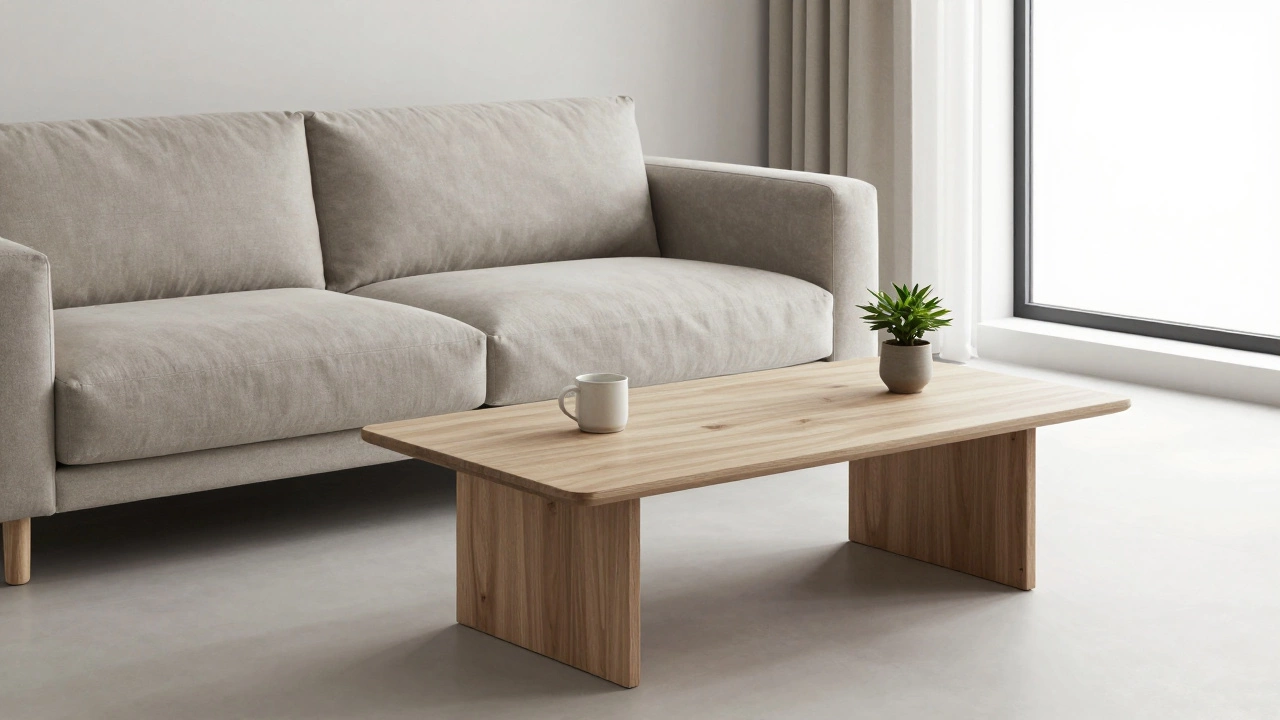
The standard advice you hear is that your coffee table should be about the same height as your couch seat. That’s a good starting point, but it’s not a hard rule. Most couches sit between 17 and 20 inches off the floor. That means a coffee table between 14 and 18 inches tall usually fits just fine.
Why the range? Because couches aren’t all the same. A deep, plush sectional might sit lower than a sleek mid-century modern sofa. If your couch is on the higher side, a table at 16 inches might feel perfect. If your couch is low-slung, even a 14-inch table could work.
The key isn’t matching numbers-it’s how it feels when you’re actually using it. Can you reach your drink without leaning too far? Can you set down a plate without straining? If the answer is yes, the height is right for you.
Why a Lower Table Often Feels Better
Think about how you use your coffee table. You’re not standing over it like a desk. You’re sitting, relaxing, maybe putting your feet up. A table that’s slightly lower than your couch seat creates a more natural reach. Your arm naturally rests at a slight downward angle, which feels more relaxed than reaching up.
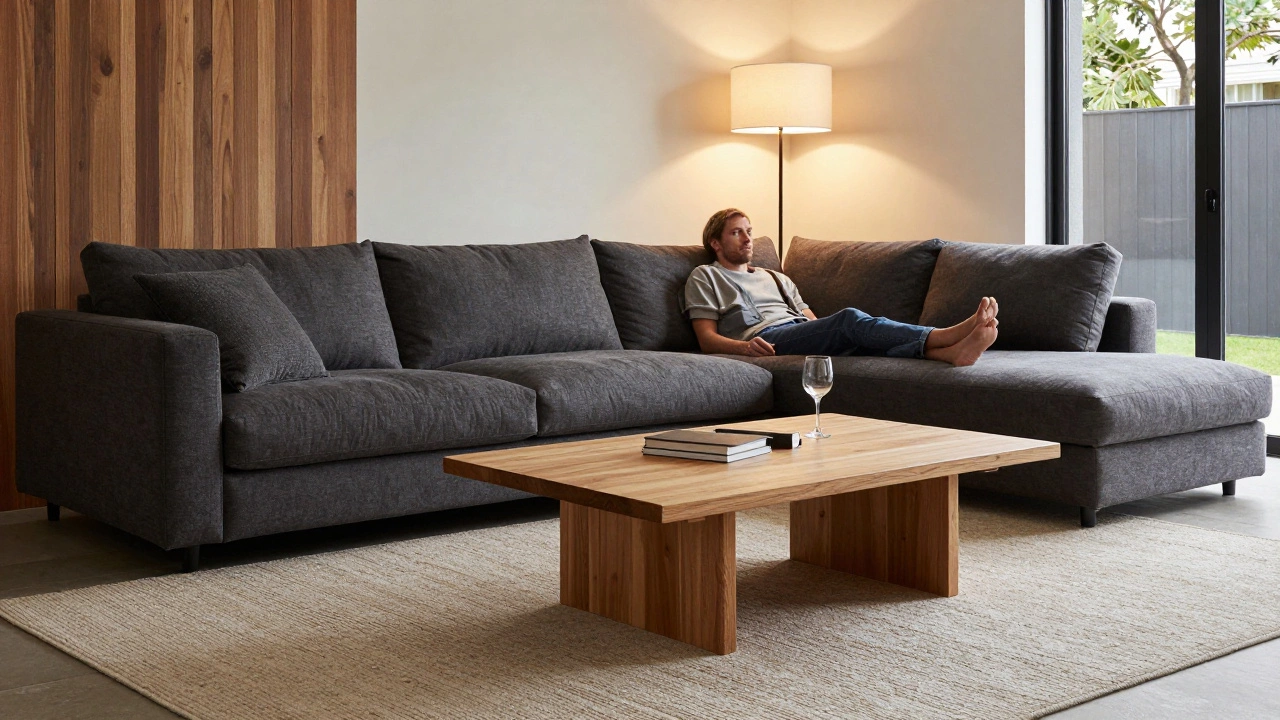
Low tables also make the space feel more grounded. When the table sits below the couch, it visually anchors the seating area. It creates a sense of balance, like the couch is floating slightly above it. This is why you’ll see low tables in Japanese tea rooms, Scandinavian homes, and modern lounges-they’re designed for comfort, not rigid rules.
Real-world example: In Melbourne, a lot of modern apartments use low-profile couches with 15-inch tables. It’s not because they followed a guide-it’s because it just works. People can rest their arms comfortably, tuck their feet under the table, and still have enough clearance to slide a tray through without knocking things over.
When a Lower Table Can Cause Problems
There are limits. If your coffee table is more than 4 inches lower than your couch, you’ll start running into issues. At 13 inches or below, it becomes hard to set down heavier items like a large coffee mug or a bowl of snacks without bending too far. Kids or older adults might struggle to reach it. And if you have a deep couch with a high seat back, a very low table can look disconnected, like it’s floating in front of the sofa instead of belonging to it.
Another issue: leg room. If the table is too low and too close to the couch, your knees might bump into it when you sit down. That’s why spacing matters just as much as height. Leave at least 12 to 18 inches between the front edge of your couch and the table. That gives you room to move without feeling cramped.
How to Measure and Choose the Right Fit
Here’s how to figure out what works for your space, step by step:
- Measure the height of your couch seat from the floor. Use a tape measure, not your eyes. Seat height is measured from the floor to the top of the cushion, not the bottom of the frame.
- Subtract 1 to 3 inches. That’s your ideal table height range. For example, if your couch is 19 inches tall, aim for a table between 16 and 18 inches.
- Test it out. Place a box or stack of books at the height you’re considering. Sit on the couch and pretend you’re reaching for something on top. Does your arm angle feel natural? Can you set something down without leaning forward?
- Check clearance. Sit on the couch and extend your legs. Do your knees hit the table? If yes, move the table back or get a smaller one.
Don’t forget the shape. A long, narrow table might need more space than a round one. A square table with sharp corners can feel more intrusive than a rounded one, especially if you have kids or pets.
What About Style? Does Height Affect Look?
A lower table doesn’t mean it looks cheap. In fact, many high-end designs use low profiles on purpose. Mid-century modern, Japandi, and minimalist styles often favor tables that sit lower than the couch. It’s intentional-it creates a calm, grounded vibe. Brands like IKEA, Hay, and &Tradition all offer low coffee tables that pair beautifully with modern sofas.
On the flip side, if you have a tall, ornate couch with high arms and a dramatic back, a very low table might feel out of place. In that case, a table that’s closer to couch height (or even 1 inch higher) can balance the visual weight.
The trick is to match the vibe. A sleek, low table works with clean lines. A taller, heavier table with carved legs fits better with traditional or rustic styles. Height isn’t just about function-it’s part of the story your furniture tells.

Real-Life Examples That Work
Take a typical living room in a Melbourne terrace house. The couch is a deep, fabric sectional at 18 inches. The coffee table is a solid oak slab at 15 inches. It’s 3 inches lower. No one noticed. No one complained. People sit on the floor, kids draw on it, guests set down wine glasses without spilling. It just works.
Another example: a studio apartment with a sofa bed. The couch is 16 inches high. The coffee table is 14 inches. It’s low enough that the bed can roll out without hitting it, and high enough to hold a laptop for work. It’s not textbook perfect-but it’s perfectly suited to how the space is used.
These aren’t exceptions. They’re common. People are choosing comfort over dogma.
What About Rugs and Other Elements?
Don’t forget the rug. If your coffee table sits on a rug, make sure the table legs aren’t floating over bare floor. That creates a weird visual gap. The table should either sit fully on the rug or have its legs rest on the floor. Mixing the two can make the table look like it’s floating.
Also, think about lighting. A low table works well under floor lamps or pendant lights that hang lower. If your table is too high, it might block the light path. That’s another reason why lower tables can improve the whole room’s feel.
Final Verdict: Yes, It’s OK
Is it OK for a coffee table to be lower than a couch? Absolutely. As long as it’s not too low-no more than 4 inches under-and you’ve checked the reach and leg room, it’s not just acceptable, it’s often better. The old rule about matching heights was made for a time when couches were all the same height and everyone sat upright. Today, we lounge. We stretch. We put our feet up. A slightly lower table supports that.
Don’t stress over perfect numbers. Test it. Live with it. If it feels right when you’re actually using it, that’s the only standard that matters.