 18
Oct,2026
18
Oct,2026
Round Table & Tray Styling Checker
Enter your coffee table dimensions and intended use to get a personalized styling recommendation based on professional design guidelines.
You’ve got a sleek round coffee table in your living room. It’s the focal point, the place where you drop your keys, rest your mug, and maybe hide the clutter from guests. Then you spot a matching round tray at the store. It looks perfect. But does putting a circle on top of a circle actually work? Or does it just look like a target?
This is one of those small design decisions that can make or break the vibe of a room. A bad choice makes the space feel flat and repetitive. A good choice adds depth, texture, and intentionality. So, should you do it? The short answer is: yes, but only if you break the rules slightly. If you just slap a same-sized round tray on a round table, you’re asking for trouble. You need contrast.
The Problem with Perfect Symmetry
Humans are wired to notice patterns, but we also get bored by them easily. When you place a circular object directly on top of another circular surface of similar diameter, you create what designers call "visual redundancy." Your eye doesn’t know where to stop. It slides off the edge because there’s no distinct boundary between the table and the tray.
Think about it this way: if the tray covers 90% of the table, the table itself becomes invisible. You might as well have bought a smaller table. On the flip side, if the tray is tiny-like a coaster size-it gets lost in the vastness of the tabletop. The sweet spot is creating a deliberate frame. You want the viewer to see the table’s material (wood grain, marble veining, glass transparency) around the edges of the tray. This negative space is crucial. It proves the tray is an intentional accessory, not an accident.
| Table Diameter | Ideal Tray Diameter | Visual Effect | Best For |
|---|---|---|---|
| Small (30-40cm) | 15-20cm | High contrast, delicate look | Minimalist spaces, holding remotes/candles |
| Medium (45-60cm) | 25-35cm | Balanced framing, visible border | General living rooms, displaying books/vases |
| Large (70cm+) | 40-50cm | Statement piece, strong anchor | Open plan areas, grouping many items |
Texture Is Your Best Friend
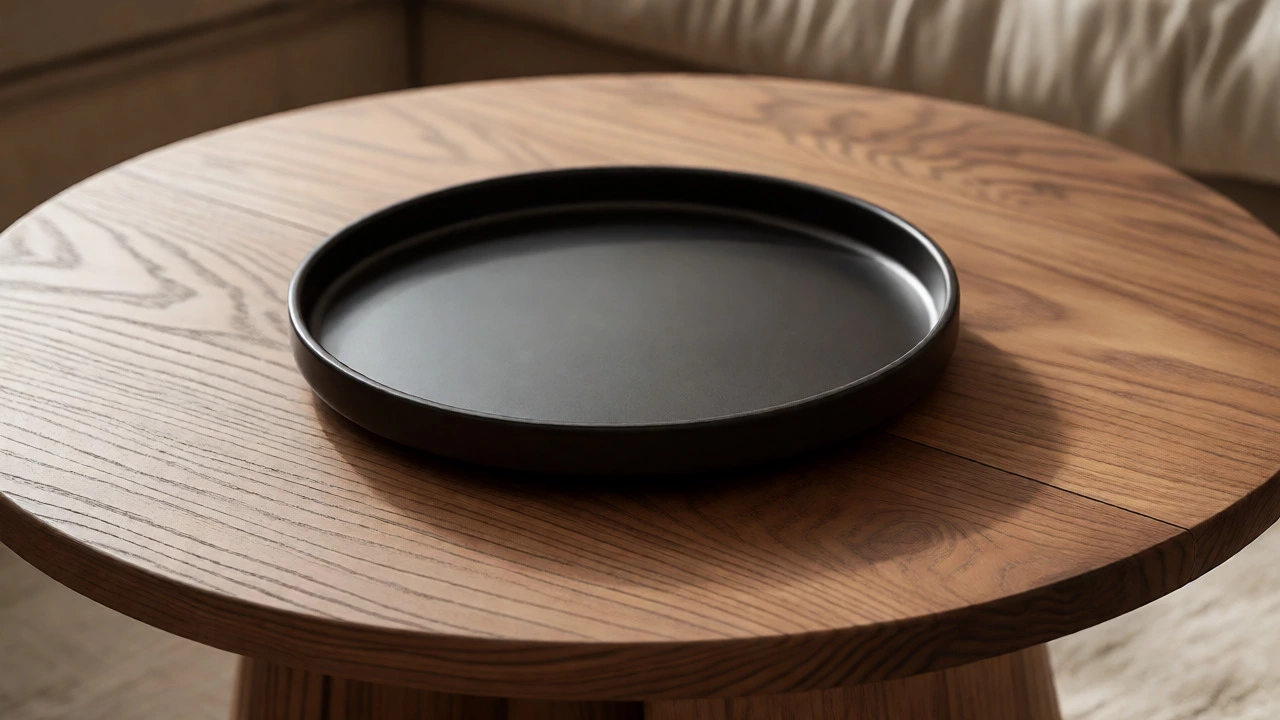
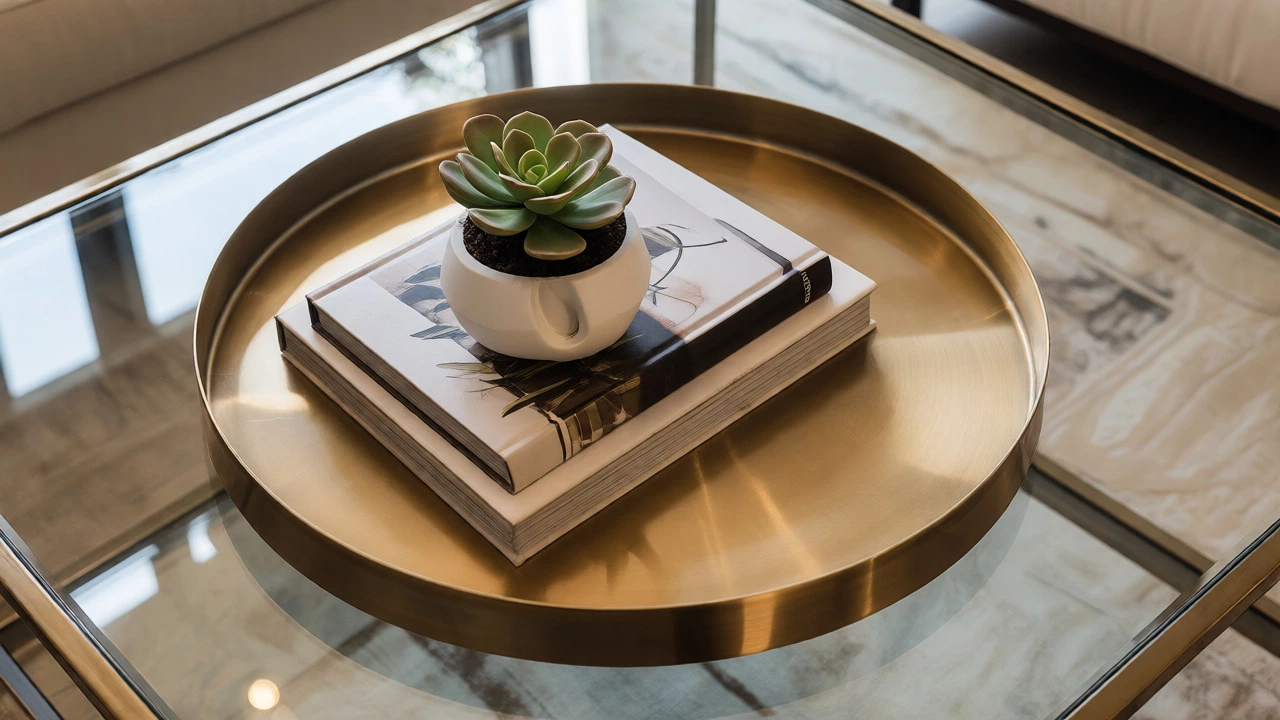
If shape repetition is risky, texture variation is your safety net. A glass coffee table paired with a matte ceramic tray creates immediate visual interest. The reflection of the glass against the solid tray grounds the composition. Conversely, a heavy oak table feels lighter when topped with a woven rattan or brass tray. The materials interact. They tell a story.
Consider the lighting in your Melbourne home. If you have lots of natural light, reflective surfaces like mirrored or metallic trays bounce light around the room. A dark wooden tray on a light wood table absorbs light and creates a cozy, grounded center. Don’t match colors exactly. Match tones. A warm walnut tray on a cool grey concrete table works because they share an earthy base but differ in temperature. This subtlety prevents the "matchy-matchy" catalog look.
When to Break the Shape Rule
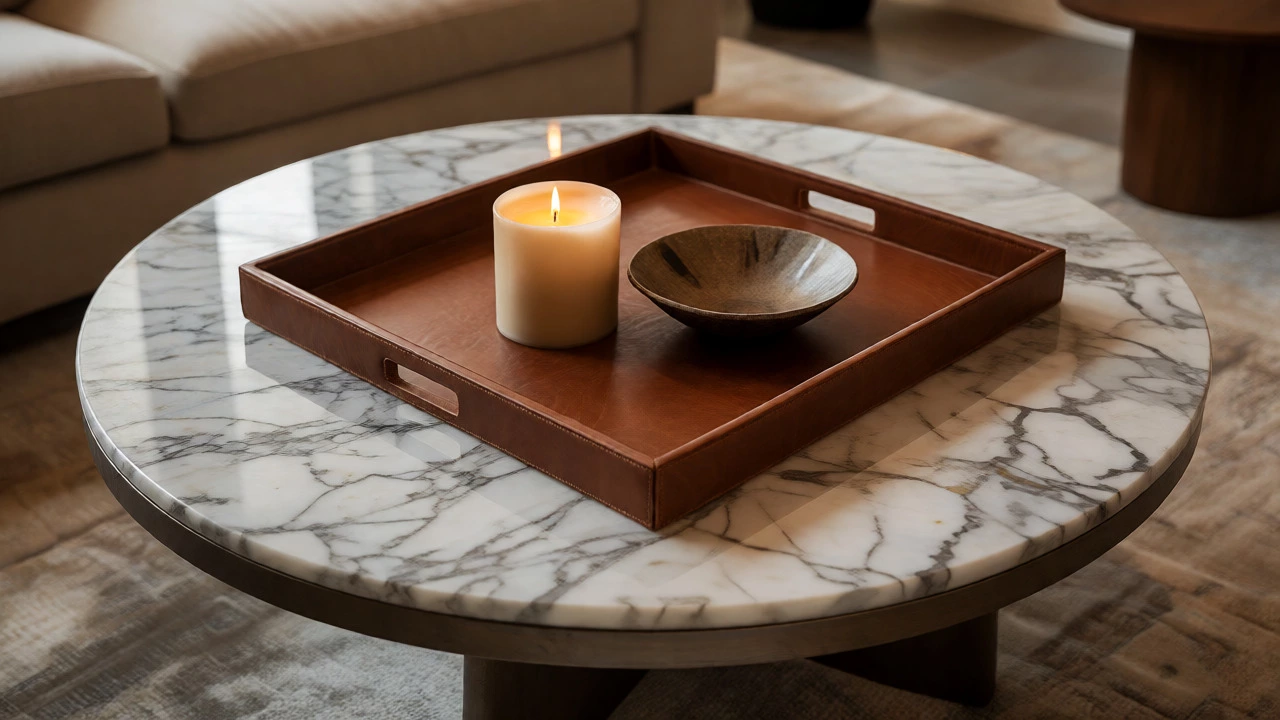
Here’s the controversial part: sometimes, a square tray on a round table is better. Why? Because circles roll. Squares stay put. If you use your coffee table for working from home, eating dinner, or playing board games, a round tray can slide around annoyingly. A rectangular or square tray provides straight lines for stacking magazines or placing laptops.
However, if you stick with the round tray, ensure it has weight. A lightweight plastic tray will shift every time you bump the table. Look for weighted bases or non-slip bottoms. In high-traffic family homes, functionality trumps aesthetics. I’ve seen too many beautiful setups ruined because the tray slid into the sofa armrest during movie night.
Styling Layers: The Three-Tier Method
A tray isn’t just a container; it’s a stage. Treat it like a mini display case. Use the three-tier method to keep things interesting:
- Tier 1: The Base. This is the tray itself. Ensure it’s clean and polished.
- Tier 2: The Anchor. Place one substantial item here. A stack of two hardcover art books or a single large candle. This gives the eye a place to land.
- Tier 3: The Accent. Add height or organic shapes. A small potted succulent, a sculptural vase, or a decorative bowl for keys. Keep this item small enough so it doesn’t overshadow the anchor.
Leave at least 20% of the tray empty. Crowding kills elegance. If you fill every inch, it looks like a storage bin, not a styled vignette. Remember, the goal is to curate, not collect.
Material Pairings That Work
Not all combinations are created equal. Some clash violently, while others sing together. Here’s a quick cheat sheet based on common table materials found in Australian homes:
- Marble/Stone Table: Pair with metal (brass, gold) or clear acrylic. The hardness of the stone needs something shiny or transparent to avoid looking too heavy.
- Wood Table: Pair with leather, woven grass, or dark ceramic. Warmth on warmth creates a cozy, rustic feel. Avoid white plastic-it looks cheap against rich timber.
- Glass Table: Pair with opaque materials. Wood, stone, or thick fabric. Clear-on-clear disappears. You need opacity to define the space.
- Metal Table: Pair with soft textures. Velvet, silk, or wood. Metal can feel cold; soften it up with natural elements.
Practical Maintenance Tips
Let’s be real: coffee tables get dirty. Spills happen. Crumbs accumulate. A tray makes cleaning easier, but only if it’s easy to remove. Heavy cast iron trays are gorgeous but painful to lift every week. If you have kids or pets, choose a lightweight material with a raised rim. The rim catches spills before they hit your expensive table surface. This practical benefit often outweighs the aesthetic risk of shape repetition.
Also, check the clearance under the table. If your round table has a lower shelf, a deep tray might block access to items stored below. Measure the vertical space before buying. Nothing ruins a layout faster than realizing you can’t reach your remote control because a tall decorative bowl sits on a tray that blocks the view.
Final Verdict: To Round or Not to Round?
Should a round coffee table have a round tray? Yes, if you respect the scale and embrace contrast. Do not let the diameters match. Leave a visible border of the table surface. Vary the materials significantly. And most importantly, style the contents with intention. If you find yourself constantly adjusting the tray because it slides, or if the room feels monotonous, swap it for a square or rectangular option. Design is about feeling, not just following rules. Trust your eye. If it feels balanced, it is balanced.
Is it okay to put a square tray on a round coffee table?
Absolutely. In fact, many designers prefer it. The contrast between the curved table edge and the straight tray edges creates dynamic visual tension. It also offers more stable surface area for placing items like laptops or plates, which can slide off round trays.
What size tray should I buy for a 50cm round coffee table?
For a 50cm table, aim for a tray between 25cm and 35cm in diameter. This leaves a 7.5cm to 12.5cm border of the table visible around the tray. This negative space is essential for highlighting the table's material and preventing the 'bullseye' effect.
How do I stop my round tray from sliding on a glass table?
Use adhesive felt pads on the bottom corners of the tray, or apply a thin strip of double-sided mounting tape. Alternatively, choose a tray with a textured or rubberized base. Weighted trays made of stone or metal are less likely to move than lightweight plastic or bamboo options.
Can I use multiple trays on one round coffee table?
Yes, but proceed with caution. Using two or three small trays of different shapes (e.g., one round, one oval, one square) can create a curated, collected look. Ensure they don't overlap chaotically. Grouping them asymmetrically usually looks more modern than arranging them in a perfect line.
Does a round tray make a small room look bigger?
Not necessarily. A round tray on a round table can make a small room feel enclosed if the colors are dark. To open up a small space, use a light-colored tray or a transparent acrylic tray. This allows light to pass through and maintains a sense of airiness.