 23
Nov,2026
Japanese Bedding Identifier & Quiz
Confused about which layer goes where? Use the identifier below to analyze a bedding item's features, then take the quiz to master the basics.
Loading question...
Quiz Complete!
You scored 0/3.
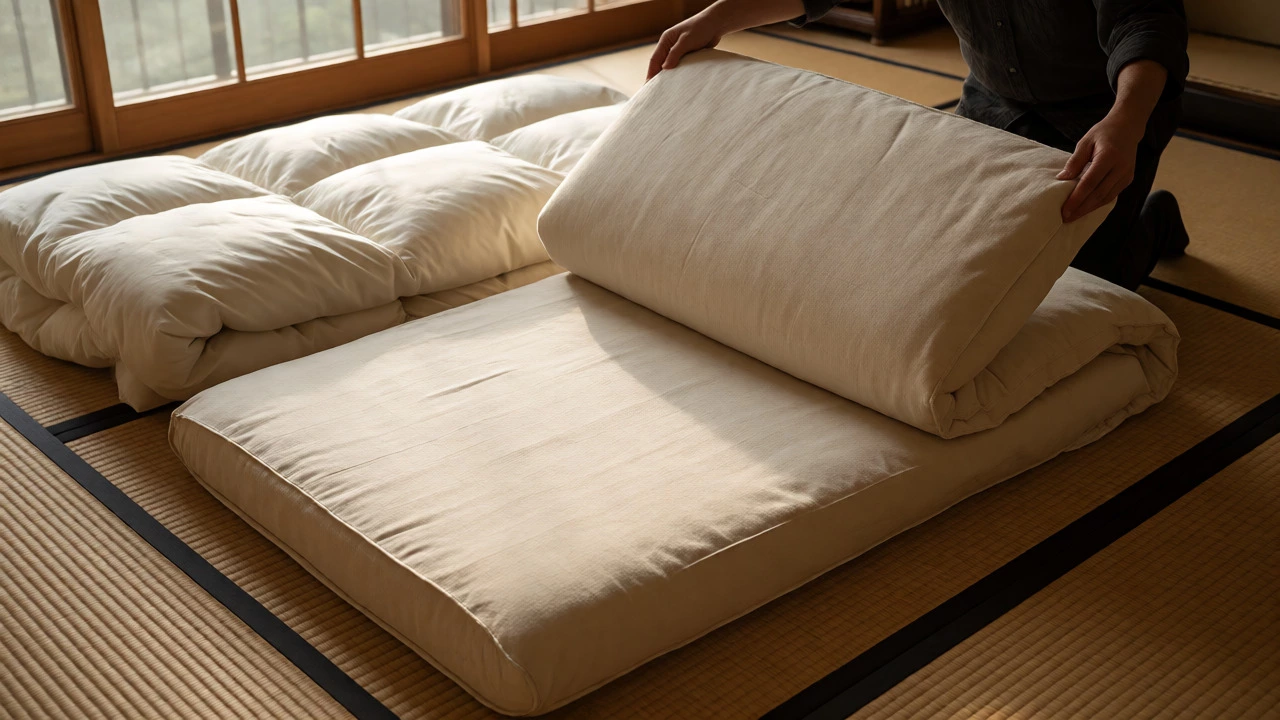
You walk into a friend's apartment in Melbourne, and they offer you a place to sleep on the floor. You expect a thin yoga mat or maybe a camping pad. Instead, you get two distinct layers of fabric that feel surprisingly luxurious. One goes under you, firm but cushioned. The other goes over you, soft and warm like a cloud. This is the traditional Japanese sleeping arrangement, and it confuses plenty of people who are used to Western box springs and duvets.
The confusion usually centers on two specific terms: shikibuton and kakebuton. They look similar if you’re just glancing at them folded up, but they serve completely different jobs. Mixing them up is like using your pillow as a blanket or wearing your bedsheet as a shirt. It technically covers you, but it’s not doing what it’s supposed to do.
The Core Difference: Bottom vs Top
Let’s cut straight to the chase. The shikibuton is the mattress you lie on. It is the foundation. The kakebuton is the comforter or duvet you pull over yourself for warmth. That’s it. That’s the primary distinction.
Think of your standard Western bed setup. You have a mattress (the shikibuton equivalent) and a duvet or heavy blanket (the kakebuton equivalent). In Japan, because these items are stored away during the day, both need to be lightweight enough to carry and flexible enough to fold. But their construction differs significantly to handle their specific roles.
| Feature | Shikibuton (Mattress) | Kakebuton (Comforter) |
|---|---|---|
| Primary Function | Supports body weight; provides cushioning against the floor. | Provides insulation; traps body heat while sleeping. |
| Material Density | High density. Often uses cotton batting, wool, or memory foam layers. | Low to medium density. Uses feathers, down, silk, or hollow fiber. |
| Firmness | Firm to semi-firm. Needs structural integrity to prevent bottoming out. | Soft and fluffy. Needs to drape comfortably without pressing too hard. |
| Storage Method | Folded into thirds or rolled tightly. Must withstand compression. | Folded loosely or rolled. Can be compressed more easily due to loft. |
| Cover Type | Often has a removable washable cover (futon cover). | Always used with a duvet cover (kakegawa) to protect the filling. |
Deep Dive: What Exactly Is a Shikibuton?
The word "shiki" means "to lay down" or "to spread," and "buton" refers to bedding or padding. So, literally, it’s the bedding you spread out. Unlike a Western mattress which sits on a frame, the shikibuton rests directly on the tatami mats or hardwood floors.
This direct contact changes how it’s built. A regular spring mattress would sag quickly if placed on a hard floor without support. Therefore, high-quality shikibutons use dense layers of natural fibers. Traditional ones rely on carded cotton, which is tough and resilient. Modern versions often incorporate memory foam or latex cores sandwiched between cotton layers. This gives you the contouring support of foam but the breathability of natural fibers.
If you’ve ever slept on a cheap air mattress, you know the feeling of sinking all the way to the ground. A good shikibuton prevents this. It needs enough thickness-usually around 10 to 15 centimeters-to keep your spine aligned even when lying on a hard surface. If it’s too thin, your hips will hit the floor. If it’s too thick, it becomes difficult to store and might slide around on smooth floors.
One critical aspect people overlook is maintenance. Because it touches the floor, it absorbs moisture from your body and the environment. You cannot leave it out 24/7. Sunlight is its best friend. Hanging it outside or airing it out regularly kills dust mites and evaporates sweat. This is why the ability to fold and move it is so vital. You aren’t stuck with a stationary object; you have a mobile piece of furniture.
Deep Dive: What Exactly Is a Kakebuton?
Now let’s talk about the top layer. "Kake" means "to hang" or "to drape." The kakebuton is designed to drape over you. It’s the Japanese equivalent of a duvet insert. However, there is a subtle difference in how it’s perceived versus a Western duvet.
In many Western homes, we put a heavy comforter directly on the bed and rarely wash it. We might use a sheet underneath, but the comforter itself gets dirty. In Japan, hygiene standards are strict. The kakebuton is almost always encased in a separate cover called a kakegawa. This cover is washed weekly or bi-weekly, while the inner kakebuton is aired out periodically.
The filling material matters here. Down and feather fillings are popular for winter because they offer incredible warmth-to-weight ratios. You want something light so it doesn’t feel suffocating, but insulating enough to keep you warm. Silk is another premium option, known for regulating temperature-keeping you cool in summer and warm in winter. Synthetic fills like polyester hollow fibers are common for those with allergies or tighter budgets. They mimic the loft of down but are hypoallergenic and machine washable.
Size is another factor. Japanese bedding sizes can differ slightly from international standards. A single kakebuton is typically sized to fit one person snugly, minimizing gaps where cold air can sneak in. Larger sizes exist for couples, but the principle remains: it should cover you fully without dragging excessively on the floor when you roll over.
Why Do People Confuse Them?
Honestly, it’s easy to mix them up if you’re new to Japanese culture. Both are rectangular, both come in fabric covers, and both are sold in sets. Retailers often bundle a "futon set" containing a shikibuton, a kakebuton, and sometimes a pillow (makura). When you unbox them, they might look like two identical pads until you touch them.
Here’s a quick test to tell them apart before you buy:
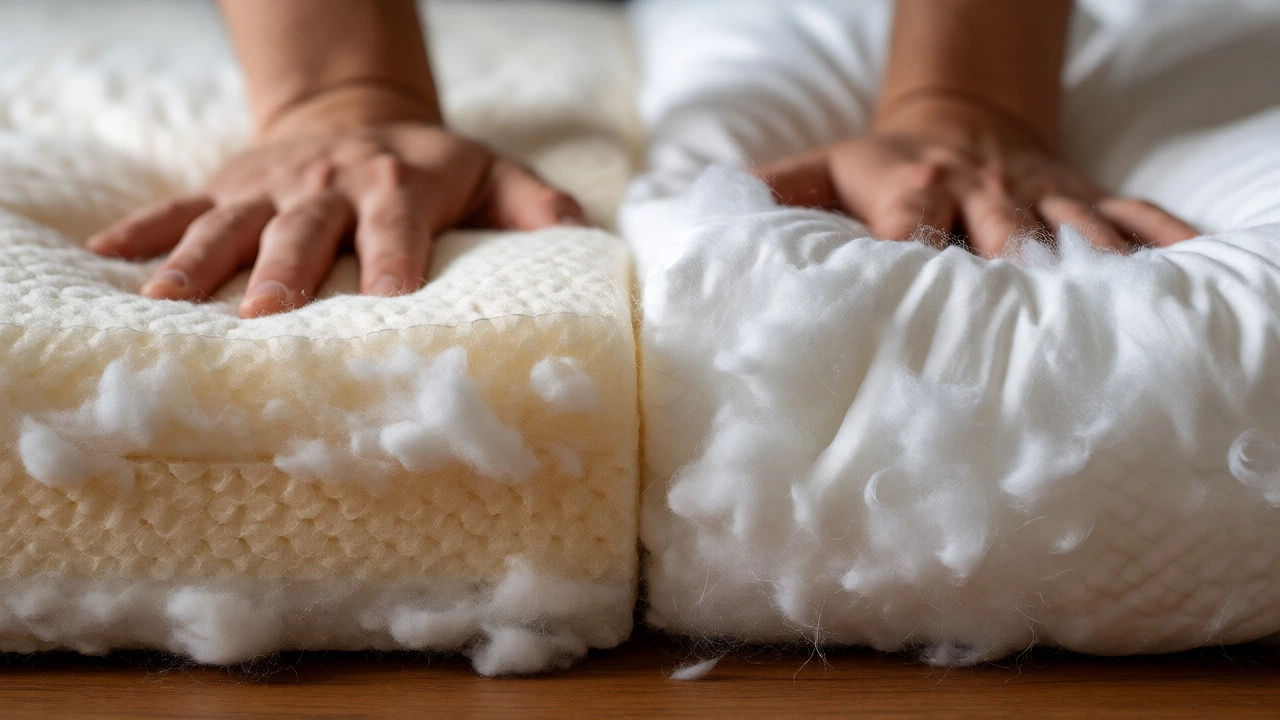
- Weight: Pick them up. The shikibuton will feel heavier and denser. It has substance. The kakebuton feels lighter and fluffier.
- Texture: Press your hand into the center. The shikibuton resists pressure firmly. The kakebuton yields easily and springs back softly.
- Thickness: Measure them. While thickness varies, the shikibuton is usually thicker to provide shock absorption. The kakebuton is thinner relative to its volume because it relies on trapped air (loft) rather than solid mass for warmth.
Another source of confusion is the term "futon" itself. In the US, "futon" often refers to a sofa-bed hybrid-a couch that unfolds into a thin mattress. This is actually closer to a shikibuton concept but executed poorly with thin foam. True Japanese futons are higher quality. When shopping online, check the specs. If it says "sofa bed," it’s likely a Western adaptation. If it says "shikibuton," it’s the real deal.
Practical Tips for Using Both Together
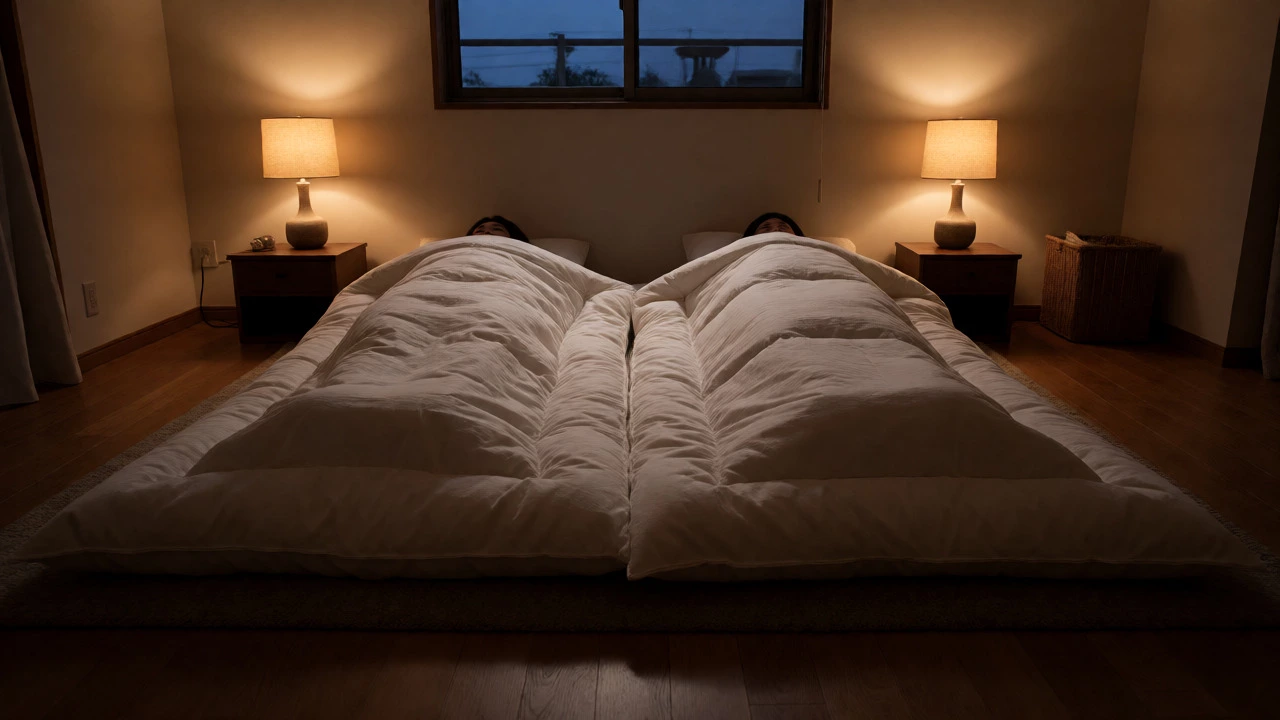
So you’ve got your shikibuton and your kakebuton. How do you make them work together for a great night’s sleep? First, consider your flooring. Tatami mats are ideal because they breathe. Hardwood or tile floors can be cold and hard. If you don’t have tatami, consider placing a rug or a breathable underlay beneath the shikibuton. This adds a tiny bit of extra cushion and protects the mattress from dirt.
Layering is key. Start with the shikibuton on the floor. Lay down a fitted sheet or a protective cover. Then, place your pillow (makura) at the head. Finally, drape the kakebuton over you. During warmer months in Melbourne, you might skip the kakebuton entirely and use just a thin blanket. In winter, you might add an additional light blanket under the kakebuton for extra insulation.
Don’t forget the morning routine. As soon as you wake up, open the windows. Fold the shikibuton neatly and stand it upright against the wall. This allows air to circulate through the sides. Do the same with the kakebuton. Never store them in a closed closet immediately after waking up. Trapping moisture inside leads to mold and bad smells. Give them an hour or two to dry out before folding them into storage bags.
Choosing the Right Materials for Your Climate
Melbourne weather is unpredictable. One day it’s hot, the next it’s freezing. Your bedding choices should reflect this variability. For the shikibuton, look for materials that manage moisture well. Cotton is excellent for breathability. Wool is naturally antimicrobial and regulates temperature, though it requires careful cleaning. Memory foam offers great support but can sleep hot unless it has cooling gel infusions.
For the kakebuton, versatility is king. A down alternative (synthetic) is practical for most households because it’s easy to wash. If you suffer from allergies, avoid feather/down options unless they are specifically labeled hypoallergenic and tightly woven. Silk is a luxury choice that works year-round but comes with a higher price tag and delicate care requirements.
Consider buying separate seasons’ worth of kakebutons. A lighter, breathable cotton-filled comforter for summer, and a thicker down or wool-filled one for winter. Since they are easy to store, having two isn’t a burden. This ensures you’re never too hot or too cold, maximizing the comfort of your floor-sleeping experience.
Can I use a shikibuton on a bed frame?
Yes, you can. Many people place a shikibuton on top of a slatted bed frame or a platform bed. It acts as a comfortable, supportive topper. Just ensure the frame has adequate slat spacing (no more than 5-7 cm apart) to support the mattress properly and prevent sagging.
How often should I wash my kakebuton?
You generally wash the outer cover (kakegawa) every 2-4 weeks. The inner kakebuton itself is rarely washed. Instead, air it out monthly by hanging it in indirect sunlight or using a vacuum cleaner with an upholstery attachment to remove dust. Check the manufacturer’s label, as some synthetic fills are machine washable.
Is a shikibuton good for back pain?
Many users report relief from back pain due to the firm, flat support. It encourages neutral spinal alignment compared to soft, sagging mattresses. However, individual results vary. Those with severe joint issues may find it too hard initially. Look for shikibutons with added memory foam layers for a balance of firmness and contouring.
What size should I buy for a couple?
Standard Japanese double futons are smaller than Western queen beds. A typical double shikibuton measures around 140cm x 200cm. If you and your partner prefer more space, consider buying two single shikibutons and pushing them together, or look for "wide" or "semi-double" sizes which are becoming more available internationally.
Do I need a special cover for the shikibuton?
Yes, a fitted futon cover is highly recommended. It protects the mattress from stains and wear, and it makes washing easier. Most shikibutons come with a zippered cover. Ensure the cover is made of breathable fabric like cotton or linen to maintain the airflow benefits of the mattress.