 22
Oct,2026
Corner Sofa Fit & Style Finder
Answer a few questions about your space and lifestyle to get personalized recommendations for your next corner sofa.
Fill out the form on the left to see your personalized sofa recommendations.
You walk into a showroom or scroll through an online catalog, and suddenly you're paralyzed. There are chaise lounges on the left, right-facing sections, reversible arms, modular pieces, and fabrics that promise to withstand a toddler’s crayon attack. It’s overwhelming. But here is the truth: choosing the right corner sofa isn’t about picking the one that looks best in the store; it’s about solving a spatial puzzle in your actual home.
A corner sofa, often called a sectional, is designed to maximize seating capacity while anchoring a room. Unlike standard three-seaters, these L-shaped or U-shaped giants define zones in open-plan spaces. But if you get the dimensions wrong by even six inches, you might block a doorway or make your living room feel like a cramped hallway. This guide cuts through the marketing fluff to help you measure, choose, and buy with confidence.
Measure Your Space Before You Fall in Love
The biggest mistake people make is falling for a sofa’s aesthetic before checking if it fits. Don’t just eyeball it. Grab a tape measure. You need three critical numbers: the width of the wall where the long side will sit, the depth of the room (from the back of the sofa to any opposing furniture), and the width of every doorway and stairwell the delivery team must navigate.
Here is a simple rule of thumb: leave at least 30-36 inches of walking space between the front of the sofa and your coffee table or TV stand. If your room is narrow, avoid deep-seated models. Standard seat depths range from 21 to 24 inches. Anything deeper than 25 inches is luxurious but eats up floor plan real estate fast.
- Check the path: Measure the narrowest point of your entryway. Many modern sectionals come in two pieces, which helps, but bulky armrests can still cause issues.
- Map the swing: Do doors open into the room? Will they hit the sofa arm?
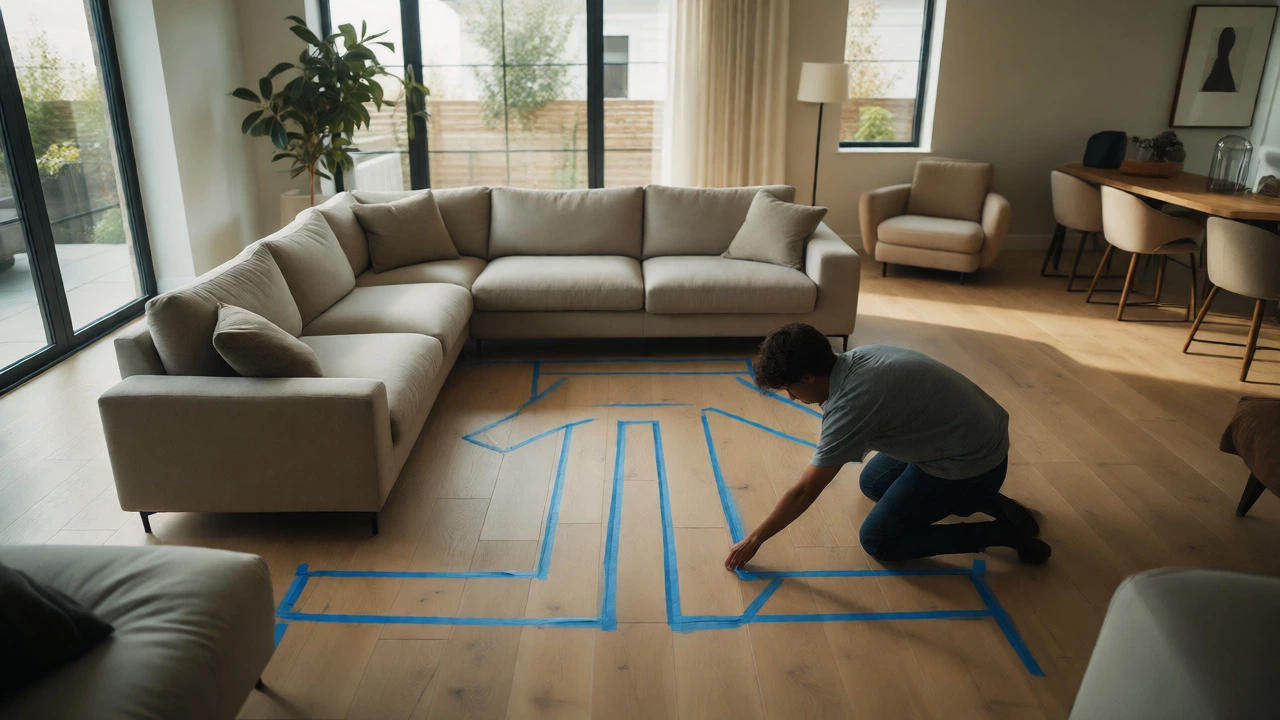
- Visualize with tape: Use blue painter’s tape on your floor to outline the exact footprint of the sofa you’re considering. Walk around it. Does it feel claustrophobic?
Decide on the Configuration: Left vs. Right Facing
This is where most buyers panic. What does "left-facing" actually mean? It’s simpler than it sounds. Stand facing your sofa. If the chaise lounge (the extended part) is on your left hand, it’s a left-facing sectional. If it’s on the right, it’s right-facing.
Why does this matter? Because it dictates traffic flow. In most homes, the main walkway runs along one side of the room. You generally want the chaise to face *away* from high-traffic areas so people don’t have to step over legs to get past. However, if you want to create a cozy nook near a window, placing the chaise there makes sense, provided it doesn’t block natural light or heating vents.
| Configuration | Best For | Space Requirement |
|---|---|---|
| L-Shaped (Chaise) | Standard living rooms, maximizing seating without crowding. | Medium to Large |
| U-Shaped | Large families, movie nights, defining large open-plan areas. | Very Large |
| Modular | Renters or those who move frequently; customizable layouts. | Flexible |
| Reversible Chaise | Homes where layout changes often; flexibility. | Medium |
Choose the Right Material for Your Lifestyle
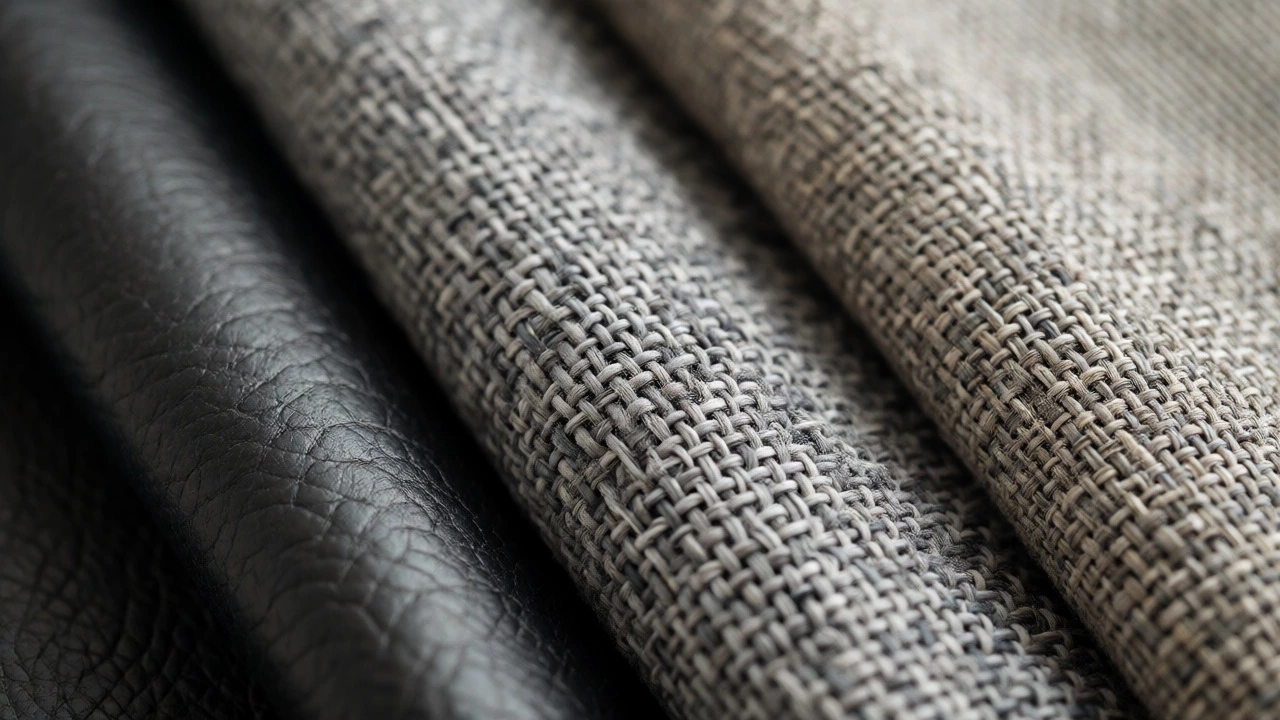
Fabric choice isn’t just about color; it’s about maintenance and durability. Ask yourself: Who uses this sofa? Do you have pets? Kids? Do you eat dinner on it?
Leather is durable and ages well, developing a patina over time. It’s easy to wipe clean, making it great for spills, but it can be cold in winter and sticky in summer. Plus, cat claws are its nemesis.
Performance Fabrics, such as Crypton or Sunbrella, are engineered to resist stains and moisture. They look like linen or cotton but repel liquids. If you have toddlers or clumsy friends, this is worth the premium price tag.
Microfiber is soft, affordable, and surprisingly tough against pet hair (it vacuums off easily). However, it can flatten over time and may not breathe as well as natural fibers.
Avoid delicate silks or light-colored linens unless you are disciplined about cleaning. Darker shades or patterned fabrics hide wear and tear better than solid white or beige.
Comfort Mechanics: Cushions and Frame Construction
Sitting down in a showroom for ten seconds won’t tell you how the sofa feels after two hours of Netflix. Look under the hood-literally.
The Frame: Hardwood frames (kiln-dried oak, maple, or ash) are the gold standard. They resist warping and squeaking. Avoid particleboard or plastic frames if you want longevity; they tend to break within five years.
The Suspension: Eight-way hand-tied springs offer the best support and durability. Sinuous springs (zigzag metal wires) are common in mid-range sofas and work fine for average use. Webbing is cheap and tends to sag quickly.
The Cushions: This is subjective, but generally, high-resilience foam lasts longer than standard polyfoam. Feather-wrapped foam offers a plush initial sink-in feeling but requires constant fluffing. If you hate maintaining cushions, stick to all-foam or foam-and-polyester blends.
Style and Scale: Matching Your Decor
A massive, overstuffed sectional in a minimalist apartment looks out of place. Conversely, a sleek, low-profile modern sofa might look lost in a traditional Victorian home. Match the scale of the sofa to the ceiling height and square footage of the room.
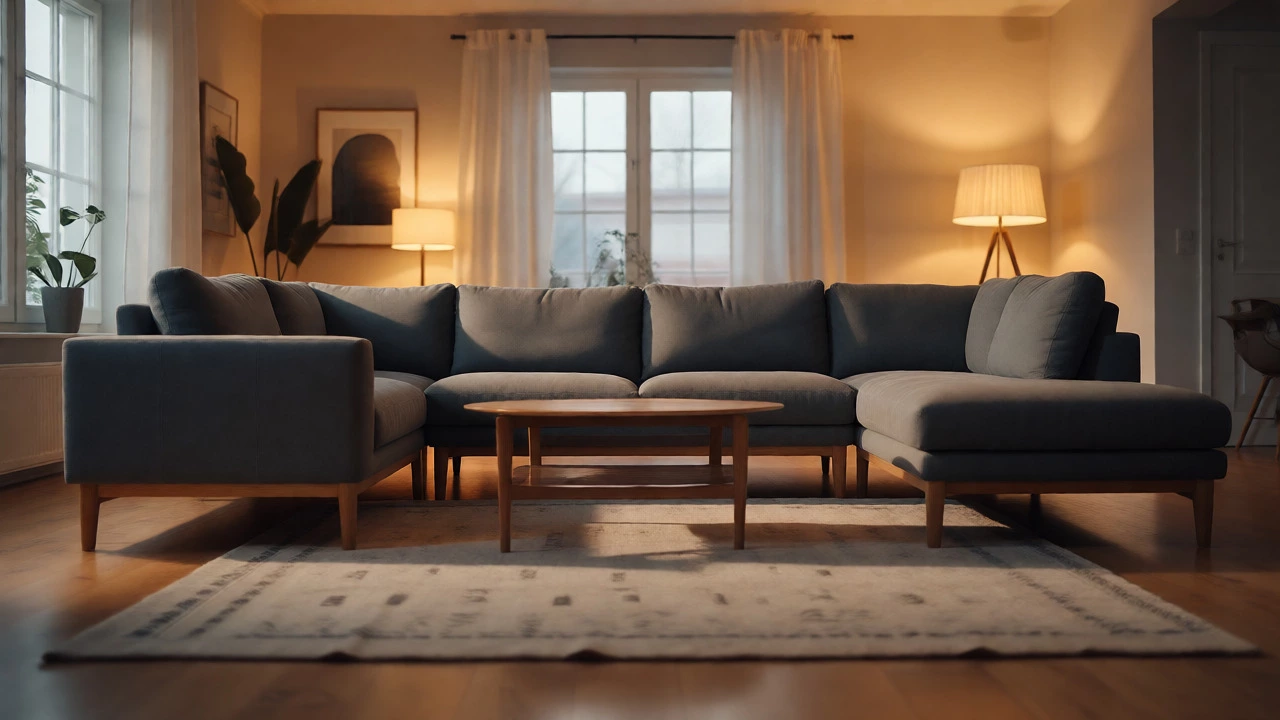
In small apartments, opt for exposed legs. Seeing the floor beneath the sofa creates an illusion of more space. Bulky skirted bases anchor the piece heavily, which works well in larger, formal living rooms. Also, consider the back of the sofa. If your sectional floats in the middle of an open-plan room, ensure the back upholstery matches the front. Some budget models only finish the visible sides, leaving rough fabric on the back.
Budgeting and Delivery Logistics
Corner sofas are expensive investments. Prices range wildly from $800 for basic flat-pack models to $5,000+ for custom leather designs. Set a realistic budget, including delivery fees.
Many retailers charge extra for "white glove" delivery, which includes assembly and removing packaging. Skip this only if you are confident you can maneuver heavy boxes through tight turns. Always check the return policy. Once a sofa is assembled and removed from its box, many stores treat it as final sale due to hygiene concerns.
Next Steps: The Final Checklist
Before you click "buy," run through this quick audit:
- Did I measure my doorways and stairs?
- Is the chaise position correct for my traffic flow?
- Does the fabric suit my lifestyle (pets/kids)?
- Is the frame hardwood?
- Do I have 30+ inches of clearance in front of the sofa?
If you checked all boxes, you’re ready. Remember, comfort is personal. What feels firm to one person feels rock-hard to another. If possible, visit a store to test similar styles before ordering online.
What is the difference between a corner sofa and a sectional?
The terms are often used interchangeably, but technically, a corner sofa is a single continuous piece shaped like an L, while a sectional consists of multiple separate modules that connect together. Sectionals offer more flexibility for moving and rearranging, whereas corner sofas are often sturdier because they lack connection points.
Can I change the direction of my corner sofa?
Only if it has a reversible chaise. Most fixed-chaise sectionals cannot be flipped because the internal mechanisms and cushion shapes are specific to one side. Reversible models allow you to detach the chaise and reattach it to the other end, usually using a simple bracket system.
How do I protect my corner sofa from pets?
Choose tightly woven fabrics like microfiber or performance synthetics, which resist claw snags. Avoid loose weaves like chenille or boucle. Regular vacuuming removes hair and dander, and using a throw blanket on the chaise area can prevent direct contact with favorite sleeping spots.
Are corner sofas good for small living rooms?
Yes, if chosen correctly. A corner sofa utilizes dead corner space efficiently, freeing up the center of the room. Opt for a compact L-shape with slim arms and raised legs to maintain visual openness. Avoid oversized U-shapes in rooms under 200 square feet.
How much space should be between a corner sofa and a coffee table?
Aim for 14 to 18 inches between the edge of the coffee table and the sofa seat. This distance allows you to reach your drink comfortably while ensuring enough legroom to pass through. If the gap is too wide, you strain to reach items; if too narrow, you bump your knees.